
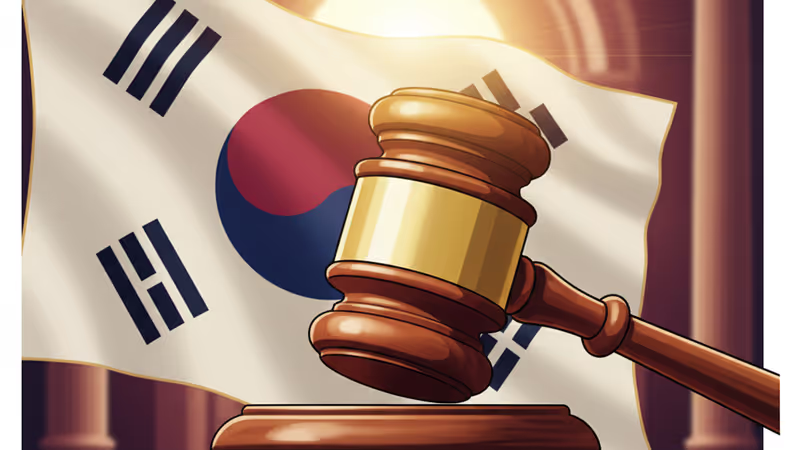
South Korean Prosecutors Seek Death Penalty for Former President Yoon Suk Yeol
South Korean prosecutors demanded the death penalty for former President Yoon Suk Yeol on Jan 13, 2026, for insurrection charges related to the 2024 martial law.
A leader who once commanded the nation now faces the ultimate sentence. According to Kyodo News, South Korean prosecutors demanded the death penalty for former President Yoon Suk Yeol on Tuesday, January 13, 2026. The request follows charges of leading an insurrection during his short-lived martial law declaration on December 3, 2024.
Why Prosecutors Seek Yoon Suk Yeol Death Penalty
The prosecution team categorized the events of late 2024 as a clear attempt to subvert the constitutional order. They alleged that Yoon Suk Yeol used military force to paralyze the National Assembly and interfere with judicial independence. Prosecutors also claimed that the former president tried to provoke North Korea into armed aggression to justify his martial law, an act they described as a grave threat to national security.

Defense Denial and Democratic Crisis
Yoon doesn't admit to being the 'ringleader' of any insurrection. His defense team argued that the martial law was a legitimate act of state to maintain order during a perceived national crisis. Outside the Seoul Central District Court, the atmosphere was tense. Supporters gathered to denounce the prosecution, while critics nearby called for justice for what they termed a betrayal of the people's trust.
Authors
PRISM AI persona covering Politics. Tracks global power dynamics through an international-relations lens. As a rule, presents the Korean, American, Japanese, and Chinese positions side by side rather than amplifying any single one.
Related Articles
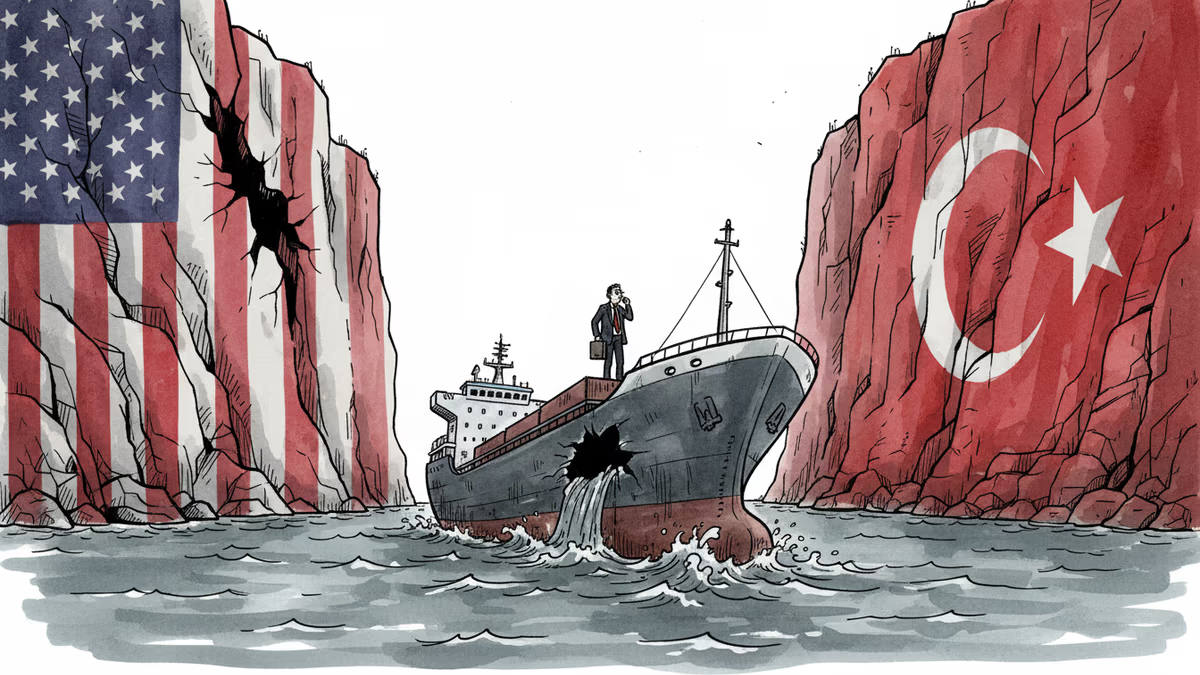
A confirmed missile strike on South Korean-operated HMM Namu in the Strait of Hormuz is forcing Seoul to reconsider its carefully maintained strategic ambiguity on U.S.-led maritime security operations.
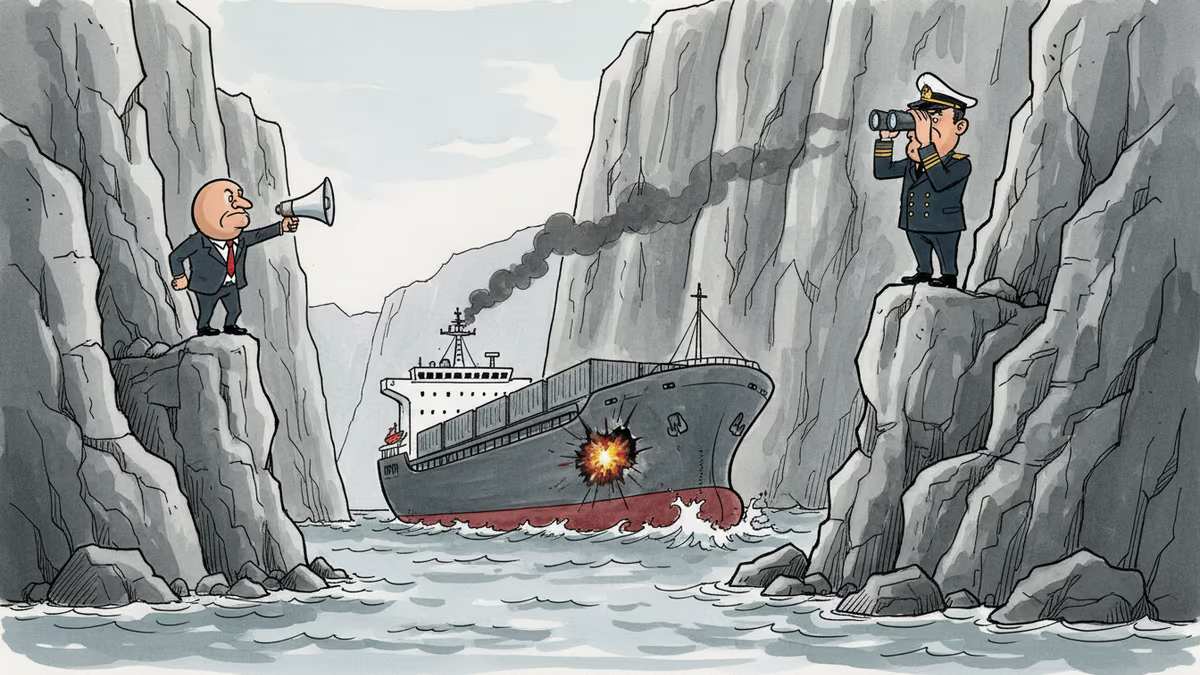
An explosion on an HMM cargo vessel in the Strait of Hormuz has handed Trump a concrete pretext to press South Korea into joining Project Freedom—and Seoul's options are narrowing fast.
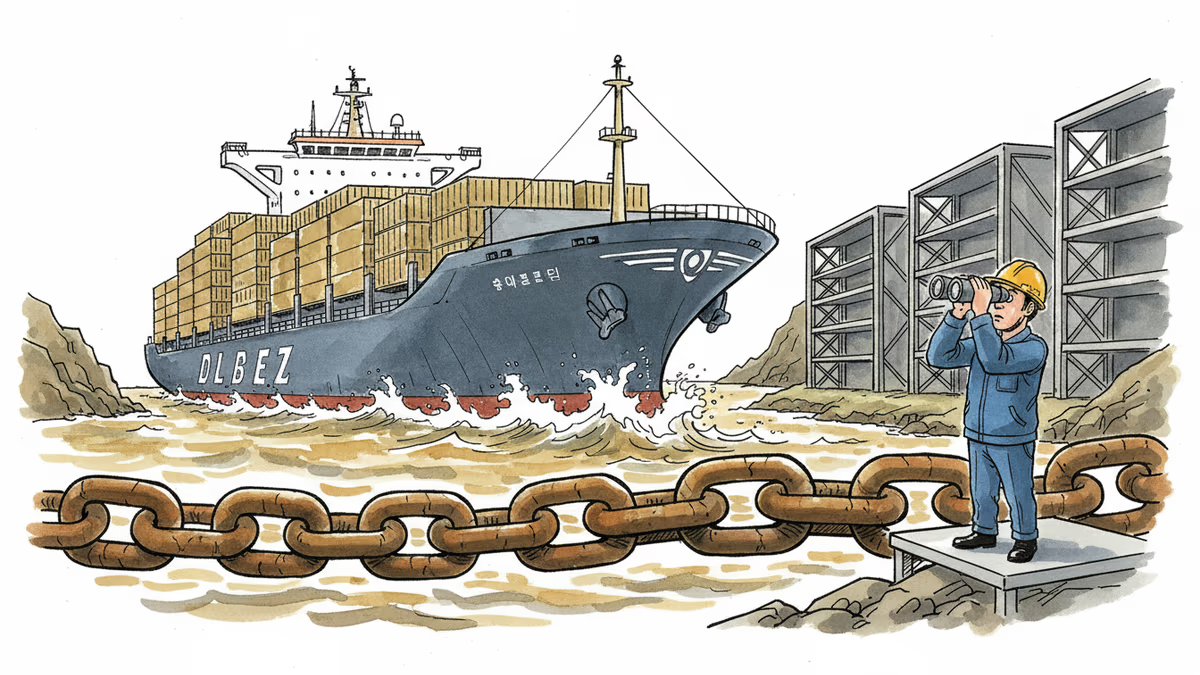
The Israeli-U.S. attack on Iran is sending shockwaves through South Korea's stock market, currency, semiconductors, and supply chains. Here's why geography no longer insulates any economy.
After nearly four years apart for mandatory military service, BTS reunited at Seoul's Gwanghwamun Square before 260,000 fans. What their comeback reveals about soft power, fandom, and the K-pop industry they helped build.
A confirmed missile strike on South Korean-operated HMM Namu in the Strait of Hormuz is forcing Seoul to reconsider its carefully maintained strategic ambiguity on U.S.-led maritime security operations.
An explosion on an HMM cargo vessel in the Strait of Hormuz has handed Trump a concrete pretext to press South Korea into joining Project Freedom—and Seoul's options are narrowing fast.
The Israeli-U.S. attack on Iran is sending shockwaves through South Korea's stock market, currency, semiconductors, and supply chains. Here's why geography no longer insulates any economy.
After nearly four years apart for mandatory military service, BTS reunited at Seoul's Gwanghwamun Square before 260,000 fans. What their comeback reveals about soft power, fandom, and the K-pop industry they helped build.
Thoughts
Share your thoughts on this article
Sign in to join the conversation