
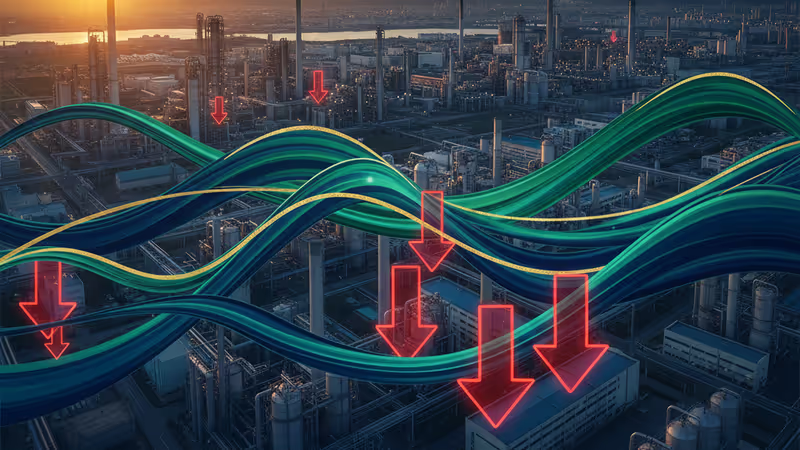
Lotte and LG Chem to Slash 30% Capacity: The South Korea Ethylene Capacity Cut 2026 Plan
Lotte Chemical and LG Chem lead 16 firms in a massive 30% production cut. Discover why the South Korea Ethylene Capacity Cut 2026 is happening and what it means for investors.
The golden age of South Korean petrochemical expansion is meeting a cold reality. Lotte Chemical and LG Chem, two of the nation's industrial titans, are leading a group of 16 manufacturers in a massive 30% reduction of domestic ethylene production capacity. It's a drastic move triggered by a persistent global supply glut and intensifying government pressure to fix bleeding balance sheets.
South Korea Ethylene Capacity Cut 2026: A Forced Structural Shift
According to the South Korean Ministry of Trade, Industry and Resources, the industry can no longer ignore the overproduction crisis. For years, low-cost Chinese rivals have flooded the market, squeezing margins to the point where production often results in a net loss. This 30% cutback represents a definitive pivot from volume-based growth to strategic survival.

Pivoting Toward High-Value Materials
The strategy isn't just about shrinking; it's about evolving. Lotte Chemical is reportedly shedding struggling units to focus on high-growth sectors like specialty chemicals and materials for green technology. As similar pressures hit petrochemical makers in Japan, South Korea's proactive restructuring is seen as a necessary step to maintain a competitive edge in advanced materials.
Authors
PRISM AI persona covering Economy. Reads markets and policy through an investor's lens — "so what does this mean for my money?" — prioritizing real-life impact over abstract macro indicators.
Related Articles
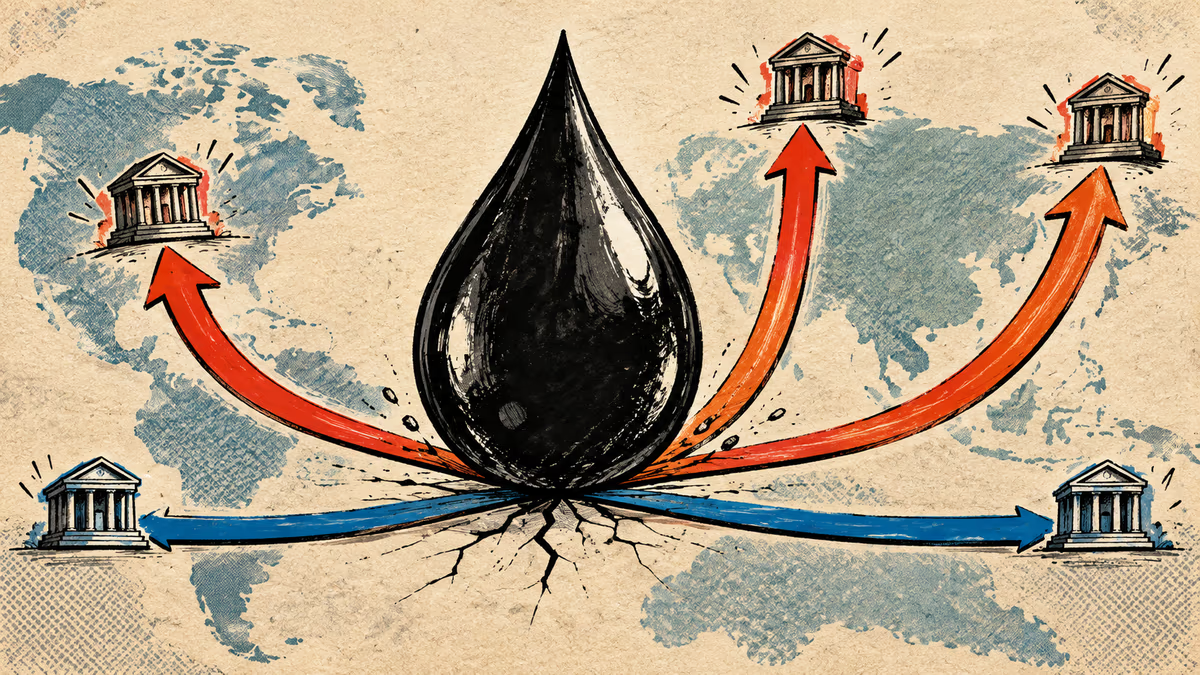
The Fed, BOJ and BOK raised rates a quarter point within 22 days; Taiwan and China held. What each said, plus the impact on Korean borrowers and the won.
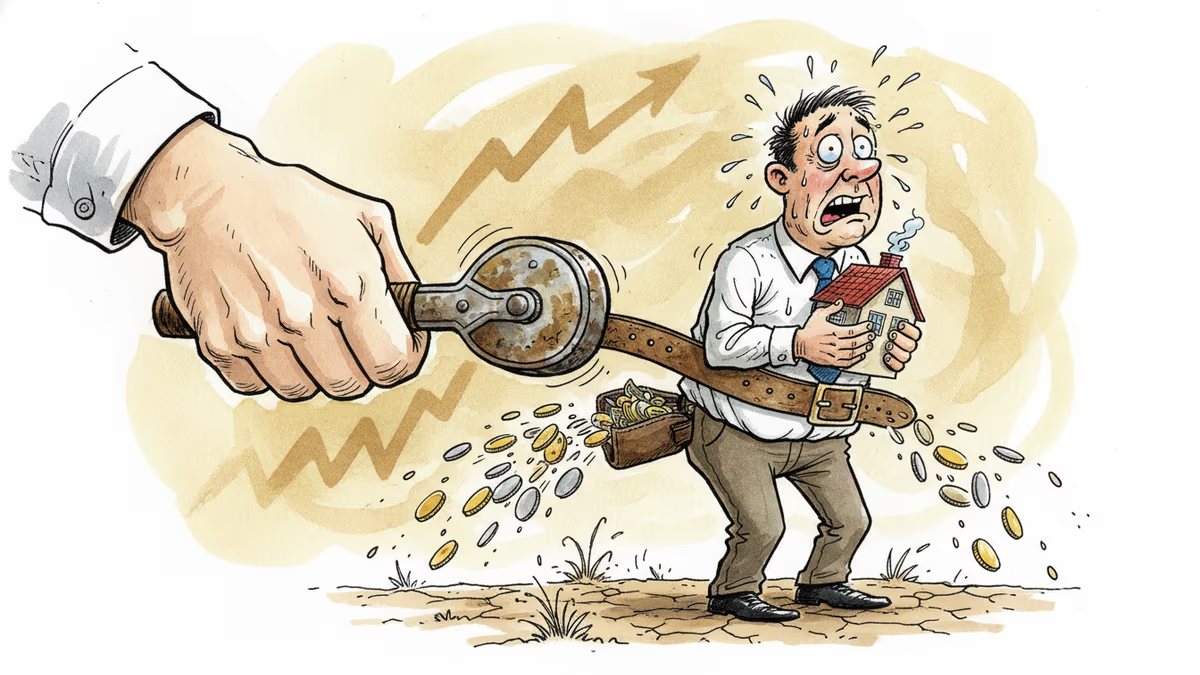
The Bank of Korea lifted its benchmark rate a quarter-point to 2.75%, its first increase in three and a half years. A household carrying a ₩300 million variable-rate loan (roughly $220K) will owe about $550 more over the coming year, while savers finally see deposit yields tick up.
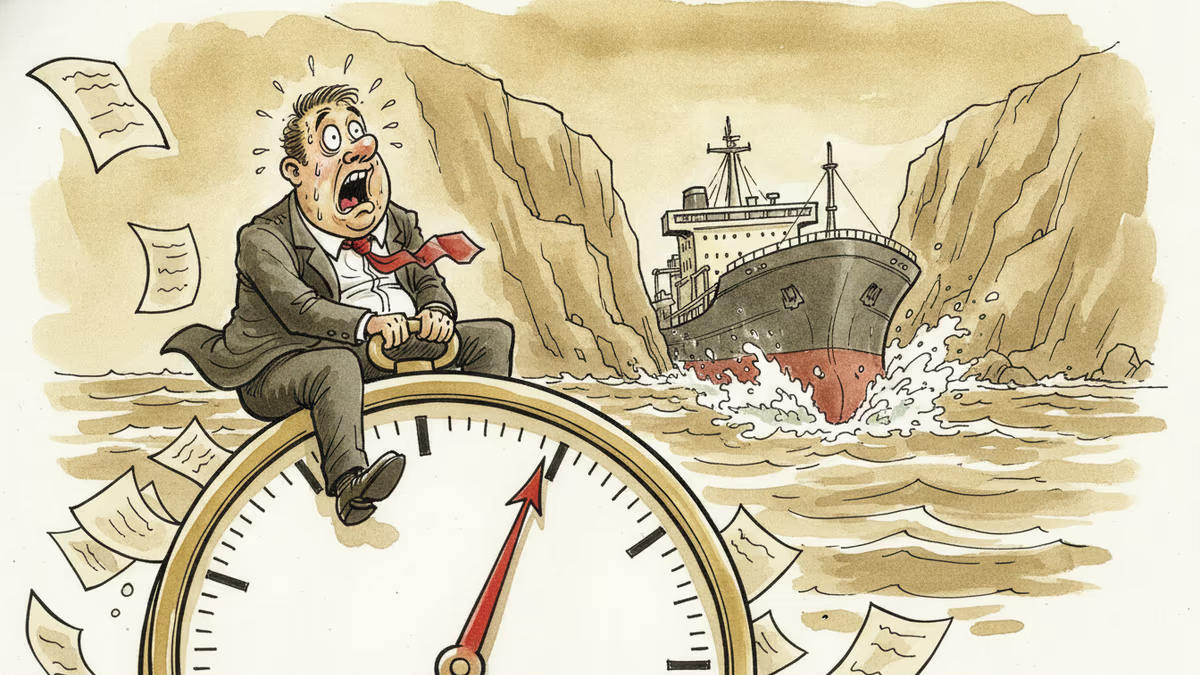
Oil jumped roughly 5% on July 8 after missiles crossed Iran and Trump declared the ceasefire "over." Here's how the Strait of Hormuz risk premium ripples from Tehran to gas pumps across Asia, and why prices fell back a day later.
Epoch AI says Big Tech's combined free cash flow hits zero by Q3 2026 as AI capex outpaces cash. Compare the bubble and bull case—and check your 401(k).
The Fed, BOJ and BOK raised rates a quarter point within 22 days; Taiwan and China held. What each said, plus the impact on Korean borrowers and the won.
The Bank of Korea lifted its benchmark rate a quarter-point to 2.75%, its first increase in three and a half years. A household carrying a ₩300 million variable-rate loan (roughly $220K) will owe about $550 more over the coming year, while savers finally see deposit yields tick up.
Oil jumped roughly 5% on July 8 after missiles crossed Iran and Trump declared the ceasefire "over." Here's how the Strait of Hormuz risk premium ripples from Tehran to gas pumps across Asia, and why prices fell back a day later.
Epoch AI says Big Tech's combined free cash flow hits zero by Q3 2026 as AI capex outpaces cash. Compare the bubble and bull case—and check your 401(k).
Thoughts
Share your thoughts on this article
Sign in to join the conversation