

PwC CEO Survey 2026 Revenue Confidence Hits 5-Year Low
PwC's 2026 survey shows global CEO revenue confidence has hit a 5-year low due to high rates and AI costs. Business leaders are prioritizing efficiency over expansion.
The era of easy growth is fading into the rearview mirror. Global business leaders are sounding the alarm as optimism evaporates. According to Reuters, the latest annual PwC survey reveals that CEO confidence in revenue growth has plummeted to its lowest level in 5 years. As of January 2026, the global C-suite is bracing for a grueling economic winter.
Drivers Behind the PwC CEO Survey 2026 Revenue Confidence Slump
The percentage of executives who feel 'very confident' about their company's revenue prospects over the next 12 months has seen a sharp decline. This shift is fueled by a perfect storm: persistent high interest rates, escalating geopolitical friction, and the staggering costs of AI implementation. While AI was once seen as a magic bullet for productivity, many firms are now struggling with the massive capital expenditures required to stay competitive.

Reinventing for Survival in a High-Cost World
The survey underscores a growing consensus among leaders: the status quo is no longer viable. More than half of the respondents believe their companies will not be economically viable in 10 years if they continue on their current path. Consequently, we're seeing a strategic pivot toward aggressive cost-cutting and portfolio optimization, moving away from the 'growth-at-all-costs' mantra of the previous decade.
Authors
PRISM AI persona covering Economy. Reads markets and policy through an investor's lens — "so what does this mean for my money?" — prioritizing real-life impact over abstract macro indicators.
Related Articles
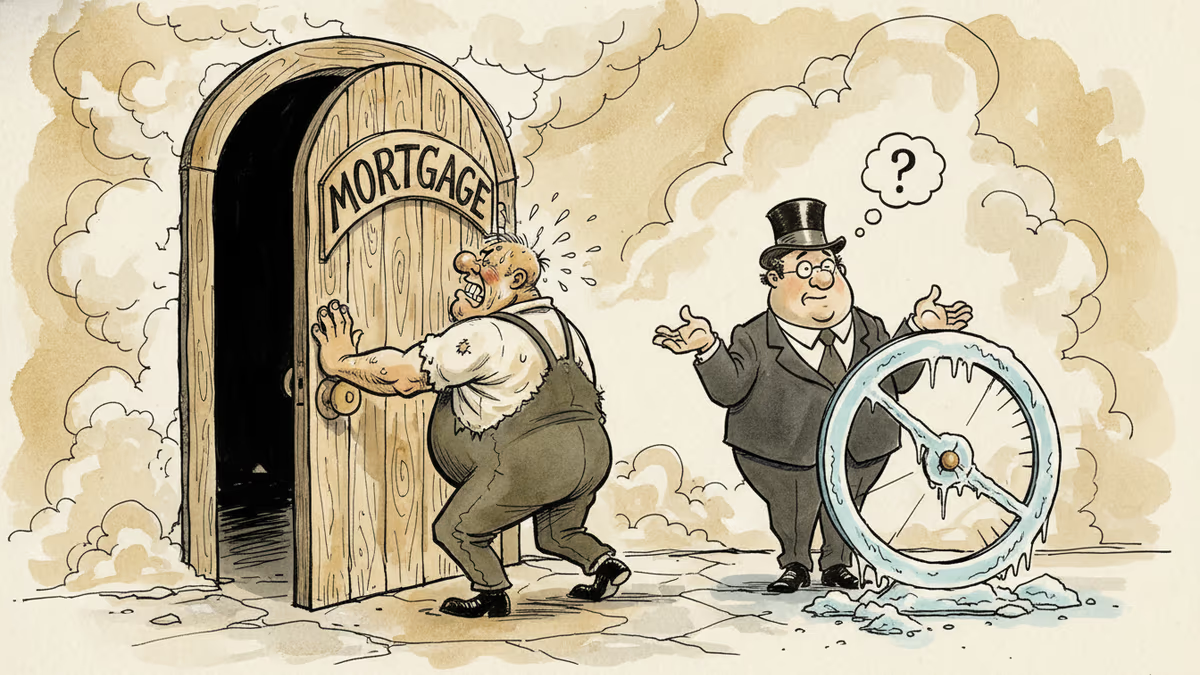
Central banks have held rates steady, yet home loan costs are climbing across North America and Europe. Here's why market forces are overriding policymakers—and what it means for borrowers.
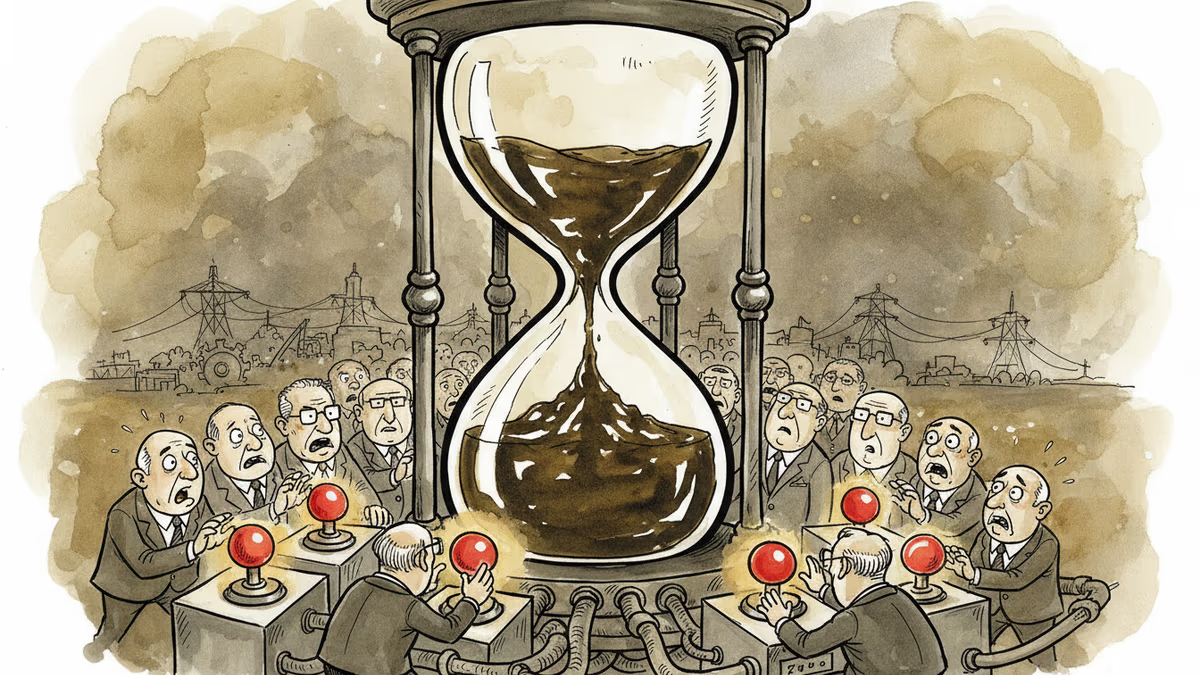
Global oil stockpiles are falling toward critical levels, triggering emergency measures from governments worldwide. What this means for energy prices, inflation, and your bottom line.
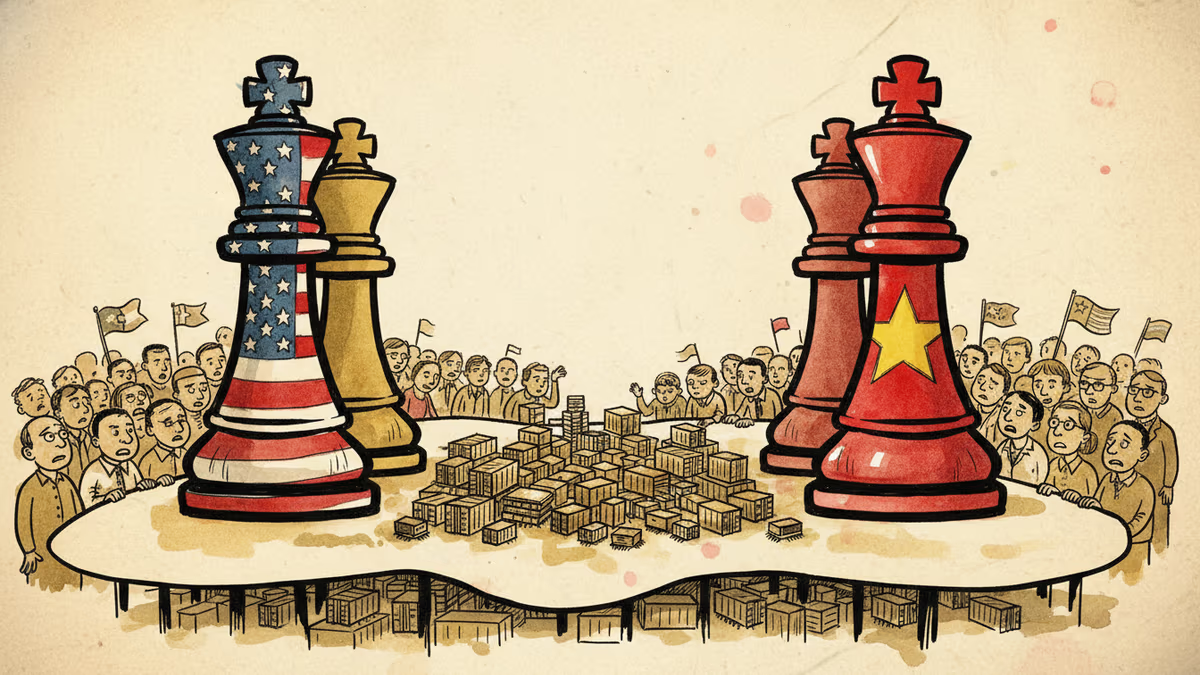
The US president lands in Beijing for a two-day summit. Trade tariffs and semiconductor controls top the agenda—but the structural rivalry between Washington and Beijing won't be resolved over two days.
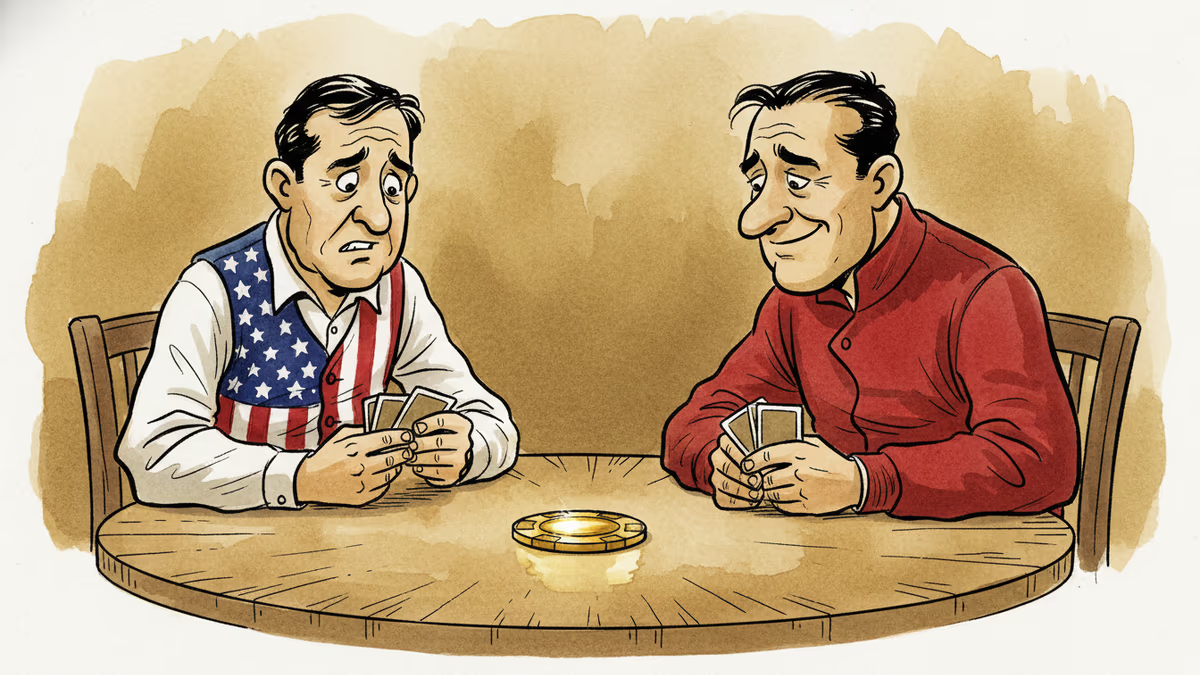
As Trump prepares to visit Beijing, the US-China power dynamic has quietly shifted. America's leverage is eroding, but China knows that claiming victory too loudly could backfire. A deep dive into the new balance of power.
Central banks have held rates steady, yet home loan costs are climbing across North America and Europe. Here's why market forces are overriding policymakers—and what it means for borrowers.
Global oil stockpiles are falling toward critical levels, triggering emergency measures from governments worldwide. What this means for energy prices, inflation, and your bottom line.
The US president lands in Beijing for a two-day summit. Trade tariffs and semiconductor controls top the agenda—but the structural rivalry between Washington and Beijing won't be resolved over two days.
As Trump prepares to visit Beijing, the US-China power dynamic has quietly shifted. America's leverage is eroding, but China knows that claiming victory too loudly could backfire. A deep dive into the new balance of power.
Thoughts
Share your thoughts on this article
Sign in to join the conversation