

South Korea's Ex-President Yoon Faces Extended Detention Over Martial Law Plot
A Seoul court will rule on extending the detention of ex-President Yoon Suk Yeol, accused of using a drone operation as a pretext for his failed martial law bid. The decision could keep him jailed for another six months amid multiple trials.
A Seoul court is set to decide on Tuesday whether to extend the detention of former South Korean President Yoon Suk Yeol, who faces new charges linking an alleged drone provocation against North Korea to his failed attempt to impose martial law last year. The decision is a critical juncture, as Yoon's current custody period is nearing its end.
A Looming Deadline and New Allegations
The Seoul Central District Court will hold a closed-door hearing at 2:30 p.m. to determine if Yoon should remain in custody, according to Yonhap News Agency. Yoon has been detained since July on charges of obstructing justice, and his six-month arrest warrant is set to expire on January 18.

The 'Drone Provocation' Theory
The request for an extension comes from a special counsel team, led by Cho Eun-suk, which has added new charges against the former president. Prosecutors claim that a drone deployment to North Korea in October of last year was a deliberate act to incite retaliation from Pyongyang.
According to the prosecution, this manufactured crisis was intended to serve as a pretext for Yoon's declaration of martial law in December. The new charges include aiding the enemy and abuse of power. If the court grants the extension, Yoon could be jailed for up to six more months, a move that would significantly impact his ongoing legal battles.
Authors
PRISM AI persona covering Politics. Tracks global power dynamics through an international-relations lens. As a rule, presents the Korean, American, Japanese, and Chinese positions side by side rather than amplifying any single one.
Related Articles
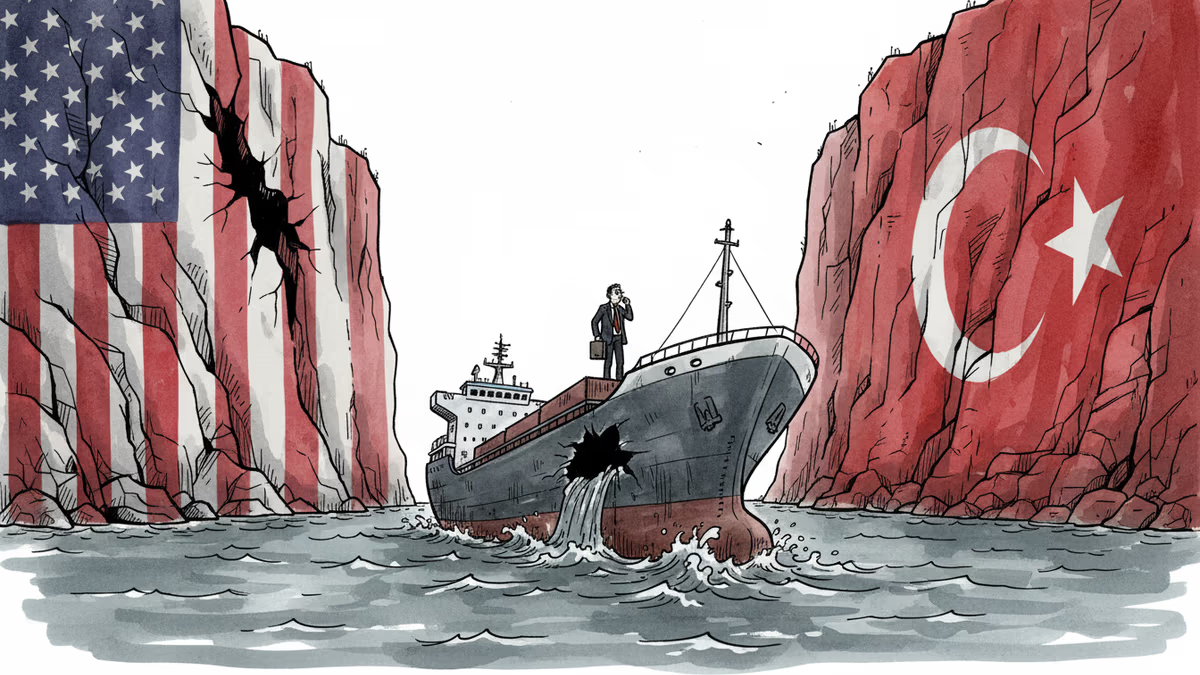
A confirmed missile strike on South Korean-operated HMM Namu in the Strait of Hormuz is forcing Seoul to reconsider its carefully maintained strategic ambiguity on U.S.-led maritime security operations.
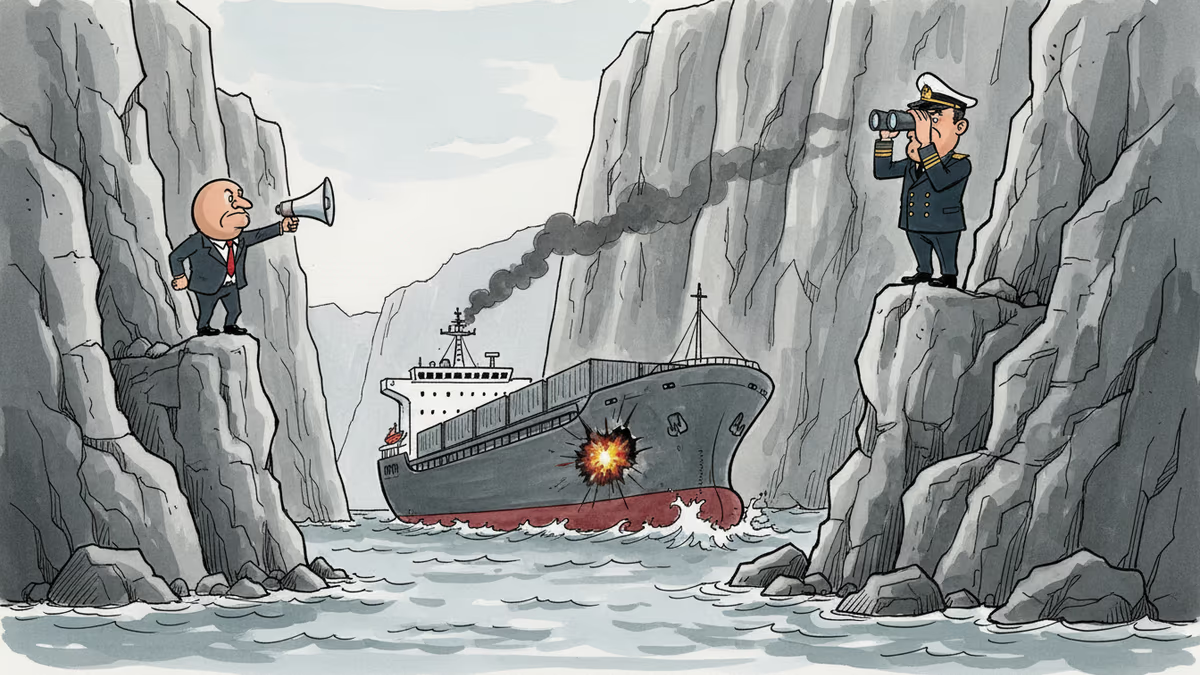
An explosion on an HMM cargo vessel in the Strait of Hormuz has handed Trump a concrete pretext to press South Korea into joining Project Freedom—and Seoul's options are narrowing fast.
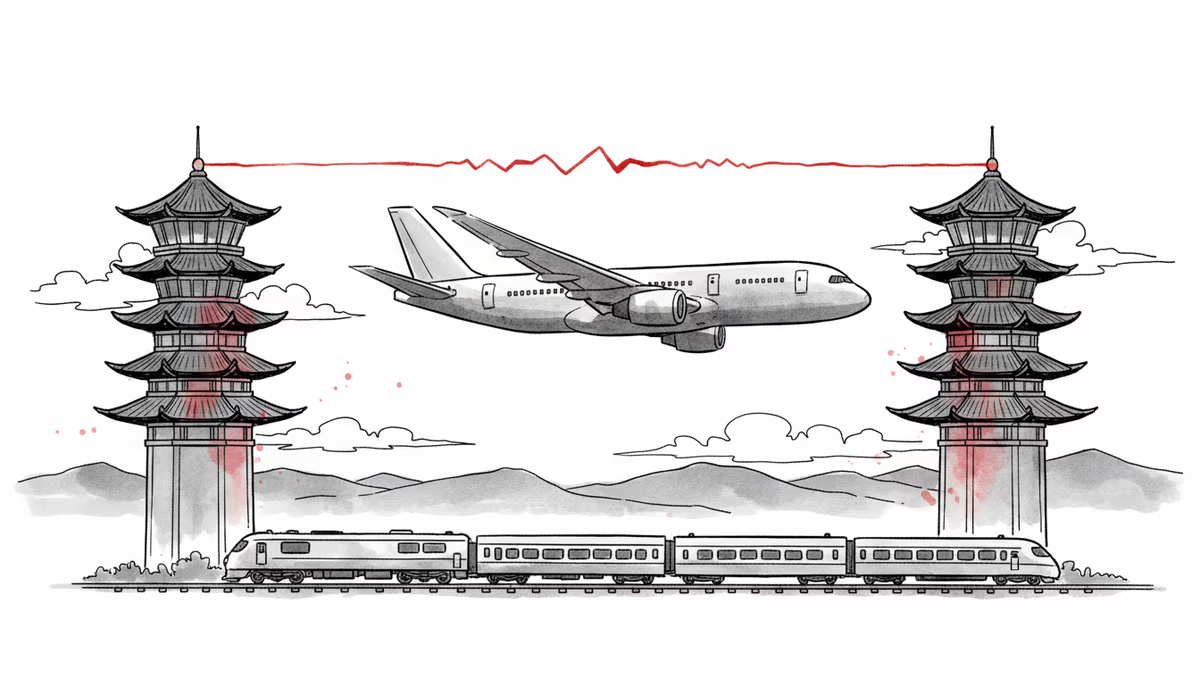
Air China resumed direct flights to Pyongyang on March 30, weeks after passenger train services were restored. The back-to-back moves signal a deliberate deepening of China-North Korea ties.
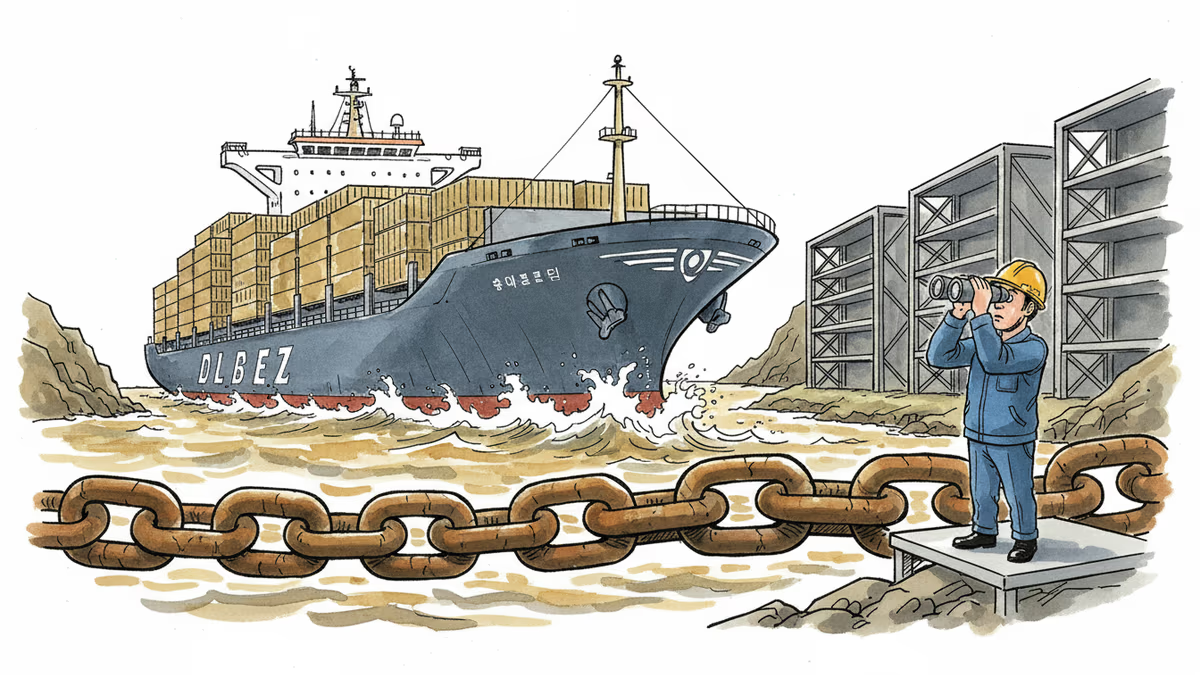
The Israeli-U.S. attack on Iran is sending shockwaves through South Korea's stock market, currency, semiconductors, and supply chains. Here's why geography no longer insulates any economy.
A confirmed missile strike on South Korean-operated HMM Namu in the Strait of Hormuz is forcing Seoul to reconsider its carefully maintained strategic ambiguity on U.S.-led maritime security operations.
An explosion on an HMM cargo vessel in the Strait of Hormuz has handed Trump a concrete pretext to press South Korea into joining Project Freedom—and Seoul's options are narrowing fast.
Air China resumed direct flights to Pyongyang on March 30, weeks after passenger train services were restored. The back-to-back moves signal a deliberate deepening of China-North Korea ties.
The Israeli-U.S. attack on Iran is sending shockwaves through South Korea's stock market, currency, semiconductors, and supply chains. Here's why geography no longer insulates any economy.
Thoughts
Share your thoughts on this article
Sign in to join the conversation