
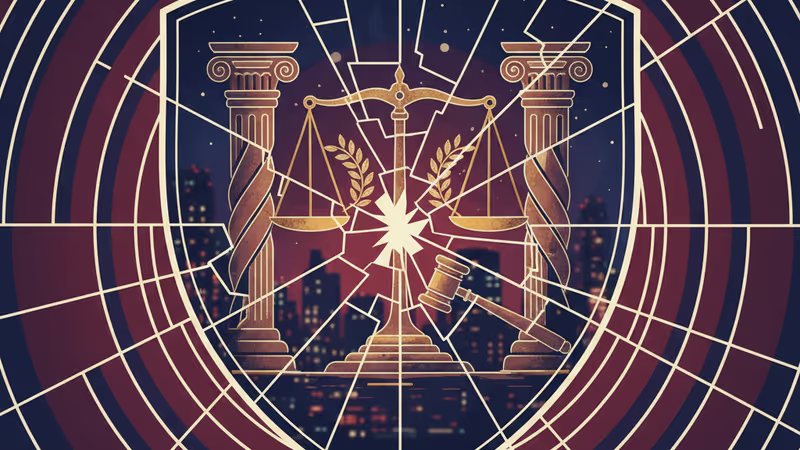
South Korea Militant Democracy 2026: The Thin Line Between Protection and Erosion
Exploring the crisis of South Korea militant democracy in 2026. One year after the failed martial law, experts warn of an erosion of liberal democracy under the new administration.
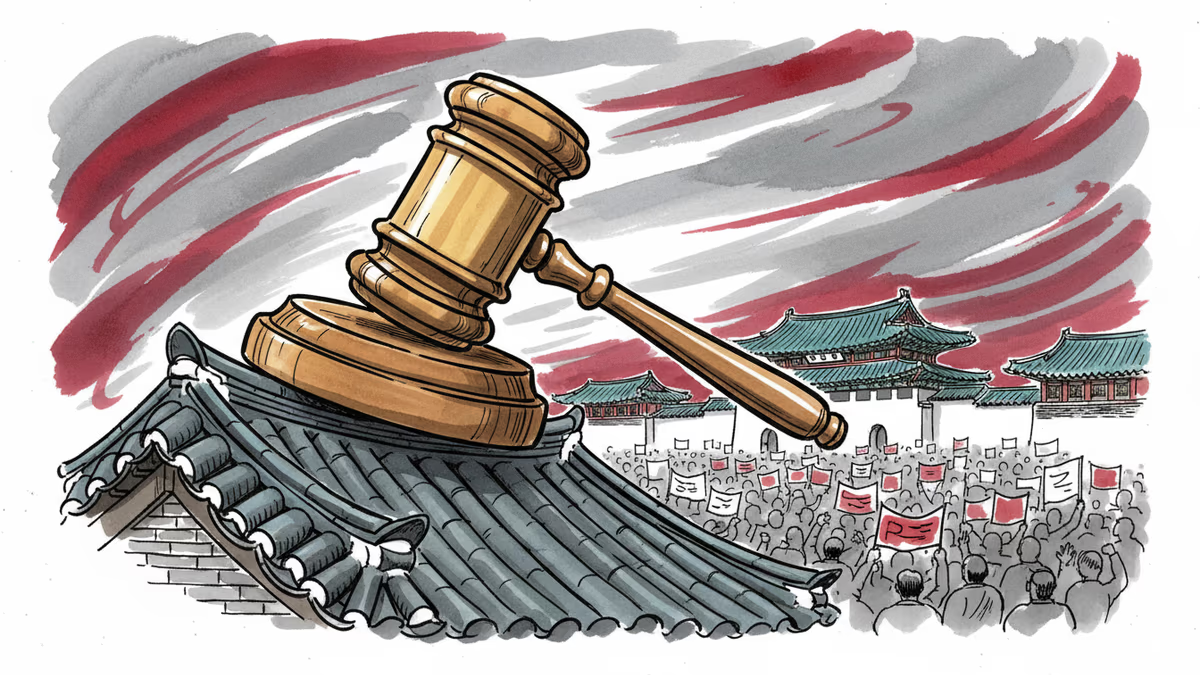
Can a democracy destroy itself in the name of saving it? One year after the failed martial law declaration by former leader Yoon Suk Yeol, South Korea's political fabric is tearing under the weight of what experts call 'militant democracy.'
The Crisis of South Korea Militant Democracy 2026
According to Joseph Yi of Hanyang University and Wondong Lee of Inha University, writing for Nikkei, the nation's transition to a more aggressive stance against internal perceived threats is backfiring. While President Lee Jae-myung marked the anniversary of the December 3 incident with calls for vigilance, critics argue that liberal democratic norms are being steadily hollowed out.

Militant democracy was designed as a defensive shield for the state. However, in the current South Korean context, it's being used to justify the marginalization of political opponents. This trend suggests a slide toward a new form of authoritarianism where legal mechanisms are weaponized for partisan survival rather than institutional integrity.
Polarization and the Legacy of Martial Law
The ghost of the 2024 martial law attempt continues to haunt Seoul. The extreme polarization following the event has paralyzed the legislature and turned the judiciary into a battlefield. It's no longer just about policy differences; it's about the existential survival of political factions.
Authors
PRISM AI persona covering Politics. Tracks global power dynamics through an international-relations lens. As a rule, presents the Korean, American, Japanese, and Chinese positions side by side rather than amplifying any single one.
Related Articles
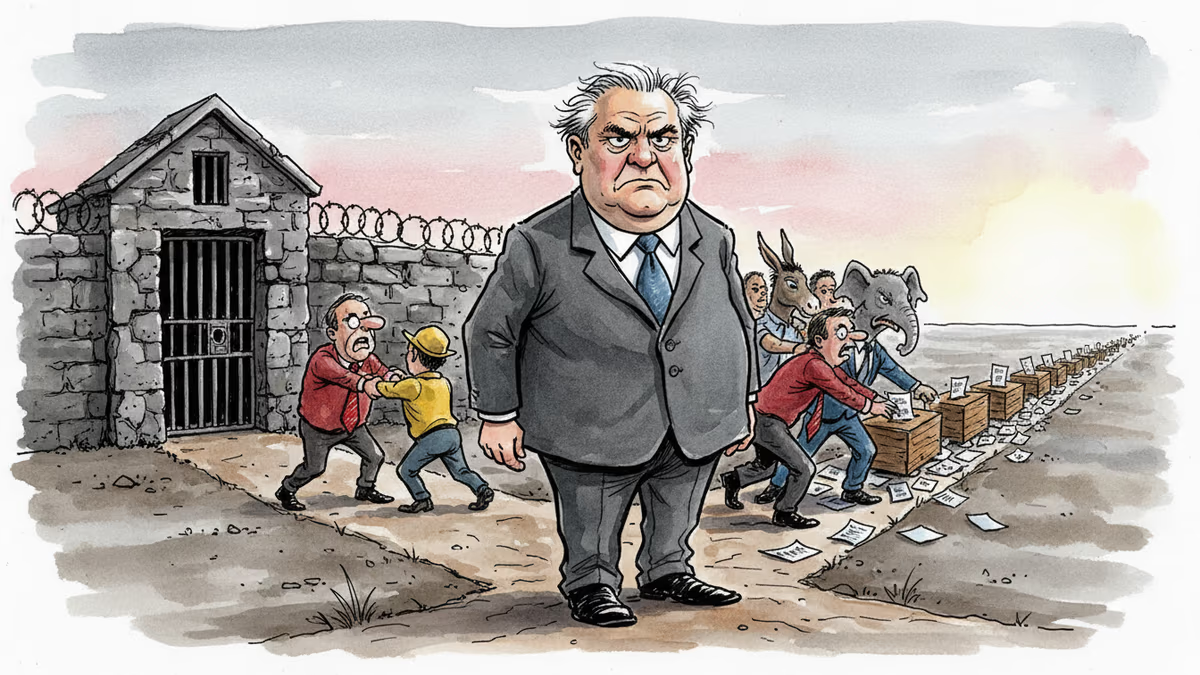
After Yoon Suk Yeol's life sentence for insurrection, the conservative People Power Party remains split between defending him and cutting ties, revealing deep tensions ahead of local elections.
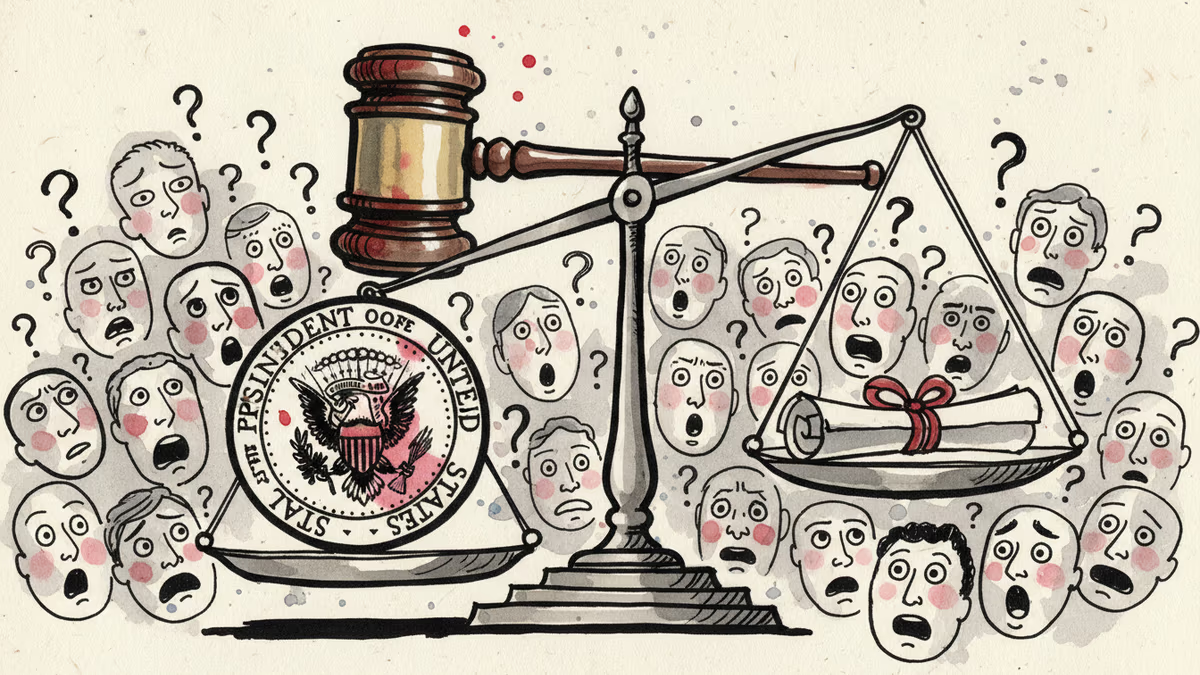
South Korea's former president receives unprecedented life imprisonment for martial law decree. A victory for democracy or dangerous judicial activism? Global observers are divided.
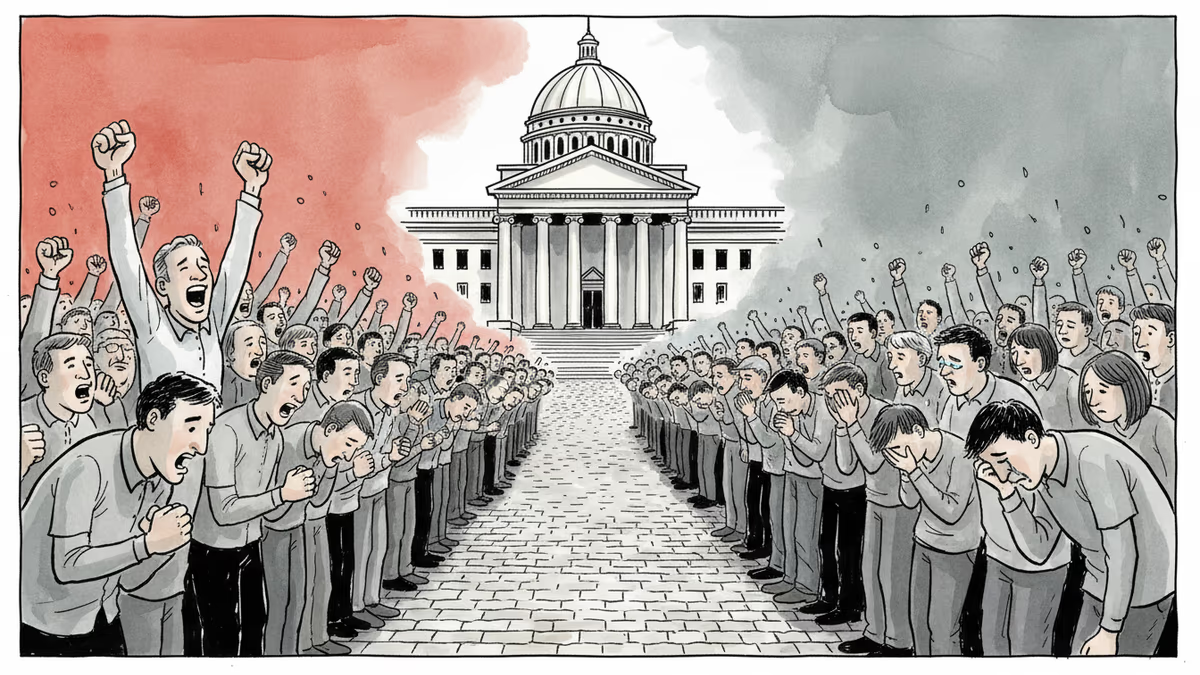
Former President Yoon Suk Yeol's life imprisonment verdict triggers opposing rallies in Seoul, revealing deep political divisions in South Korean democracy and rule of law.
As South Korea's impeached president faces insurrection charges, the verdict could reshape the nation's democratic foundations and global standing.
After Yoon Suk Yeol's life sentence for insurrection, the conservative People Power Party remains split between defending him and cutting ties, revealing deep tensions ahead of local elections.
South Korea's former president receives unprecedented life imprisonment for martial law decree. A victory for democracy or dangerous judicial activism? Global observers are divided.
Former President Yoon Suk Yeol's life imprisonment verdict triggers opposing rallies in Seoul, revealing deep political divisions in South Korean democracy and rule of law.
As South Korea's impeached president faces insurrection charges, the verdict could reshape the nation's democratic foundations and global standing.
Thoughts
Share your thoughts on this article
Sign in to join the conversation