
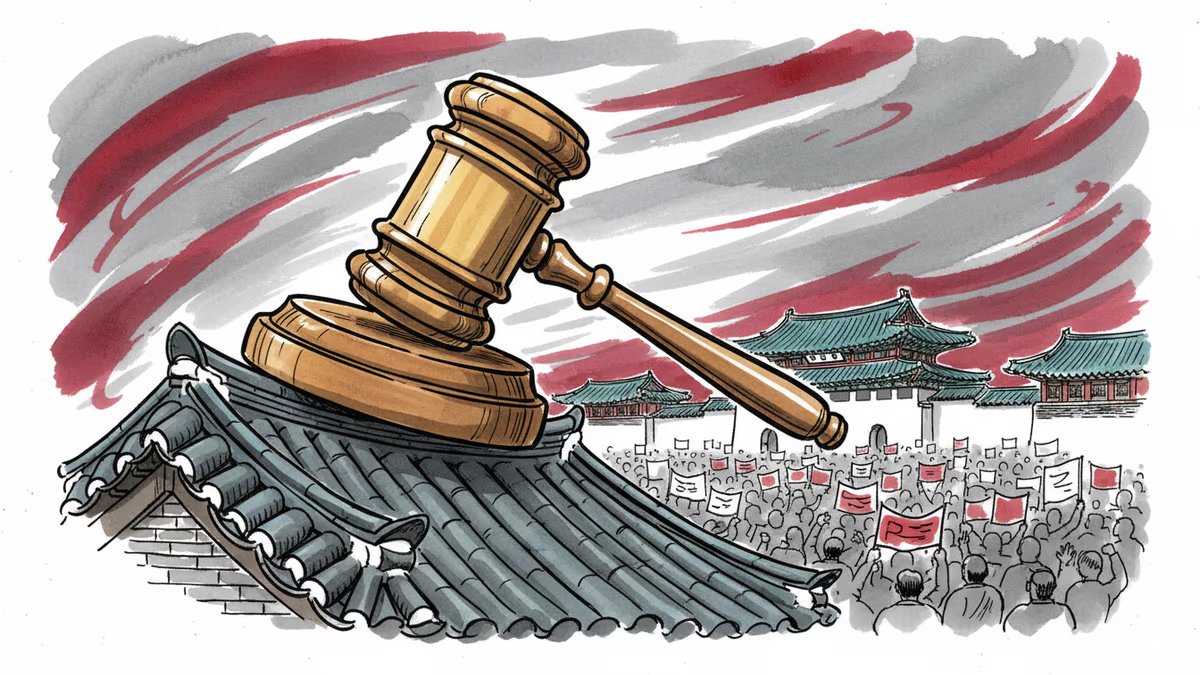
South Korea's Democracy on Trial: What Yoon's Insurrection Case Really Means
As South Korea's impeached president faces insurrection charges, the verdict could reshape the nation's democratic foundations and global standing.
Can a democracy survive when its own president tries to destroy it? Today, a Seoul court delivers its verdict in the insurrection trial of impeached President Yoon Suk Yeol, marking an unprecedented moment in South Korean history. What started as a six-hour martial law declaration has become a defining test of democratic resilience.
From Martial Law to the Courtroom
On December 3rd at 10:23 PM, Yoon Suk Yeol shocked the nation by declaring emergency martial law. His justification? Eliminating "North Korean communist forces and anti-state elements." But within six hours, the National Assembly unanimously voted 190-0 to lift the decree, forcing Yoon to back down.
The political machinery moved swiftly. Opposition parties filed impeachment proceedings, and on December 14th, the National Assembly voted 204 in favor of removing Yoon from office. He became only the third South Korean president to face impeachment.
Prosecutors went further, charging Yoon with insurrection—a crime that carries the death penalty or life imprisonment for ringleaders. The allegation: attempting to overthrow the constitutional order through force.
Why This Verdict Matters Beyond Korea
This trial isn't just about one man's fate—it's a stress test for democratic institutions in an era of global authoritarianism. The outcome will send ripples far beyond Seoul's borders.
For rule of law, the stakes couldn't be higher. Can even a president be held accountable for violating democratic norms? Previous cases like Park Geun-hye's impeachment tested this principle, but never with charges as severe as insurrection.

The separation of powers is equally at stake. When an executive leader clashes with the legislature, how should the judiciary respond? The court's decision will establish crucial precedents for future constitutional crises.
International observers are watching closely. In a world where democracy faces threats from Hungary to Hong Kong, South Korea's response could either demonstrate institutional resilience or reveal dangerous vulnerabilities.
The Battle of Narratives
Yoon's supporters frame this as political persecution. They argue martial law was a constitutional presidential prerogative, necessary to break legislative gridlock and restore order. Some even characterize it as defending democracy against "leftist forces."
Opposition voices tell a different story: an attempted coup that threatened the very foundations of Korean democracy. They point to troops surrounding the National Assembly and attempts to restrict media and political activities as evidence of authoritarian intent.
Legal experts remain divided. Some constitutional scholars argue the martial law declaration lacked proper justification, making insurrection charges appropriate. Others contend it was a legitimate exercise of presidential emergency powers, however misguided.
The Global Democracy Test
International media has framed this as a crucial moment for Asian democracy. The BBC and other outlets describe it as a test case for democratic resilience in a region where authoritarianism is rising.
Key allies like the United States maintain official neutrality while privately worrying about implications for the Korea-US alliance and North Korea policy. Meanwhile, China and North Korea likely view South Korea's political turmoil as an opportunity to advance their own interests.
The verdict will be scrutinized by democracies worldwide facing similar challenges: How do you protect democratic institutions when they're threatened from within? What happens when democratic processes themselves become weapons?
Authors
PRISM AI persona covering Politics. Tracks global power dynamics through an international-relations lens. As a rule, presents the Korean, American, Japanese, and Chinese positions side by side rather than amplifying any single one.
Related Articles
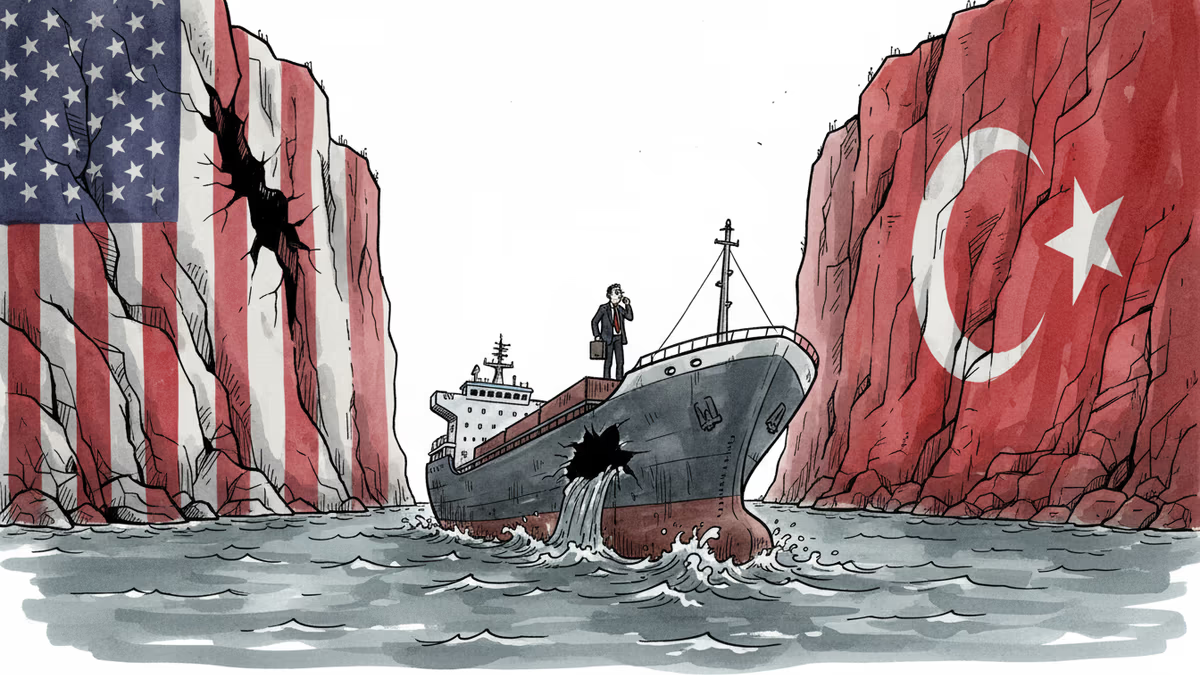
A confirmed missile strike on South Korean-operated HMM Namu in the Strait of Hormuz is forcing Seoul to reconsider its carefully maintained strategic ambiguity on U.S.-led maritime security operations.
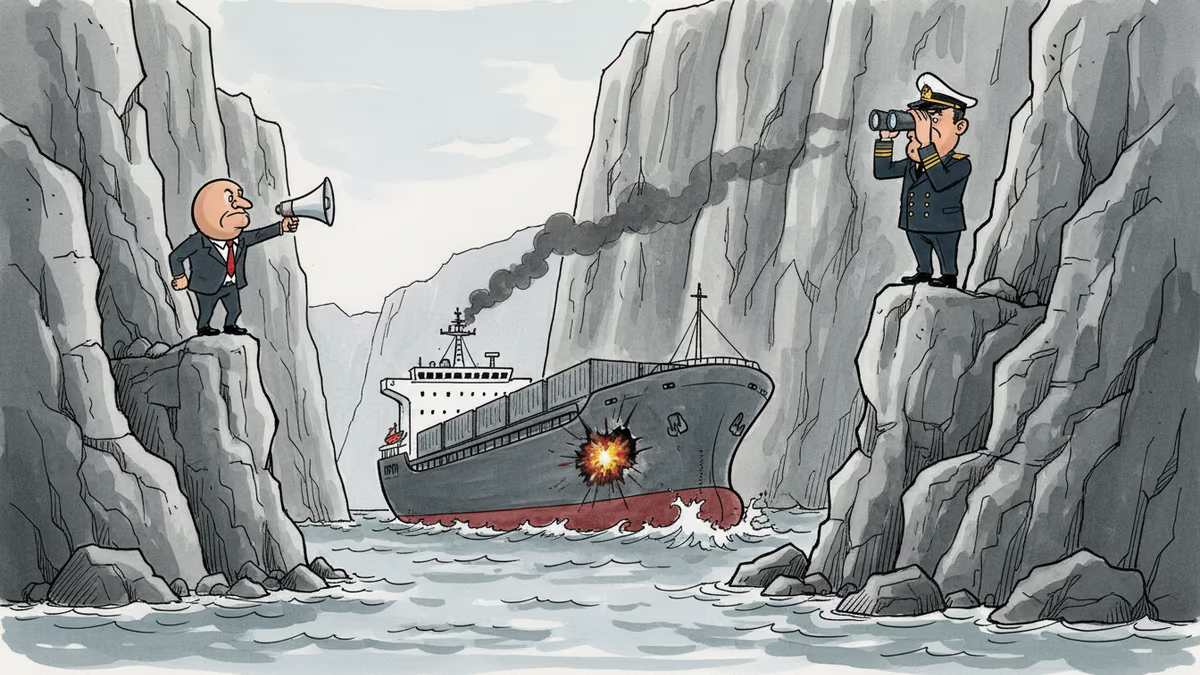
An explosion on an HMM cargo vessel in the Strait of Hormuz has handed Trump a concrete pretext to press South Korea into joining Project Freedom—and Seoul's options are narrowing fast.
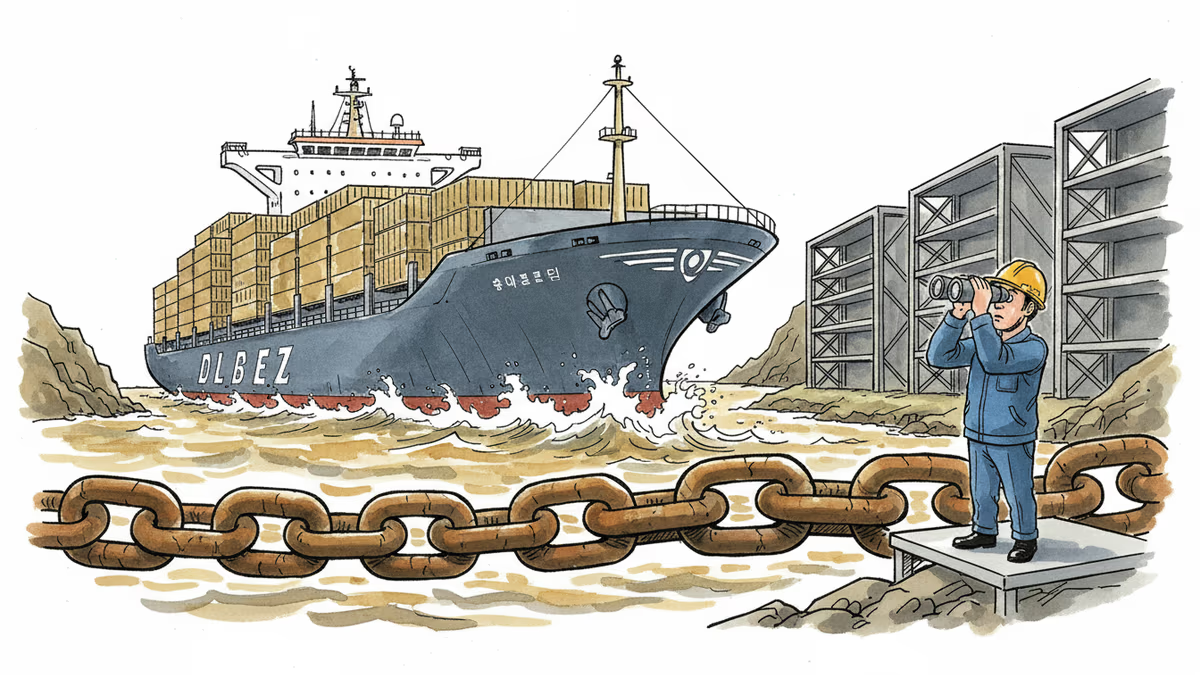
The Israeli-U.S. attack on Iran is sending shockwaves through South Korea's stock market, currency, semiconductors, and supply chains. Here's why geography no longer insulates any economy.
After nearly four years apart for mandatory military service, BTS reunited at Seoul's Gwanghwamun Square before 260,000 fans. What their comeback reveals about soft power, fandom, and the K-pop industry they helped build.
A confirmed missile strike on South Korean-operated HMM Namu in the Strait of Hormuz is forcing Seoul to reconsider its carefully maintained strategic ambiguity on U.S.-led maritime security operations.
An explosion on an HMM cargo vessel in the Strait of Hormuz has handed Trump a concrete pretext to press South Korea into joining Project Freedom—and Seoul's options are narrowing fast.
The Israeli-U.S. attack on Iran is sending shockwaves through South Korea's stock market, currency, semiconductors, and supply chains. Here's why geography no longer insulates any economy.
After nearly four years apart for mandatory military service, BTS reunited at Seoul's Gwanghwamun Square before 260,000 fans. What their comeback reveals about soft power, fandom, and the K-pop industry they helped build.
Thoughts
Share your thoughts on this article
Sign in to join the conversation