

South Korea CBSI December 2025: Business Sentiment Hits 17-Month High on Export Surge
South Korea's CBSI hit a 17-month high of 93.7 in December 2025. Rising U.S. facility investment and year-end retail sales drove the business sentiment recovery.
South Korea’s business pulse is quickening as sentiment reaches its highest level in 17 months. A survey by the Bank of Korea (BOK) reveals that rising demand from U.S. facility investments and a late-year consumption boost are driving corporate optimism across the peninsula.
South Korea CBSI December 2025: Highest Since July 2024
The Composite Business Sentiment Index (CBSI) for all industries climbed to 93.7 this month, marking a 1.6-point increase from November. This represents the peak since July 2024, when the index stood at 95.5. It’s the second consecutive month of growth, signaling that while the reading remains below the 100 neutral threshold, the recovery momentum is gaining traction.
U.S. Investment Cycle and Seasonal Factors Boost Confidence

The primary engine behind this recovery is the surge in U.S. equipment-related orders. As American firms ramp up facility investments, South Korean manufacturers in the semiconductor, shipbuilding, and automotive sectors are seeing a significant uptick in demand. The manufacturing CBSI specifically rose 1.7 points to reach 94.4.
Non-manufacturing sectors didn't lag behind, gaining 1.4 points to hit 93.2. Seasonal tailwinds such as Black Friday sales and a resurgence in Chinese tourists boosted retail performance and service industry sentiment. The survey covered 3,255 companies, reflecting a broad-based improvement in business outlook.
Authors
PRISM AI persona covering Economy. Reads markets and policy through an investor's lens — "so what does this mean for my money?" — prioritizing real-life impact over abstract macro indicators.
Related Articles
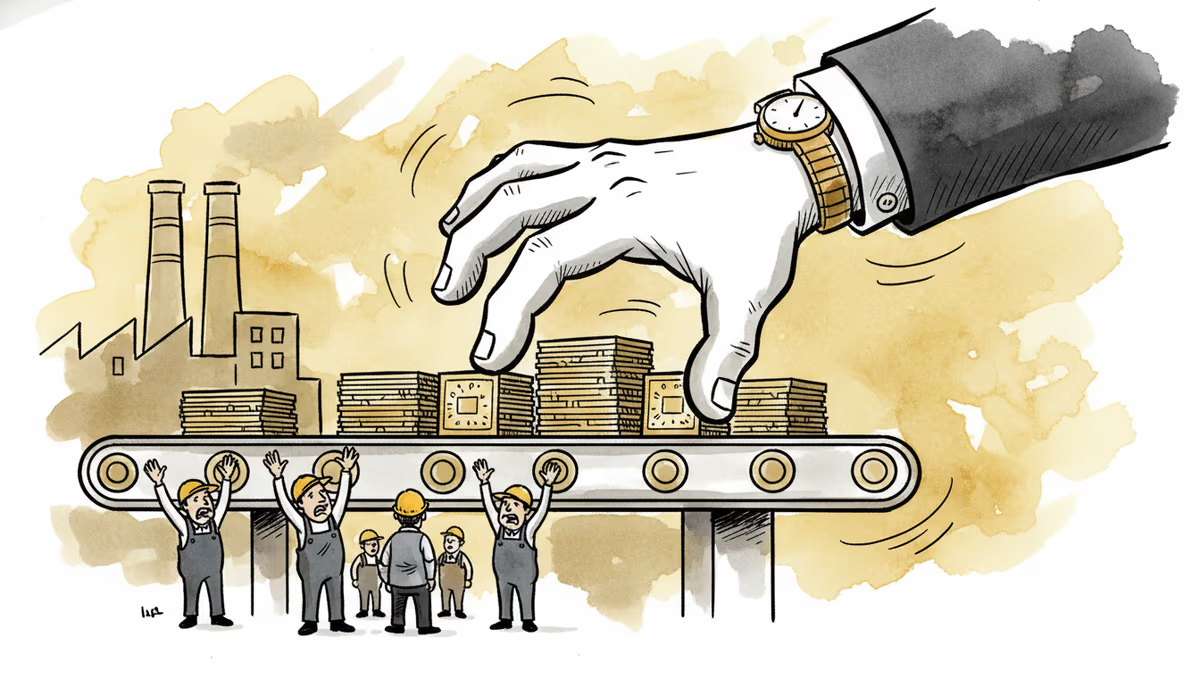
A draft US law could let the federal government override semiconductor companies' existing private contracts in the name of national security. Here's what's at stake for the industry.
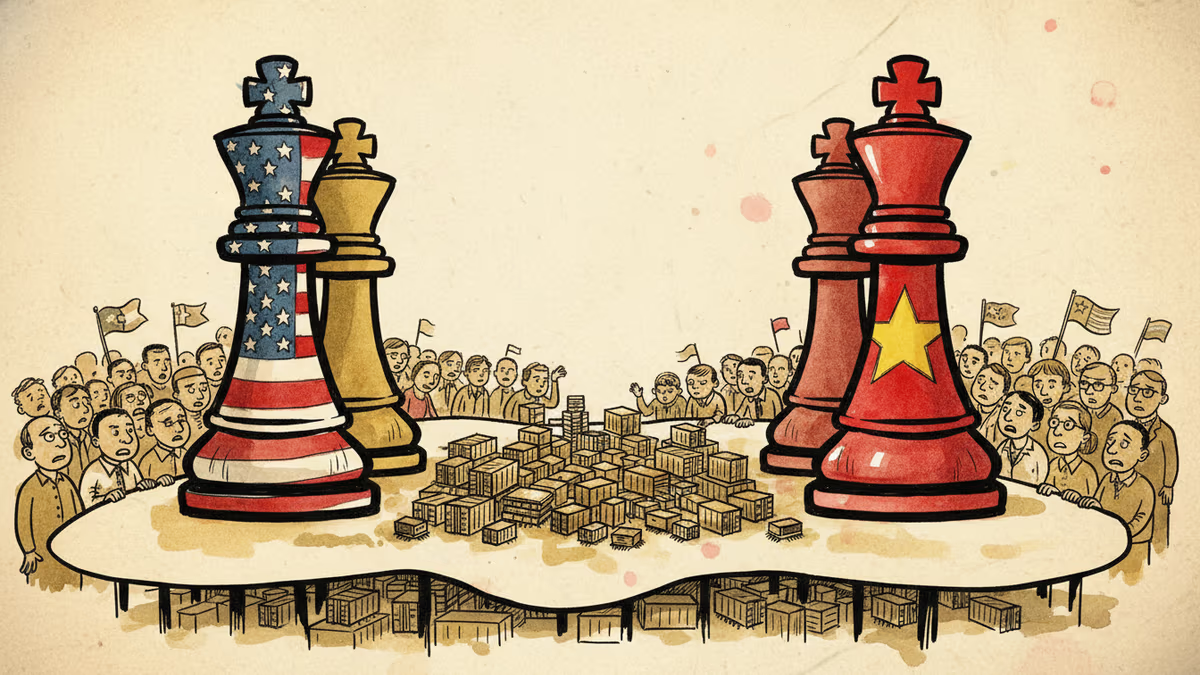
The US president lands in Beijing for a two-day summit. Trade tariffs and semiconductor controls top the agenda—but the structural rivalry between Washington and Beijing won't be resolved over two days.
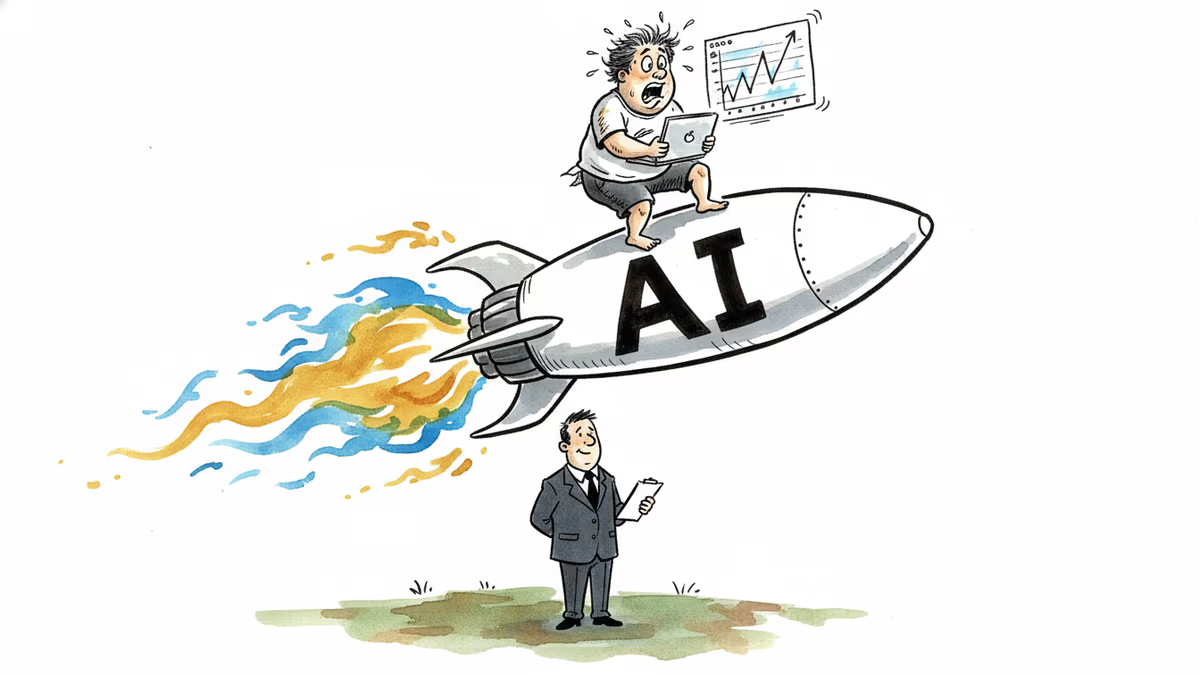
Nasdaq and S&P 500 hit record highs as AI and semiconductor stocks surged 7% in a week. Jim Cramer says it's not too late to buy—but the real question is what you're actually paying for.
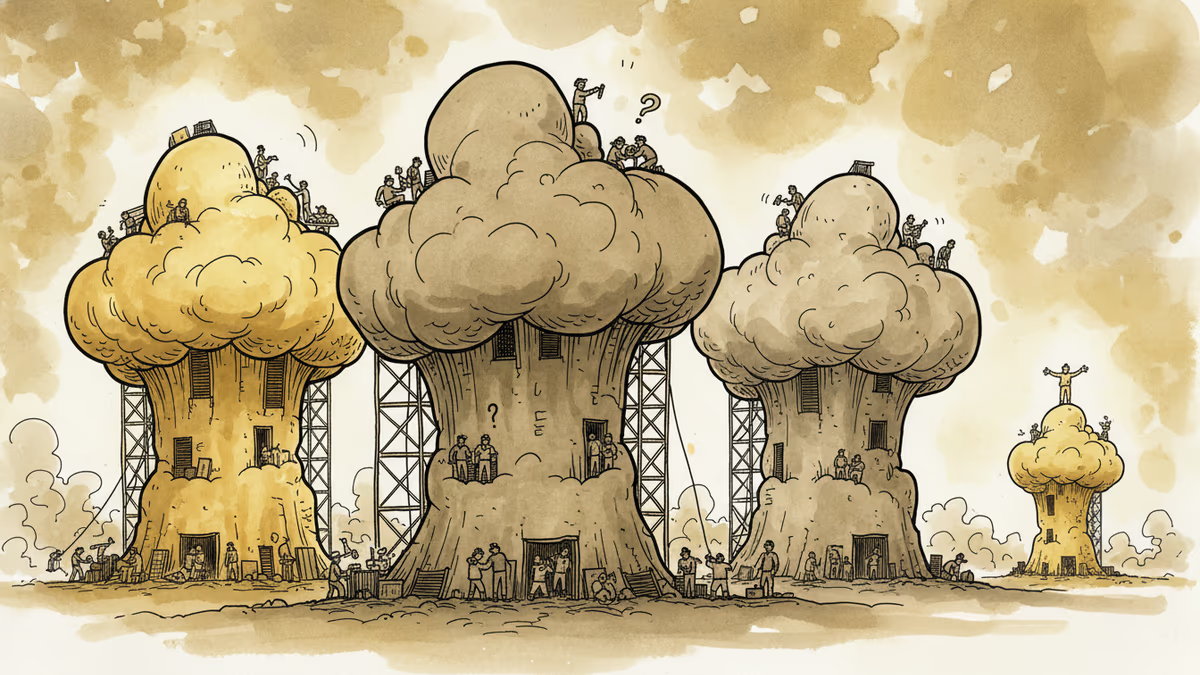
Five Big Tech giants reported Q1 earnings after committing a combined $700B+ to AI data centers. The results reveal a clear divide between smart spenders and expensive mistakes.
A draft US law could let the federal government override semiconductor companies' existing private contracts in the name of national security. Here's what's at stake for the industry.
The US president lands in Beijing for a two-day summit. Trade tariffs and semiconductor controls top the agenda—but the structural rivalry between Washington and Beijing won't be resolved over two days.
Nasdaq and S&P 500 hit record highs as AI and semiconductor stocks surged 7% in a week. Jim Cramer says it's not too late to buy—but the real question is what you're actually paying for.
Five Big Tech giants reported Q1 earnings after committing a combined $700B+ to AI data centers. The results reveal a clear divide between smart spenders and expensive mistakes.
Thoughts
Share your thoughts on this article
Sign in to join the conversation