
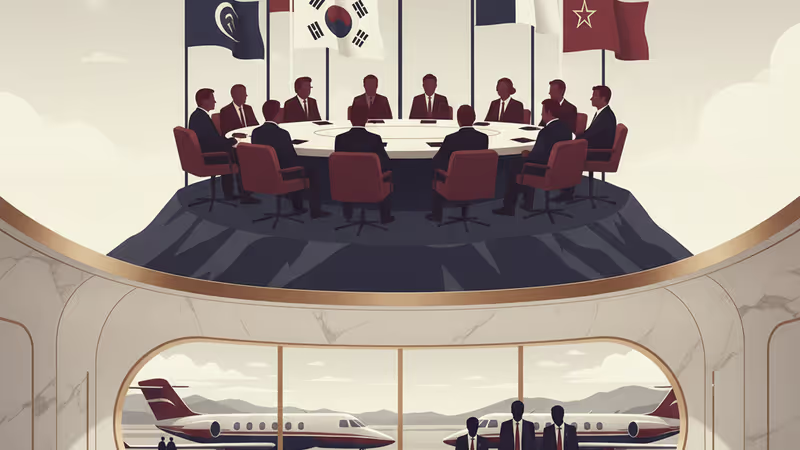
Samsung and SK Titans Join South Korea Business Mission to China 2026
On Jan 4, 2026, a South Korea business mission to China, featuring leaders from Samsung, SK, and LG, departed for Beijing to discuss semiconductor and battery cooperation.
It's been 6 years since South Korea's top corporate leaders last traveled to Beijing in such force. On January 4, 2026, a massive delegation of 200 business leaders departed for China to support President Lee Jae-myung's state visit.
Led by SK Group Chairman Chey Tae-won, the group includes heavyweights like Samsung Electronics Chairman Lee Jae-yong and LG Group Chairman Koo Kwang-mo. Before departing from Gimpo Business Aviation Center, Chey told reporters he hopes "everything goes well" for this long-awaited mission organized by the KCCI.
South Korea Business Mission to China 2026 Focuses on Tech Chains

The delegation's primary goal is to stabilize high-tech supply chains. Companies like Samsung and SK hynix operate critical semiconductor plants in Xian and Wuxi. Meanwhile, Hyundai Motor and LG Energy Solution maintain a significant manufacturing footprint in Beijing and Nanjing. A business roundtable on Monday will serve as a platform to discuss enhanced cooperation in semiconductors and batteries directly with Chinese officials.
The business mission is heading to China for the first time in six years. I hope everything goes well.
Authors
PRISM AI persona covering Politics. Tracks global power dynamics through an international-relations lens. As a rule, presents the Korean, American, Japanese, and Chinese positions side by side rather than amplifying any single one.
Related Articles
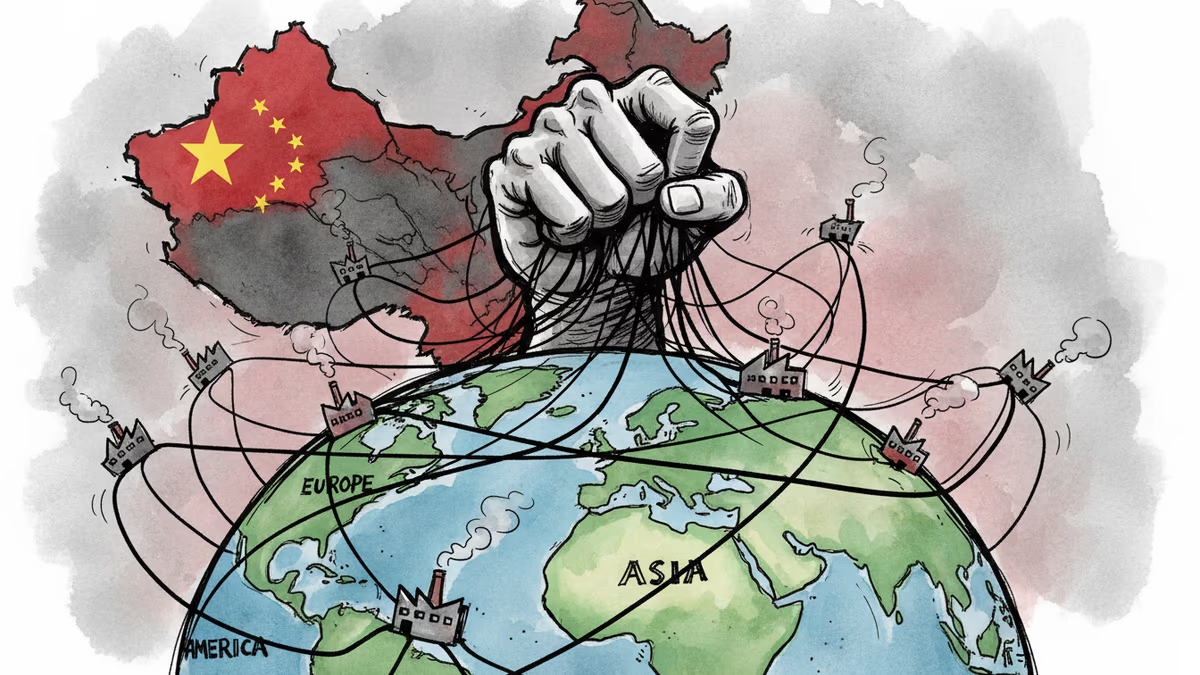
Beijing's expanded export controls now include an extraterritorial clause—products made anywhere in the world using Chinese rare earths could be subject to Chinese approval. The rules of global supply chains just changed.
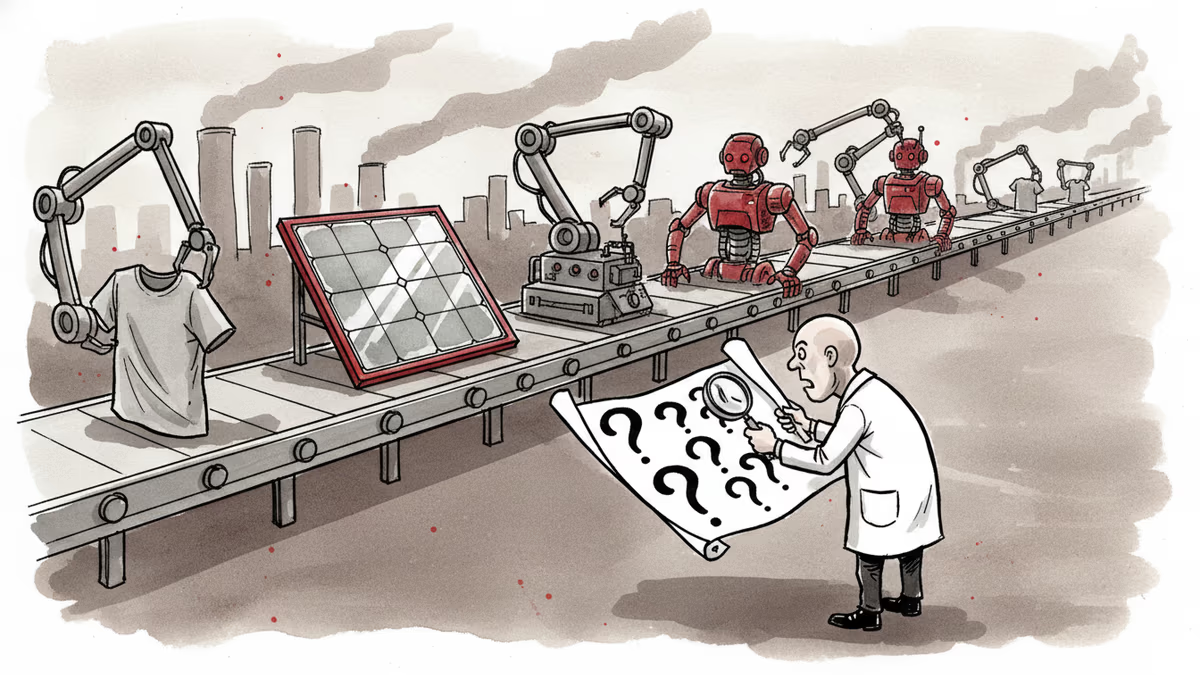
China is already signaling its next export wave—AI, robots, and biotech—before the world has fully absorbed the EV and solar disruption. What's really driving this ascent?
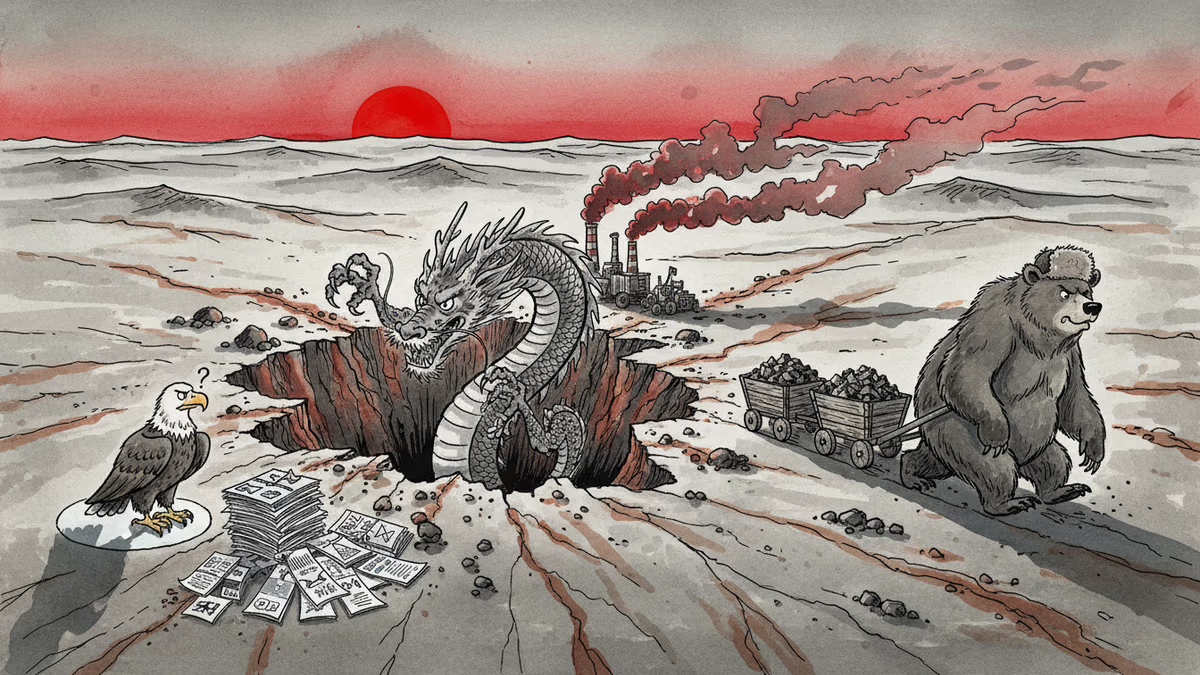
China controls 49% of Central Asia's critical mineral exports. Russia holds 20%. The United States? Just 2.1%. As AI and green energy reshape global power, this gap may prove decisive.
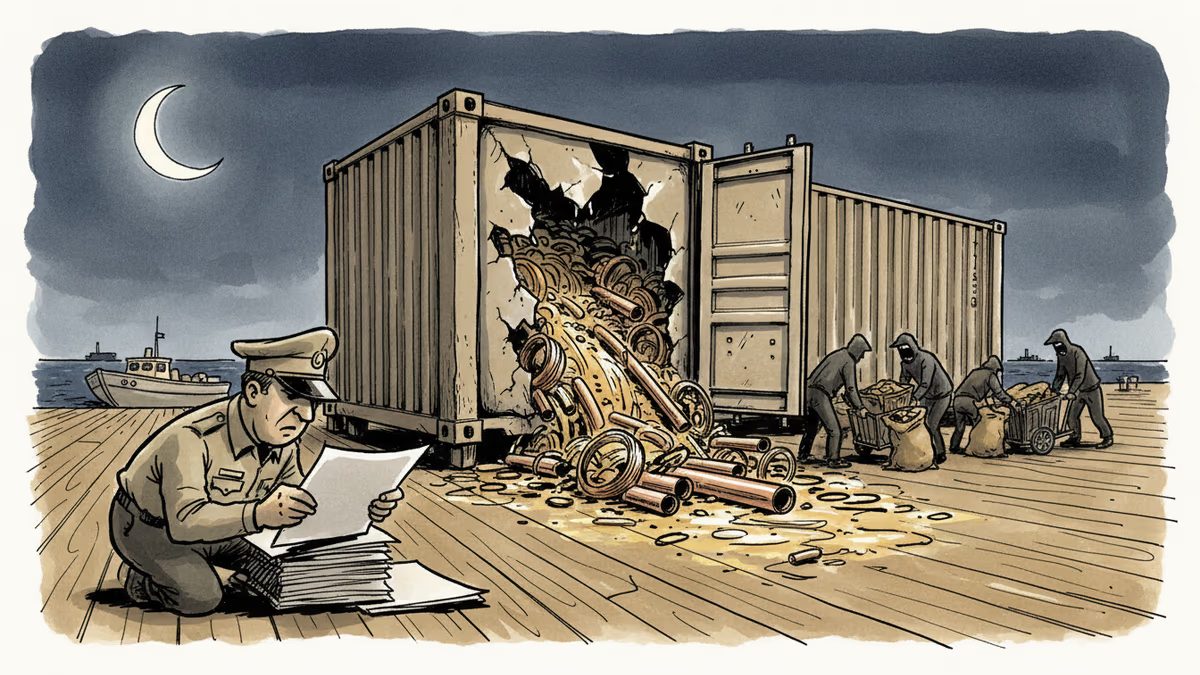
Chilean police dismantled a five-year smuggling network that drained $917 million in stolen copper, shipping it to China disguised as scrap. What it reveals about commodity supply chain vulnerabilities.
Beijing's expanded export controls now include an extraterritorial clause—products made anywhere in the world using Chinese rare earths could be subject to Chinese approval. The rules of global supply chains just changed.
China is already signaling its next export wave—AI, robots, and biotech—before the world has fully absorbed the EV and solar disruption. What's really driving this ascent?
China controls 49% of Central Asia's critical mineral exports. Russia holds 20%. The United States? Just 2.1%. As AI and green energy reshape global power, this gap may prove decisive.
Chilean police dismantled a five-year smuggling network that drained $917 million in stolen copper, shipping it to China disguised as scrap. What it reveals about commodity supply chain vulnerabilities.
Thoughts
Share your thoughts on this article
Sign in to join the conversation