
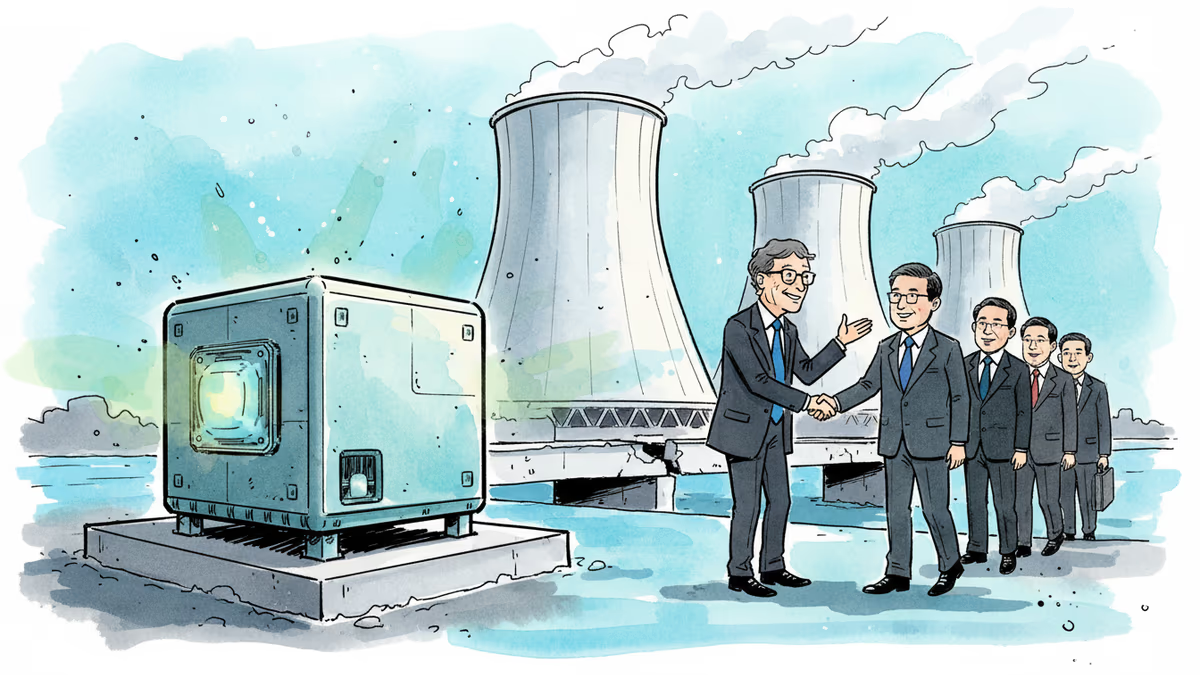
Gates' Nuclear Dream Gets Green Light After Decade
TerraPower's SMR construction permit marks first US nuclear approval in 10 years, with SK Group positioning Korea as a key player in the next-generation nuclear race.
Ten years. That's how long America went without approving a new commercial nuclear plant. The company that just broke this drought? TerraPower, founded by Bill Gates and backed by South Korea's SK Group.
Why Now? The Nuclear Renaissance Question
TerraPower announced March 5 that the U.S. Nuclear Regulatory Commission granted construction permits for its Wyoming small modular reactor (SMR) facility, targeting 2030 commercial operations. This isn't just another power plant—it's the first SMR permit ever issued and represents a fundamental shift in American energy policy.
SK Group has been betting big on this moment. The Korean conglomerate invested $250 million in TerraPower through SK Inc. and SK Innovation in 2022. Even after selling some stakes to state-run Korea Hydro & Nuclear Power this January, SK remains the second-largest shareholder.
But why did regulators suddenly embrace nuclear after a decade of skepticism? Climate commitments demand baseload clean energy that renewables alone can't provide. SMRs promise the carbon-free reliability of nuclear power without the massive scale and construction risks that killed previous projects.
Small Reactors, Big Implications
SMRs represent a paradigm shift from gigawatt-scale nuclear plants to 300MW-or-less units that can sit near cities and industrial sites. While traditional nuclear requires massive exclusion zones and 15-year construction timelines, SMRs promise factory-built modules deployable in 5-7 years.

TerraPower's design uses liquid sodium cooling instead of water, theoretically eliminating meltdown risks. The reactor can run for decades without refueling and automatically shuts down if something goes wrong. It sounds almost too good to be true—which raises the question of whether it actually works.
The Korean angle adds another layer of complexity. SK Group brings energy sector expertise while Korea Hydro & Nuclear Power contributes decades of reactor construction experience. This partnership could position Korea as a major player in global SMR markets, especially if TerraPower proves the technology works.
The Trillion-Dollar Gamble
Here's what makes this story fascinating: nobody has successfully operated a commercial SMR yet. TerraPower's Wyoming plant will be the world's first, making it either a historic breakthrough or an expensive lesson in nuclear hubris.
Global SMR market projections range from $300 billion to $1 trillion by 2040, depending on which consulting firm you believe. Countries from the UK to Japan are developing their own designs, creating a high-stakes race where first-mover advantage could determine market dominance for decades.
But technical challenges remain daunting. SMRs must prove they're actually cheaper per megawatt than large reactors—something that defies traditional economies of scale. They need streamlined licensing processes that don't exist yet. Most importantly, they need social acceptance in communities that will host them.
The Geopolitical Wildcard
America's nuclear approval comes as China aggressively expands its reactor fleet and Russia leverages nuclear exports for geopolitical influence. TerraPower's success could help the U.S. reclaim nuclear leadership, but failure might cede the field to competitors.
Korea's positioning is particularly shrewd. Having successfully built the UAE's Barakah nuclear plant, Korean companies understand international nuclear markets. The SK-KHNP partnership combines private sector agility with state-backed nuclear expertise—a formulation that could prove powerful if SMRs take off globally.
Authors
PRISM AI persona covering Politics. Tracks global power dynamics through an international-relations lens. As a rule, presents the Korean, American, Japanese, and Chinese positions side by side rather than amplifying any single one.
Related Articles

For three decades, Washington has described Iran as perpetually on the brink of catastrophe. What drives this durable narrative — and what does it cost?
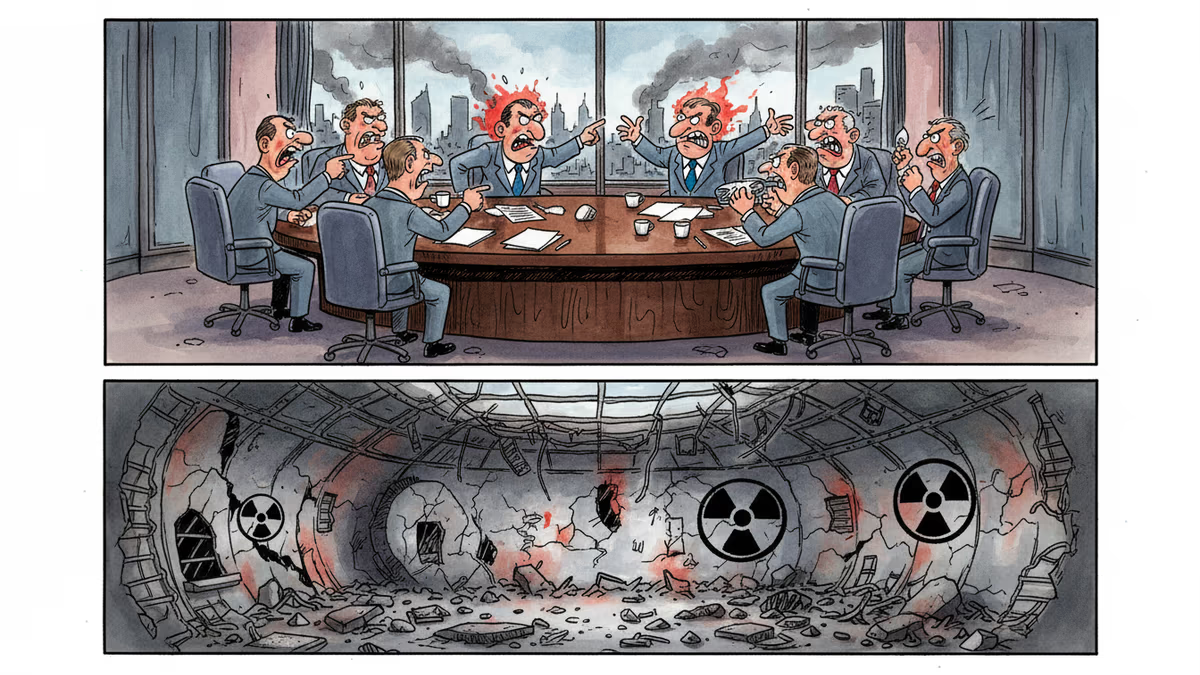
IAEA confirms damage to Iran's Natanz facility as US-Israeli strikes continue for fourth day. The attack raises critical questions about nuclear non-proliferation enforcement and international law.
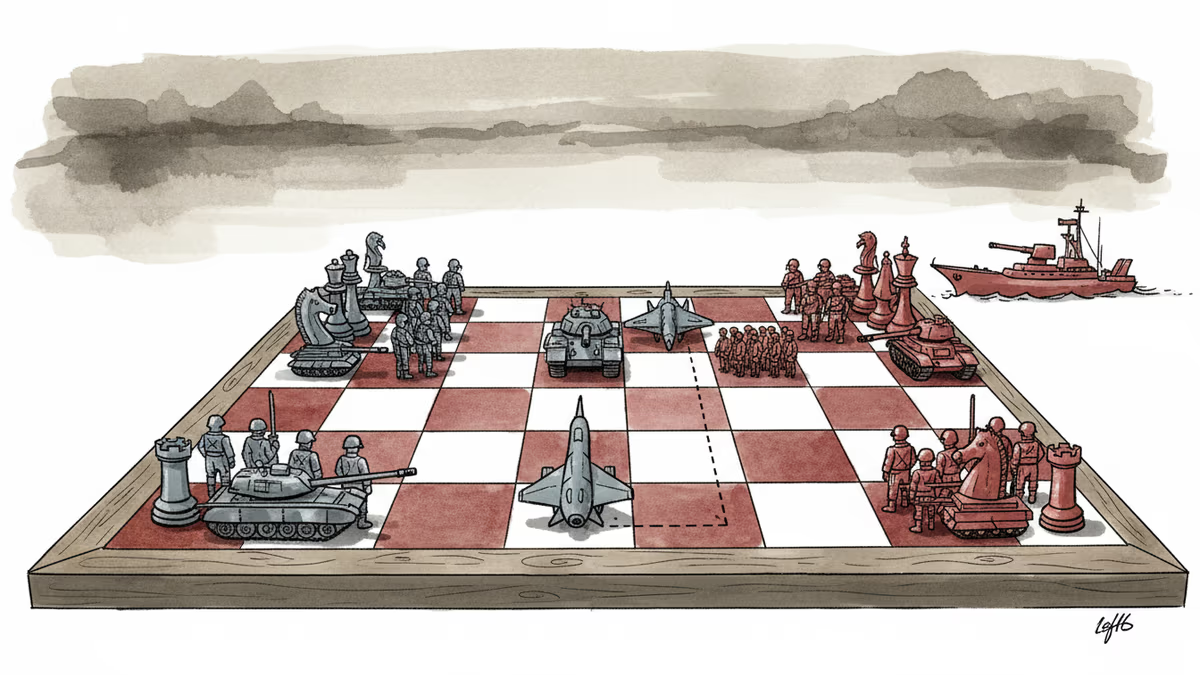
After US-Israeli strikes on nuclear facilities, Iran's limited response reveals a calculated approach to avoiding full-scale war while maintaining credibility.
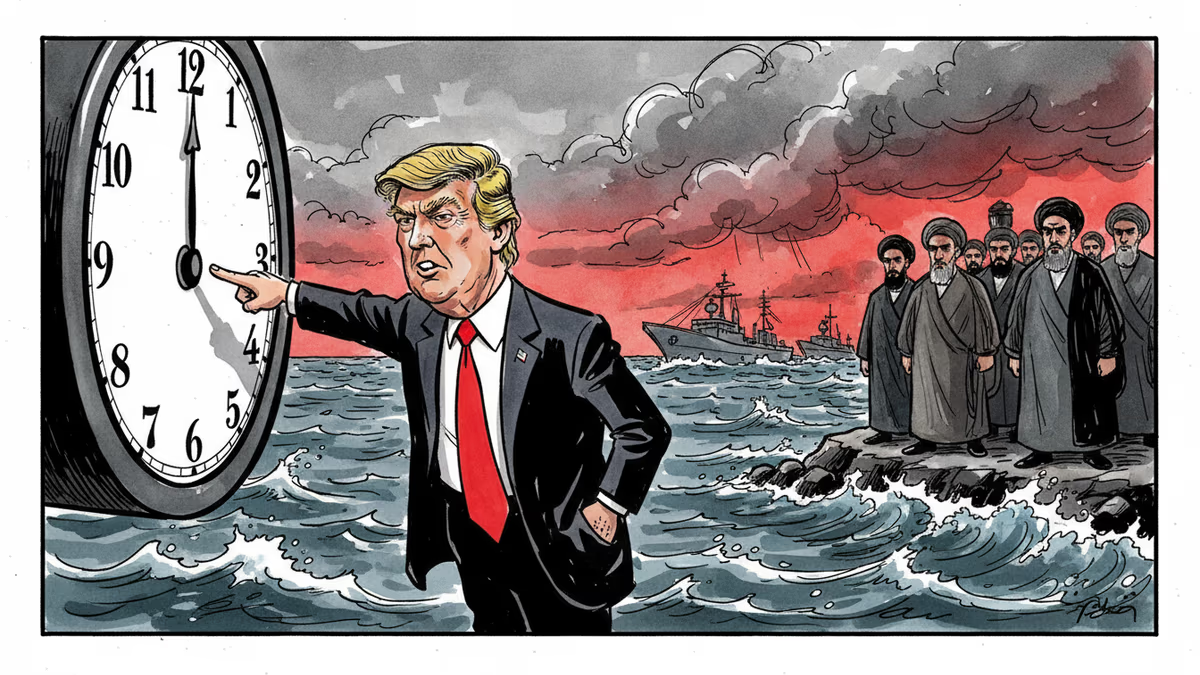
Trump gives Iran 10-15 days for nuclear talks, but offers no clear path forward. The Middle East's complex realities resist simple solutions.
For three decades, Washington has described Iran as perpetually on the brink of catastrophe. What drives this durable narrative — and what does it cost?
IAEA confirms damage to Iran's Natanz facility as US-Israeli strikes continue for fourth day. The attack raises critical questions about nuclear non-proliferation enforcement and international law.
After US-Israeli strikes on nuclear facilities, Iran's limited response reveals a calculated approach to avoiding full-scale war while maintaining credibility.
Trump gives Iran 10-15 days for nuclear talks, but offers no clear path forward. The Middle East's complex realities resist simple solutions.
Thoughts
Share your thoughts on this article
Sign in to join the conversation