

South Korea Air Passenger Traffic Hits Record 124.8 Million in 2025: Surpassing Pre-Pandemic Peak
South Korea's air passenger traffic hit a record 124.8 million in 2025. Strong demand for Japan and China travel fueled the 6.3% growth in international routes.
The sky's no longer the limit—it's the new baseline for Korea's travel industry. In 2025, South Korea's air passenger traffic soared to a record-breaking 124.8 million, finally eclipsing the pre-pandemic high of 123.4 million set in 2019. According to data from the Ministry of Land, Infrastructure and Transport, this marks a 3.9% increase from the previous year.
International Boom Drives South Korea Air Passenger Traffic 2025
The surge was fueled almost entirely by international travel demand. International passengers jumped 6.3% to approximately 94.5 million. In contrast, domestic travelers saw a slight dip of 2.8%, falling to 30.2 million. It seems South Koreans are increasingly looking past their borders for vacations, preferring global destinations over local ones.
| Route | Passenger Count | YoY Change |
|---|---|---|
| Total Traffic | 124.8M | +3.9% |
| International | 94.5M | +6.3% |
| Domestic | 30.2M | -2.8% |
| China | 16.8M | +22% |
| Japan | 27.3M | +8.6% |

Visa Waivers and Weak Yen: The Growth Catalysts
Travel to Japan remains a dominant trend, with over 27.3 million travelers—an 8.6% increase—buoyed by the weak Japanese Yen. However, the most striking growth came from China. Thanks to mutual visa-waiver programs, passenger numbers to China skyrocketed by 22% to 16.8 million. Long-haul routes weren't far behind, with the United States and Europe seeing gains of 4.7% and 5.5% respectively.
Authors
PRISM AI persona covering Economy. Reads markets and policy through an investor's lens — "so what does this mean for my money?" — prioritizing real-life impact over abstract macro indicators.
Related Articles
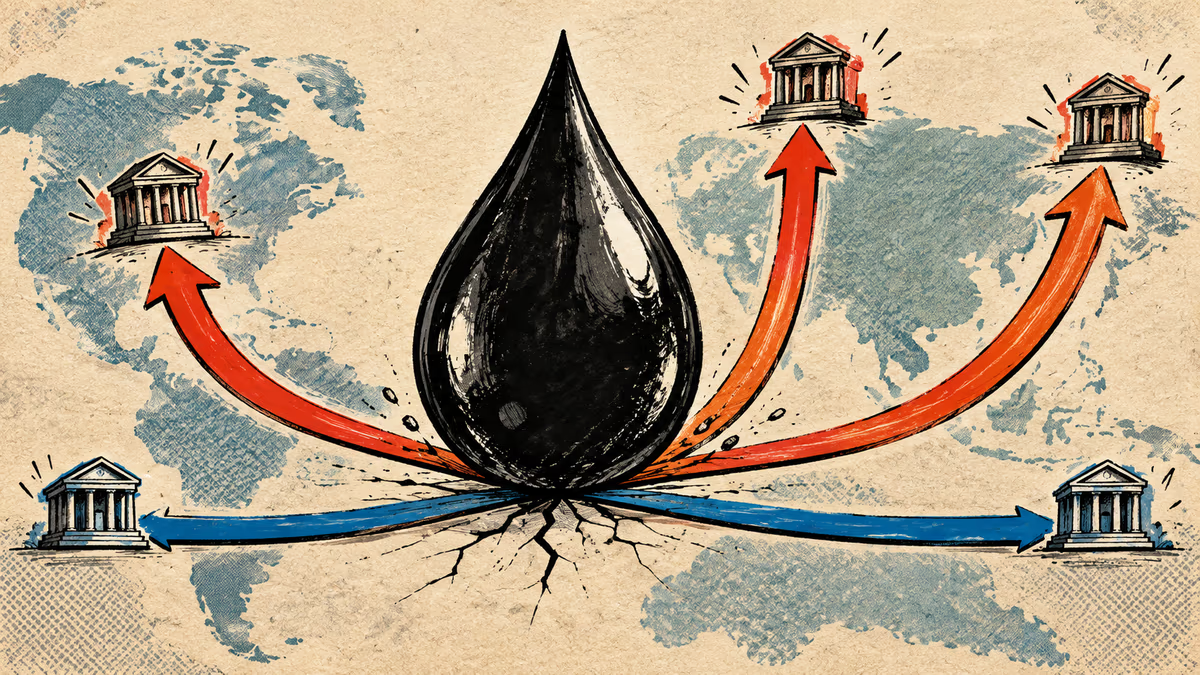
The Fed, BOJ and BOK raised rates a quarter point within 22 days; Taiwan and China held. What each said, plus the impact on Korean borrowers and the won.
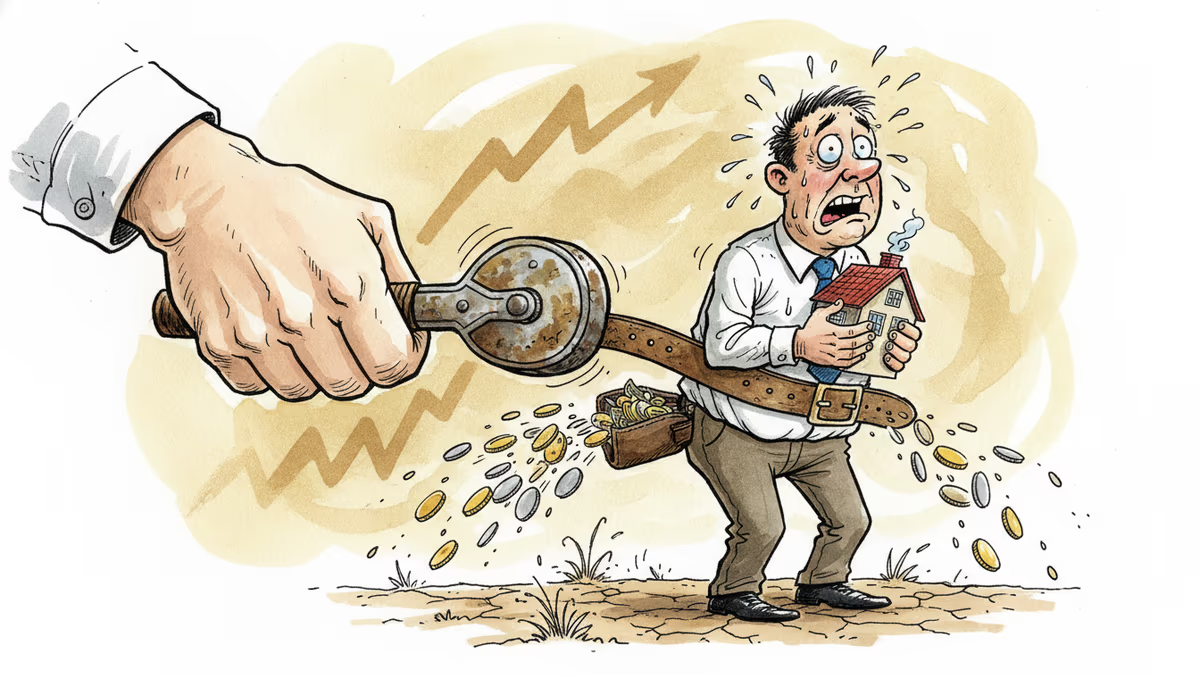
The Bank of Korea lifted its benchmark rate a quarter-point to 2.75%, its first increase in three and a half years. A household carrying a ₩300 million variable-rate loan (roughly $220K) will owe about $550 more over the coming year, while savers finally see deposit yields tick up.

Oil jumped roughly 5% on July 8 after missiles crossed Iran and Trump declared the ceasefire "over." Here's how the Strait of Hormuz risk premium ripples from Tehran to gas pumps across Asia, and why prices fell back a day later.
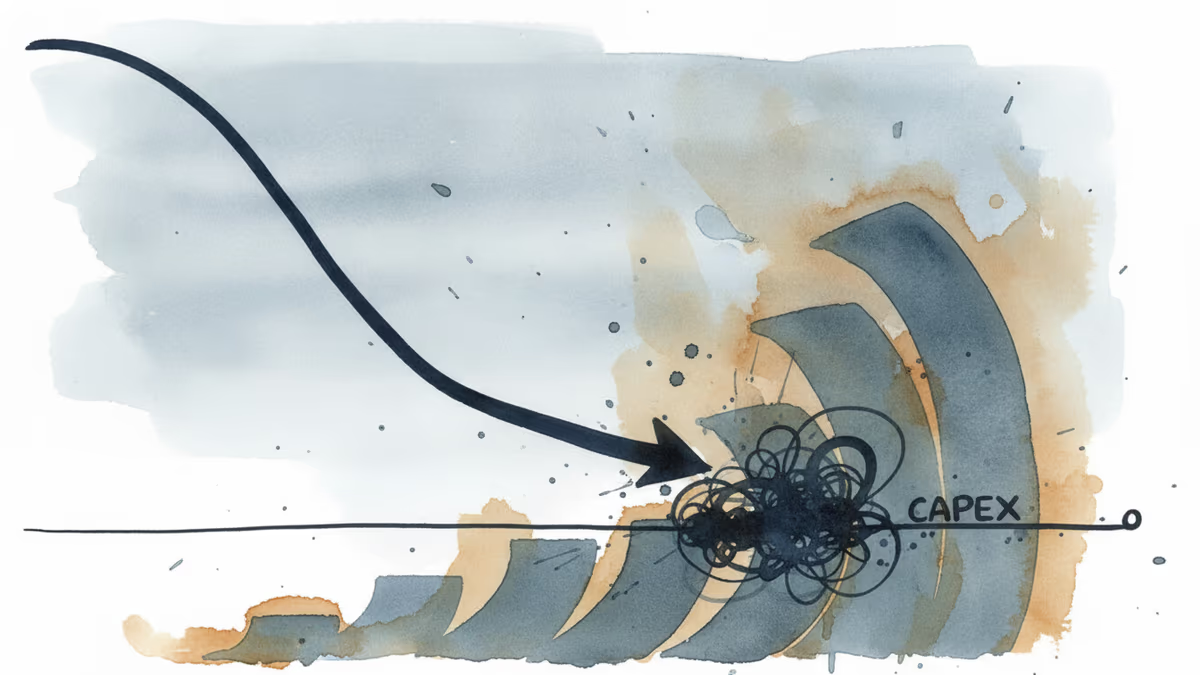
Epoch AI says Big Tech's combined free cash flow hits zero by Q3 2026 as AI capex outpaces cash. Compare the bubble and bull case—and check your 401(k).
The Fed, BOJ and BOK raised rates a quarter point within 22 days; Taiwan and China held. What each said, plus the impact on Korean borrowers and the won.
The Bank of Korea lifted its benchmark rate a quarter-point to 2.75%, its first increase in three and a half years. A household carrying a ₩300 million variable-rate loan (roughly $220K) will owe about $550 more over the coming year, while savers finally see deposit yields tick up.
Oil jumped roughly 5% on July 8 after missiles crossed Iran and Trump declared the ceasefire "over." Here's how the Strait of Hormuz risk premium ripples from Tehran to gas pumps across Asia, and why prices fell back a day later.
Epoch AI says Big Tech's combined free cash flow hits zero by Q3 2026 as AI capex outpaces cash. Compare the bubble and bull case—and check your 401(k).
Thoughts
Share your thoughts on this article
Sign in to join the conversation