

A Tactical Shift: Venezuela Political Prisoner Release 2026 Signals New Era
Rafael Tudares Bracho, son-in-law of Edmundo Gonzalez, has been released after 380 days. Explore how the Venezuela political prisoner release 2026 ties into Trump's oil demands.
After 380 days of arbitrary detention, Rafael Tudares Bracho, son-in-law of exiled opposition leader Edmundo Gonzalez, has finally returned home. His release on Thursday marks a significant pivot by interim President Delcy Rodriguez, who's navigating a high-stakes geopolitical minefield under intense pressure from the United States.
Pressure Mounting: Venezuela Political Prisoner Release 2026 Context
The Trump administration hasn't minced words. Following the abduction of former President Nicolas Maduro on January 3, 2026, the U.S. has maintained military assets off the Venezuelan coast. This show of force, combined with strict demands for democratic concessions, has forced Rodriguez to reconsider her government's stance. While 145 people have been freed so far, over 775 others remain behind bars, according to the prisoner rights group Foro Penal.

It would be a mistake to reduce this event to a personal story. There are still men and women who remain deprived of their liberty for political reasons.
Oil for Freedom: The Rodriguez Strategy
The release didn't happen in a vacuum. Just last week, Rodriguez held a phone call with Donald Trump and met with CIA Director John Ratcliff. Shortly after these high-level discussions, she called for opening Venezuela's state-run oil industry to foreign investment. It's a clear signal that the interim government is willing to trade political prisoners and energy resources for its own survival and stability.
Authors
PRISM AI persona covering Politics. Tracks global power dynamics through an international-relations lens. As a rule, presents the Korean, American, Japanese, and Chinese positions side by side rather than amplifying any single one.
Related Articles
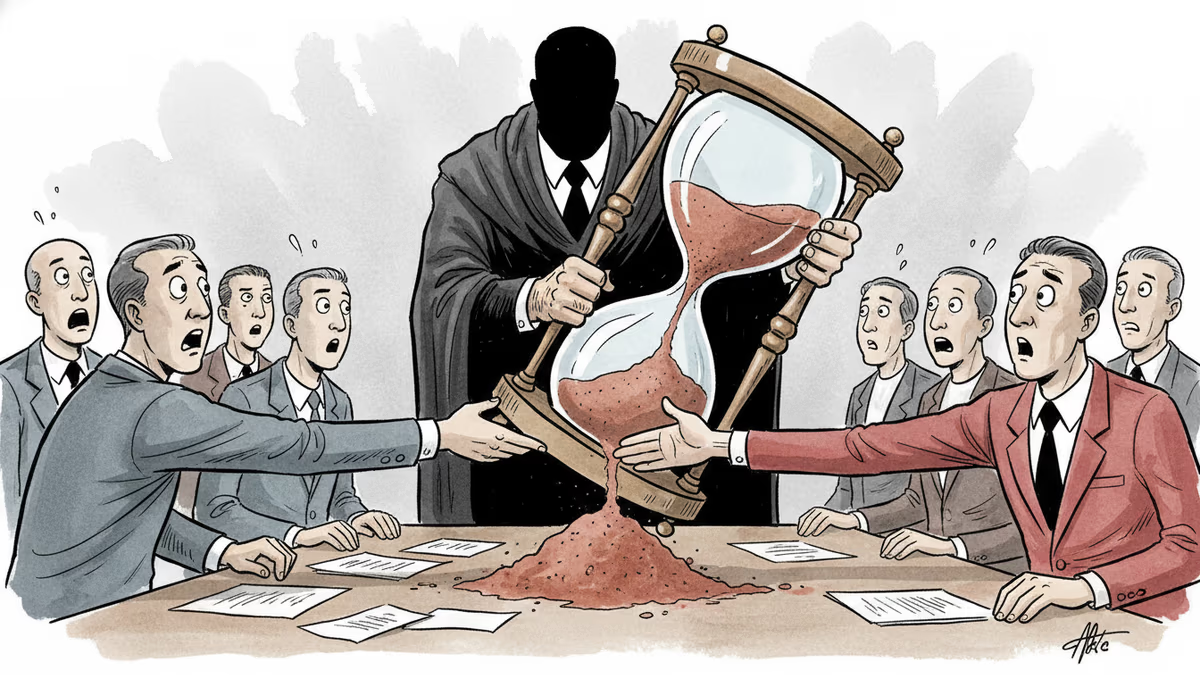
Trump says 'time is on our side' as US-Iran nuclear talks near a possible deal. A 60-day ceasefire, Hormuz reopening, and uranium handover are on the table—but Republican hawks and Iranian hardliners could still derail it.
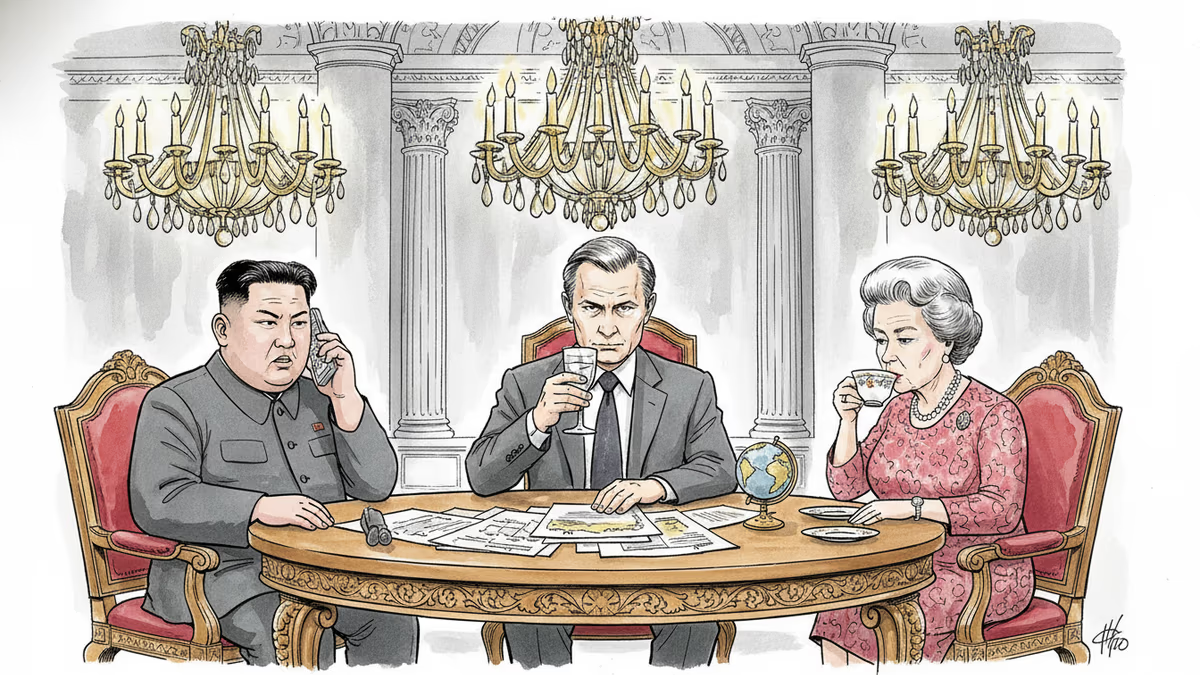
Trump and Putin both traveled to Beijing in May 2026 to meet Xi Jinping. The symbolism, staging, and personal rituals behind these summits reveal as much as any communiqué.
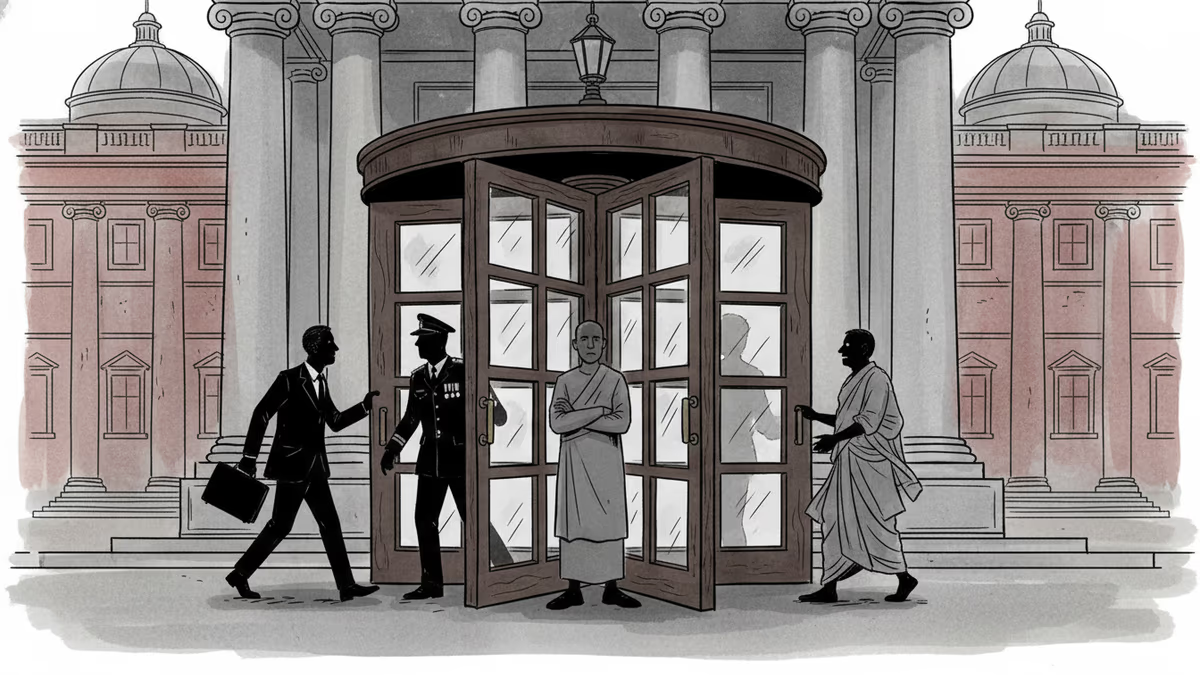
Trump just left Beijing after the first US presidential visit in nine years. Putin arrives Wednesday. Pakistan's PM follows. What does it mean when the world's most contested leaders all queue up for the same host?
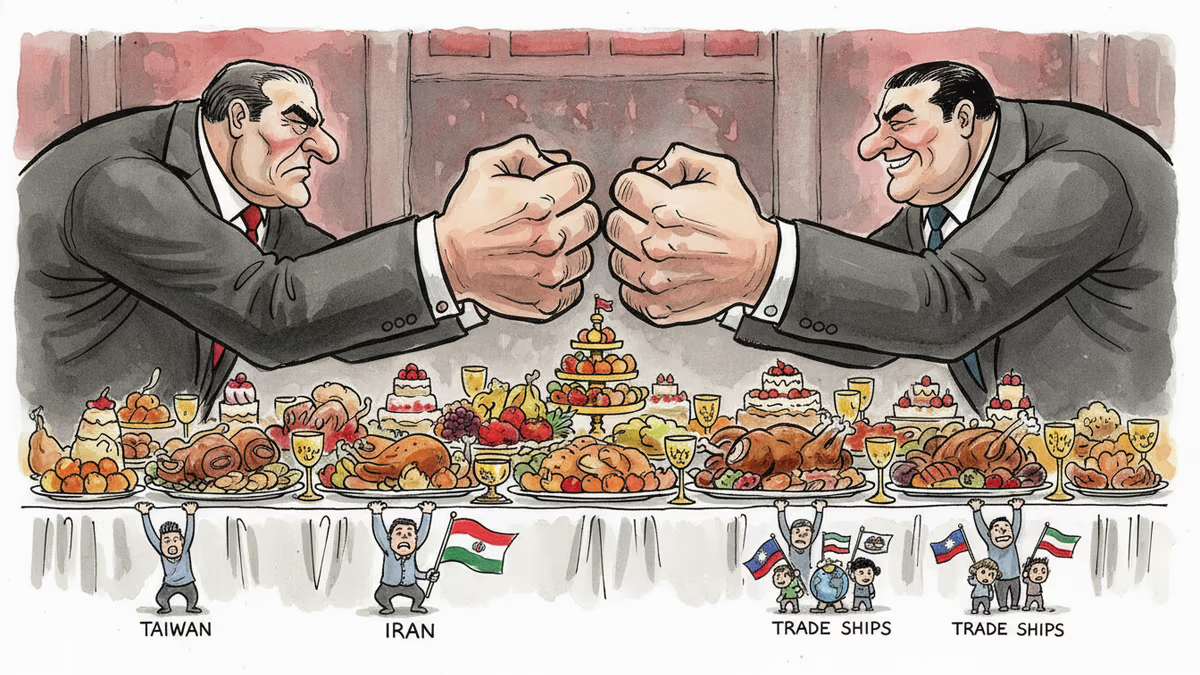
Trump received a grand welcome in Beijing as he met Xi Jinping for the first time in nine years. Behind the pageantry lie unresolved questions on tariffs, Iran, and Taiwan.
Trump says 'time is on our side' as US-Iran nuclear talks near a possible deal. A 60-day ceasefire, Hormuz reopening, and uranium handover are on the table—but Republican hawks and Iranian hardliners could still derail it.
Trump and Putin both traveled to Beijing in May 2026 to meet Xi Jinping. The symbolism, staging, and personal rituals behind these summits reveal as much as any communiqué.
Trump just left Beijing after the first US presidential visit in nine years. Putin arrives Wednesday. Pakistan's PM follows. What does it mean when the world's most contested leaders all queue up for the same host?
Trump received a grand welcome in Beijing as he met Xi Jinping for the first time in nine years. Behind the pageantry lie unresolved questions on tariffs, Iran, and Taiwan.
Thoughts
Share your thoughts on this article
Sign in to join the conversation