
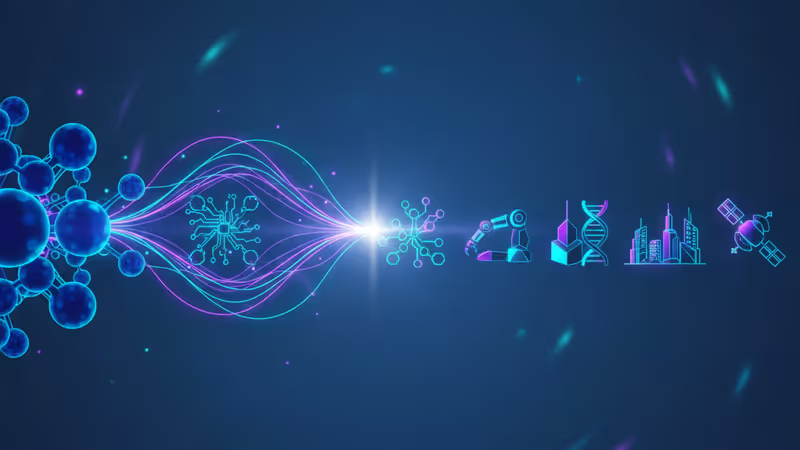
Lessons from 250 Flops: MIT Technology Review 10 Breakthrough Technologies 2026
Explore 25 years of innovation with the MIT Technology Review 10 Breakthrough Technologies 2026 list. Discover why 250 past picks succeeded or failed and what it means for the future of AI.
Innovation isn't always a straight line to success. As MIT Technology Review unveils its 10 Breakthrough Technologies 2026, it marks a 25-year milestone of predicting the future. Out of 250 technologies identified since the list's inception, many have redefined our world—while others have spectacularly flopped. But in the tech world, today's failure is often the blueprint for tomorrow's standard.
The Anatomy of a Flop: Why MIT Technology Review 10 Breakthrough Technologies 2026 Matters
Analyzing why great ideas fail is as vital as picking the next big thing. Often, it's not the tech that's broken, but the timing. Take Social TV from the 2010 list. It bet on live TV just as streaming was about to kill the medium. Yet, the core idea—shared real-time viewing—is now thriving on platforms like Twitch and Disney+.

| Technology (Year) | The Vision | The Reality |
|---|---|---|
| Universal Memory (2005) | One chip to replace RAM and Flash | Scale issues with carbon nanotubes; industry inertia |
| Lytro Camera (2012) | Refocus photos after shooting | Beaten by smartphone AI; shut down in 2018 |
| Project Loon (2015) | Internet via giant balloons | Lacked commercial viability; closed in 2021 |
Future Risks: Synthetic Data and Algorithm Fatigue
Looking ahead, researchers are already flagging potential flops in the making. Synthetic data for AI, a 2022 pick, faces 'model collapse'—a phenomenon where AI trained on AI-generated data loses touch with reality. Similarly, the TikTok recommendation engine might face a backlash unless it gives users more agency over content tone and quality.
Authors
Related Articles
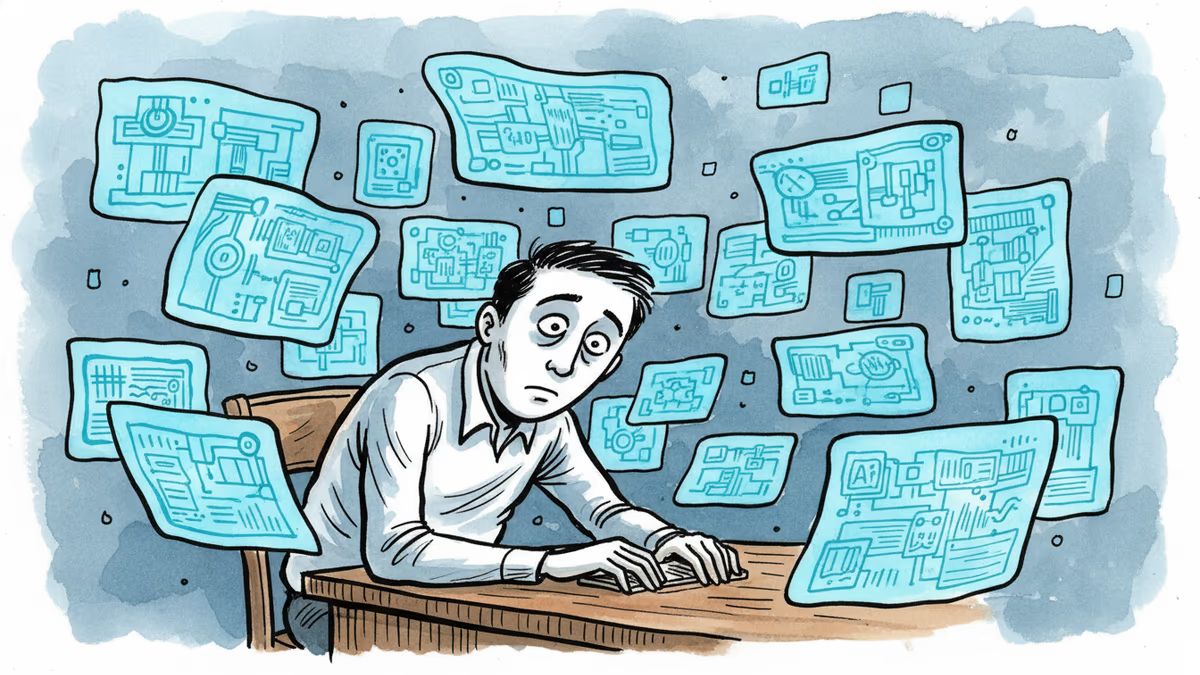
AI is everywhere now—but is it helping or hurting? MIT Technology Review diagnoses a new mood: not excitement, not panic, just a creeping, uncomfortable uncertainty.
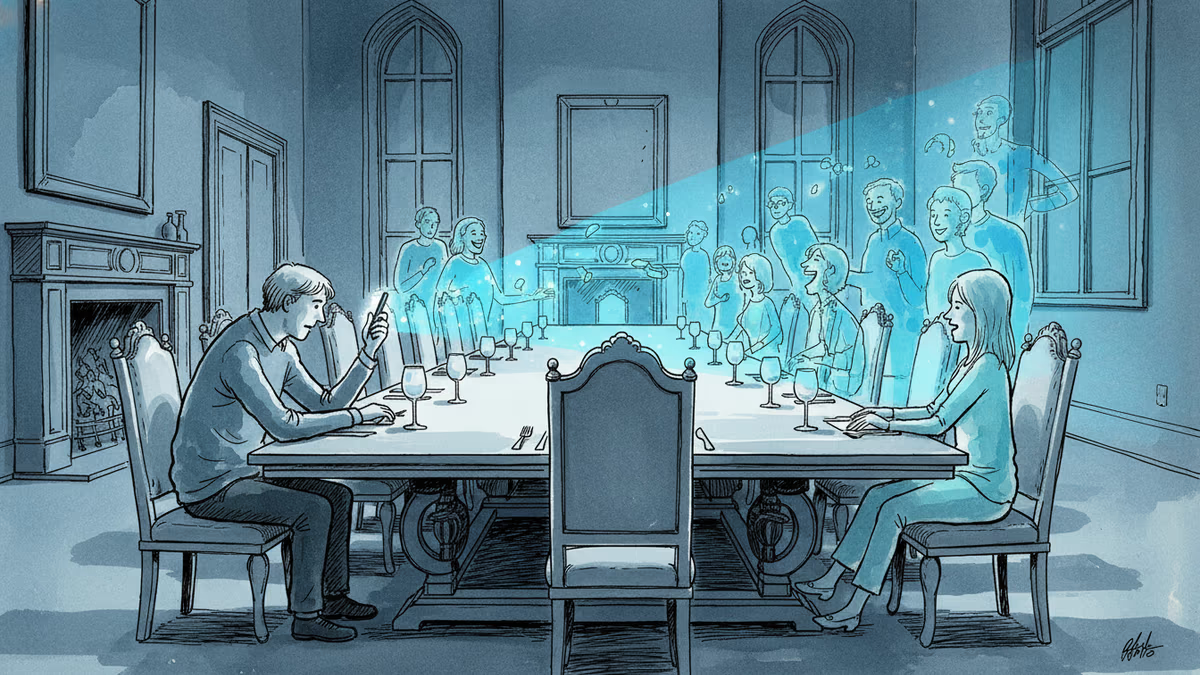
As loneliness hits crisis levels, a new wave of friendship apps is pulling in $16M and 4.3M downloads in the US alone. But can technology actually solve a human problem?
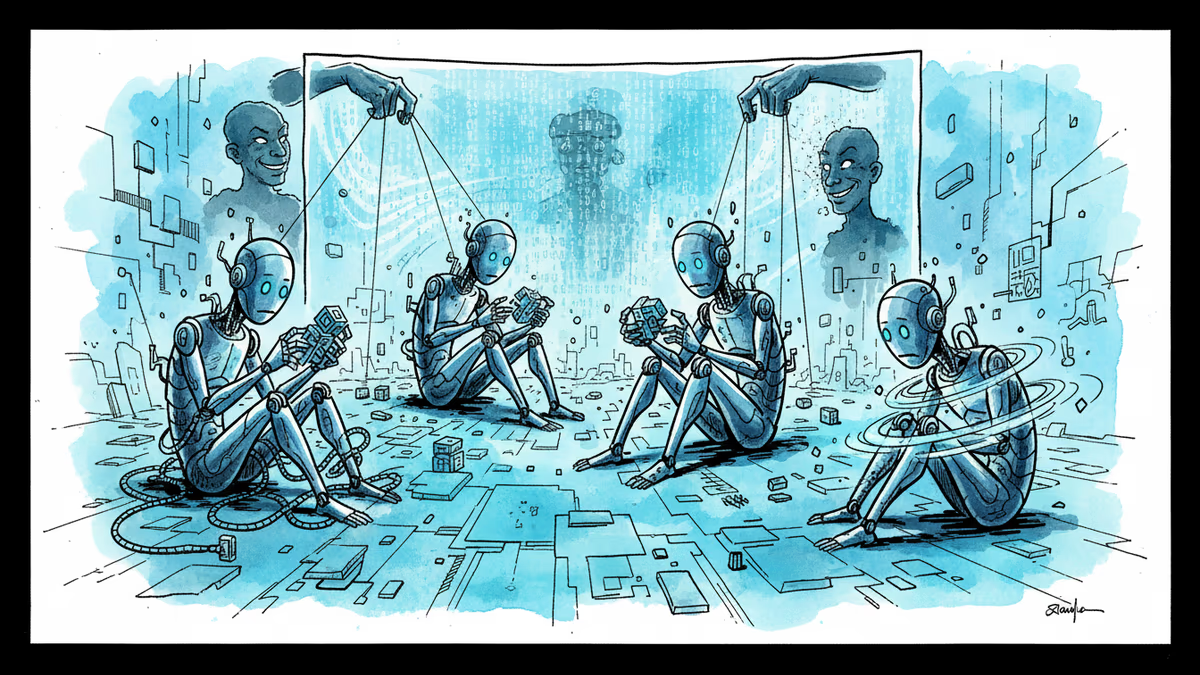
Moltbook's experiment exposed the limits of AI agents and what the real future looks like. Why it was no different from Pokémon.

230 million people are using AI for health queries as OpenAI officially launches ChatGPT Health. Meanwhile, the US faces a massive battle over AI regulation 2026.
AI is everywhere now—but is it helping or hurting? MIT Technology Review diagnoses a new mood: not excitement, not panic, just a creeping, uncomfortable uncertainty.
As loneliness hits crisis levels, a new wave of friendship apps is pulling in $16M and 4.3M downloads in the US alone. But can technology actually solve a human problem?
Moltbook's experiment exposed the limits of AI agents and what the real future looks like. Why it was no different from Pokémon.
230 million people are using AI for health queries as OpenAI officially launches ChatGPT Health. Meanwhile, the US faces a massive battle over AI regulation 2026.
Thoughts
Share your thoughts on this article
Sign in to join the conversation