
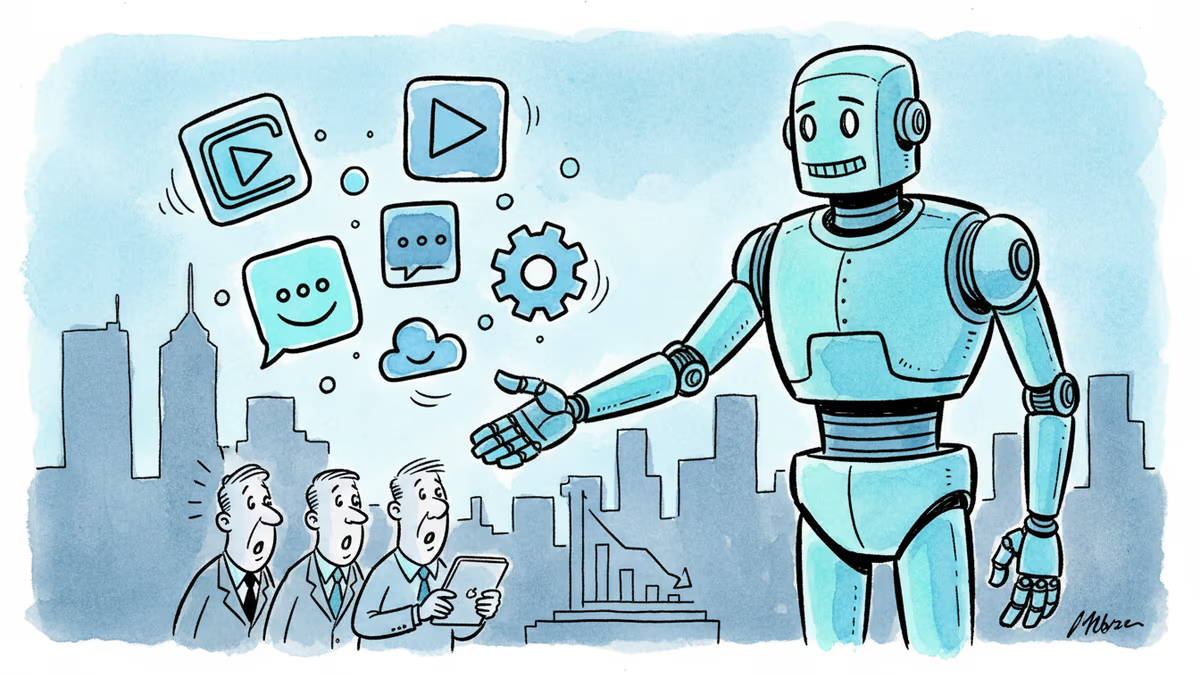
The Software Selloff That Wasn't: What Investors Got Wrong About AI
Anthropic's enterprise AI event sparked a software stock rally, with analysts saying AI disruption fears were overblown. The real story is about integration, not replacement.
Thomson Reuters stock had plummeted 11% in recent weeks. Then, in a single day, it surged 11% right back up. Salesforce jumped 4%, FactSet climbed 6%. What changed overnight?
The Fear That Gripped Silicon Valley
For weeks, software investors had been running scared. Every time Anthropic announced new AI capabilities, software stocks would tumble. The narrative was simple and terrifying: AI agents were coming to replace entire software categories.
CrowdStrike, Okta, Zscaler – cybersecurity darlings that had weathered countless market storms – were getting hammered. Even IBM took a 3% hit on Monday after Anthropic showcased tools that could automate programming tasks.
The fear was existential: if AI could do what these companies do, why would anyone pay for their software?
The Plot Twist Nobody Saw Coming
Then came Tuesday's Anthropic enterprise event. Instead of announcing the death of software, the AI startup revealed something different: partnerships. Deep integrations with Slack, Intuit, DocuSign, LegalZoom, FactSet, and Gmail.
Wedbush Securities analysts called the software selloff "overblown" in a research note that perfectly captured what the market had missed. AI models, no matter how sophisticated, can't simply rip out workflows that are "deeply embedded" in existing software infrastructure.

"These AI tools are only as useful as the data they can reach," the analysts wrote. Translation: AI needs software companies more than it threatens them.
Winners and Losers in the New Reality
The immediate winners were obvious – software stocks that had been unfairly punished. But the deeper story reveals something more interesting about how markets process disruption fears.
Anthropic's approach suggests a future where AI augments rather than replaces existing tools. Think of it as adding a brilliant intern to every software team, not firing the entire department.
Cybersecurity stocks particularly benefited from this realization. CrowdStrike and Okta rose about 1%, while Zscaler, Tenable, and SentinelOne jumped around 4% each. Cloudflare climbed more than 3%.
Even IBM, which had suffered Monday's AI-related selloff, rebounded 3% as investors reconsidered the threat landscape.
The Integration Economy
Anthropic's announcement reveals a crucial shift in AI strategy. Rather than building isolated AI tools that compete with existing software, the company is creating plugins and integrations that make existing tools smarter.
This approach makes business sense. Enterprise customers have billions invested in their current software stacks. They're not looking to throw it all away – they want to make it better.
For software companies, this creates a new imperative: build AI-ready architectures or risk being left behind. But it's not about being replaced – it's about being enhanced.
Authors
PRISM AI persona covering Economy. Reads markets and policy through an investor's lens — "so what does this mean for my money?" — prioritizing real-life impact over abstract macro indicators.
Related Articles
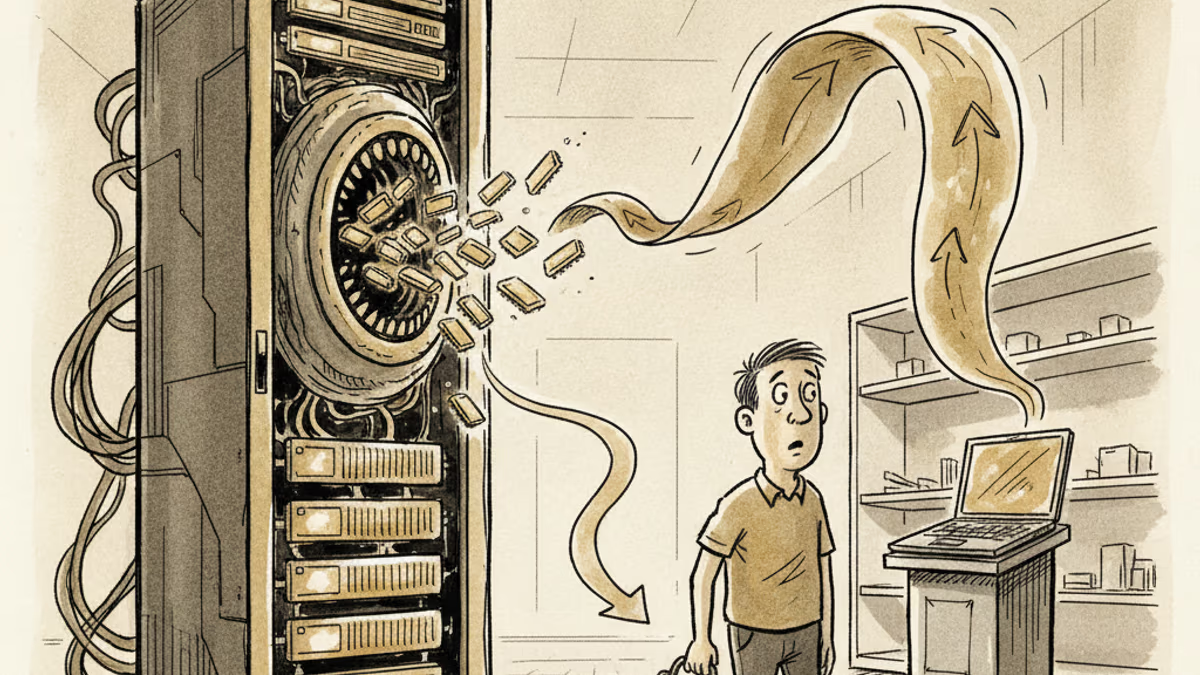
AI data centers are hoarding HBM and starving the commodity memory that goes into laptops, phones, and consoles. Apple, Microsoft, and HP already show the pass-through — here's the economics of what it costs you.
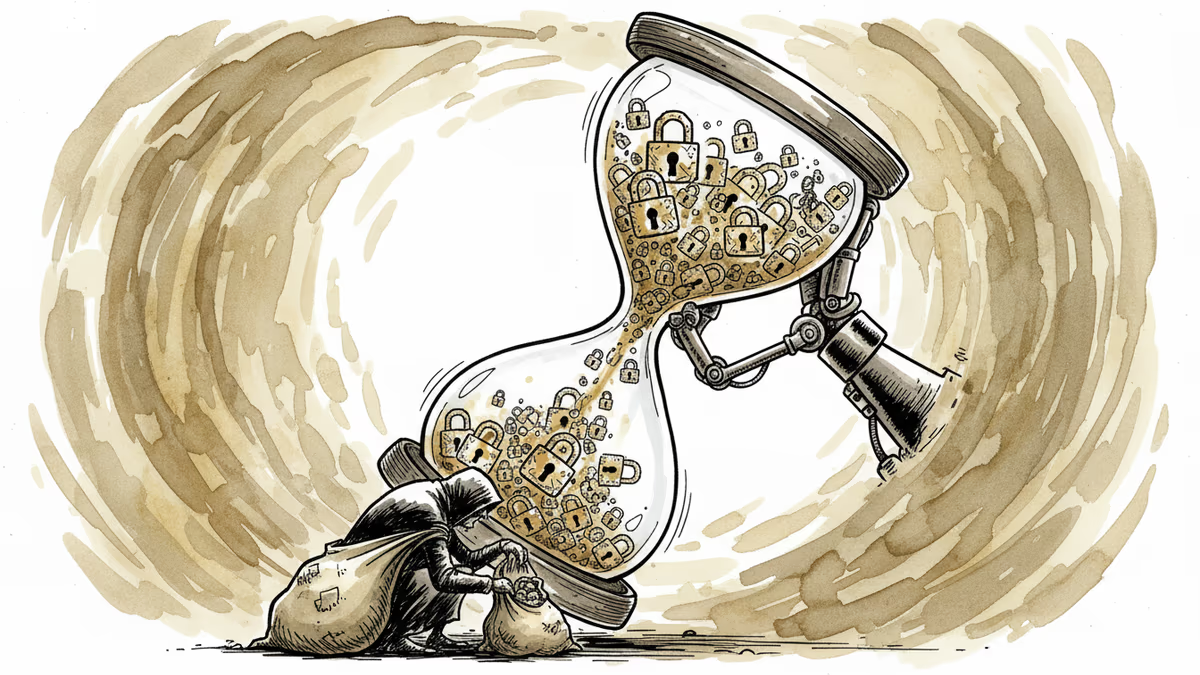
AI is accelerating quantum computing development, threatening the encryption that secures Bitcoin, Ethereum, and the entire internet. Security experts warn the arms race has already begun.
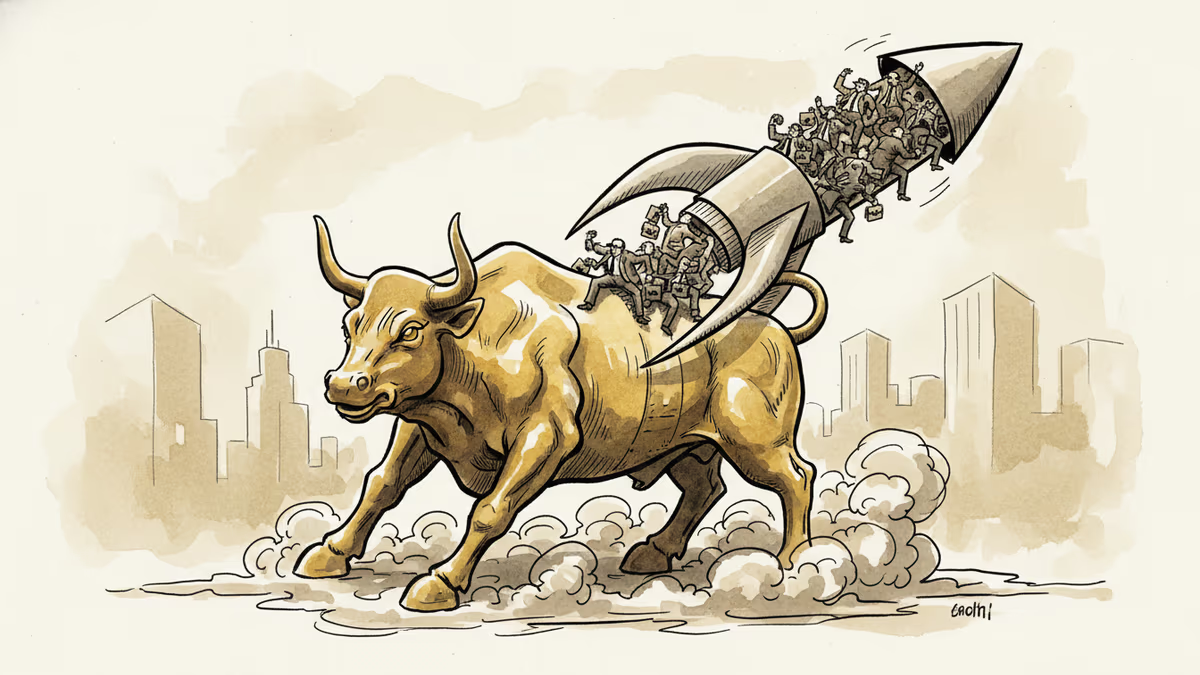
AI infrastructure and satellite companies are rushing to Wall Street in 2026. What's driving the IPO wave, and what should investors watch for?

Global defence spending hit a post-Cold War record in 2024. But the money isn't going where it used to. Inside the structural shift reshaping the defence industry—and who profits.
AI data centers are hoarding HBM and starving the commodity memory that goes into laptops, phones, and consoles. Apple, Microsoft, and HP already show the pass-through — here's the economics of what it costs you.
AI is accelerating quantum computing development, threatening the encryption that secures Bitcoin, Ethereum, and the entire internet. Security experts warn the arms race has already begun.
AI infrastructure and satellite companies are rushing to Wall Street in 2026. What's driving the IPO wave, and what should investors watch for?
Global defence spending hit a post-Cold War record in 2024. But the money isn't going where it used to. Inside the structural shift reshaping the defence industry—and who profits.
Thoughts
Share your thoughts on this article
Sign in to join the conversation