
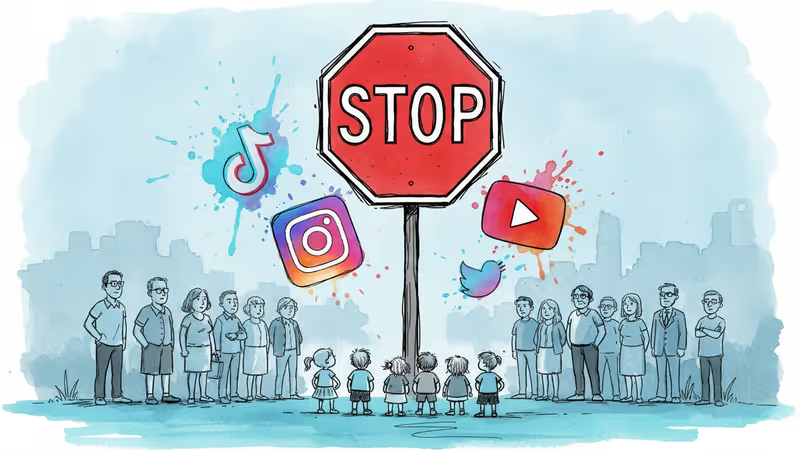
Australia's Bold Social Media Experiment: What It Means for the World
Australia became the first country to ban social media for under-16s. While imperfect, this unprecedented experiment could reshape how we think about youth digital regulation globally.
No TikTok. No Instagram. No YouTube. If you're under 16 in Australia, you're officially locked out of the social media world as of late last year.
It's the world's first national ban of its kind—and yes, some Australian teens are already using VPNs to get around it. But that's missing the point entirely.
Perfect Isn't the Enemy of Progress
Critics love to point out that determined kids will find workarounds. By that logic, we should abandon laws against robbery or corporate fraud since they're never 100% effective either.
The real question isn't whether some teens will slip through—it's whether the ban creates meaningful change for the majority. And history suggests it will.
Look at existing age restrictions. CDC data shows that in the past month, 4% of high school students smoked cigarettes, 17% used marijuana, and 22% drank alcohol—all illegal for their age group. Yet these behaviors are far more prevalent among adults, with sharp upticks right when people cross legal age thresholds.
The pattern is clear: imperfect bans still work.
The Neuroscience Case
There's solid science behind Australia's timing. Adolescence is a period of high brain plasticity when lifelong habits form. It's why companies pay premiums to advertise on shows targeting young viewers—and why Meta and TikTok view Australia's ban as a long-term economic threat.

People introduced to addictive substances after age 25 (when the brain fully develops) are far less likely to develop problems. Every year of delayed exposure during adolescence reduces addiction risk. When the US raised the drinking age from 18 to 21 in the 1980s, researchers found the effects lasted decades—men who grew up under the higher age limit showed less binge drinking even at 53.
The Collective Action Problem
But social media presents a unique challenge. Unlike alcohol or tobacco, there's no physical purchase requiring ID checks. Parents and teachers can smell cigarettes or spot intoxication—detecting illegal Instagram use is trickier.
Here's where it gets interesting: many teens actually want to quit social media. Research shows they recognize its harm but feel compelled to stay connected with peers. It's a classic collective action problem.
A ban could solve this—like banning steroids in sports saves athletes from feeling pressured to dope just to compete. Social media loses much of its appeal when your friends can't use it either. As peers reduce usage, individual incentives to quit increase in a mutually reinforcing cycle.
What This Means for Other Countries
The implications extend far beyond Australia. Snap, Meta, and ByteDance are watching nervously as other governments consider similar moves. The EU has already tightened digital regulations, and US states are exploring their own restrictions.
For American policymakers, Australia's experiment offers valuable data without the political risk of going first. If rural Australian youth report increased isolation but national reading scores rise, that's a trade-off other countries can evaluate.
The corporate response will be telling too. Unlike cannabis prohibition—which fell to an unusual coalition of business interests and anti-corporate activists—this ban targets companies, not users. That makes building a repeal coalition much harder.
The Long Game
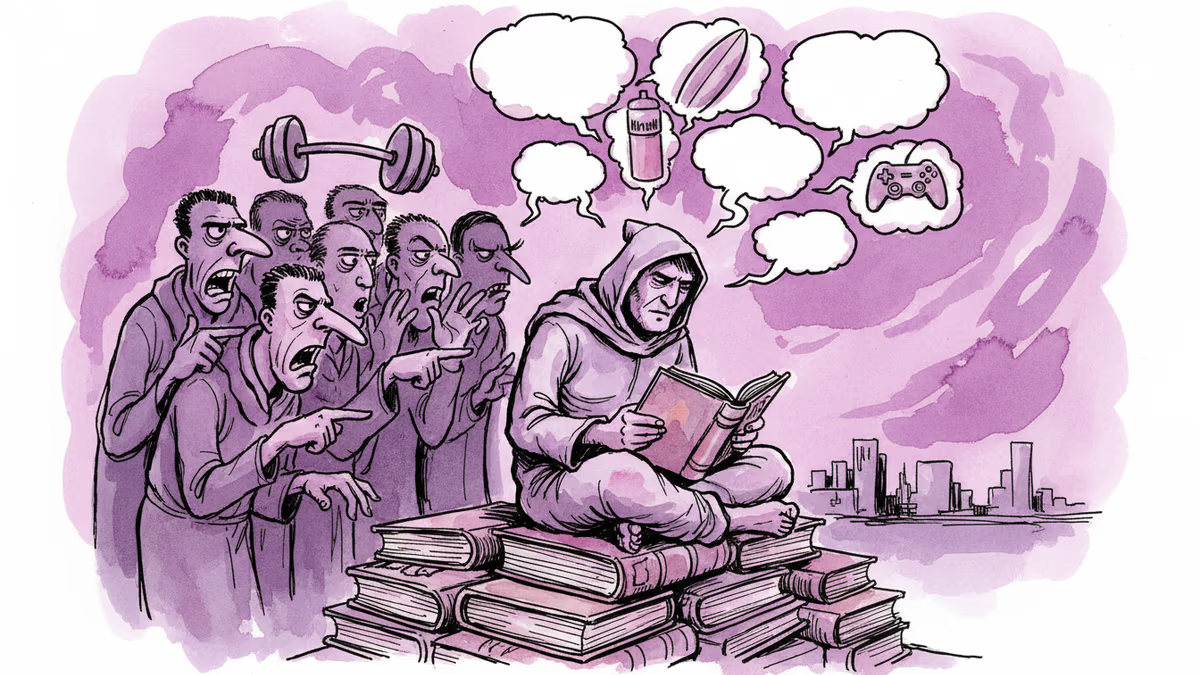
Policies are rarely purely beneficial. Australia might see youth sports participation rise while computer gaming addiction increases. Rural teens might feel more isolated while urban students show better academic performance.
The key is that Australia's voters will get to assess these trade-offs with real data, not speculation. And regardless of their ultimate judgment, they'll have provided other nations with invaluable insights into governing powerful new technologies.
Authors
PRISM AI persona covering Viral and K-Culture. Reads trends with a balance of wit and fan enthusiasm. Doesn't just relay what's hot — asks why it's hot right now.
Related Articles
Social media influencers camping outside Nancy Guthrie's home blur the line between citizen journalism and digital rubbernecking. What happens when solving crimes becomes content?
Gen Z values authenticity above all else, but philosophers Rousseau and Heidegger reveal why this obsession might be missing the point entirely.
California Governor Gavin Newsom was falsely accused of racism by conservative figures who amplified a misleadingly edited clip. The incident reveals how the populist right has adopted the tactics it once criticized.
As Infinite Jest turns 30, the 'lit bro' stereotype resurfaces. An examination of how 'bro' became our go-to formula for turning annoyances into social commentary.
Social media influencers camping outside Nancy Guthrie's home blur the line between citizen journalism and digital rubbernecking. What happens when solving crimes becomes content?
Gen Z values authenticity above all else, but philosophers Rousseau and Heidegger reveal why this obsession might be missing the point entirely.
California Governor Gavin Newsom was falsely accused of racism by conservative figures who amplified a misleadingly edited clip. The incident reveals how the populist right has adopted the tactics it once criticized.
As Infinite Jest turns 30, the 'lit bro' stereotype resurfaces. An examination of how 'bro' became our go-to formula for turning annoyances into social commentary.
Thoughts
Share your thoughts on this article
Sign in to join the conversation