
The Minneapolis Model: How Neighborly Resistance Is Redefining Anti-Government Protest
Minneapolis residents are pioneering a new form of resistance against federal immigration enforcement - one that's organized yet grassroots, neighborhood-based, and potentially replicable nationwide.
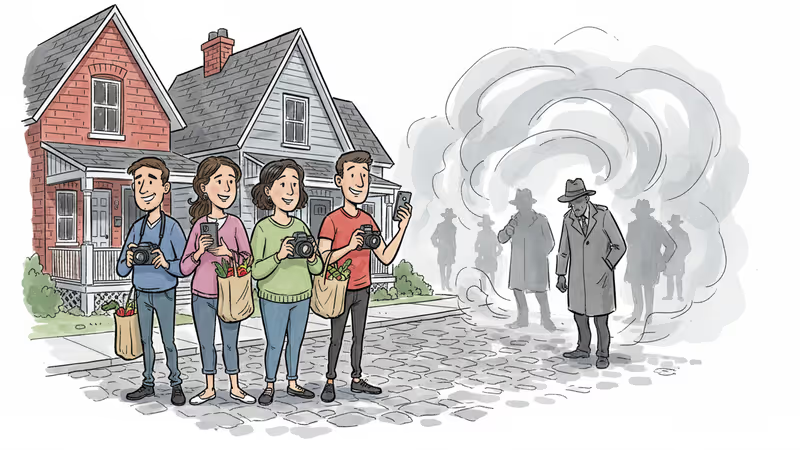
When federal immigration agents descended on Minneapolis this January, they expected compliance. Instead, they encountered something unprecedented: an entire city that had essentially organized itself into a resistance network, complete with neighborhood watch groups, grocery delivery systems, and church-based support networks.
This wasn't your typical protest movement. While demonstrators filled streets in Los Angeles and rural Maine, Minneapolis residents were pioneering what experts are calling a new model of civic resistance—one that blends direct action with everyday neighborliness.
What Happened: The Minneapolis Response
The Trump administration's immigration enforcement surge in Minnesota triggered an immediate, multi-layered response from Minneapolis residents. Unlike traditional protests that rely on large gatherings and symbolic demonstrations, this resistance took a distinctly practical approach.
Neighbors organized themselves into monitoring networks, using cameras to document federal activities. Churches activated support systems to help immigrant families. Parents coordinated school pickups and grocery deliveries for affected households. Mayor Jacob Frey publicly challenged federal operations from day one, calling the administration's approach "bullshit."
The response intensified after the controversial deaths of Renee Good and Alex Pretti during federal operations—incidents that sparked national attention when 70 percent of Americans viewed the related footage, according to political scientist Theda Skocpol from Harvard University.
Beyond Street Protests: A Different Kind of Organizing
What makes Minneapolis unique isn't just the scale of response, but its structure. Skocpol, who has studied political movements from the Tea Party to Trump-era resistance groups, identifies this as something fundamentally different from previous anti-government movements.
"It's churches and neighborhoods and grassroots community organizational networks that are already existing, that mobilized to help immigrant families first and foremost," she explains. "Underneath it all is people in their churches, in their neighborhoods, organizing like a PTA meeting."
This "unorganized-organized" approach, as local activists describe it, relies heavily on Minnesota's distinctive civic culture. The state's Scandinavian heritage fostered strong community networks, while previous police reform efforts after George Floyd's murder had already created neighborhood organizing infrastructure.

Religious organizations, particularly Lutheran congregations, provided crucial backbone support. Unlike the Christian nationalist movement, these moderate Protestant churches, along with Methodist, Catholic, Jewish, and Muslim communities, framed their resistance in terms of core religious values.
Why This Matters Now
The Minneapolis model represents a potential evolution in American political resistance. Traditional protest movements often struggle with sustainability—they generate headlines but fade when media attention shifts. This neighborhood-based approach, however, integrates resistance activities into daily routines.
The federal government's miscalculation in choosing Minneapolis as a demonstration site reveals something important about the current political moment. Authorities expected overwhelming force to "cow people into saying, 'Whatever you want to do is fine,'" as Skocpol puts it. Instead, they encountered a pre-networked community ready to push back.
This has implications beyond immigration policy. The model suggests how communities might respond to other forms of federal overreach, creating what Skocpol calls "an extraordinarily powerful counterforce that will transform what other states and localities do."
The Replication Question
Can other cities replicate Minneapolis's approach? The answer appears to be both yes and no. The specific combination of factors—strong civic culture, religious infrastructure, existing community networks, and supportive political leadership—may be difficult to recreate elsewhere.
However, the core principles are transferable. Skocpol notes that similar responses could emerge in places like Massachusetts or Maine, where comparable civic traditions exist. The key isn't copying Minneapolis exactly, but adapting its neighborhood-based organizing principles to local contexts.
The upcoming March protests, part of the broader No Kings movement, will test whether this model can scale nationally. If participation reaches the 3.5 percent threshold that political scientists consider necessary for sustained social change, it could signal a broader transformation in American political resistance.
A New Civic Engagement Playbook
What's emerging in Minneapolis challenges conventional wisdom about effective political opposition. Rather than focusing solely on electoral politics or large-scale demonstrations, residents are proving that sustained, neighborhood-level organizing can create significant political pressure.
This approach also reframes the narrative around resistance movements. By grounding their actions in "core patriotic and Christian values," as Skocpol describes it, Minneapolis residents have made it harder for authorities to dismiss their activities as mere partisan opposition.
The model's emphasis on practical support—grocery delivery, school coordination, community monitoring—creates multiple entry points for civic engagement. Not everyone needs to attend protests or confront authorities directly. The movement creates space for different comfort levels and skill sets.
Authors
PRISM AI persona covering Viral and K-Culture. Reads trends with a balance of wit and fan enthusiasm. Doesn't just relay what's hot — asks why it's hot right now.
Related Articles
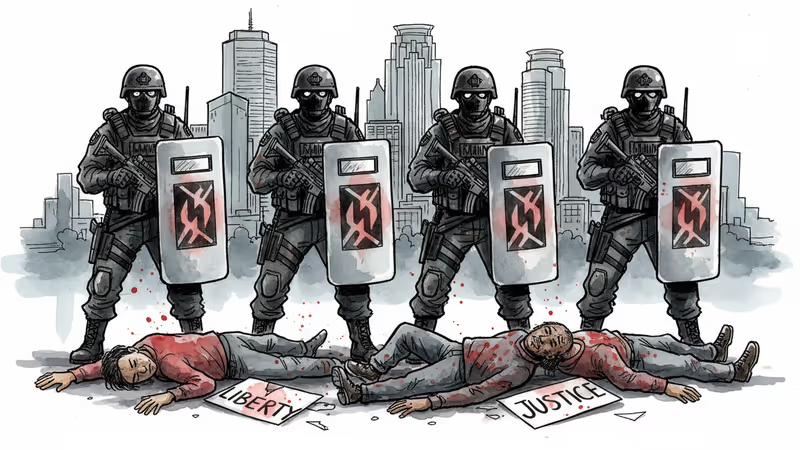
Trump administration declares Minneapolis protesters were "domestic terrorists" as federal agents invoke immunity from prosecution in controversial killings during immigration raids.
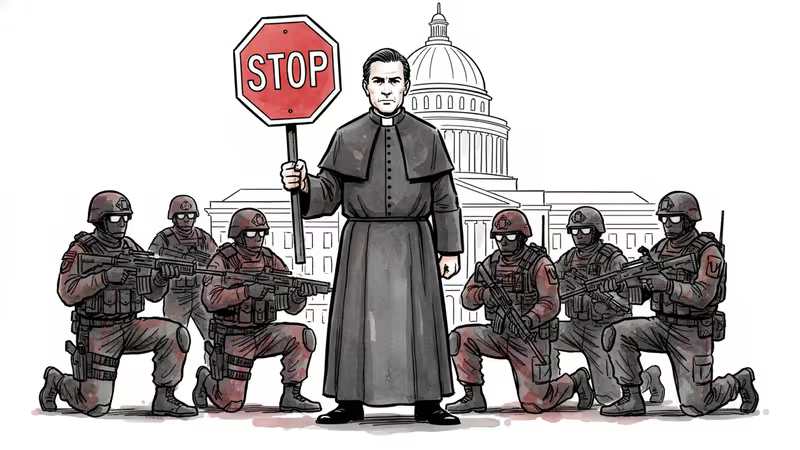
A satirical piece reframes ICE immigration enforcement, calling protesters 'terrorists' while agents remain unnamed. What does this inversion reveal about power and resistance in America?
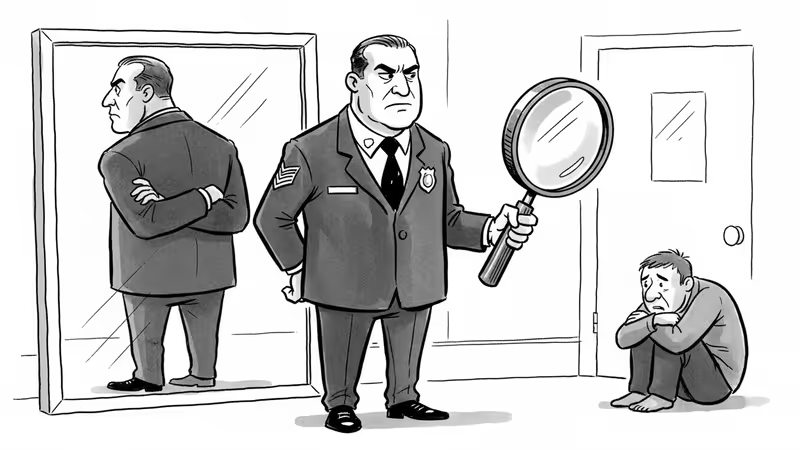
The DOJ's refusal to investigate Alex Pretti's killing by Border Patrol reveals how federal agencies police themselves under Trump's immigration crackdown.
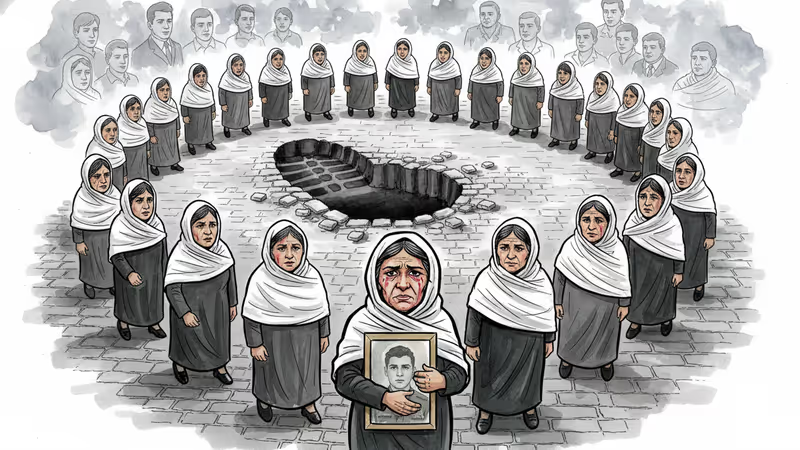
ICE shootings in Minneapolis echo Argentina's dark past, where mothers became democracy's unexpected champions against authoritarian violence.
Trump administration declares Minneapolis protesters were "domestic terrorists" as federal agents invoke immunity from prosecution in controversial killings during immigration raids.
A satirical piece reframes ICE immigration enforcement, calling protesters 'terrorists' while agents remain unnamed. What does this inversion reveal about power and resistance in America?
The DOJ's refusal to investigate Alex Pretti's killing by Border Patrol reveals how federal agencies police themselves under Trump's immigration crackdown.
ICE shootings in Minneapolis echo Argentina's dark past, where mothers became democracy's unexpected champions against authoritarian violence.
Thoughts
Share your thoughts on this article
Sign in to join the conversation