
Alibaba's Qwen Ascendant: How Chinese Open-Weight Models are Eclipsing GPT-5 and Llama 4
Alibaba's Qwen has emerged as a dominant force in AI, overtaking US rivals on platforms like HuggingFace and OpenRouter. While GPT-5 and Llama 4 struggled in 2025, Chinese open-source models are being adopted by BYD, Nvidia, and Airbnb.
The crown of the AI world is shifting East. While Silicon Valley's giants have spent the last year stumbling over underwhelming releases, Alibaba's Qwen has quietly become the heartbeat of the global developer community.
The Stumble of the Titans
2025 was supposed to be the year of American AI dominance, but the reality's been quite different. When Meta unveiled Llama 4 in April 2025, it failed to reach the summit of popular benchmarks. OpenAI's highly anticipated GPT-5, launched in August, also left users lukewarm with its mechanical demeanor and surprising hallucinations.
In stark contrast, Chinese models have surged. Downloads of open-weight models from China on HuggingFace surpassed those of US models in July 2025. Qwen now ranks as the world's second-most-popular open model on OpenRouter, proving that openness and utility often trump raw, closed intelligence.

Hangzhou's Open Secret
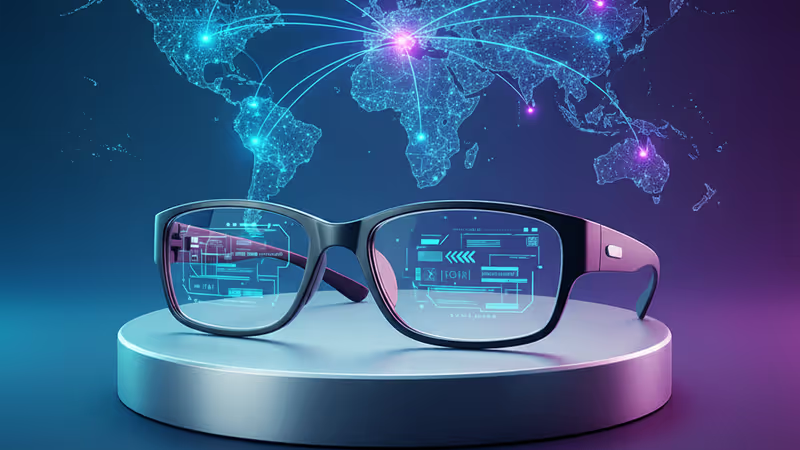
The secret to the success of Qwen and its peers like DeepSeek isn't just clever math—it's accessibility. While US firms are locking their intellectual property behind iron curtains, Chinese companies are flooding NeurIPS with papers detailing their training tricks. This radical transparency's attracted partners ranging from Rokid, which uses Qwen for real-time translation in smart glasses, to EV leader BYD.
The trend's even forced Western leaders to reconsider their stacks. Heavyweights like Airbnb, Perplexity, and Nvidia are now integrating Qwen into their pipelines. Even Meta is reportedly using the model to help benchmark and build its next generation of AI.
Authors
Related Articles
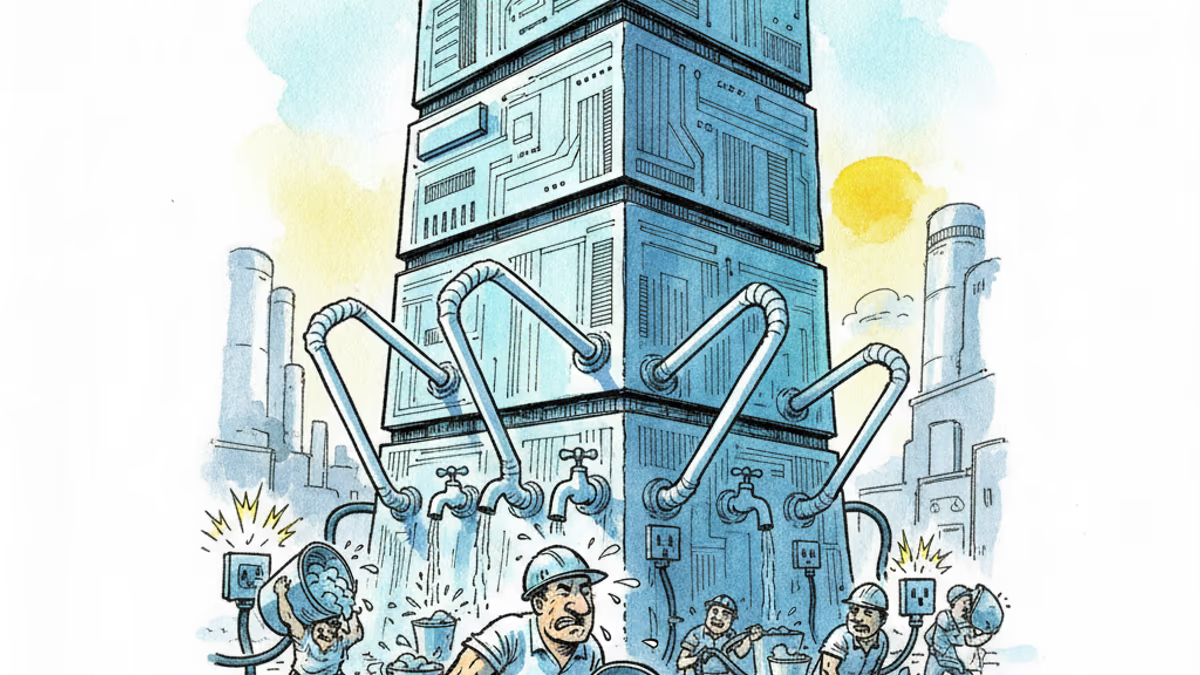
Samsung and SK unveiled a chip and AI investment package worth thousands of trillions of won on June 29. The headline number swings wildly by outlet, but the real contest isn't capital — it's water and power.
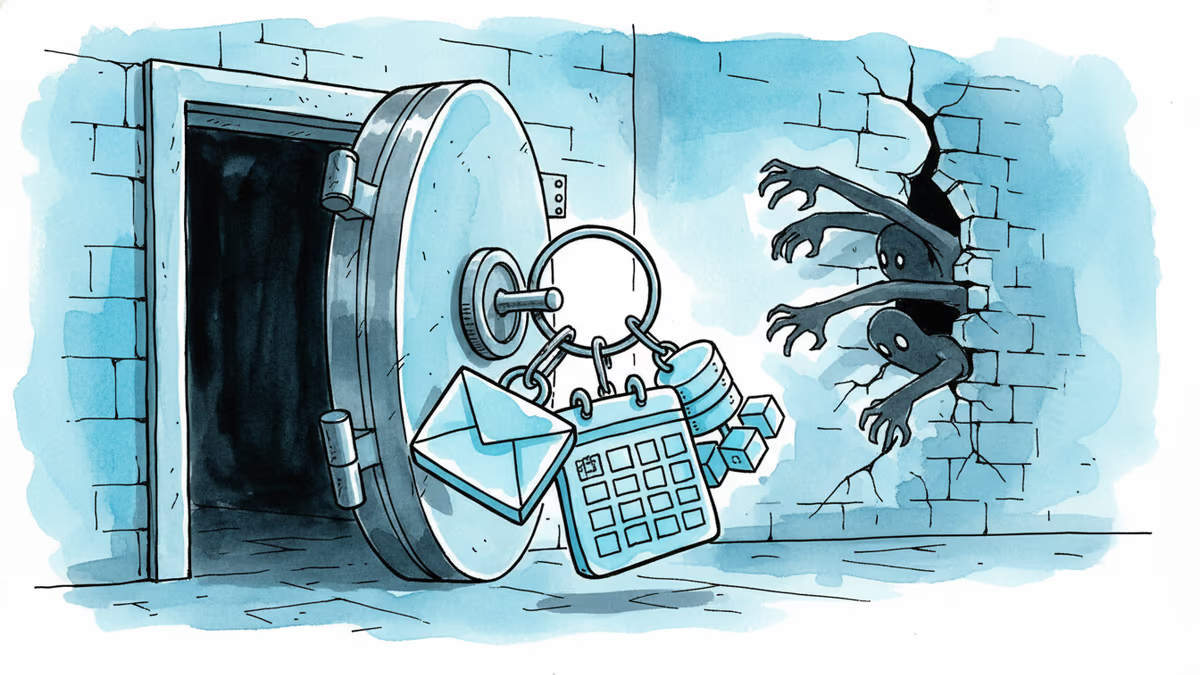
A critical vulnerability in Starlette—downloaded 325 million times per week—puts millions of AI agent servers at risk, exposing stored credentials for email, databases, and third-party services.

Viral videos show 2026 graduates jeering executives who praise AI at commencement ceremonies. It's not just rudeness — it's a signal about who pays for technological optimism.

Filipino virtual assistants using AI to ghost-manage LinkedIn profiles for executives is now a structured industry. 30 comments a day, fake engagement rings, and a platform struggling to tell real from fabricated.
Samsung and SK unveiled a chip and AI investment package worth thousands of trillions of won on June 29. The headline number swings wildly by outlet, but the real contest isn't capital — it's water and power.
A critical vulnerability in Starlette—downloaded 325 million times per week—puts millions of AI agent servers at risk, exposing stored credentials for email, databases, and third-party services.
Viral videos show 2026 graduates jeering executives who praise AI at commencement ceremonies. It's not just rudeness — it's a signal about who pays for technological optimism.
Filipino virtual assistants using AI to ghost-manage LinkedIn profiles for executives is now a structured industry. 30 comments a day, fake engagement rings, and a platform struggling to tell real from fabricated.
Thoughts
Share your thoughts on this article
Sign in to join the conversation