
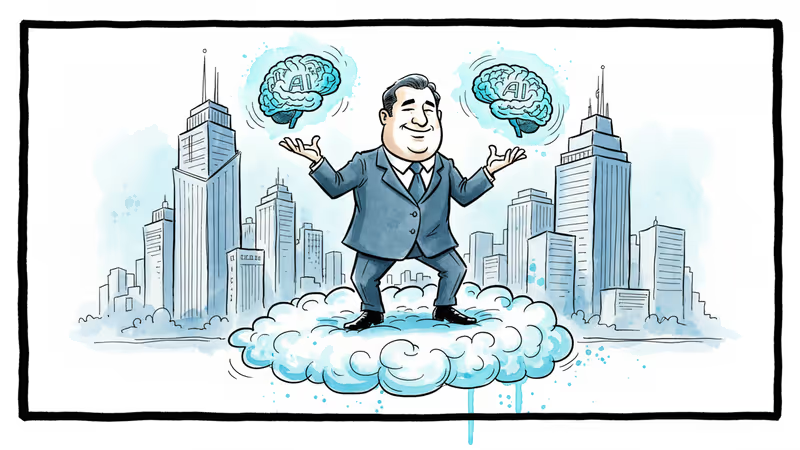
Why Snowflake Just Spent $400M on Two AI Partners
Snowflake signs identical $200M deals with OpenAI and Anthropic within two months. The enterprise AI market is becoming a multi-vendor game where choice trumps exclusivity.
Cloud data giant Snowflake just signed a $200 million multi-year deal with OpenAI, barely two months after inking an identical $200 million partnership with Anthropic. Same price tag, same playbook, different AI partner.
The message is clear: in enterprise AI, exclusivity is dead.
The Copy-Paste Strategy
Under the OpenAI deal, Snowflake's12,600 customers get access to OpenAI models across all three major cloud providers. Employees get ChatGPT Enterprise access too. The companies will also co-develop AI agents and other AI products.
What's striking is how CEO Sridhar Ramaswamy's announcement reads almost identically to his December Anthropic partnership statement. Both deals promise to "bring AI models to enterprise data" using Snowflake's "secure, governed platform."
"We remain intentionally model-agnostic," Baris Gultekin, Snowflake's VP of AI, told TechCrunch. "Enterprises need choice, and we do not believe in locking customers into a single provider."
The Multi-Vendor Moment

Snowflake isn't alone in this hedge-your-bets approach. Workflow automation platform ServiceNow announced similar multi-year deals with both OpenAI and Anthropic in January. Their reasoning? Different models excel at different tasks, and enterprises want flexibility.
ServiceNow's president Amit Zavery put it bluntly: they wanted to give customers and employees "the ability to choose which model they wanted based on the task at hand."
This makes business sense. OpenAI's GPT models shine at creative tasks and conversational AI, while Anthropic's Claude is praised for analytical reasoning and safety. Why limit yourself to one when you can have both?
The Measurement Problem
Who's actually winning the enterprise AI race? That depends on who's asking. A Menlo Ventures survey from late 2025 showed Anthropic with a commanding lead. An Andreessen Horowitz report last week naturally found OpenAI ahead. Both VCs are backing their portfolio companies' narratives.
These conflicting surveys highlight a fundamental challenge: enterprise AI adoption is still too new and fragmented to measure accurately. But the pattern of multi-vendor deals tells its own story.
The Uber-Lyft Model
Enterprise AI appears headed toward a ride-hailing market structure. Just as consumers switch between Uber and Lyft based on price, availability, and preference, enterprises are choosing AI models based on specific use cases and performance needs.
Employees are already doing this informally, using their preferred models regardless of corporate contracts. Smart enterprises are recognizing this reality and providing official multi-vendor access rather than fighting it.
Authors
Related Articles
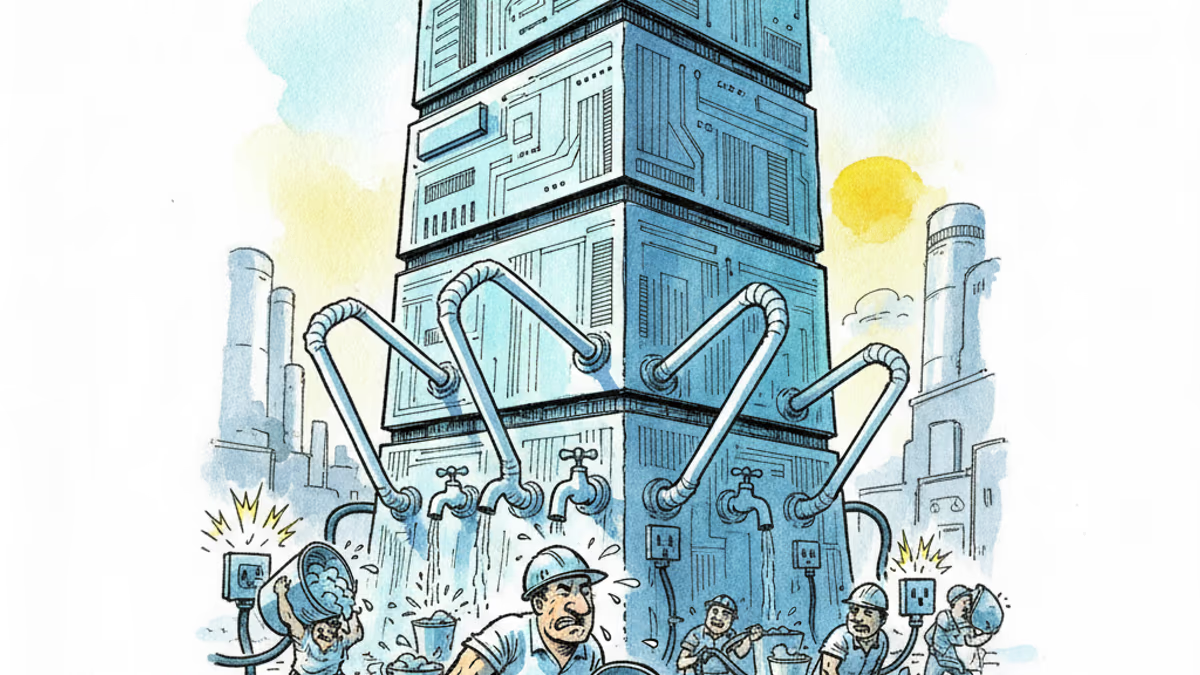
Samsung and SK unveiled a chip and AI investment package worth thousands of trillions of won on June 29. The headline number swings wildly by outlet, but the real contest isn't capital — it's water and power.
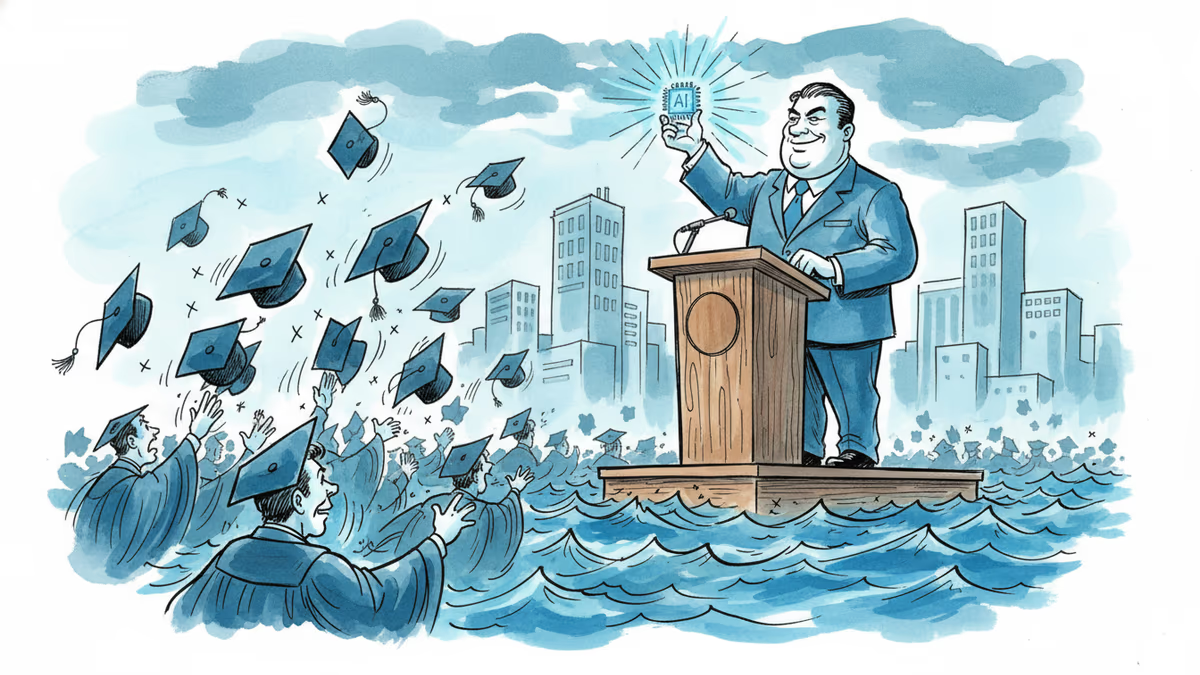
Viral videos show 2026 graduates jeering executives who praise AI at commencement ceremonies. It's not just rudeness — it's a signal about who pays for technological optimism.
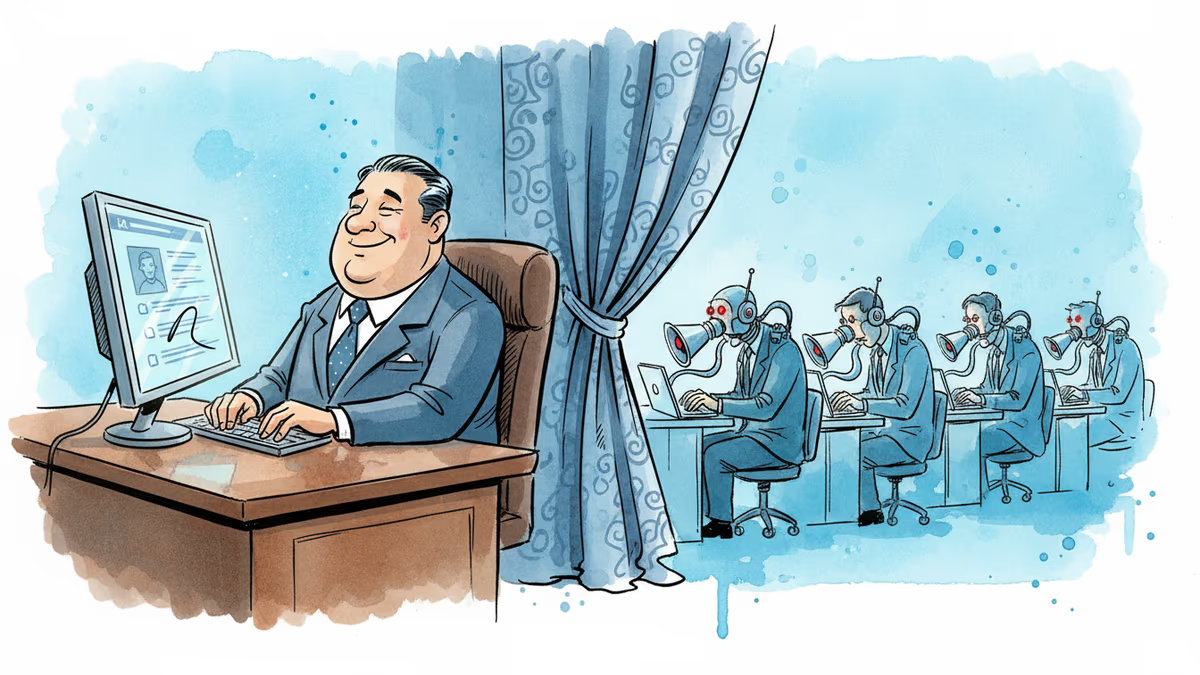
Filipino virtual assistants using AI to ghost-manage LinkedIn profiles for executives is now a structured industry. 30 comments a day, fake engagement rings, and a platform struggling to tell real from fabricated.
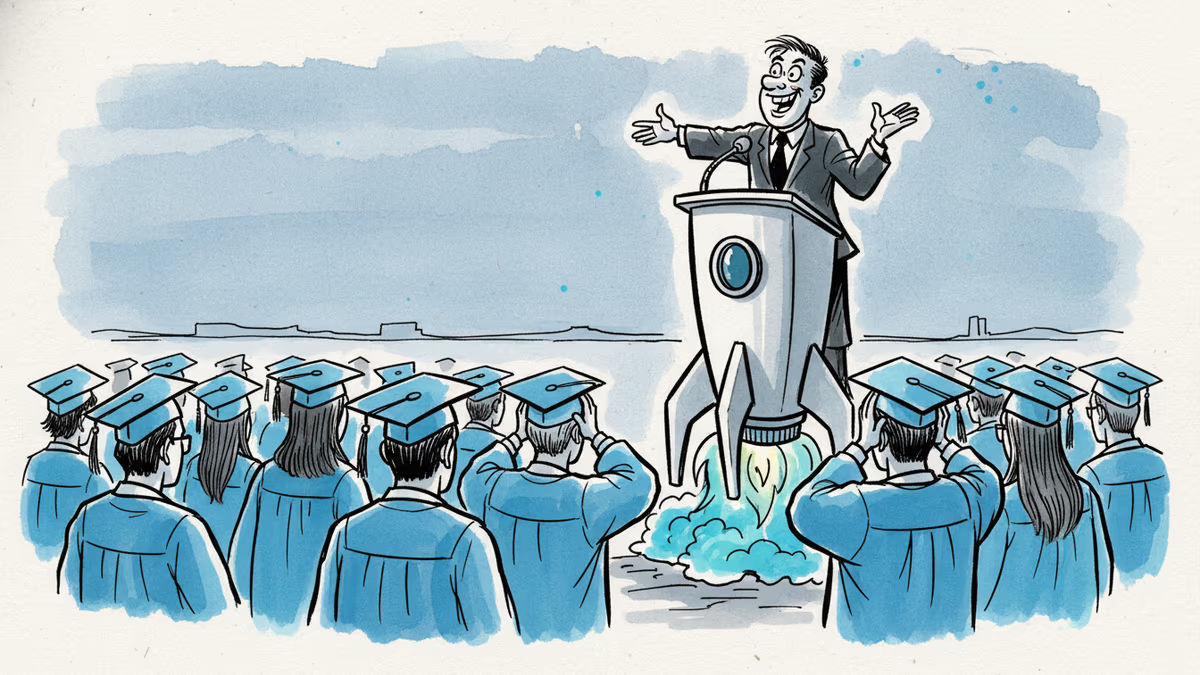
Two commencement speakers learned the hard way that AI enthusiasm doesn't land well with today's graduates. The backlash reveals a widening gap between tech optimism and Gen Z's economic reality.
Samsung and SK unveiled a chip and AI investment package worth thousands of trillions of won on June 29. The headline number swings wildly by outlet, but the real contest isn't capital — it's water and power.
Viral videos show 2026 graduates jeering executives who praise AI at commencement ceremonies. It's not just rudeness — it's a signal about who pays for technological optimism.
Filipino virtual assistants using AI to ghost-manage LinkedIn profiles for executives is now a structured industry. 30 comments a day, fake engagement rings, and a platform struggling to tell real from fabricated.
Two commencement speakers learned the hard way that AI enthusiasm doesn't land well with today's graduates. The backlash reveals a widening gap between tech optimism and Gen Z's economic reality.
Thoughts
Share your thoughts on this article
Sign in to join the conversation