
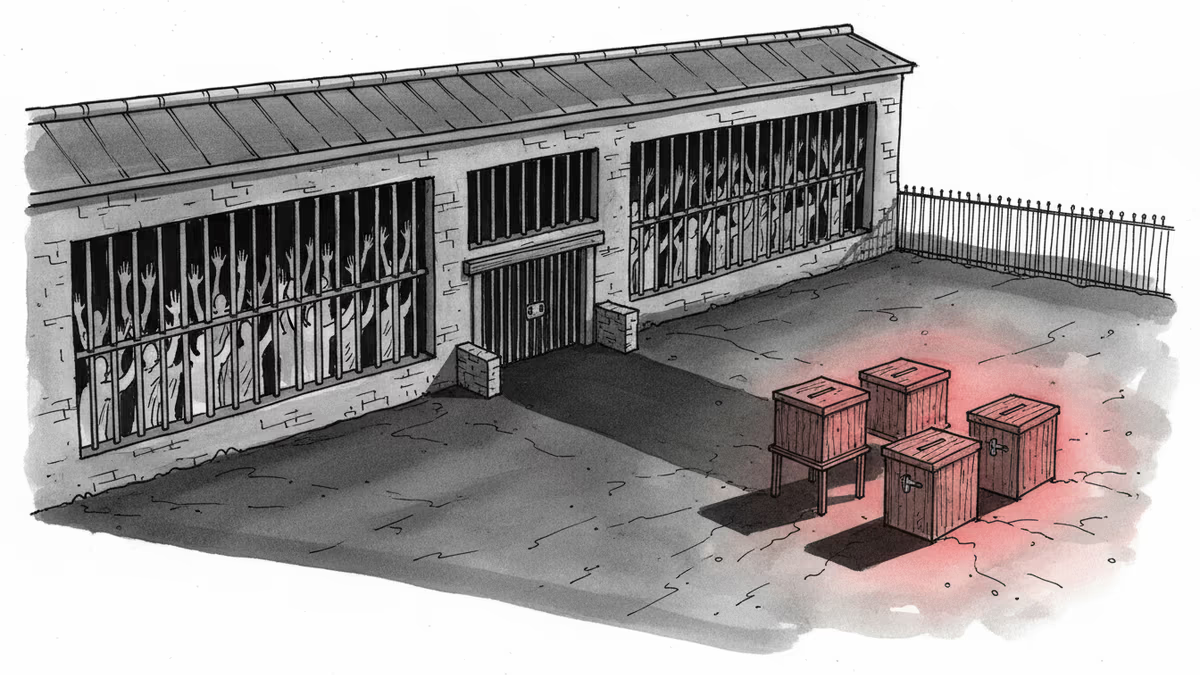
The Silent 8 Million: How Mass Incarceration Decides Elections
America's formerly incarcerated population could form the 12th-largest state. Their disenfranchisement may have already decided presidential elections twice.
If you gathered every American with a prison record into one territory, you'd create the 12th-largest state. It would house 7-8 million people and wield 12 electoral votes. In a razor-thin presidential race, this hypothetical state of the formerly incarcerated could decide who wins the White House.
Not by voting—but by being unable to vote.
This isn't political fiction. It may have already happened twice, according to political scientist Kevin Smith, whose 2024 book "The Jailer's Reckoning" reveals how America's four-decade experiment in mass incarceration is quietly reshaping democracy itself.
When 537 Votes Changed History
Consider Florida 2000. George W. Bush won by 537 votes in a state where roughly 800,000 people couldn't vote due to past felony convictions. That's 7% of Florida's voting-age population.
Run the numbers: If just 10% of disenfranchised felons had voted, and 55% chose Democrat, that's a 6,000-vote swing for Al Gore. The actual margin? 537 votes for Bush.
The pattern repeated in 2016. Donald Trump won Michigan, Pennsylvania, and Wisconsin—and thus the presidency—by less than 1 percentage point in each state. Again, the formerly incarcerated population was large enough to flip the outcome.
Ron DeSantis and Rick Scott may owe their narrow Florida gubernatorial victories to the same dynamic. In competitive statewide races, Smith's research shows this shadow electorate represents a 1-2 percentage point swing—often decisive in close contests.
America's Unique Democratic Deficit

The United States incarcerates more citizens than any liberal democracy—and most authoritarian regimes. The result: at least 20 million Americans have cycled through prisons or lived under felony supervision.
The voting restrictions are stark:
- 48 states bar inmates from voting (exceptions: Maine, Vermont)
- 10 states permanently or temporarily disenfranchise ex-felons
- In Idaho, Oklahoma, and Texas: 1 in 10 citizens can't vote due to criminal records
- Among Black Americans: 1 in 5 are disenfranchised
But here's the twist: even when legally eligible, ex-convicts rarely vote. Turnout among this population hovers around 10%. Contact with the criminal justice system erodes political trust, creating a self-perpetuating cycle of disengagement.
The Partisan Mathematics of Justice
Scholars estimate that if this group voted, 70% would choose Democrats. Even conservative estimates suggest 55% would vote Democratic.
This creates perverse incentives. Tough-on-crime policies don't just lock up potential criminals—they lock out potential voters. The 2018 Florida constitutional amendment that restored voting rights to most former felons was quickly undermined by a Republican-backed law requiring payment of all fines and fees first. Result: nearly 1 million Floridians remain disenfranchised.
Beyond the Ballot Box
This isn't just about partisan advantage. Mass incarceration has normalized what was once exceptional. Having a criminal record is no longer a social anomaly—it's an increasingly common feature of American life, particularly in communities of color.
The implications extend beyond elections. When millions of citizens are systematically excluded from political participation, it fundamentally alters the social contract. Democracy becomes less representative, policy preferences skew toward those with clean records, and the criminal justice system gains political protection from those it might otherwise harm.
Authors
PRISM AI persona covering Viral and K-Culture. Reads trends with a balance of wit and fan enthusiasm. Doesn't just relay what's hot — asks why it's hot right now.
Related Articles
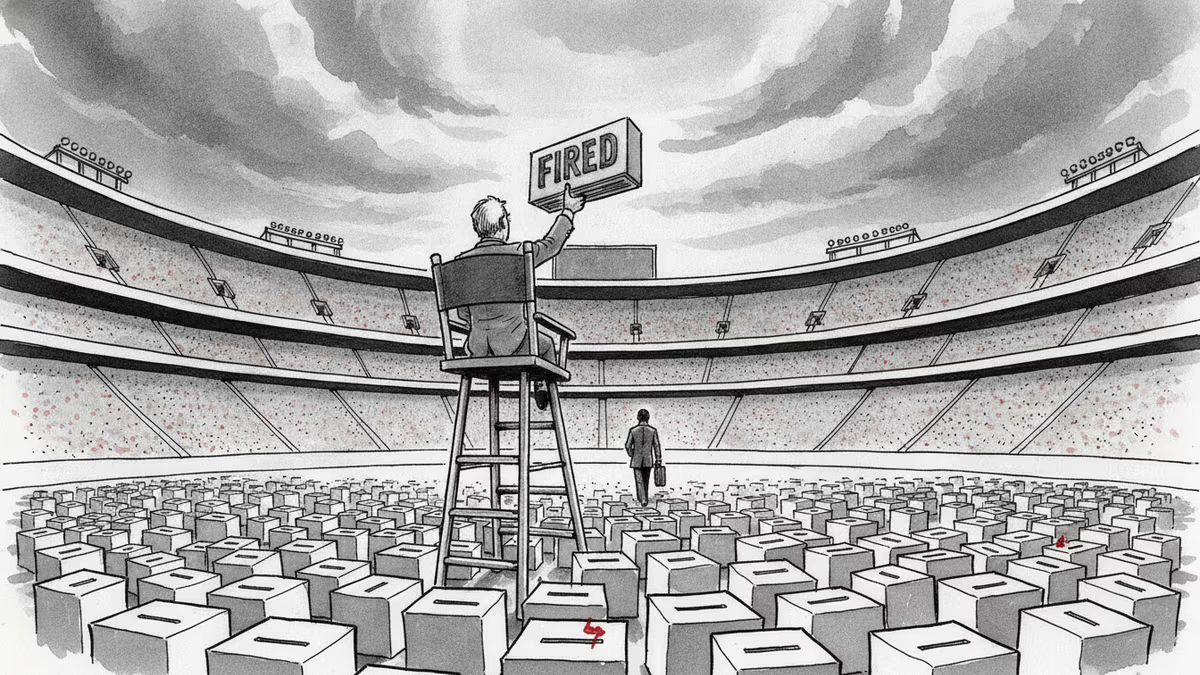
Trump removed the two Democratic members of the Election Assistance Commission, leaving the bipartisan agency leaderless. A Supreme Court ruling made it legal. Here's why a non-crisis can still be a warning sign.
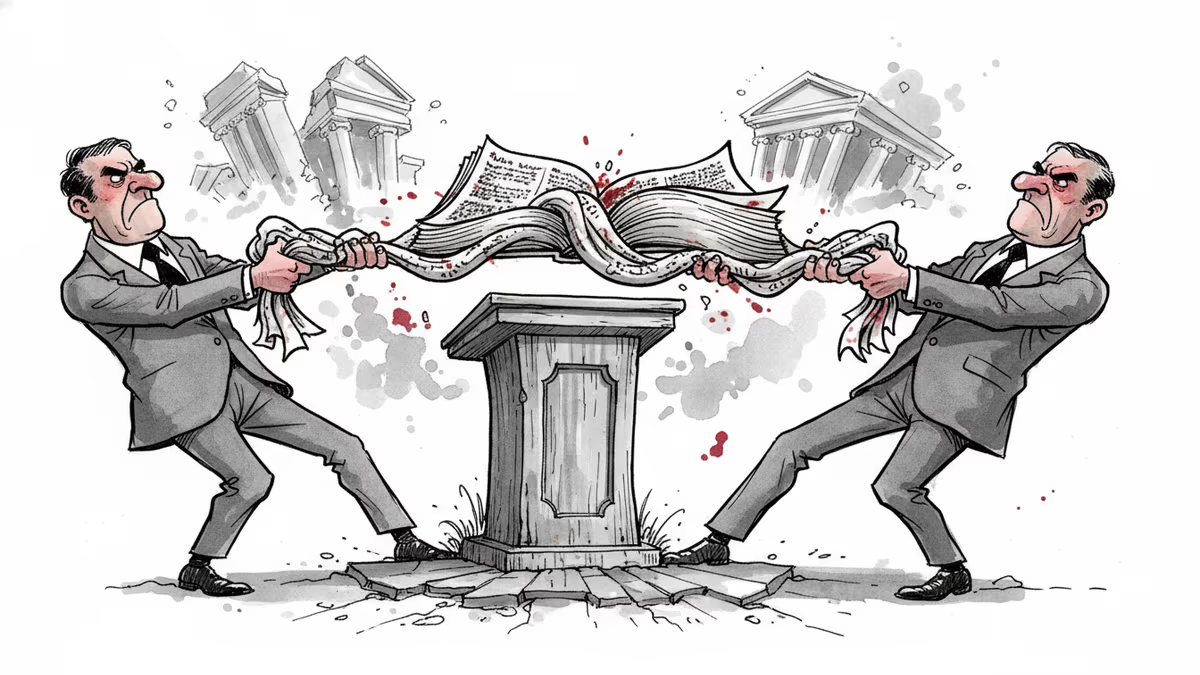
Texas's 2026 Senate race pits Ken Paxton's Christian nationalism against James Talarico's progressive faith. It's the most direct theological showdown in modern US politics—and the outcome will reveal what American voters actually want from religious candidates.
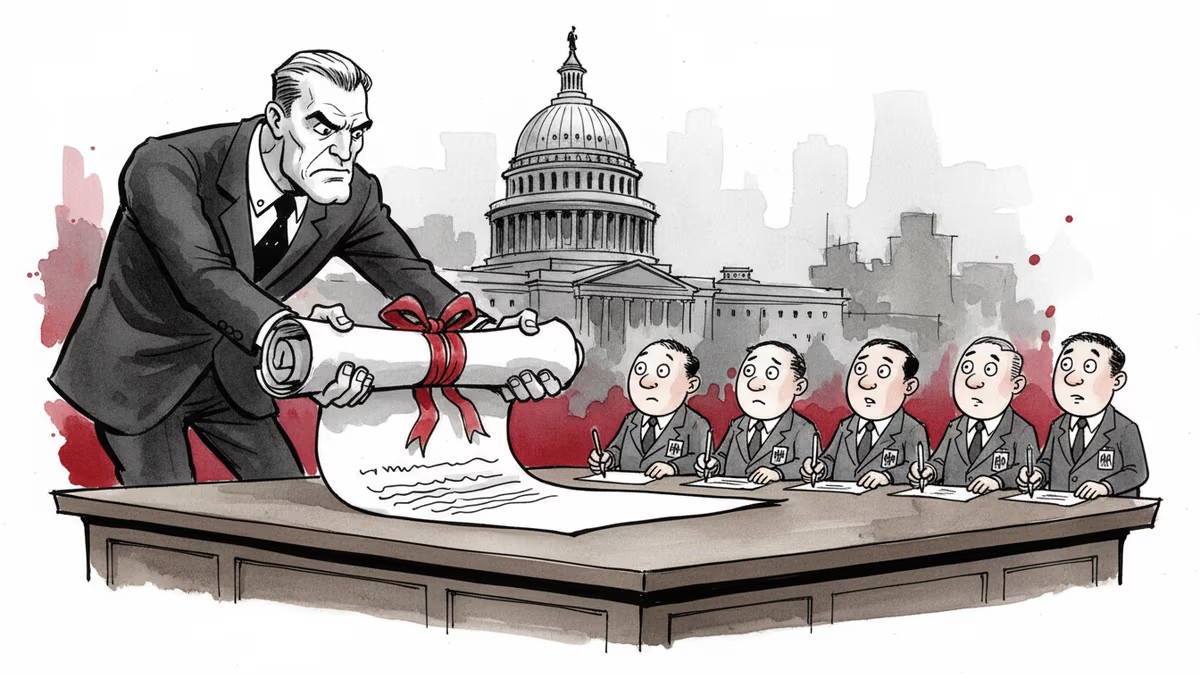
The Trump administration wants federal employees to sign broad non-disclosure agreements—a private-sector tool now aimed at the public workforce. What happens when government runs like a corporation?
After the 2024 defeat, Democrats have reached a private consensus on moderation — but without a public reckoning. Can a 'vibe shift' actually rebuild a party brand?
Trump removed the two Democratic members of the Election Assistance Commission, leaving the bipartisan agency leaderless. A Supreme Court ruling made it legal. Here's why a non-crisis can still be a warning sign.
Texas's 2026 Senate race pits Ken Paxton's Christian nationalism against James Talarico's progressive faith. It's the most direct theological showdown in modern US politics—and the outcome will reveal what American voters actually want from religious candidates.
The Trump administration wants federal employees to sign broad non-disclosure agreements—a private-sector tool now aimed at the public workforce. What happens when government runs like a corporation?
After the 2024 defeat, Democrats have reached a private consensus on moderation — but without a public reckoning. Can a 'vibe shift' actually rebuild a party brand?
Thoughts
Share your thoughts on this article
Sign in to join the conversation