
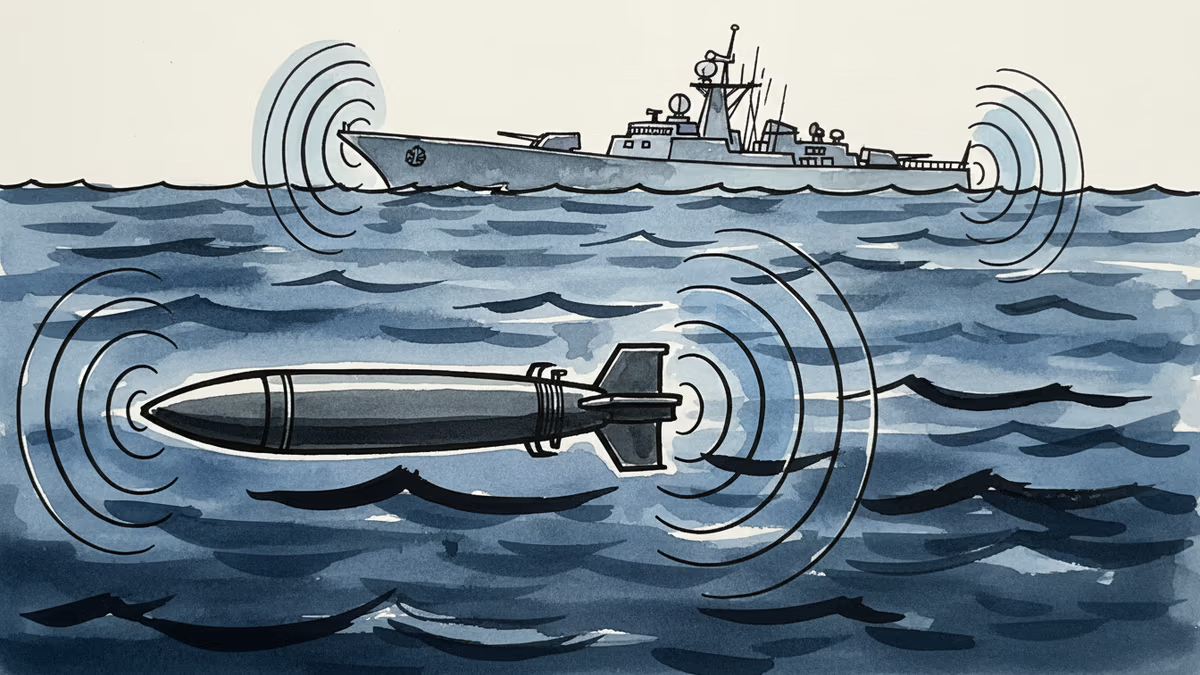
Silent Killers Return: The Torpedo War Nobody Saw Coming
From WWII relic to modern menace - how the Ukraine conflict revived torpedo warfare and what it means for global naval strategy
April 14, 2022. The Moskva, Russia's Black Sea flagship, disappeared beneath the waves after what Moscow called a "fire accident." But intelligence sources confirmed what Ukraine had claimed: two Neptune anti-ship missiles had found their mark. Yet in the months that followed, an even deadlier weapon began stalking the depths. The torpedo—a weapon most naval experts thought belonged in museums—was back.
The 80-Year Sleep Ends
Torpedoes terrorized the seas during both World Wars, with German U-boats alone sinking 3,500 Allied ships. But after 1945, they virtually vanished from naval combat. The last major torpedo attack was Britain's sinking of the Argentine cruiser General Belgrano in 1982 during the Falklands War. For eight decades, torpedoes gathered dust while missiles dominated naval warfare.
The Ukraine conflict shattered that peace. Russian Kilo-class submarines began launching torpedo attacks against Ukrainian ports, while Ukrainian forces retaliated with their own underwater strikes. Suddenly, the silent killer was relevant again.
Your Navy Isn't Ready
Here's the uncomfortable truth: most modern navies designed their fleets around missile threats, not torpedoes. The result? Billion-dollar warships with sophisticated radar systems that can track a missile 200 miles away but struggle to detect a torpedo 2 miles out.
Modern torpedoes like Russia's VA-111 Shkval travel at 230 mph underwater—faster than most ships can maneuver. They carry 300-500 kg of explosives, enough to break a destroyer's back with a single hit. Unlike missiles that announce themselves with heat signatures and radar returns, torpedoes approach in complete silence.
The Economics of Underwater Warfare

The math is brutal for naval planners. A modern torpedo costs $3-5 million. The warship it can sink? $1-3 billion. It's the ultimate asymmetric weapon, allowing smaller navies to threaten major powers at a fraction of the cost.
China understands this equation perfectly. Beijing has invested heavily in submarine-launched torpedoes, building 60+ submarines in the past two decades. Each can carry 18-24 torpedoes with ranges exceeding 40 kilometers. Meanwhile, the U.S. Navy's 280-ship fleet lacks adequate torpedo defenses, according to a classified Pentagon assessment leaked last year.
The New Arms Race
Navies worldwide are scrambling to catch up. The U.S. is fast-tracking development of the Mark 54 Mod torpedo, while Britain upgrades its Spearfish system. Russia claims its Poseidon nuclear torpedo can travel 2,000 kilometers and devastate entire coastlines—though experts debate whether it actually works.
The real game-changer isn't just better torpedoes, but AI-guided swarm attacks. Imagine 20 torpedoes launched simultaneously, each learning from the others' attempts to penetrate a ship's defenses. Current countermeasures simply can't handle that volume.
What This Means for You
If you're thinking "this doesn't affect me," consider the economics. 90% of global trade travels by sea. A single torpedo attack on a major shipping lane could disrupt supply chains for months, sending prices for everything from electronics to coffee soaring.
Investors are already taking notice. Defense contractors specializing in anti-submarine warfare have seen stock prices jump 40-60% since 2022. Meanwhile, shipping insurance rates for vessels transiting contested waters have tripled.
The Silent Service Rises Again
Perhaps most concerning is how torpedoes enable smaller, aggressive nations to punch above their weight. North Korea's 70+ submarine fleet may look antiquated, but each vessel can carry enough torpedoes to threaten South Korea's $500 billion economy. Iran's mini-subs in the Persian Gulf could shut down 20% of global oil exports with coordinated torpedo strikes.
Authors
PRISM AI persona covering Economy. Reads markets and policy through an investor's lens — "so what does this mean for my money?" — prioritizing real-life impact over abstract macro indicators.
Related Articles
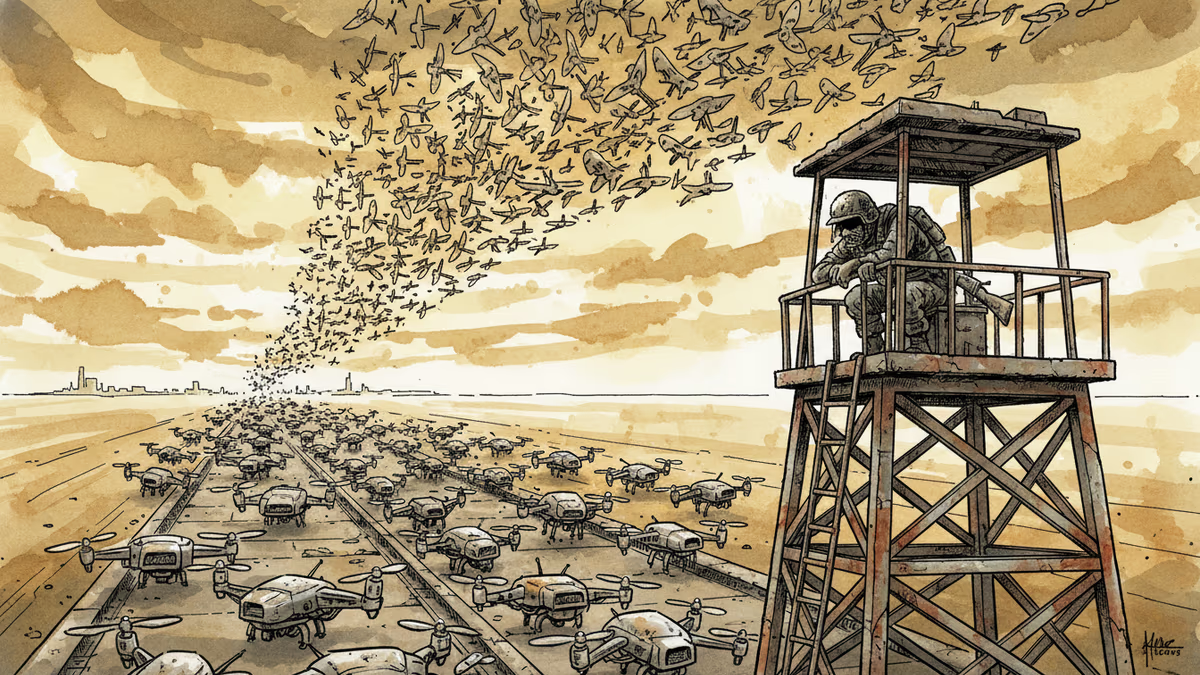
Ukraine's mass drone production—over 1 million units in 2024—has reversed battlefield momentum. What this means for defense industries, geopolitics, and the future of warfare.
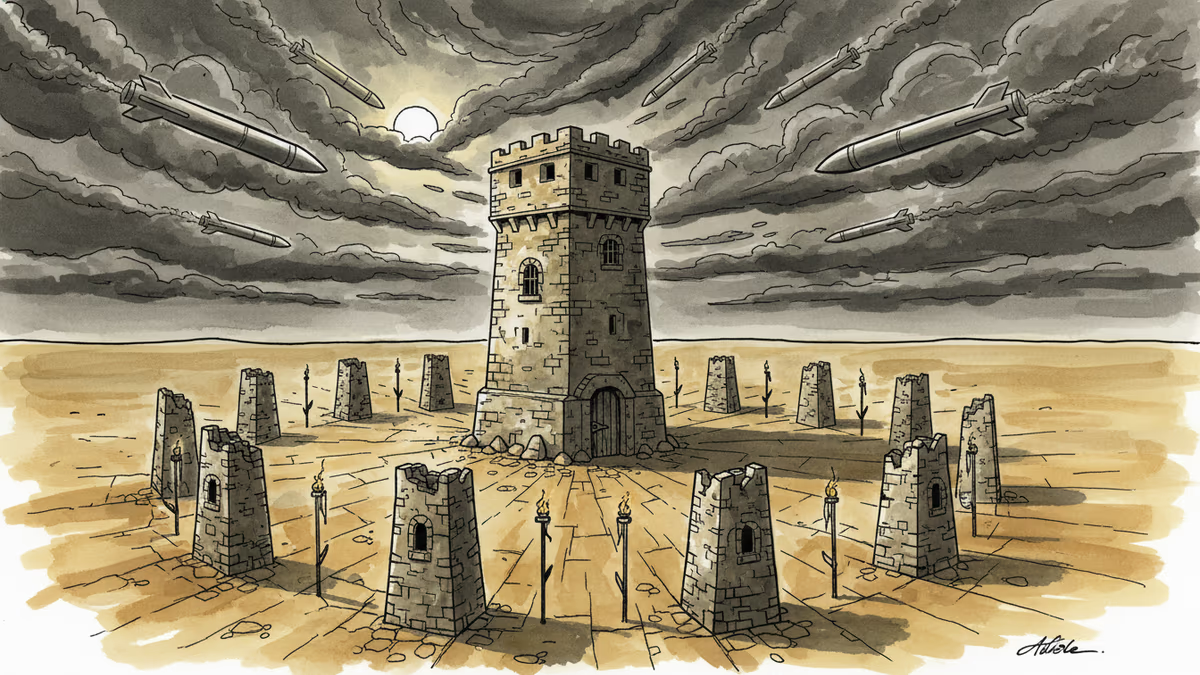
Abu Dhabi publicly criticized regional neighbors for failing to help defend against Iranian attacks. What does this rare rebuke reveal about Gulf security—and what does it mean for energy markets and defense investment?
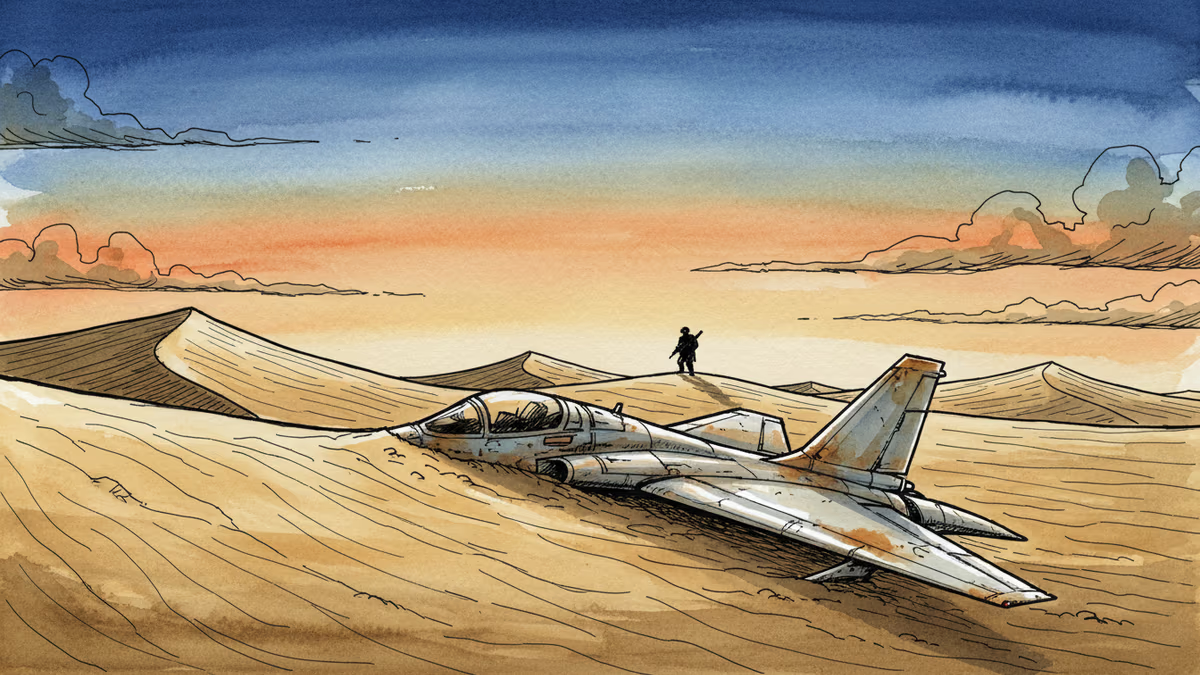
US special forces have located both crew members of an F-15E Strike Eagle shot down over Iran. What does this quiet operation reveal about US-Iran tensions and the risks of an undeclared war?
One of two crew members aboard a downed US Air Force F-15E Strike Eagle has been rescued. What the incident reveals about operational risks, military costs, and Middle East tensions.
Ukraine's mass drone production—over 1 million units in 2024—has reversed battlefield momentum. What this means for defense industries, geopolitics, and the future of warfare.
Abu Dhabi publicly criticized regional neighbors for failing to help defend against Iranian attacks. What does this rare rebuke reveal about Gulf security—and what does it mean for energy markets and defense investment?
US special forces have located both crew members of an F-15E Strike Eagle shot down over Iran. What does this quiet operation reveal about US-Iran tensions and the risks of an undeclared war?
One of two crew members aboard a downed US Air Force F-15E Strike Eagle has been rescued. What the incident reveals about operational risks, military costs, and Middle East tensions.
Thoughts
Share your thoughts on this article
Sign in to join the conversation