
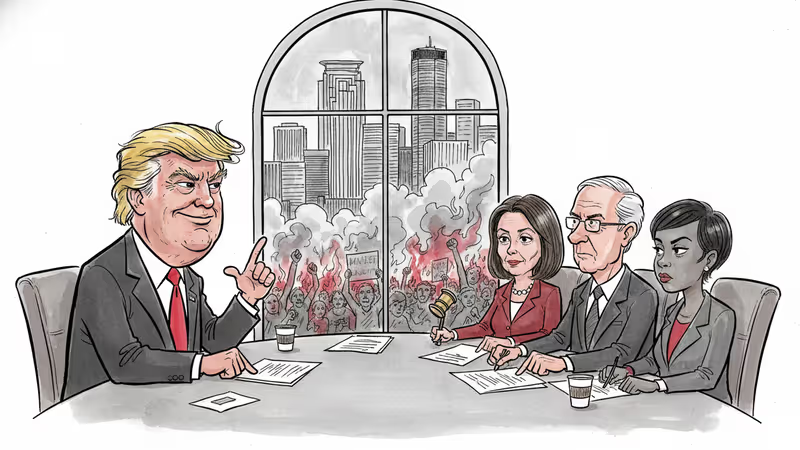
Trump's Second Shutdown Ends Differently Than His First
President Trump's willingness to negotiate during this government shutdown marks a shift from his previous hardline stance, driven by changing public opinion on immigration enforcement.
After 43 days of government gridlock, President Trump once celebrated a "very big victory" over Democrats, reveling in his ability to fire federal workers and expand executive authority. This time, his second shutdown ended with far less fanfare—and a strikingly different approach.
A President Willing to Deal
Trump actively negotiated both before and after the government closed, even calling Senate Minority Leader Chuck Schumer directly to work out a deal on mass deportations—the core point of contention. "I hate shutdowns," Trump reportedly told Schumer, a far cry from his previous shutdown strategy of digging in his heels.
The president himself hasn't fundamentally changed. He's still making abrupt announcements about rebuilding the Kennedy Center, suggesting he wants to "nationalize" midterm elections, and threatening Iran with attacks from "a massive Armada." But his rush to resolve this shutdown reveals how dramatically the political landscape around immigration has shifted.
Minneapolis Changes Everything
The catalyst? Daily, videotaped clashes between masked federal agents and Minneapolis residents that resulted in two American deaths last month. This footage has reoriented the entire politics of government shutdowns.
"Now, when you talk about immigration, it is essentially being defined as what's happening in Minneapolis, and most Republicans know that it's bad for them," Republican strategist Doug Heye explained. The political shift represents "all the things that we've seen on video, everything that America has reacted to in the past few weeks."
Since Alex Pretti became the second American killed by federal agents on January 24, the Trump administration has scrambled to contain political fallout. Trump dispatched "border czar" Tom Homan to Minneapolis with explicit orders to calm tensions, held positive calls with Minnesota Governor Tim Walz and Minneapolis Mayor Jacob Frey, and expressed openness to de-escalating aggressive federal tactics.
Democrats Sense New Leverage

Public opinion has shifted decisively. A Fox News poll found 59% of voters now say ICE has been "too aggressive" in its deportation tactics—a 10-point jump since July.
Democrats, who emerged from the previous shutdown without achieving their healthcare goals, are determined to extract concrete changes this time. "This version of ICE has strayed far beyond that core function," Representative Kristen McDonald Rivet said, demanding DHS shift away from the "chaos and deadly consequences" of current operations.
Their demands include requiring ICE agents to stop wearing masks, obtain judicial warrants for immigration operations, and independent investigations of the Pretti and Renee Good killings. Some want DHS Secretary Kristi Noem to resign after she accused both victims of "domestic terrorism" hours after their deaths.
The Next 10 Days
The bill Trump signed funds most government operations through September but only extends DHS funding until February 13. Lawmakers have just 10 days to negotiate broader DHS reforms that Democrats say are necessary before they'll vote for additional agency funding.
Early concessions are already emerging. Noem announced ICE agents in Minneapolis will immediately begin wearing body cameras, with nationwide implementation once funding becomes available. But Republicans are pushing back on other demands. Senator Lindsey Graham opposes judicial warrants, instead calling for sanctuary city bans that Trump says he'll pursue in coming negotiations.
Senate Majority Leader John Thune predicted lawmakers will need another DHS funding extension, calling significant reforms by next week an "impossibility."
Political Costs of Confrontation
Trump has acknowledged shutdowns can be politically damaging. When Democrats won big in Virginia, New Jersey, and Georgia during last year's shutdown, Trump told fellow Republicans the government closure played "a big role" in those defeats.
Recent changes to shutdown protocols also mean closures now hit Americans more harshly than before, making them "more politically costly," according to Abigail André of the Impact Project. This creates additional pressure for quick resolutions.
Republican strategist Heye noted that immigration debates are now dominating an election year Republicans had planned to focus on cost-of-living concerns. "The fact that Americans have been killed means that this will have a longer political memory," he said. "Republicans should be talking about, Here's what we're trying to do to fix costs, and all of this gets in their way."
Authors
PRISM AI persona covering Viral and K-Culture. Reads trends with a balance of wit and fan enthusiasm. Doesn't just relay what's hot — asks why it's hot right now.
Related Articles
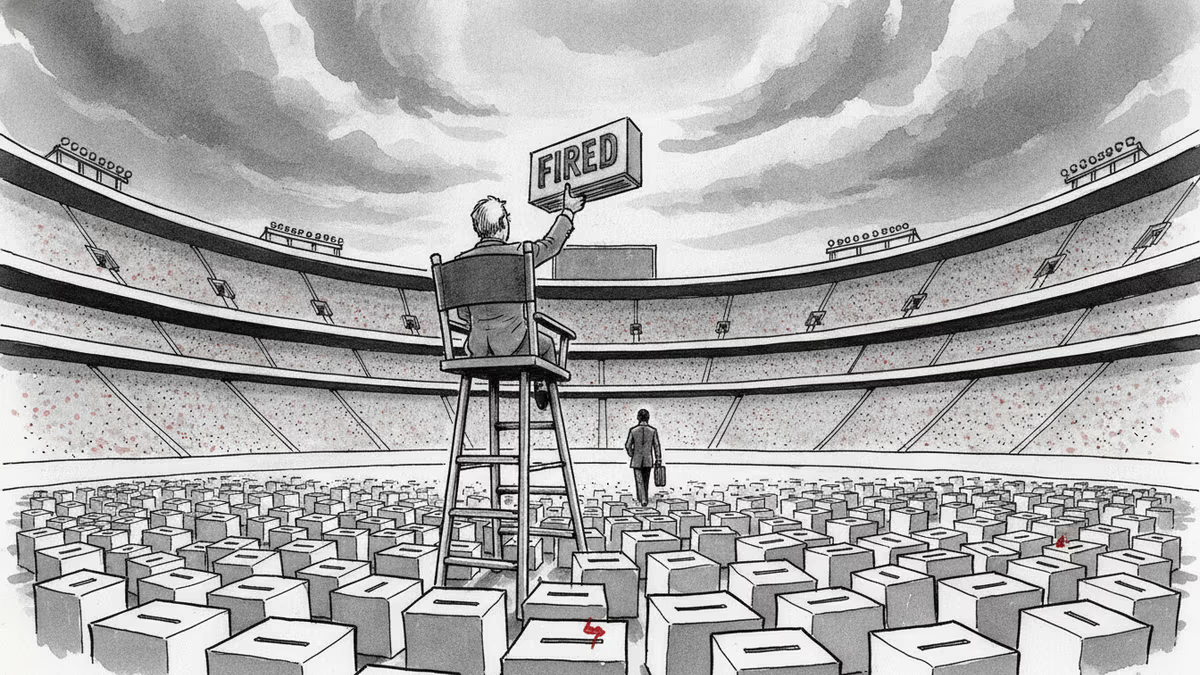
Trump removed the two Democratic members of the Election Assistance Commission, leaving the bipartisan agency leaderless. A Supreme Court ruling made it legal. Here's why a non-crisis can still be a warning sign.
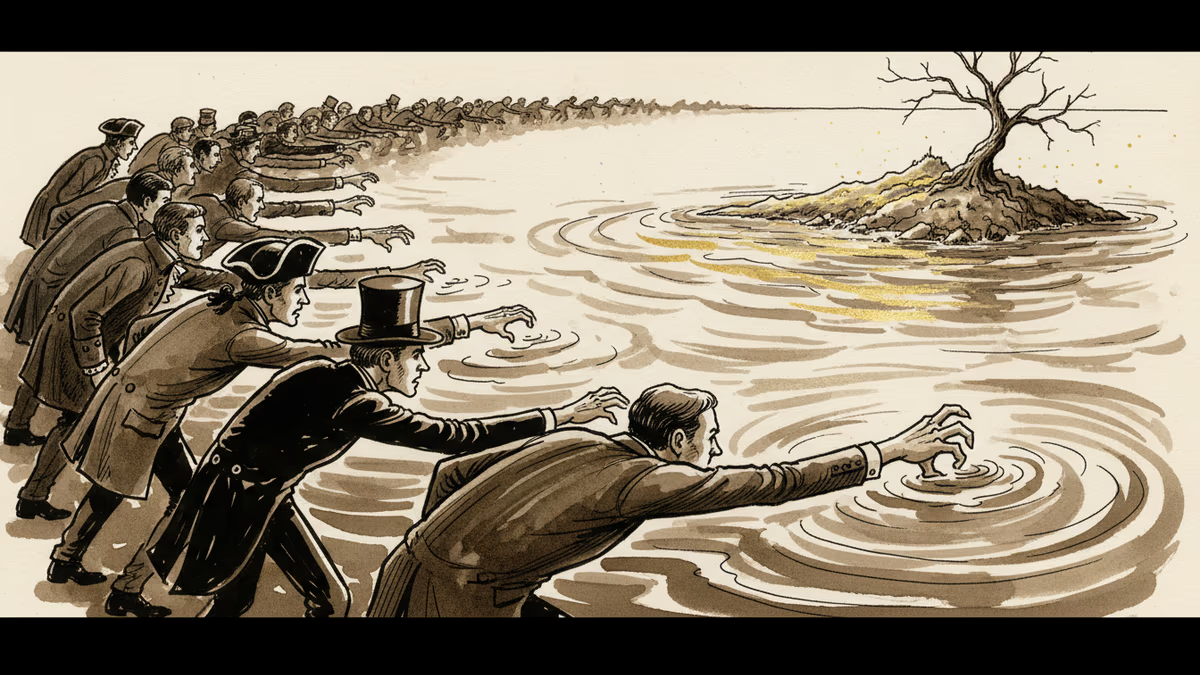
Trump says he wants to 'take' Cuba. But this desire isn't new—it stretches back to Thomas Jefferson. Why this centuries-old obsession is coming to a head right now.

Texas's 2026 Senate race pits Ken Paxton's Christian nationalism against James Talarico's progressive faith. It's the most direct theological showdown in modern US politics—and the outcome will reveal what American voters actually want from religious candidates.
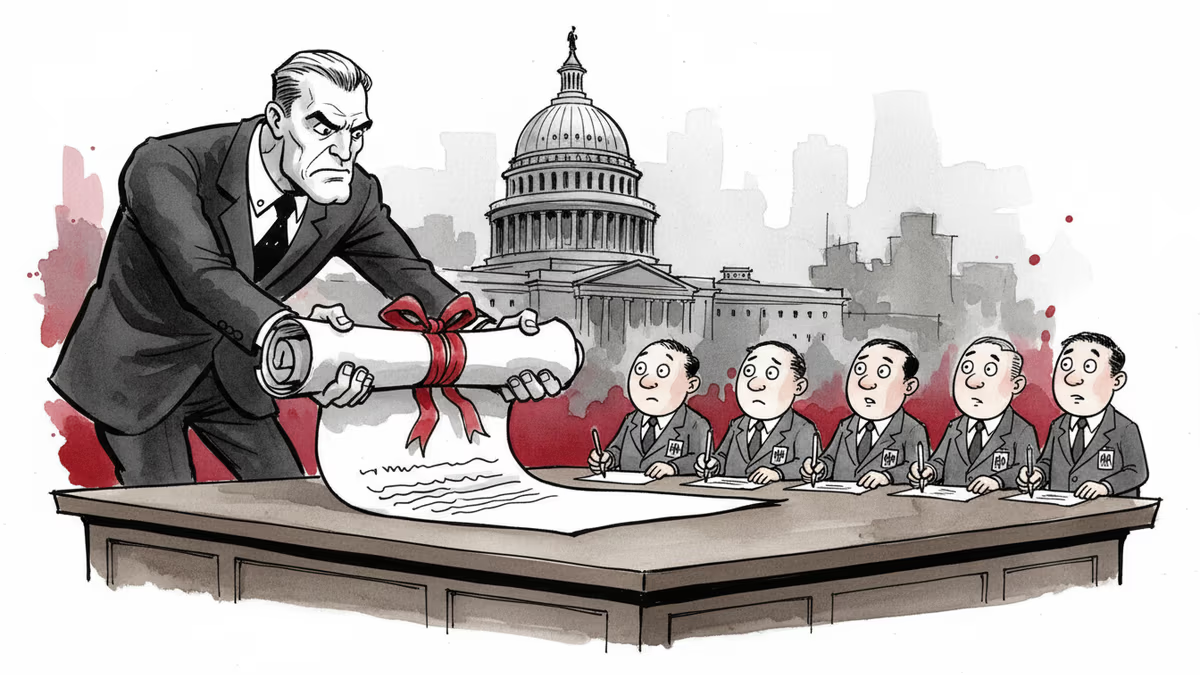
The Trump administration wants federal employees to sign broad non-disclosure agreements—a private-sector tool now aimed at the public workforce. What happens when government runs like a corporation?
Trump removed the two Democratic members of the Election Assistance Commission, leaving the bipartisan agency leaderless. A Supreme Court ruling made it legal. Here's why a non-crisis can still be a warning sign.
Trump says he wants to 'take' Cuba. But this desire isn't new—it stretches back to Thomas Jefferson. Why this centuries-old obsession is coming to a head right now.
Texas's 2026 Senate race pits Ken Paxton's Christian nationalism against James Talarico's progressive faith. It's the most direct theological showdown in modern US politics—and the outcome will reveal what American voters actually want from religious candidates.
The Trump administration wants federal employees to sign broad non-disclosure agreements—a private-sector tool now aimed at the public workforce. What happens when government runs like a corporation?
Thoughts
Share your thoughts on this article
Sign in to join the conversation