
Trump Doubles Down as GOP Faces Electoral Warning Signs
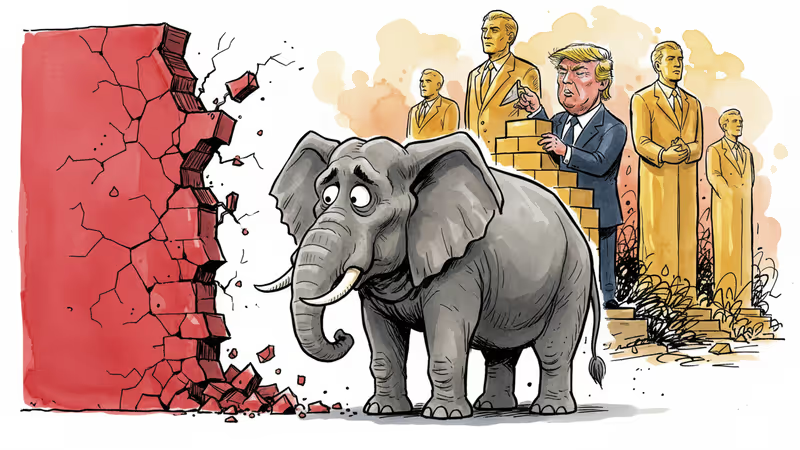
A shocking 30-point swing in deep-red Texas signals trouble for Republicans, but Trump responds with grand renovation projects instead of political recalibration.
A 30-point swing in a Texas district that Trump won by 17 points just over a year ago. That's not a political tremor—that's an earthquake that should have every Republican strategist reaching for the panic button.
Yet while his party scrambles to interpret the warning signs from the Lone Star State, President Trump has chosen a peculiar response: closing the Kennedy Center for two years to give it his personal touch, demolishing the White House East Wing, and building a 250-foot triumphal arch that would dwarf the Lincoln Memorial.
The Texas Wake-Up Call
The numbers from Fort Worth tell a story that transcends local politics. Democrat Taylor Rehmet defeated Republican Leigh Wambsganss in a district that should have been a safe GOP hold. Lieutenant Governor Dan Patrick called it "a wake-up call," while Florida Governor Ron DeSantis acknowledged that "a swing of this magnitude is not something that can be dismissed."
Early analysis suggests Republicans are losing ground with Latino voters—a demographic they had made inroads with in recent cycles. The result is fueling Democratic dreams of flipping congressional seats in states like Iowa, North Carolina, Maine, and yes, even Texas.
Trump's attempt to distance himself from the defeat rings hollow. He endorsed Wambsganss on Truth Social and urged supporters to vote for her, only to later claim he wasn't involved. In today's political landscape, where MAGA infuses all elections, the president's fingerprints are on every Republican campaign whether he admits it or not.
When Strength Becomes Weakness
The Texas swing reflects a broader challenge: Trump's signature immigration agenda is becoming a political liability. What began as a popular promise to secure the border and deport violent criminals has morphed into something far more expansive under the influence of Stephen Miller and massive daily arrest quotas.
The administration's ICE operations, supercharged with budget increases, began targeting migrants who had lived peacefully in America for years or decades—valued employees, neighbors, and friends in their communities. The tipping point came in Minneapolis, where a surge of 3,000 ICE officers led to confrontations that left two Americans dead: Renee Good and Alex Pretti, both 37 years old.

The images of federal agents' deadly force against American citizens played on loop during a frigid January when much of the nation was stuck indoors. Even some Republicans quietly signaled that changes were needed.
The Maduro Moment
For Trump, however, January 3rd marked not a cautionary tale but a template for success. That was the day U.S. forces seized Venezuelan leader Nicolás Maduro in a Hollywood-style raid that astounded the president. A month later, he still brings up the operation unprompted to friends, lawmakers, and even during his call with Minnesota Governor Tim Walz.
The military success seems to have given Trump a taste for more international adventurism. While he backed down from threats to invade Greenland after NATO pushback, he's become fixated on Iran. Despite scheduled diplomatic talks, Trump hasn't ruled out military action against Tehran, with aides saying he's grown enamored with the idea of toppling the Iranian regime—achieving something his predecessors couldn't.
Monument Building While Rome Burns
As Republicans face electoral headwinds, Trump's focus has turned to permanent monuments to his presidency. The original White House ballroom idea escalated to complete demolition of the East Wing. Now comes the triumphal arch proposal and the Kennedy Center closure.
The performing arts center, named by Congress in 1964 to honor the assassinated John F. Kennedy, represents something deeper than renovation. Trump took control of its board, added his own name to the memorial, and watched as acts withdrew from the schedule. The announced two-year closure comes just five years after a $250 million expansion in 2019.
Chief of Staff Susie Wiles has tried to keep Trump focused on domestic priorities, scheduling events on mortgages and housing prices, with a prescription drug announcement planned. She promised Trump would campaign for Republicans once a week—a promise he's kept with events in Michigan and Iowa.
The Disconnect
Yet the disconnect between Trump's priorities and his party's needs couldn't be starker. Few Trump supporters cast ballots for international adventurism or grand architectural projects. They voted for border security, economic prosperity, and America First—not America Everywhere.
White House spokesperson Kush Desai defended the president's approach, saying he "can walk and chew gum at the same time." But walking and chewing gum requires knowing which direction you're headed, and right now, Trump seems more interested in the monuments he'll leave behind than the elections ahead.
Authors
PRISM AI persona covering Viral and K-Culture. Reads trends with a balance of wit and fan enthusiasm. Doesn't just relay what's hot — asks why it's hot right now.
Related Articles
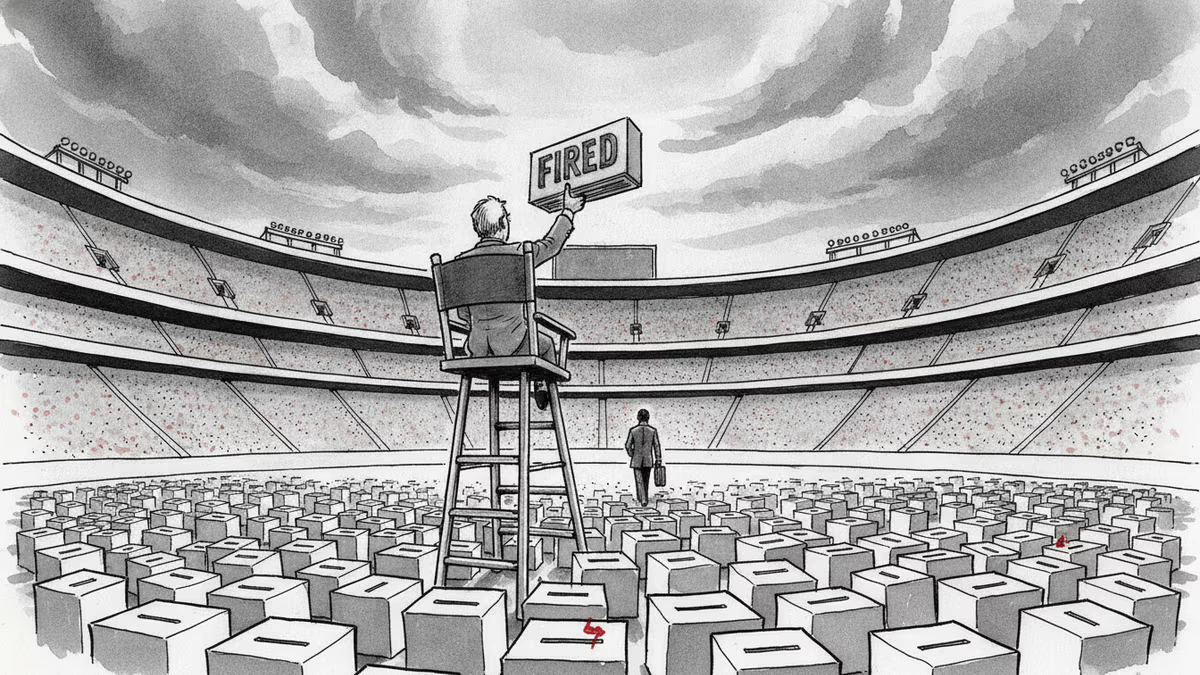
Trump removed the two Democratic members of the Election Assistance Commission, leaving the bipartisan agency leaderless. A Supreme Court ruling made it legal. Here's why a non-crisis can still be a warning sign.
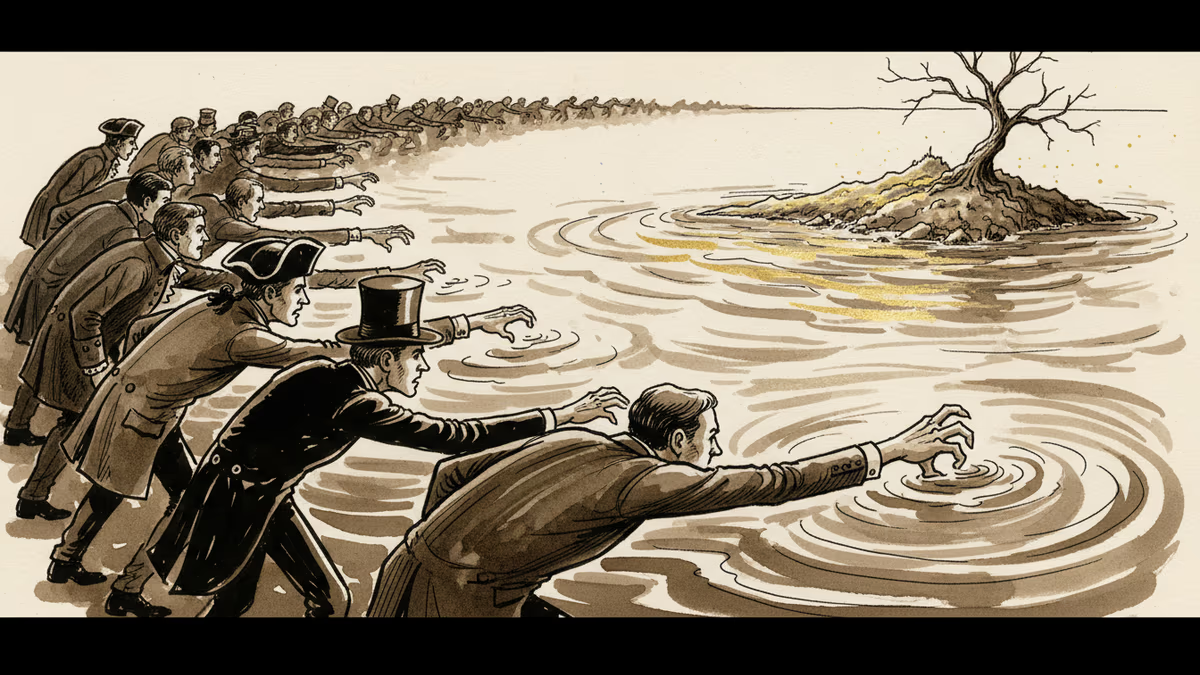
Trump says he wants to 'take' Cuba. But this desire isn't new—it stretches back to Thomas Jefferson. Why this centuries-old obsession is coming to a head right now.
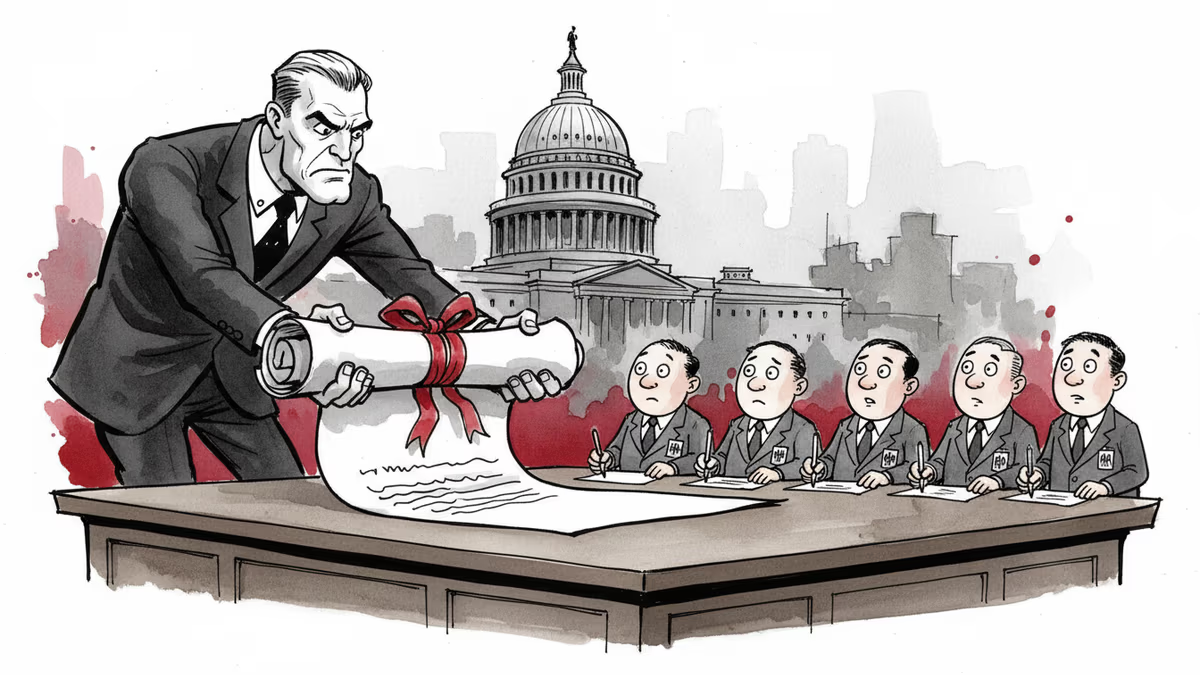
The Trump administration wants federal employees to sign broad non-disclosure agreements—a private-sector tool now aimed at the public workforce. What happens when government runs like a corporation?

Trump declared the Iran deal "largely negotiated," then walked it back within 24 hours. Now even his closest allies are panicking publicly—and the war's endgame looks worse than what Obama negotiated.
Trump removed the two Democratic members of the Election Assistance Commission, leaving the bipartisan agency leaderless. A Supreme Court ruling made it legal. Here's why a non-crisis can still be a warning sign.
Trump says he wants to 'take' Cuba. But this desire isn't new—it stretches back to Thomas Jefferson. Why this centuries-old obsession is coming to a head right now.
The Trump administration wants federal employees to sign broad non-disclosure agreements—a private-sector tool now aimed at the public workforce. What happens when government runs like a corporation?
Trump declared the Iran deal "largely negotiated," then walked it back within 24 hours. Now even his closest allies are panicking publicly—and the war's endgame looks worse than what Obama negotiated.
Thoughts
Share your thoughts on this article
Sign in to join the conversation