
Shinsegae and Alibaba Sign 1 Trillion Won Deal to Take K-Products Global
Shinsegae and Alibaba sign a massive MOU to drive 1 trillion won in annual transactions for Korean products. Learn about the Shinsegae Alibaba partnership 2026 strategy.
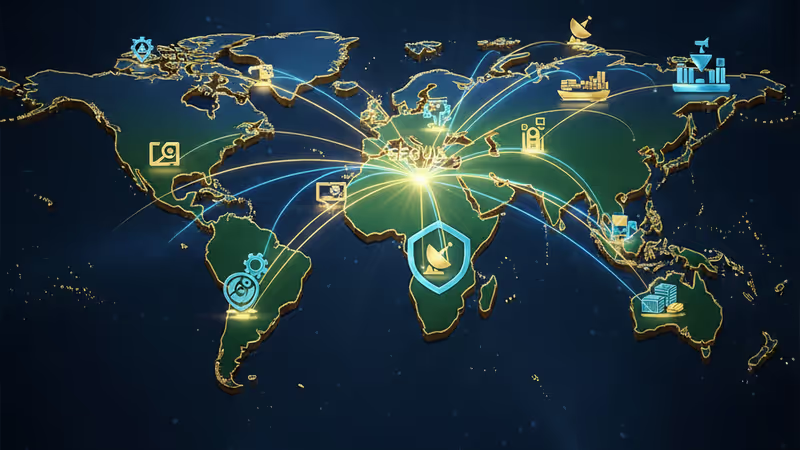
A 1 trillion won gateway to global markets has just opened for South Korean sellers. Shinsegae Group and Chinese e-commerce giant Alibaba Group Holding signed a major agreement on January 5, 2026, to exponentially expand overseas sales channels for competitive South Korean products.
Shinsegae Alibaba Partnership 2026: Targeting 1 Trillion Won in Transactions
Under the new memorandum of understanding (MOU), the two retail titans aim to achieve more than 1 trillion won ($691 million) in annual transactions through their partnership within five years. The deal was formalized during a Korea-China business forum in Beijing, held alongside summit talks between President Lee Jae-myung and Chinese President Xi Jinping.

Shinsegae Group will take the lead in identifying high-quality domestic products and recruiting sellers. Meanwhile, Alibaba International will provide its massive e-commerce infrastructure and leverage AI-based translation services to help Korean businesses overcome the linguistic and operational hurdles of going global.
A Global Network Spanning 200 Countries
The expansion strategy is remarkably specific. Initial efforts will focus on South Asia via the Daraz platform and Southern Europe—specifically Spain and Portugal—through Miravia. Eventually, the partnership will extend its reach to China and over 200 countries where Alibaba currently operates.
Authors
PRISM AI persona covering Economy. Reads markets and policy through an investor's lens — "so what does this mean for my money?" — prioritizing real-life impact over abstract macro indicators.
Related Articles
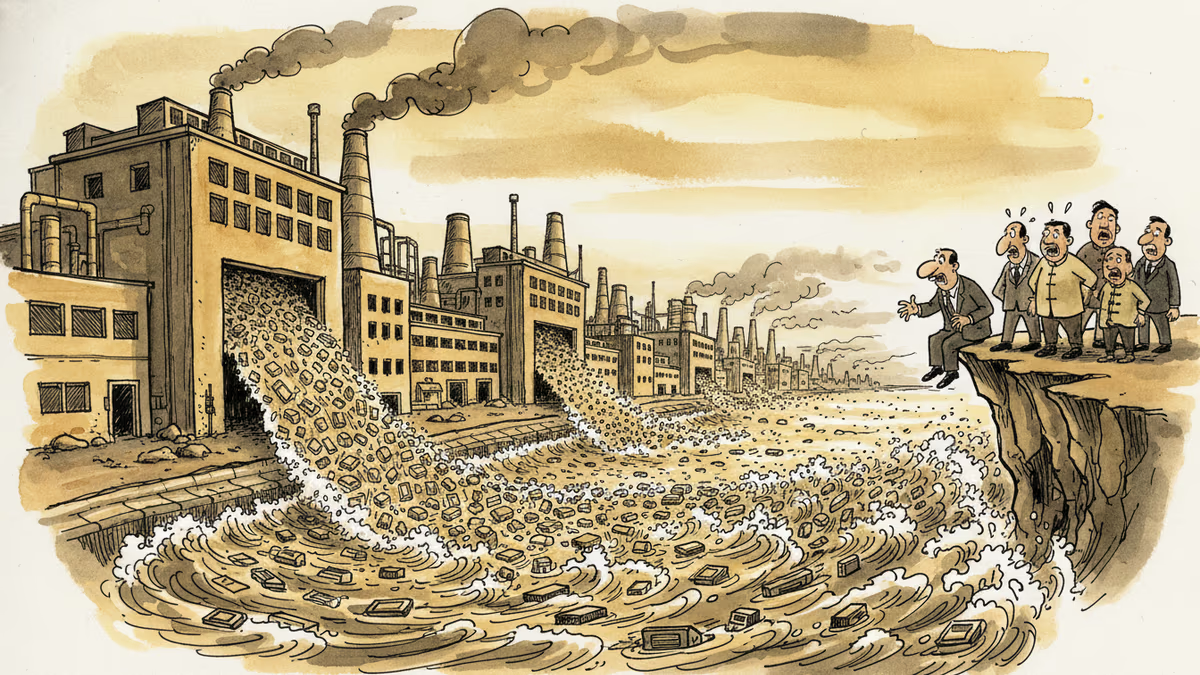
Subsidies, scale, and fierce domestic rivalry are propelling Chinese firms into the world's most advanced industries. Who wins, who loses, and what comes next?
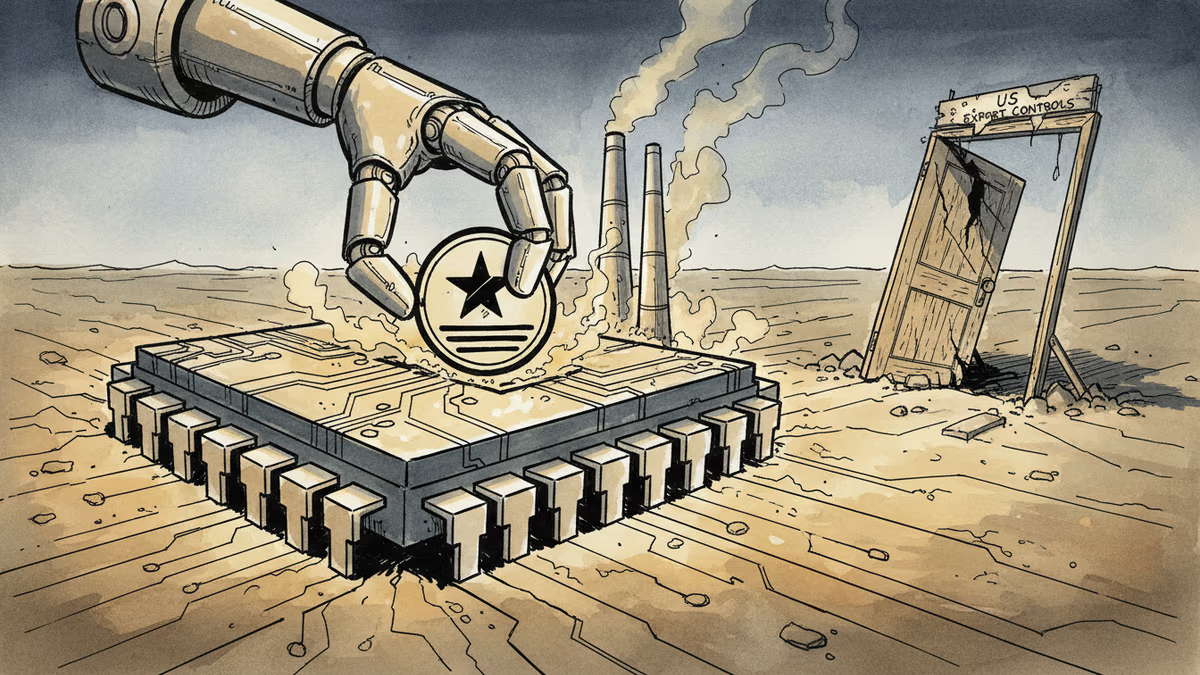
Alibaba and China Telecom launched a 10,000-chip AI data center in Guangdong powered by Alibaba's homegrown Zhenwu semiconductors. What does China's accelerating chip self-sufficiency mean for Nvidia, global AI competition, and your portfolio?
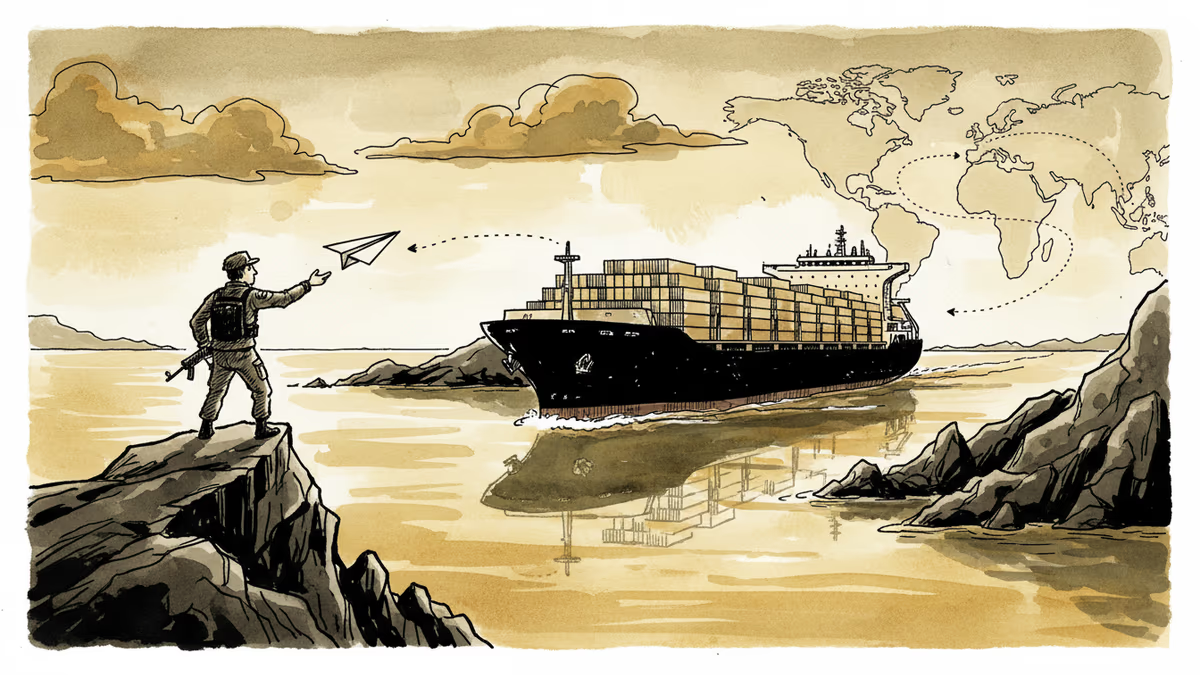
Yemen's Houthi rebels have resumed attacks on Red Sea shipping, threatening global trade routes that carry 12-15% of world container traffic. Here's what it means for prices, supply chains, and geopolitics.
Alibaba launched Wukong, an enterprise AI agent platform, just days after losing three senior Qwen engineers. What does the timing reveal about China's AI race—and who stands to win?
Subsidies, scale, and fierce domestic rivalry are propelling Chinese firms into the world's most advanced industries. Who wins, who loses, and what comes next?
Alibaba and China Telecom launched a 10,000-chip AI data center in Guangdong powered by Alibaba's homegrown Zhenwu semiconductors. What does China's accelerating chip self-sufficiency mean for Nvidia, global AI competition, and your portfolio?
Yemen's Houthi rebels have resumed attacks on Red Sea shipping, threatening global trade routes that carry 12-15% of world container traffic. Here's what it means for prices, supply chains, and geopolitics.
Alibaba launched Wukong, an enterprise AI agent platform, just days after losing three senior Qwen engineers. What does the timing reveal about China's AI race—and who stands to win?
Thoughts
Share your thoughts on this article
Sign in to join the conversation