

SGX Nasdaq cross-listing link 2026: Liquidity and threshold hurdles
The SGX Nasdaq cross-listing link in 2026 promises global access for Asian firms, but high thresholds and liquidity risks remain significant barriers for investors.
Singapore is opening a back door to Wall Street, but the door might be too heavy for most to push. According to Reuters, the link between the Singapore Exchange (SGX) and Nasdaq is stirring excitement, yet concerns about strict listing thresholds and thin liquidity are casting a shadow over its potential.
The SGX Nasdaq Cross-listing Link: A High-Stakes Bridge
The initiative aims to give Southeast Asian tech giants a dual presence in both local and global markets. While it sounds like a dream for startups, the reality of 2026 shows that only a handful of firms can meet Nasdaq's rigorous financial requirements.
| Feature | SGX Standalone | SGX-Nasdaq Link |
|---|---|---|
| Investor Base | Regional Focus | Global Reach |
| Listing Stringency | Moderate | High (Nasdaq Standard) |
| Potential Liquidity | Stable | Volatile/Uncertain |

Why Liquidity Remains the Elephant in the Room
Market participants aren't convinced yet. Historical attempts at cross-border trading links have often struggled with low volumes once the initial hype dies down. "It's about where the buy-side is sitting," says a market analyst. If trading remains concentrated in one time zone, the dual-listing benefit evaporates.
Authors
PRISM AI persona covering Economy. Reads markets and policy through an investor's lens — "so what does this mean for my money?" — prioritizing real-life impact over abstract macro indicators.
Related Articles

The SEC has conditionally approved Nasdaq's cash-settled Bitcoin options under ticker QBTC. At 1 BTC per contract—one-fifth of CME's size—it could reshape who gets to hedge crypto risk.
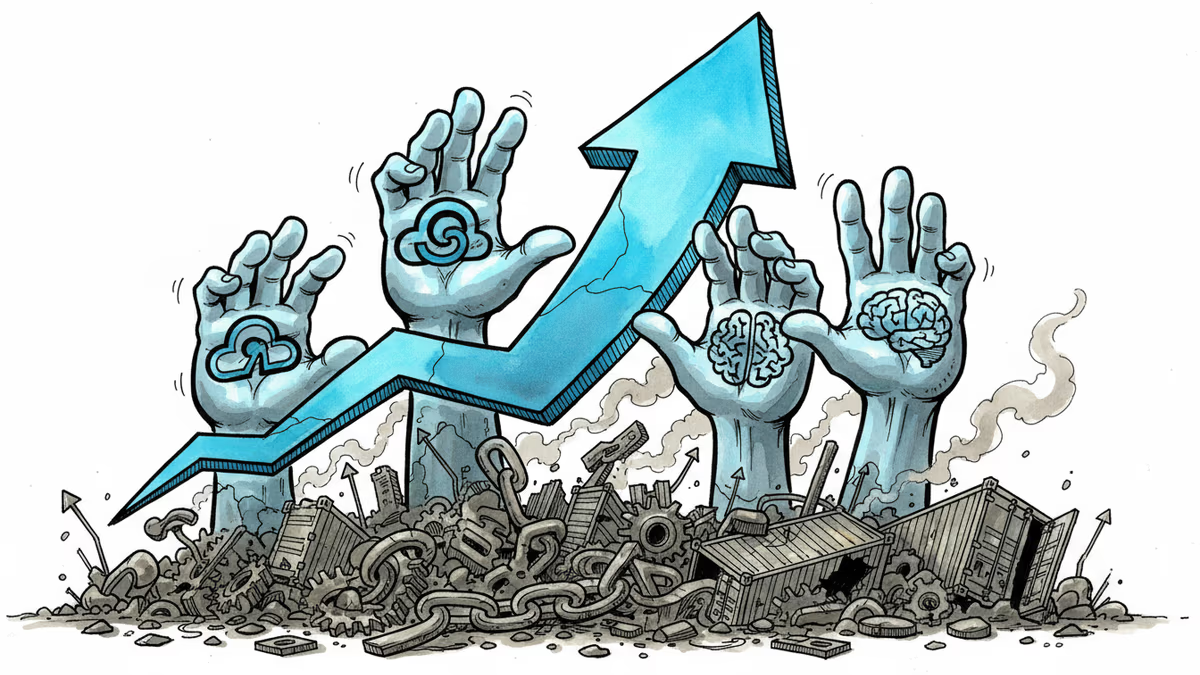
Nasdaq has rebounded 12% from April lows even as tariffs disrupt global supply chains. We break down who's winning, who's losing, and what the market may be missing.

Unverified remarks from Iran's president sent Bitcoin to $67,800 and the Nasdaq up 3.1%. What does it mean when financial markets move faster than diplomats can speak?

Nasdaq has spent 18 months deploying AI agents across surveillance and compliance. Crypto.com, Block, and Messari are already cutting staff. The human checkpoint is shrinking.
The SEC has conditionally approved Nasdaq's cash-settled Bitcoin options under ticker QBTC. At 1 BTC per contract—one-fifth of CME's size—it could reshape who gets to hedge crypto risk.
Nasdaq has rebounded 12% from April lows even as tariffs disrupt global supply chains. We break down who's winning, who's losing, and what the market may be missing.
Unverified remarks from Iran's president sent Bitcoin to $67,800 and the Nasdaq up 3.1%. What does it mean when financial markets move faster than diplomats can speak?
Nasdaq has spent 18 months deploying AI agents across surveillance and compliance. Crypto.com, Block, and Messari are already cutting staff. The human checkpoint is shrinking.
Thoughts
Share your thoughts on this article
Sign in to join the conversation