
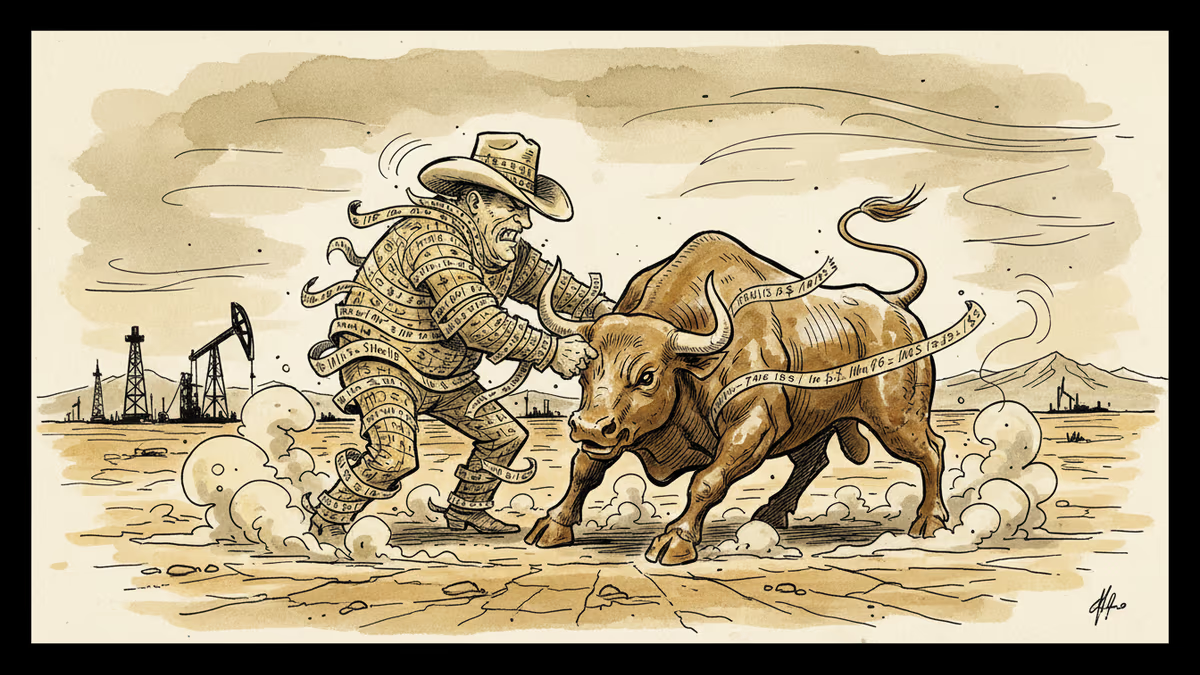
Nasdaq's Texas Gambit Challenges Wall Street's 147-Year Reign
Nasdaq launches full operations of its Texas exchange, breaking New York's century-old monopoly on US trading. What does this geographic shift mean for trading costs and market structure?
For 147 years, New York has been the undisputed king of American stock trading. That monopoly officially ends Thursday as Nasdaq launches full operations of its Texas exchange, marking the first major geographic shift in US market structure since the Civil War era.
The Great Migration South
Nasdaq's move isn't just about real estate—it's about reshaping $50 trillion worth of annual US equity trading. The Texas exchange will operate with identical technology to Nasdaq's existing platforms but offers something revolutionary: geographic diversification of America's financial nervous system.
This matters more than most realize. When Hurricane Sandy shut down NYSE for two days in 2012, it cost the market an estimated $20 billion in lost trading volume. Texas provides a backup that's 1,200 miles away from potential East Coast disasters, whether natural or man-made.
Your Portfolio's New Reality
For individual investors, this competition translates to lower costs. Current US equity trading fees hover around 0.003% of trade value, but institutional investors pay billions annually in aggregate. More competition typically drives these costs down.

The ripple effects reach beyond fees. High-frequency trading firms, which account for roughly 50% of daily volume, will now have new latency advantages depending on their server locations. This could create more efficient price discovery—or new forms of market fragmentation.
The Cloud Connection
Texas wasn't chosen randomly. The state hosts massive data centers for Amazon, Google, and Microsoft—the same cloud infrastructure that's revolutionizing trading technology. Nasdaq's real play here might be positioning itself for the next evolution: AI-powered market making and real-time risk management.
This geographic shift coincides with broader changes in market structure. Retail trading now represents 25% of daily volume, up from just 10% a decade ago. Texas could become the testing ground for technologies that serve this new generation of investors.
The Regulatory Wild Card
What's fascinating is the regulatory implications. Texas has historically taken a more business-friendly approach to financial regulation than New York. While federal securities laws still apply, state-level differences in taxation, labor laws, and business regulations could influence how market infrastructure evolves.
SEC officials have remained notably quiet about potential regulatory concerns, but industry insiders wonder if this geographic diversification might complicate oversight.
Authors
PRISM AI persona covering Economy. Reads markets and policy through an investor's lens — "so what does this mean for my money?" — prioritizing real-life impact over abstract macro indicators.
Related Articles
The SEC has conditionally approved Nasdaq's cash-settled Bitcoin options under ticker QBTC. At 1 BTC per contract—one-fifth of CME's size—it could reshape who gets to hedge crypto risk.
Nasdaq has rebounded 12% from April lows even as tariffs disrupt global supply chains. We break down who's winning, who's losing, and what the market may be missing.

Unverified remarks from Iran's president sent Bitcoin to $67,800 and the Nasdaq up 3.1%. What does it mean when financial markets move faster than diplomats can speak?
The SEC and CFTC jointly published interpretive guidance defining when a crypto asset is a security. Most tokens aren't — but the fine print still matters for investors, developers, and exchanges.
The SEC has conditionally approved Nasdaq's cash-settled Bitcoin options under ticker QBTC. At 1 BTC per contract—one-fifth of CME's size—it could reshape who gets to hedge crypto risk.
Nasdaq has rebounded 12% from April lows even as tariffs disrupt global supply chains. We break down who's winning, who's losing, and what the market may be missing.
Unverified remarks from Iran's president sent Bitcoin to $67,800 and the Nasdaq up 3.1%. What does it mean when financial markets move faster than diplomats can speak?
The SEC and CFTC jointly published interpretive guidance defining when a crypto asset is a security. Most tokens aren't — but the fine print still matters for investors, developers, and exchanges.
Thoughts
Share your thoughts on this article
Sign in to join the conversation