
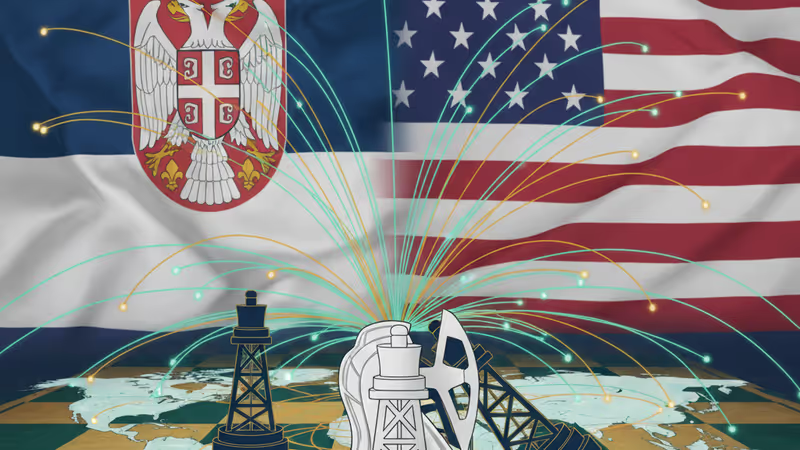
U.S. Greenlights Negotiations for Sale of Russian Stake in Serbian Energy Giant NIS
The U.S. has unusually approved negotiations for the sale of Gazprom Neft's stake in Serbian energy firm NIS, signaling a potential shift in the Balkan energy map.
A crack has just appeared in the West's sanctions wall against Russia. The United States has given Serbia's state-controlled energy company, NIS (Naftna Industrija Srbije), a green light to negotiate the sale of a majority stake held by Russia's Gazprom Neft, according to Reuters. This unusual move signals a potential realignment of the energy landscape in the Balkans, a region caught between Russian influence and Western integration.
A License to Talk, Not to Sell
To be clear, the approval is for negotiations to commence, not a final sign-off on a sale. Gazprom Neft, a sanctioned entity, is the largest shareholder in NIS with a 56.15% stake, while the Serbian government holds 29.87%. Any transaction involving this stake has been effectively frozen by Western sanctions. The U.S. decision appears to be a strategic play to reduce Moscow's economic leverage in the Balkans, offering Serbia a pathway to restructure its energy security and move closer to the West.
Who's Buying and What's at Stake?
The focus now shifts to potential buyers. Serbia has been performing a delicate balancing act, pursuing European Union membership while maintaining historic ties with Russia. This deal could be a major test of its diplomatic direction. Regional energy players, such as Hungary's MOL Group, are rumored to be potential suitors, but any buyer would have to navigate a legal minefield of sanctions. The outcome of these negotiations will likely cause significant volatility in NIS's valuation and stock price.
Investing in assets with high geopolitical exposure carries substantial risk. The negotiations could collapse due to political pressures, leading to sharp price fluctuations.
This content is AI-generated based on source articles. While we strive for accuracy, errors may occur. We recommend verifying with the original source.
Related Articles

The U.S. has signaled a return to 'maximum pressure' sanctions on Venezuela at the UN Security Council. The move could tighten global oil supply and lead to higher crude prices.

Samsung Heavy Industries has secured a $500 million order for two LNG carriers, bringing its 2025 order total to $7.4 billion, or 76% of its annual target. The company's backlog now stands at $28.3 billion.
A Chinese-owned tanker, the Kunpeng, has loaded the first LNG cargo from Russia's sanctioned Arctic LNG 2 plant, testing the effectiveness of U.S. sanctions and potentially impacting global energy markets.
Iran's crude oil exports have climbed 5% in 2025 to a 7-year high, driven by massive purchases from China that defy U.S. sanctions. What does this mean for oil prices and geopolitics?
The U.S. has signaled a return to 'maximum pressure' sanctions on Venezuela at the UN Security Council. The move could tighten global oil supply and lead to higher crude prices.
Samsung Heavy Industries has secured a $500 million order for two LNG carriers, bringing its 2025 order total to $7.4 billion, or 76% of its annual target. The company's backlog now stands at $28.3 billion.
A Chinese-owned tanker, the Kunpeng, has loaded the first LNG cargo from Russia's sanctioned Arctic LNG 2 plant, testing the effectiveness of U.S. sanctions and potentially impacting global energy markets.
Iran's crude oil exports have climbed 5% in 2025 to a 7-year high, driven by massive purchases from China that defy U.S. sanctions. What does this mean for oil prices and geopolitics?