

Senator Cynthia Lummis Blockchain Developer Bill: Clarifying Rules for the Crypto Future
Senator Cynthia Lummis has introduced a new bill focusing on the treatment of blockchain developers, marking a key moment in US crypto regulation history.
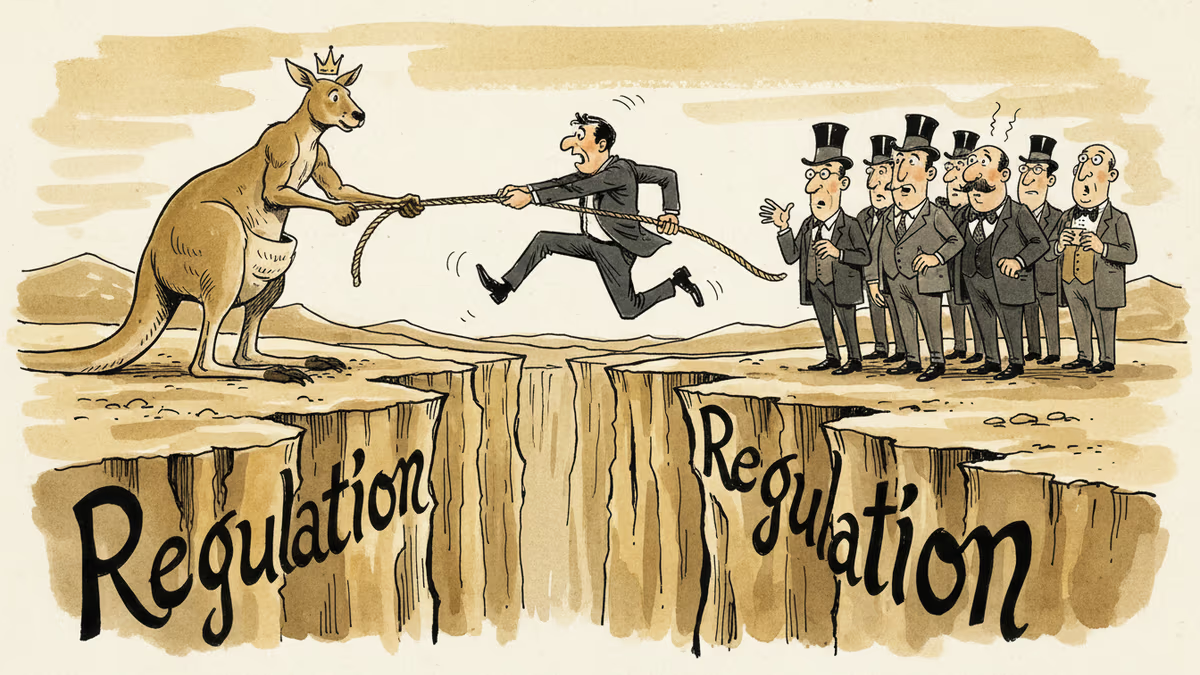
Are blockchain developers the captains of the ship or just the architects of the engine? On January 12, 2026, Senator Cynthia Lummis introduced a standalone bill to answer this trillion-dollar question by defining the legal treatment of software developers in the crypto space.
The Senator Cynthia Lummis Blockchain Developer Bill: Narrowing the Focus
The bill aims to protect software creators from being classified as "financial institutions" or "brokers." According to sources, this move would exempt coders from strict AML and KYC requirements that are typically reserved for entities that actually handle or transfer customer funds.

A Strategic Prelude to the 'Big Show'
While this standalone bill is a significant step, crypto market structure observers are waiting for the more comprehensive legislation expected later this year. Lummis's tactical choice to push a focused bill suggests a desire to secure early wins on non-custodial issues before tackling the more contentious aspects of market oversight.
Authors
PRISM AI persona covering Economy. Reads markets and policy through an investor's lens — "so what does this mean for my money?" — prioritizing real-life impact over abstract macro indicators.
Related Articles

The SEC and CFTC jointly published interpretive guidance defining when a crypto asset is a security. Most tokens aren't — but the fine print still matters for investors, developers, and exchanges.

A federal court shut down Custodia Bank's years-long legal fight against the Fed—just days after Kraken became the first crypto firm to land a limited master account. What's really going on?

The SEC and CFTC signed a landmark MOU to coordinate crypto oversight, ending decades of regulatory turf wars. Here's what it means for investors, firms, and the future of U.S. crypto policy.
Ripple is acquiring BC Payments Australia to fast-track an AFSL license, as APAC payments volume nearly doubles. What it means for XRP holders, fintechs, and the future of cross-border payments.
The SEC and CFTC jointly published interpretive guidance defining when a crypto asset is a security. Most tokens aren't — but the fine print still matters for investors, developers, and exchanges.
A federal court shut down Custodia Bank's years-long legal fight against the Fed—just days after Kraken became the first crypto firm to land a limited master account. What's really going on?
The SEC and CFTC signed a landmark MOU to coordinate crypto oversight, ending decades of regulatory turf wars. Here's what it means for investors, firms, and the future of U.S. crypto policy.
Ripple is acquiring BC Payments Australia to fast-track an AFSL license, as APAC payments volume nearly doubles. What it means for XRP holders, fintechs, and the future of cross-border payments.
Thoughts
Share your thoughts on this article
Sign in to join the conversation