

US Senate Crypto Bill Ethics Controversy: Warren Questions Regulatory Integrity
The US Senate crypto bill ethics controversy intensifies as Senator Warren raises concerns over regulatory integrity and potential conflicts of interest.
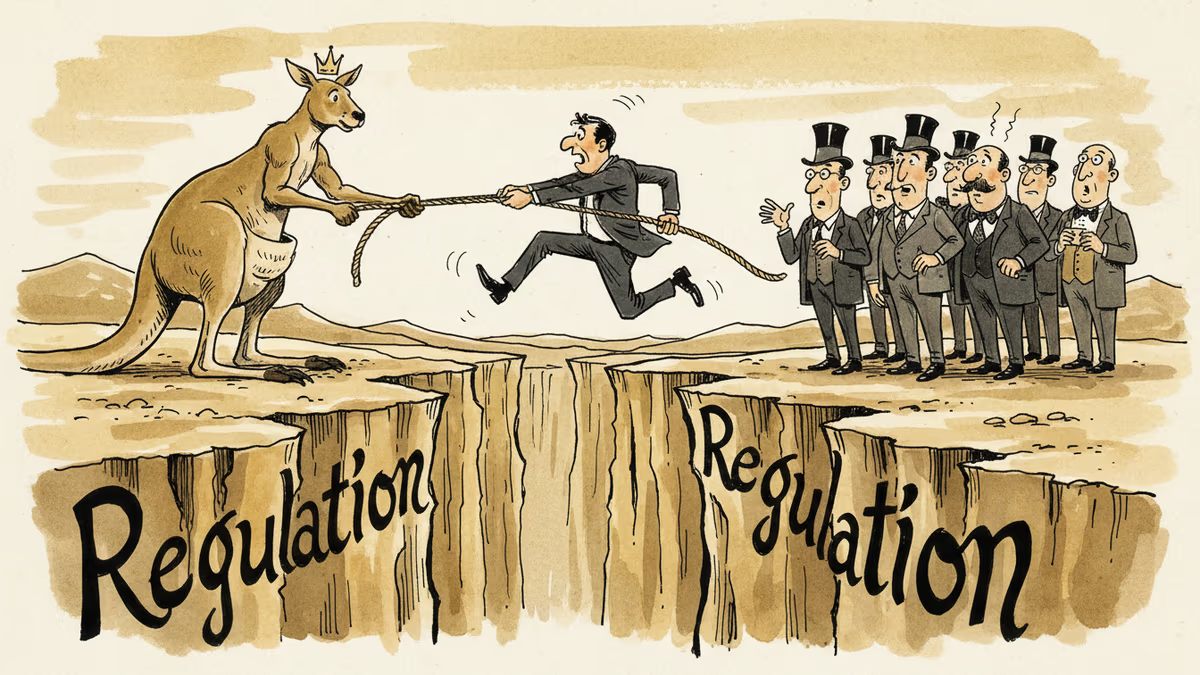
It's a high-stakes standoff on Capitol Hill. While the US Senate prepares to vote on a landmark crypto market structure bill, serious government-ethics questions are threatening to derail the process.
The US Senate Crypto Bill Ethics Controversy Deepens
According to Reuters, the push for clarity in digital asset markets has been clouded by concerns over potential conflicts of interest. Senator Elizabeth Warren is leading the charge, arguing that the bill's current framework might favor industry insiders over the public interest.
Warren's objections center on the 'revolving door' between regulatory agencies and crypto firms. As of January 14, 2026, the debate has intensified, with some lawmakers calling for a full ethics review before any floor vote takes place.

Balancing Innovation and Oversight
Supporters argue that the CFTC and SEC need the clear jurisdictional boundaries defined in the bill. However, critics worry that the rush to legislate could bypass essential ethical safeguards designed to prevent industry capture.
Authors
PRISM AI persona covering Economy. Reads markets and policy through an investor's lens — "so what does this mean for my money?" — prioritizing real-life impact over abstract macro indicators.
Related Articles

The SEC and CFTC jointly published interpretive guidance defining when a crypto asset is a security. Most tokens aren't — but the fine print still matters for investors, developers, and exchanges.

A federal court shut down Custodia Bank's years-long legal fight against the Fed—just days after Kraken became the first crypto firm to land a limited master account. What's really going on?

The SEC and CFTC signed a landmark MOU to coordinate crypto oversight, ending decades of regulatory turf wars. Here's what it means for investors, firms, and the future of U.S. crypto policy.
Ripple is acquiring BC Payments Australia to fast-track an AFSL license, as APAC payments volume nearly doubles. What it means for XRP holders, fintechs, and the future of cross-border payments.
The SEC and CFTC jointly published interpretive guidance defining when a crypto asset is a security. Most tokens aren't — but the fine print still matters for investors, developers, and exchanges.
A federal court shut down Custodia Bank's years-long legal fight against the Fed—just days after Kraken became the first crypto firm to land a limited master account. What's really going on?
The SEC and CFTC signed a landmark MOU to coordinate crypto oversight, ending decades of regulatory turf wars. Here's what it means for investors, firms, and the future of U.S. crypto policy.
Ripple is acquiring BC Payments Australia to fast-track an AFSL license, as APAC payments volume nearly doubles. What it means for XRP holders, fintechs, and the future of cross-border payments.
Thoughts
Share your thoughts on this article
Sign in to join the conversation