
AirTag 2nd Gen Proves Apple's Humblest Device Might Be Its Most Essential
Apple's second-generation AirTag gets 1.5x better range and 50% louder sound. At $29, is this tiny tracker really more useful than an iPad?
Can a $29 coin-sized gadget really outshine devices costing hundreds more? Apple's second-generation AirTag launch has reignited a contentious debate about which Apple product delivers the most bang for your buck.
Small Device, Big Improvements
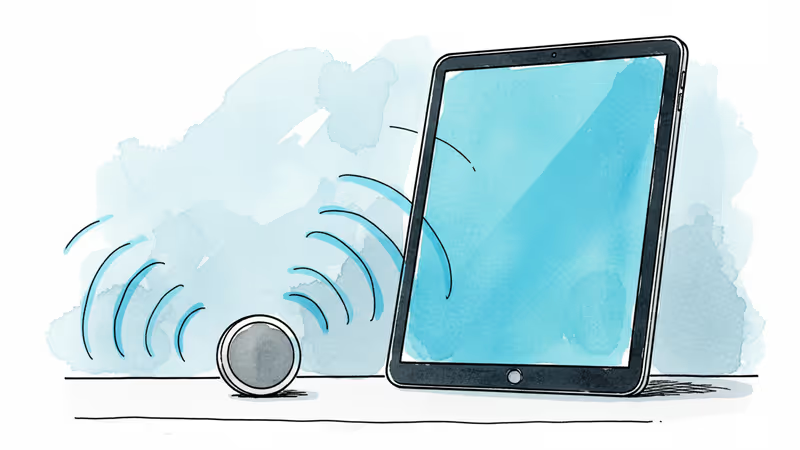
The new AirTag doesn't reinvent the wheel – it makes the wheel roll smoother. Upgraded ultra-wideband and Bluetooth chips extend the tracking range by approximately 1.5 times. The redesigned speaker delivers a higher pitch that's 50% louder, making lost items easier to locate in noisy environments.
Perhaps more importantly, Precision Finding now works on Apple Watch. You can pinpoint an AirTag's exact location and direction without pulling out your iPhone. For a device you wear all day, this integration feels natural and immediate.
The improvements address real-world frustrations. Anyone who's frantically searched for keys while running late knows the value of a louder chime and better range.
The Midnight Purple Disappointment
Not everything hits the mark. The new "Midnight Purple" colorway suffers from the same naming controversy as the iPhone 14 Pro Max Deep Purple – it's barely purple at all. Apple's color marketing continues to overpromise and underdeliver on visual expectations.

But color aside, the core value proposition remains compelling. For the price of a nice dinner, you can eliminate the daily anxiety of misplaced essentials.
The Simplicity Advantage
What makes AirTags potentially more valuable than iPads isn't technical sophistication – it's problem-solving efficiency. An iPad offers countless capabilities, but how many do you actually use regularly? An AirTag does one thing exceptionally well: it finds your stuff.
This reflects a broader trend in consumer technology. As devices become increasingly complex, there's growing appreciation for products that solve specific problems without feature bloat. The AirTag succeeds because it doesn't try to be everything to everyone.
Privacy and Competition Considerations
The enhanced tracking capabilities raise familiar questions about privacy and surveillance. While Apple has implemented safeguards against unwanted tracking, the improved range and precision could amplify both legitimate and concerning use cases.
Meanwhile, competitors like Samsung's Galaxy SmartTag and Tile continue pushing their own innovations. The item tracker market is becoming surprisingly competitive for such a simple product category.
Authors
Related Articles
After 15 years of fragmented mobile messaging, Apple and Google are rolling out end-to-end encrypted RCS messaging between iPhones and Android devices. Here's what changed, why it took so long, and what it means for your privacy.
Apple agreed to pay $250 million to settle claims it misled iPhone 16 buyers about Apple Intelligence features. What this means for consumers, Big Tech marketing, and the AI industry.
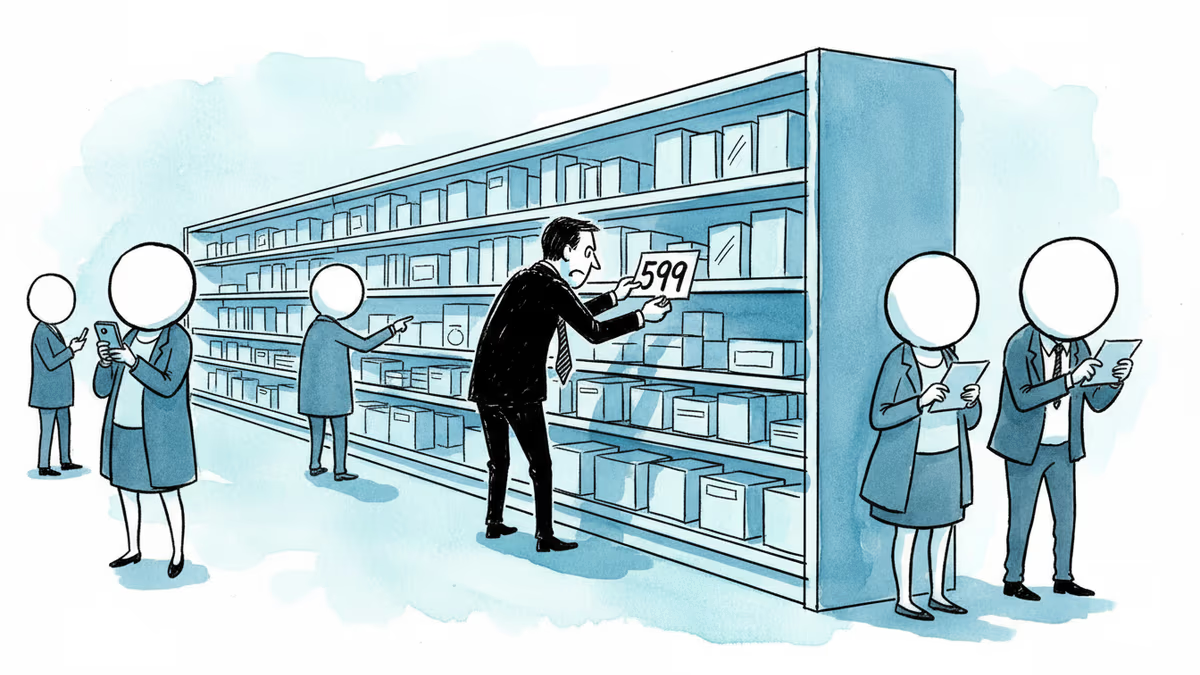
Apple quietly removed the entry-level $599 Mac Mini, raising the starting price to $799 — just one day after Tim Cook warned of chip supply constraints on the earnings call.
Expiring leases will flood the US used car market with over a million electric vehicles by 2028. Could this do what subsidies couldn't — make EVs genuinely affordable?
After 15 years of fragmented mobile messaging, Apple and Google are rolling out end-to-end encrypted RCS messaging between iPhones and Android devices. Here's what changed, why it took so long, and what it means for your privacy.
Apple agreed to pay $250 million to settle claims it misled iPhone 16 buyers about Apple Intelligence features. What this means for consumers, Big Tech marketing, and the AI industry.
Apple quietly removed the entry-level $599 Mac Mini, raising the starting price to $799 — just one day after Tim Cook warned of chip supply constraints on the earnings call.
Expiring leases will flood the US used car market with over a million electric vehicles by 2028. Could this do what subsidies couldn't — make EVs genuinely affordable?
Thoughts
Share your thoughts on this article
Sign in to join the conversation