
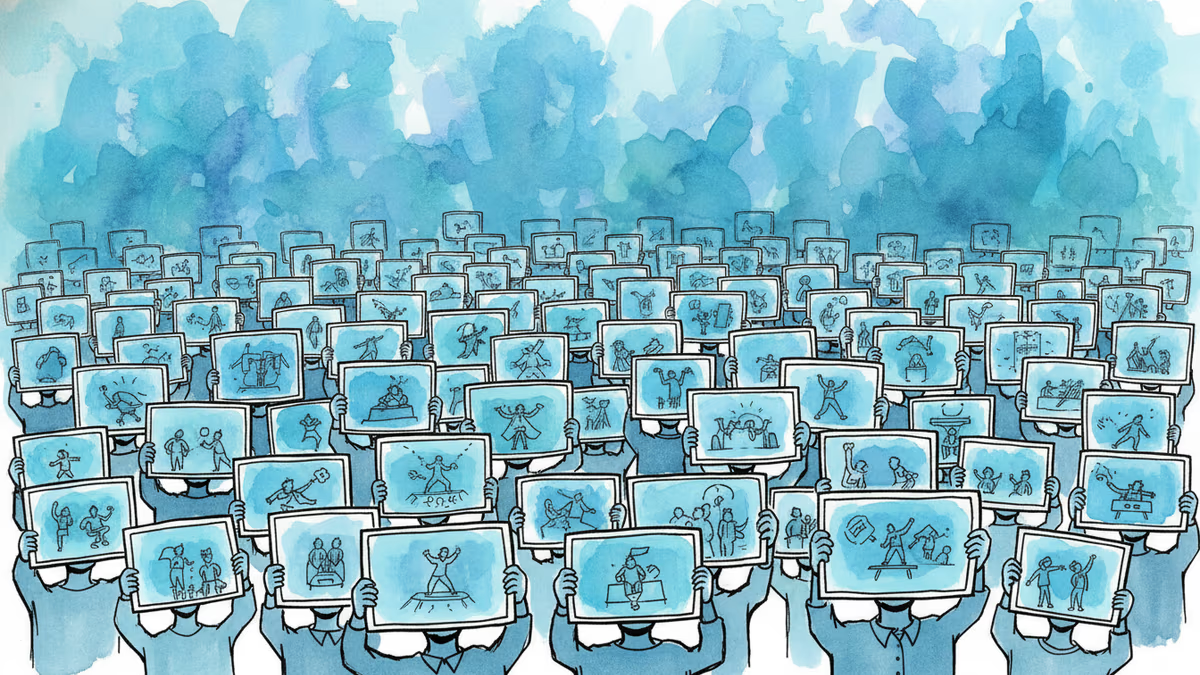
We Stopped Seeing People. We Started Watching Them.
Megan Garber's new book Screen People argues that internet culture has trained us to see each other as characters in an endless show—and that this is making us sick.
Think about the last time you truly saw someone—not scrolled past them, not watched them, not reacted to them. Just saw them.
For most of us, that answer is harder to come by than it should be. We consume hundreds of faces a day. We rate them, share them, argue about them. But somewhere along the way, people started feeling less like people and more like content.
That shift is exactly what Megan Garber, staff writer at The Atlantic, examines in her new book, Screen People: How We Entertained Ourselves Into a State of Emergency. On May 6, Garber will sit down with The Atlantic's executive editor Adrienne LaFrance for a public conversation about the book's central argument—and, crucially, what we might do about it.
The Show Must Go On—Whether We Like It or Not
Garber's thesis is uncomfortable in its simplicity: internet culture has conditioned us to see each other not as people, but as characters in an ongoing show. Platforms were built this way from the start. Likes, views, follower counts—human worth translated into metrics, and those metrics reshaping how we look at one another.
This isn't another tired lecture about screen time. Garber's argument cuts deeper. She contends that the grammar of entertainment has been quietly installed into the operating system of everyday life. We consume news, politics, and even the lives of people we know as content. And that mode of consumption, she argues, is the root cause of some of our most stubborn social pathologies: loneliness, depression, mistrust, the spread of misinformation, and a creeping, corrosive cynicism.
The timing lands hard. A 2025 Gallup survey found that more than 20% of American adults report serious loneliness. The U.S. Surgeon General declared loneliness a public health epidemic back in 2023. Meanwhile, we are more connected—by every technical measure—than any humans in history. Garber's book is, at its core, an attempt to explain that paradox.
Why This Argument Matters Now
The cultural moment couldn't be more fitting. TikTok's near-ban and subsequent legal battles in the U.S. put algorithmic design under unprecedented scrutiny. Meta faces ongoing regulatory pressure in both the U.S. and EU over the mental health effects of its platforms, particularly on younger users. The EU's Digital Services Act is already forcing platforms to answer for the consequences of their recommendation systems.

But legislation addresses behavior, not perception. What Garber is pointing at is something harder to regulate: the way years of platform-mediated interaction have quietly rewired how we relate to other human beings. You can ban an algorithm. You can't ban a habit of mind.
Consider how this plays out in practice. Political opponents aren't just wrong anymore—they're villains in a narrative. Public figures aren't flawed humans—they're protagonists or antagonists depending on which side of the feed you're on. Even personal relationships increasingly get filtered through a performative lens: the carefully curated Instagram life, the LinkedIn humble-brag, the carefully timed tweet. We've all become, to some degree, characters managing our own storylines.
The Counterargument Deserves a Hearing
Not everyone will find Garber's framing convincing, and that's worth sitting with. Critics of this kind of media pessimism point out that digital platforms have created genuine community for people who would otherwise have none—patients with rare diseases finding each other across continents, LGBTQ+ teenagers in rural towns discovering they're not alone, diaspora communities maintaining cultural ties across borders. The screen, in these cases, isn't a barrier to human connection. It is the connection.
There's also a class dimension that often gets lost in these conversations. The luxury of 'unplugging'—of choosing analog life, of attending book talks about the dangers of screens—is not equally distributed. For many workers, constant digital availability isn't a lifestyle choice. It's a job requirement.
Garber, to her credit, doesn't appear to be arguing that technology itself is the villain. The target seems to be something more specific: the particular design philosophy of attention-maximizing platforms, and the cultural logic they've normalized.
What 'Fighting Back' Actually Looks Like
Garber says we can fight back against this phenomenon. The May 6 conversation with LaFrance is expected to explore what that resistance looks like in practice. But the framing of the book title already suggests a direction: naming the emergency is the precondition for responding to it.
At the policy level, momentum is building. Platform accountability legislation is advancing in multiple jurisdictions. Researchers at institutions like MIT and Oxford are developing frameworks for measuring the social costs of algorithmic design. A small but growing number of schools in the U.S. and Europe have moved to restrict smartphone use during school hours—with early data suggesting improvements in student wellbeing.
At the individual level, though, the question is more intimate. If the problem is a trained way of seeing, then the solution has to involve retraining that perception. Which is, of course, much easier to write about than to do.
This content is AI-generated based on source articles. While we strive for accuracy, errors may occur. We recommend verifying with the original source.
Related Articles
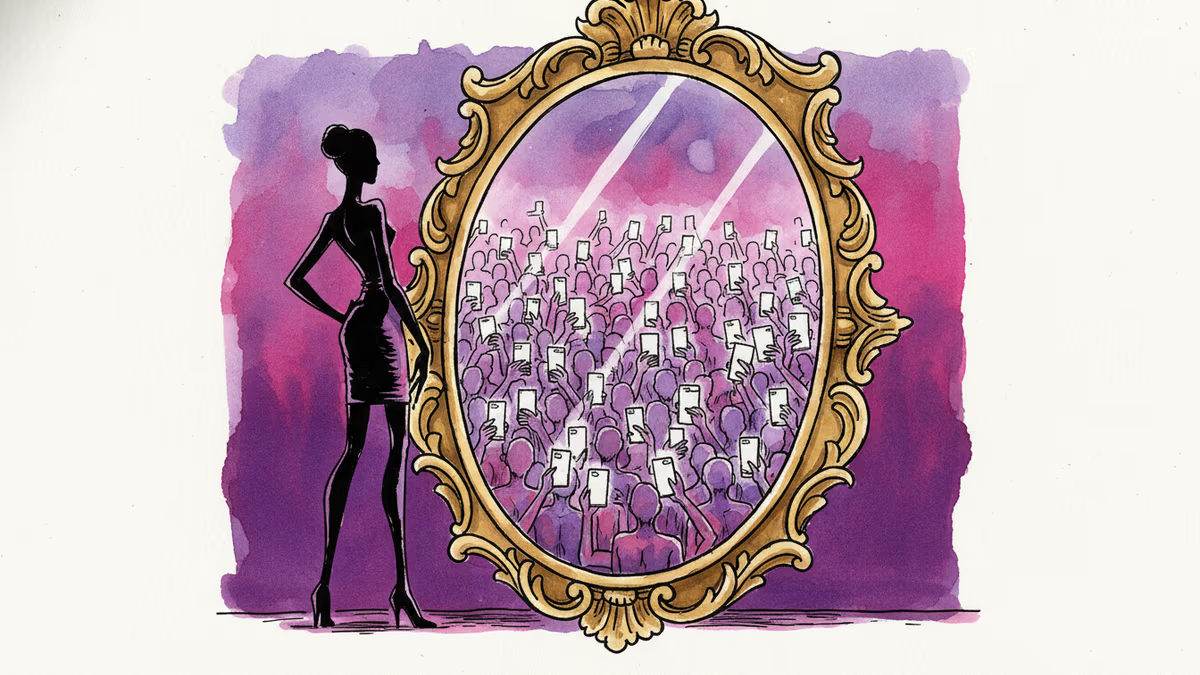
In 2011, Barbara Walters told the Kardashians they had no talent. Fourteen years later, that verdict looks less like an insult and more like a misreading of what talent now means.
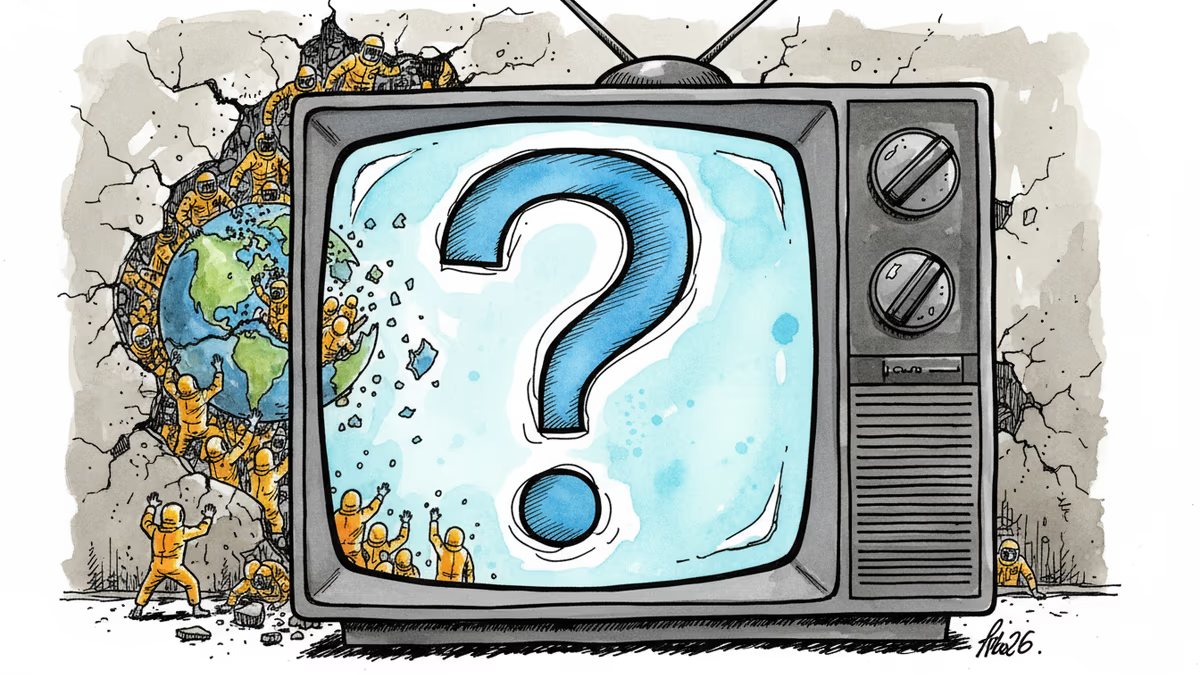
The MV Hondius hantavirus outbreak isn't the real story. The real story is how media fear-framing is obscuring the slow collapse of the global public health system designed to protect us.
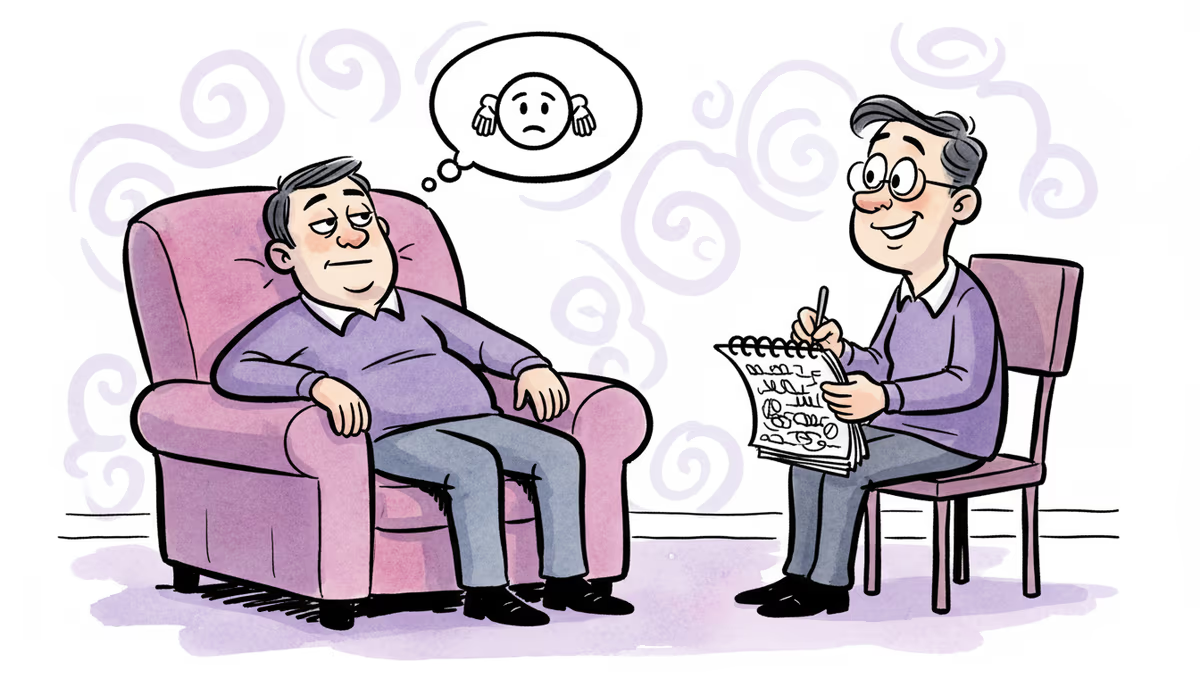
Therapists say sessions where clients have "nothing to talk about" are often the most revealing. Here's the science and psychology behind the uneventful appointment.
Adult ADHD diagnoses are surging, fueled by social media awareness. But between viral videos and clinical reality, what are we missing?
In 2011, Barbara Walters told the Kardashians they had no talent. Fourteen years later, that verdict looks less like an insult and more like a misreading of what talent now means.
The MV Hondius hantavirus outbreak isn't the real story. The real story is how media fear-framing is obscuring the slow collapse of the global public health system designed to protect us.
Therapists say sessions where clients have "nothing to talk about" are often the most revealing. Here's the science and psychology behind the uneventful appointment.
Adult ADHD diagnoses are surging, fueled by social media awareness. But between viral videos and clinical reality, what are we missing?
Thoughts
Share your thoughts on this article
Sign in to join the conversation