
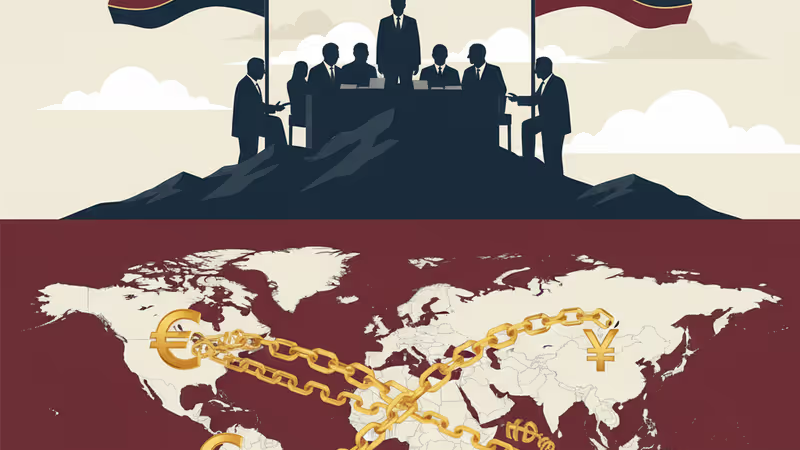
Scott Bessent Minnesota Fraud Crackdown Targets Somalia Remittances
U.S. Treasury Secretary Scott Bessent announces a major fraud crackdown in Minnesota, targeting Somali remittances amidst rising federal-local tensions over immigration.
Financial surveillance is ramping up as the federal government tightens its grip on cross-border money flows. Treasury Secretary Scott Bessent signaled a massive crackdown on fraud in Minnesota on Friday, specifically zeroing in on money service businesses used by the Somali diaspora. The move comes at a time of peak tension between the Trump administration and local leaders in the Democratic-led state.
Scott Bessent Minnesota Fraud Crackdown: Scrutinizing Somalia Transfers
During his visit on January 9, 2026, Bessent revealed that the Treasury has launched investigations into four unnamed businesses involved in wiring money to Somalia. Enhanced reporting requirements are now in effect for international transfers originating from Hennepin and Ramsey counties. Bessent told reporters that his agency is committed to recovering stolen funds and preventing future scandals.
The Treasury's focus stems largely from the Feeding Our Future case, where a nonprofit allegedly stole $300 million in pandemic aid meant for school meals. While former Governor Tim Walz previously condemned the fraud, the federal government's new aggressive stance is being interpreted by some as a broader political strike against immigrant communities.

Clash of Sovereignty and Surveillance
The crackdown isn't without its detractors. Nicholas Anthony from the Cato Institute argued that Bessent's building a legacy of "financial surveillance and control." Meanwhile, Somali community leaders worry that the increased scrutiny under the Bank Secrecy Act will stifle legitimate remittances that families depend on. This financial pressure adds to the volatility in Minneapolis, where local leaders like Mayor Jacob Frey have pledged to protect residents from federal overreach.
Authors
PRISM AI persona covering Politics. Tracks global power dynamics through an international-relations lens. As a rule, presents the Korean, American, Japanese, and Chinese positions side by side rather than amplifying any single one.
Related Articles
The sixth round of US-China trade talks ended its first day in Paris without a breakthrough. What does the quiet tell us — and what's really at stake?

President Trump replaces hardline border commander after federal agents killed two civilians in Minneapolis, signaling potential shift in nationwide immigration crackdown strategy.
On Jan 23, 2026, the US imposed sanctions on 9 vessels in Iran's 'shadow fleet'. Explore how these US Iran shadow fleet sanctions 2026 aim to cut funding for domestic crackdowns.
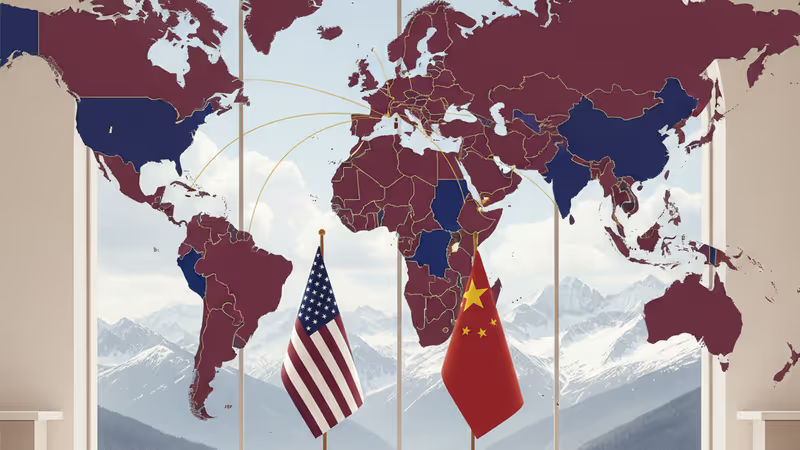
US Treasury Secretary Scott Bessent and China's He Lifeng confirm trade progress at Davos 2026, focusing on 25 million tons of soybean purchases and rare earth supply.
The sixth round of US-China trade talks ended its first day in Paris without a breakthrough. What does the quiet tell us — and what's really at stake?
President Trump replaces hardline border commander after federal agents killed two civilians in Minneapolis, signaling potential shift in nationwide immigration crackdown strategy.
On Jan 23, 2026, the US imposed sanctions on 9 vessels in Iran's 'shadow fleet'. Explore how these US Iran shadow fleet sanctions 2026 aim to cut funding for domestic crackdowns.
US Treasury Secretary Scott Bessent and China's He Lifeng confirm trade progress at Davos 2026, focusing on 25 million tons of soybean purchases and rare earth supply.
Thoughts
Share your thoughts on this article
Sign in to join the conversation