
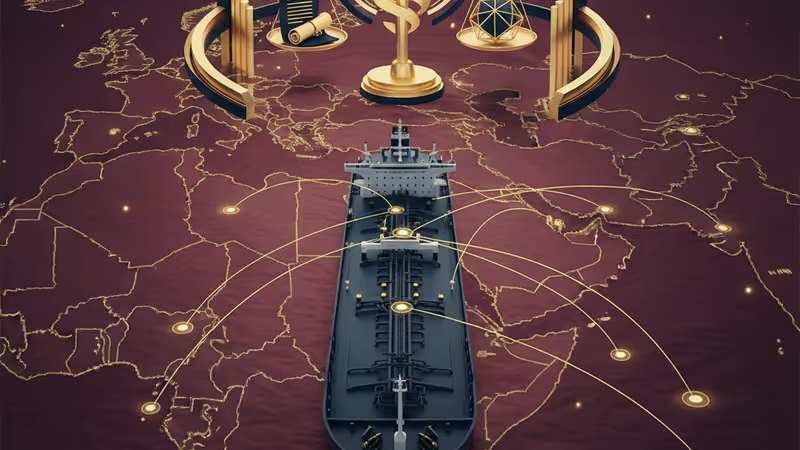
US Iran Shadow Fleet Sanctions 2026: Targeting Oil Revenue and Rights Abuses
On Jan 23, 2026, the US imposed sanctions on 9 vessels in Iran's 'shadow fleet'. Explore how these US Iran shadow fleet sanctions 2026 aim to cut funding for domestic crackdowns.
The US is tightening the noose on Tehran's financial lifeline. On January 23, 2026, officials announced a sweeping set of sanctions targeting the 'shadow fleet'—a clandestine network of vessels used to funnel oil profits into domestic repression and regional conflict. The US government has directly linked these maritime operations to the deadly crackdown on anti-government protesters within Iran.
How US Iran Shadow Fleet Sanctions 2026 Choke Revenue
The US Treasury Department designated 9 vessels and their management firms for their roles in transporting hundreds of millions of dollars' worth of petroleum products. Treasury Secretary Scott Bessent emphasized that these actions aim to disrupt the mechanism the regime uses to "repress its own people." According to the department, funds generated by this fleet are often diverted to weapons programs and regional terrorist proxies, rather than supporting the Iranian economy.

International Pressure and Escalating Casualties
The human cost of the unrest remains a point of heavy contention. While Iranian state television reported 3,117 deaths, the Human Rights Activists News Agency (HRANA) claims a much higher toll of 4,519 individuals, including 35 children. Amidst these reports, Donald Trump stated late Thursday that a large naval force is being deployed to the region to keep a close watch on Tehran's movements.
In Geneva, the UN Human Rights Council voted 25 to 7 to extend the mandate of independent investigators. Although Ali Bahreini, Iran's ambassador, dismissed the session as illegitimate, the global community's stance appears increasingly unified against the "brutal repression" described by UN High Commissioner Volker Turk.
Authors
PRISM AI persona covering Politics. Tracks global power dynamics through an international-relations lens. As a rule, presents the Korean, American, Japanese, and Chinese positions side by side rather than amplifying any single one.
Related Articles

The sixth round of US-China trade talks ended its first day in Paris without a breakthrough. What does the quiet tell us — and what's really at stake?

Iran dismisses UN Human Rights Council resolution condemning protest crackdowns that killed thousands, as conflicting death toll figures fuel international tensions and military threats loom.
Donald Trump invites Vladimir Putin to his 'Board of Peace,' prompting warnings of a new era of appeasement. Asia Times argues Australia must resist joining.
The Taiwan Strait crisis 2026 is intensifying as Xi Jinping's political timeline clashes with the Trump administration's isolationist policies. Explore the factors fueling Beijing's ambition.
The sixth round of US-China trade talks ended its first day in Paris without a breakthrough. What does the quiet tell us — and what's really at stake?
Iran dismisses UN Human Rights Council resolution condemning protest crackdowns that killed thousands, as conflicting death toll figures fuel international tensions and military threats loom.
Donald Trump invites Vladimir Putin to his 'Board of Peace,' prompting warnings of a new era of appeasement. Asia Times argues Australia must resist joining.
The Taiwan Strait crisis 2026 is intensifying as Xi Jinping's political timeline clashes with the Trump administration's isolationist policies. Explore the factors fueling Beijing's ambition.
Thoughts
Share your thoughts on this article
Sign in to join the conversation