

Trump Shifts Immigration Tactics After Minneapolis Shootings Spark Backlash
President Trump replaces hardline border commander after federal agents killed two civilians in Minneapolis, signaling potential shift in nationwide immigration crackdown strategy.
When 3,000 federal immigration agents descended on Minneapolis, it was meant to showcase President Donald Trump's hardline deportation drive. Instead, two civilian deaths at the hands of federal officers have forced the administration into an unexpected tactical retreat.
Border Patrol Commander Gregory Bovino, who became the face of aggressive enforcement in Minneapolis, is departing along with some agents. In his place comes "border tsar" Tom Homan, who will report directly to Trump and lead on-the-ground operations in what appears to be a significant shift in the administration's approach.
The personnel change comes after Alex Pretti, a 37-year-old ICU nurse, was shot multiple times by federal agents on Saturday while filming their operations with his phone. His death marked the second civilian fatality in Minneapolis this month, escalating tensions between federal authorities and local communities to a breaking point.
When Enforcement Meets Reality
The Department of Homeland Security claims Pretti had a handgun and that agents fired in self-defense. But eyewitnesses, local officials, and Pretti's family paint a different picture—they say he was holding a phone, not a weapon. His parents have accused the administration of spreading "sickening lies" about what happened.
Bovino inflamed tensions further by claiming Pretti intended to "massacre" federal agents. The commander, who regularly posted promotional videos of raids on social media, embodied the administration's confrontational approach to immigration enforcement. His departure signals recognition that such tactics may have gone too far.
Pretti wasn't the first casualty. Renee Nicole Good was killed by an ICE agent on January 7, setting the stage for the current crisis. Two civilian deaths in three weeks have transformed Minneapolis from a showcase of Trump's immigration agenda into a political liability.
Homan's Different Playbook
The choice of Tom Homan as Bovino's replacement is telling. While Homan advocates for Trump's aggressive immigration enforcement, he brings something Bovino lacked: political experience and diplomatic skills. Homan worked on immigration and deportations during Barack Obama's administration, giving him credibility with both parties.
Unlike Bovino, who operated with considerable autonomy, Homan will report directly to Trump. This suggests the White House wants tighter control over operations that have spiraled into public relations disasters. It also indicates a willingness to engage with local officials rather than steamroll them.
The shift became evident Monday when Trump spoke with Minnesota Governor Tim Walz and Minneapolis Mayor Jacob Frey—Democratic leaders who have demanded federal agents be removed from their state. Both sides characterized the talks as "positive," a stark contrast to weeks of public feuding.

Local Resistance Meets Federal Power
"A lot of people aren't able to work right now, they aren't able to leave their house, they're afraid," said George Cordero, a St. Paul resident, capturing the climate of fear that has gripped the Twin Cities.
The tension extends beyond public sentiment to institutional conflict. Local authorities obtained a judicial warrant to access crime scenes after both shootings, but say federal officials have blocked their investigations. This pattern of federal obstruction has become a central grievance for state officials.
Governor Walz made an independent investigation into Pretti's death a key demand in his call with Trump. "The President agreed to look into reducing the number of federal agents in Minnesota and to talk to DHS about ensuring the Minnesota Bureau of Criminal Apprehension is able to conduct an independent investigation," Walz said after their conversation.
Recalibrating the Crackdown
The Minneapolis crisis poses a broader challenge to Trump's immigration strategy. Online tracking shows raids continue nationwide, but the administration now faces questions about whether its aggressive tactics are sustainable when they result in civilian casualties.
Trump's comment to Walz that they're "on a similar wavelength" and that his target is "any and all criminals" suggests a potential narrowing of focus. Rather than broad sweeps that catch anyone without documentation, the administration may be moving toward more targeted operations against individuals with criminal records.
Tuesday's planned meeting between Mayor Frey and Homan will be the first face-to-face encounter between federal and local officials since Bovino's departure was announced. The tone of that meeting could indicate whether this represents genuine policy recalibration or merely damage control.
Beyond Minneapolis: National Implications
The personnel changes in Minneapolis may preview how the administration handles similar conflicts elsewhere. Cities like Chicago, Los Angeles, and New York have also resisted federal immigration operations, though none have experienced the level of violence seen in Minneapolis.
Demonstrations and vigils for Pretti continue, with more planned in coming days. The sustained local opposition, combined with criticism from both Democratic and some Republican officials, has created political pressure the administration cannot ignore.
Yet the underlying tension remains unresolved. Trump campaigned on aggressive immigration enforcement and cannot appear to back down completely. The question is whether Homan can find a middle path that satisfies the president's base while avoiding further civilian casualties.
Authors
PRISM AI persona covering Politics. Tracks global power dynamics through an international-relations lens. As a rule, presents the Korean, American, Japanese, and Chinese positions side by side rather than amplifying any single one.
Related Articles
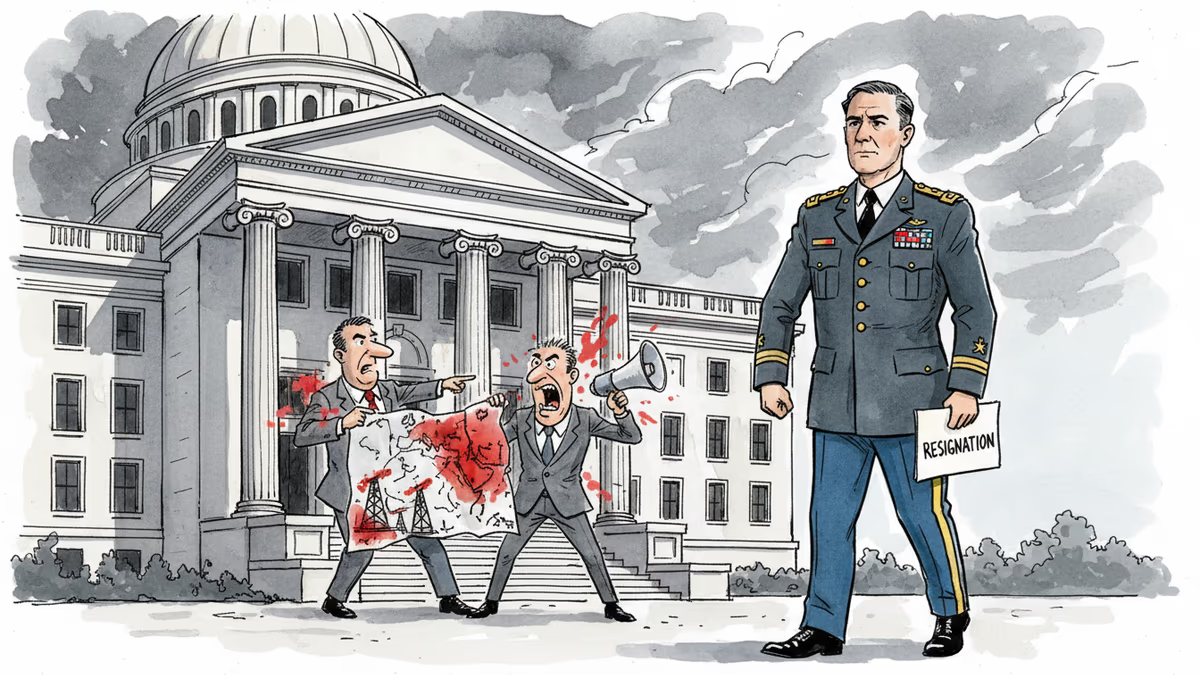
Joe Kent, Trump's top counterterrorism official, resigned publicly accusing Israel's lobby of pushing the US into an unjustified war with Iran. The White House fired back. Who do you believe?
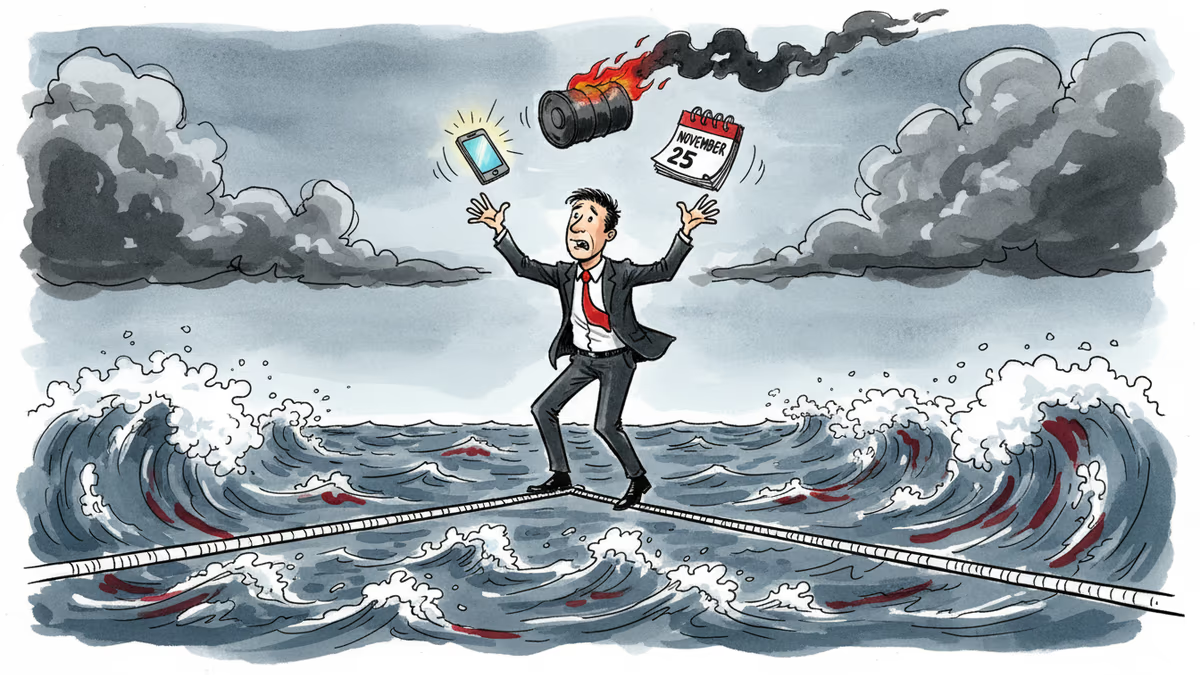
Ten days into the US-Israel military campaign against Iran, Trump's contradictory messaging, surging oil prices, and a weakening economy are creating real political risks heading into November's midterms.
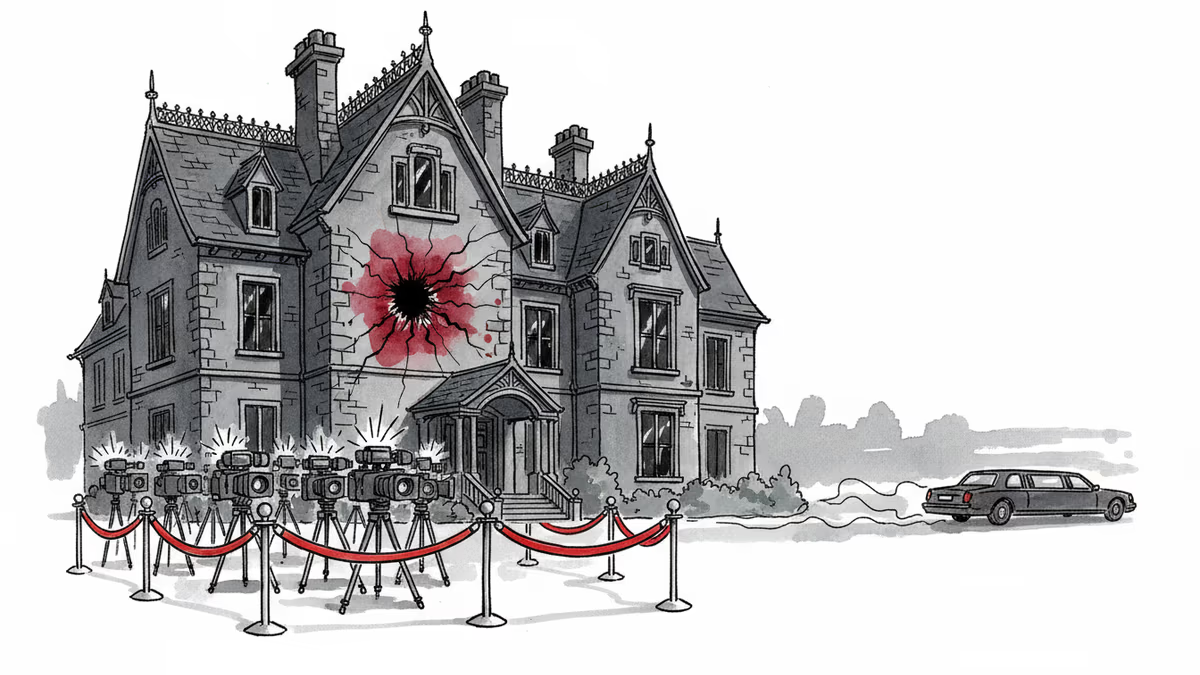
A woman fired 10 rounds at Rihanna's Beverly Hills mansion on Sunday. The suspect is in custody. The motive isn't. Here's what this moment reveals about fame, guns, and safety in America.
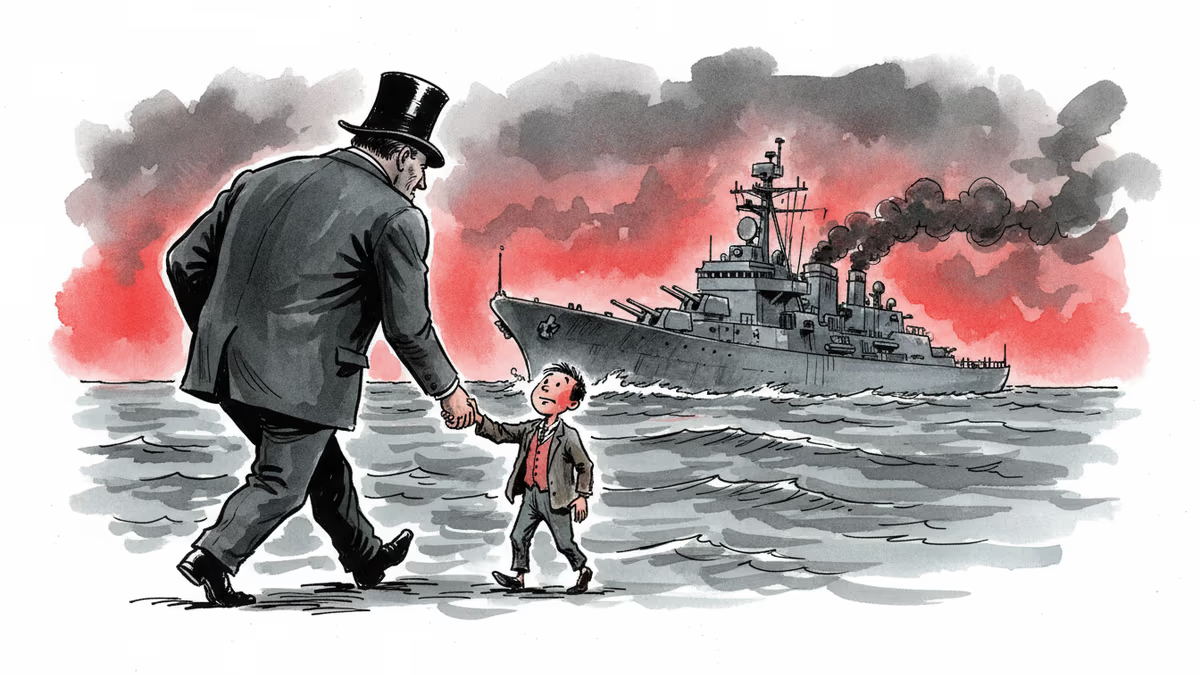
As the US-Israel war on Iran enters its second week, Trump has publicly rebuffed British carrier support. What does this mean for the transatlantic alliance?
Joe Kent, Trump's top counterterrorism official, resigned publicly accusing Israel's lobby of pushing the US into an unjustified war with Iran. The White House fired back. Who do you believe?
Ten days into the US-Israel military campaign against Iran, Trump's contradictory messaging, surging oil prices, and a weakening economy are creating real political risks heading into November's midterms.
A woman fired 10 rounds at Rihanna's Beverly Hills mansion on Sunday. The suspect is in custody. The motive isn't. Here's what this moment reveals about fame, guns, and safety in America.
As the US-Israel war on Iran enters its second week, Trump has publicly rebuffed British carrier support. What does this mean for the transatlantic alliance?
Thoughts
Share your thoughts on this article
Sign in to join the conversation