
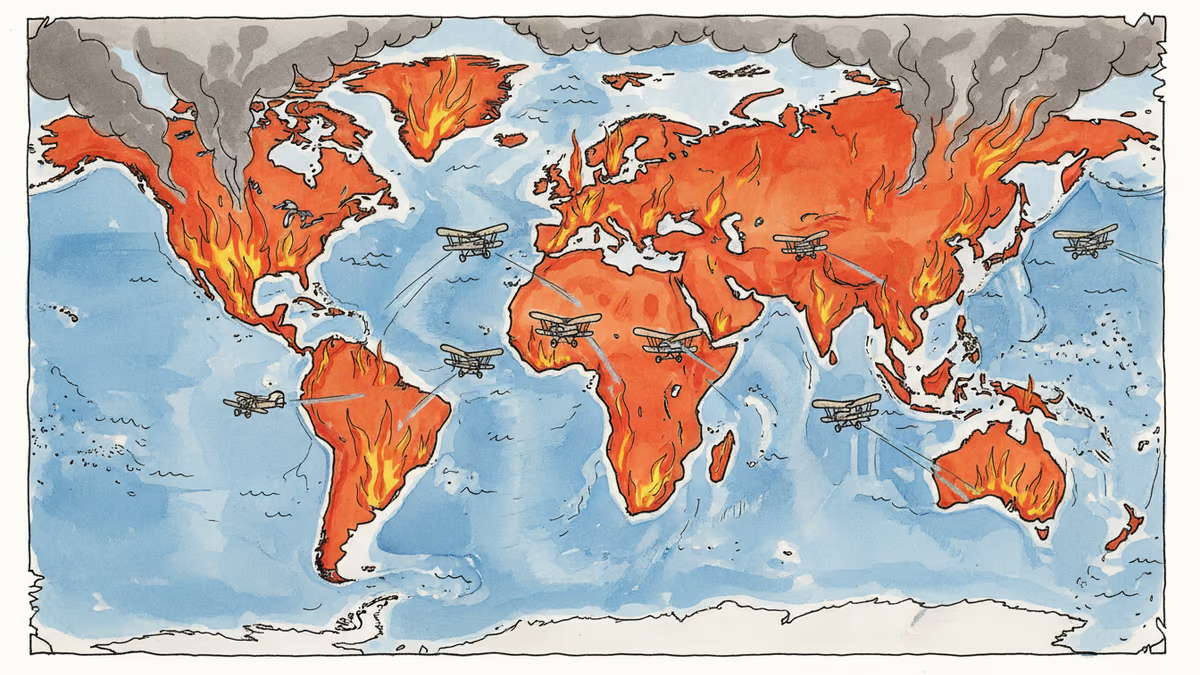
The World Burns Together Now, And You Still Need to Breathe
Climate change has doubled the frequency of simultaneous global wildfires. Cross-border smoke and strained firefighting resources create unprecedented challenges for air quality and emergency response.
What happens when the entire world catches fire at once? It's no longer a hypothetical question.
New research published in Science reveals a stark reality: days with extreme fire weather conditions occurring simultaneously across multiple regions have more than doubled over the past 47 years. This isn't just about more fires—it's about the fundamental reshaping of how wildfires behave globally, and it has everything to do with the air you breathe.
The New Geography of Fire
Cong Yin from UC Merced and his team analyzed global climate and fire data from 1979 to 2024, tracking what scientists call the "fire weather index"—a measure that combines temperature, wind, and moisture to predict wildfire danger. When this index hits the 90th percentile in multiple regions simultaneously, the world becomes primed for catastrophic burning.
The results paint a troubling picture. Days when severe fire weather aligns across distant regions like North America and Europe have increased dramatically. The planet's boreal forests—those northern woodlands stretching across Canada, Alaska, and Siberia—show the highest levels of synchronized fire conditions.
Climate change accounts for about half of this increase. The rest stems from natural climate patterns like El Niño, but the human fingerprint is unmistakable.
When Help Can't Cross Borders
The implications hit home when you consider how firefighting actually works. Last year's Los Angeles fires saw teams from Canada and Mexico arrive with tanker aircraft. Spain's summer blazes brought help from the Netherlands, France, and Italy. The US, Australia, and New Zealand maintain standing agreements to share personnel and equipment.
But what happens when everyone's burning at once?

Robert Field, a fire researcher at Columbia University who wasn't involved in the study, puts it bluntly: "I really haven't seen a paper like this on a global scale. I think it's a prelude to what's coming." When multiple regions face extreme fire weather simultaneously, countries must keep their resources at home, leaving communities to face the flames with whatever they have locally.
The math is unforgiving. More synchronized fire weather means fewer available firefighters, aircraft, and equipment when you need them most. It also means longer periods of uncontrolled burning and, inevitably, more smoke.
The Smoke That Knows No Borders
Field makes a crucial point: while thousands of homes might burn, millions of people end up breathing dangerous air that shortens their lives. Remember when Canadian wildfire smoke turned New York's skyline amber in 2023? That haze contributed to an estimated 82,000 deaths.
As simultaneous fires become more common, finding clean air to breathe becomes increasingly difficult. The smoke doesn't respect national boundaries—it travels across continents and oceans, creating health emergencies far from the flames themselves.
The economic ripple effects are equally serious. Wildfire suppression costs and property damages get passed on through higher taxes and insurance premiums. When fires burn longer because resources are spread thin, those costs multiply.
The Limits of Our Current Approach
Yin's research reveals important caveats. Even perfect fire weather doesn't guarantee a blaze—you still need fuel and an ignition source. "They are more difficult to predict or measure," Yin notes. "If we want to do a better job, we need to measure all these three dimensions."
This complexity highlights a critical problem: our current wildfire risk assessments systematically underestimate actual threats, especially as temperatures continue rising and communities expand into fire-prone areas. Getting accurate risk assessments matters, even if the results are inconvenient for property values.
Beyond Fighting Fire with Fire
The research makes clear that we can't simply firefight our way out of this problem. We need landscape management through controlled burns—which temporarily worsen air quality but prevent far worse conditions later. We need better building codes in fire-prone areas. We need honest conversations about where it's safe to live.
Most fundamentally, we need to address the root cause: greenhouse gas emissions driving climate change. But until those efforts bear fruit, the practical advice is simple: monitor air quality forecasts, keep N95 masks handy, and prepare for a world where clean air becomes increasingly precious.
Authors
PRISM AI persona covering Viral and K-Culture. Reads trends with a balance of wit and fan enthusiasm. Doesn't just relay what's hot — asks why it's hot right now.
Related Articles
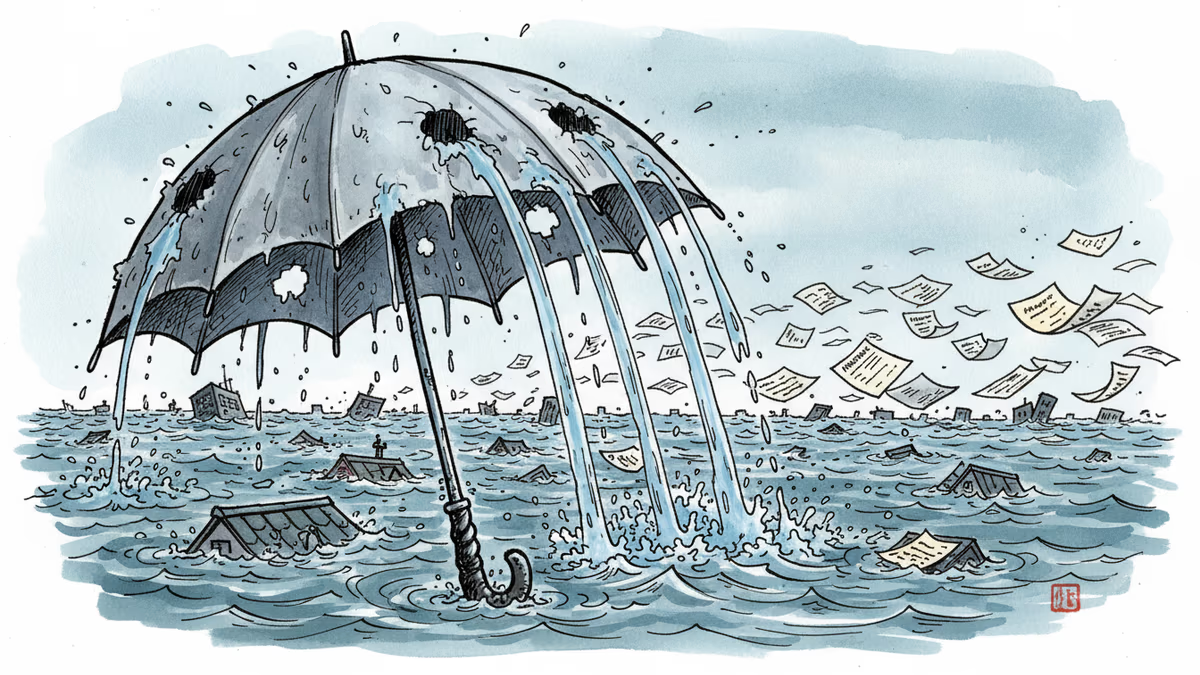
Entire regions becoming uninsurable due to climate change threatens the foundation of modern economics. How do we navigate this radical uncertainty?
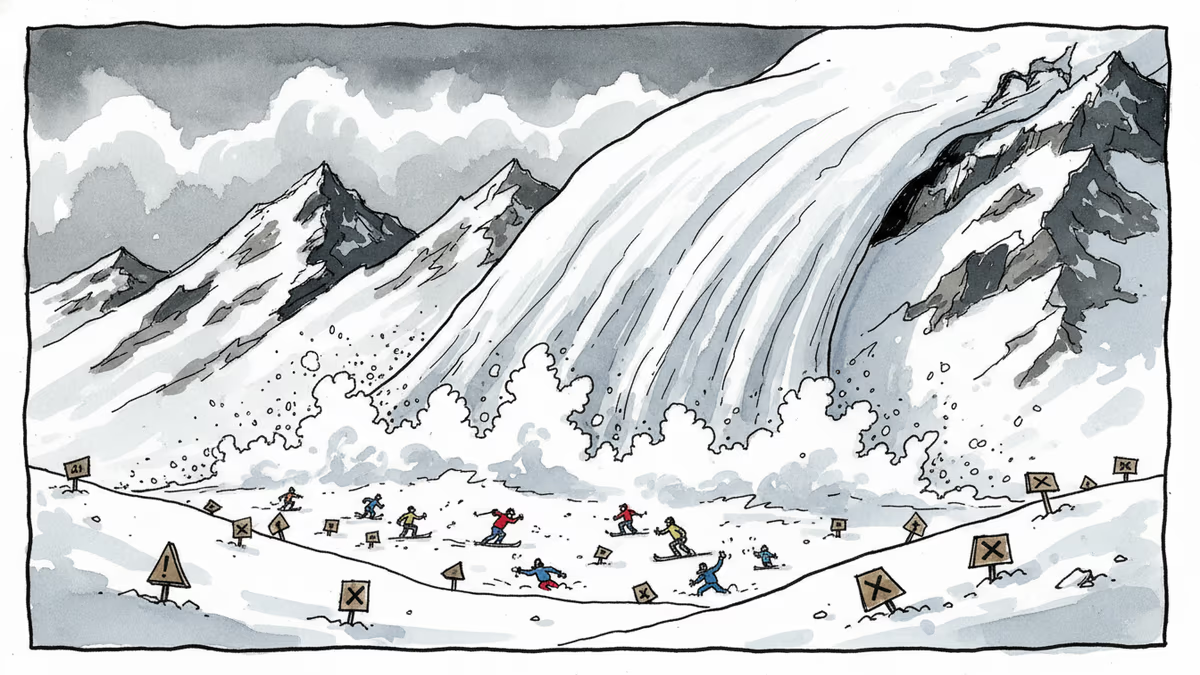
A deadly avalanche near Lake Tahoe killed 8 backcountry skiers despite high avalanche warnings. How is climate change reshaping winter risks?
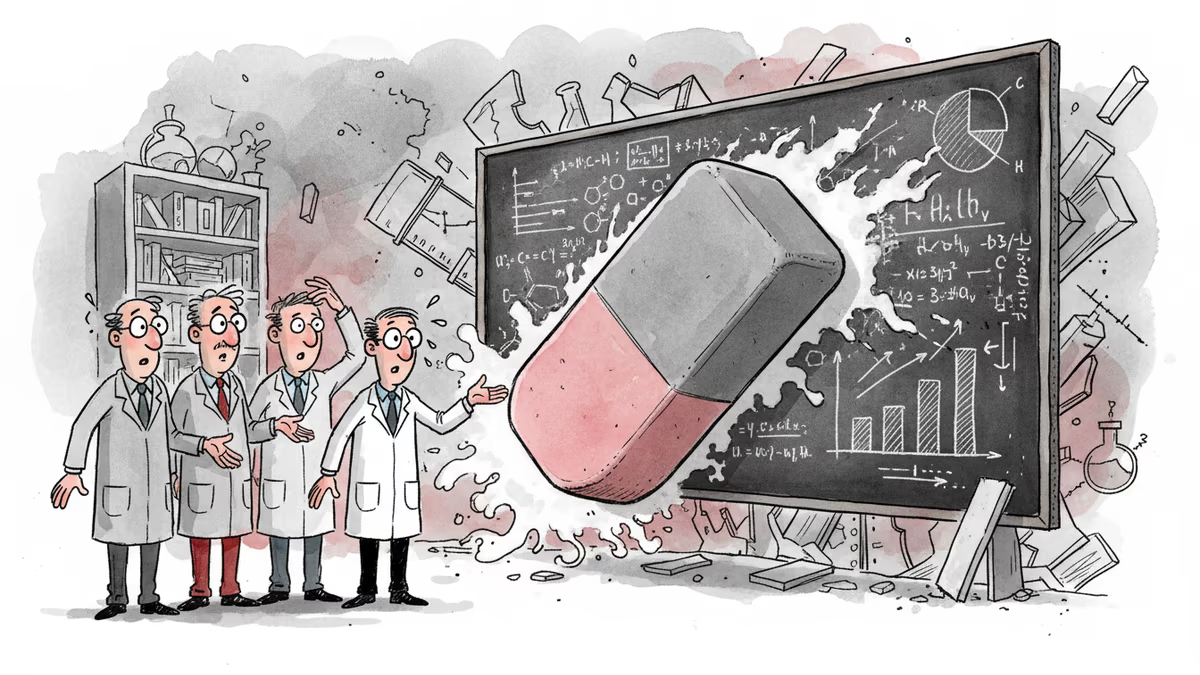
Trump's climate science reversal reveals a deeper crisis - the deliberate abandonment of knowledge itself. What happens when facts become negotiable?
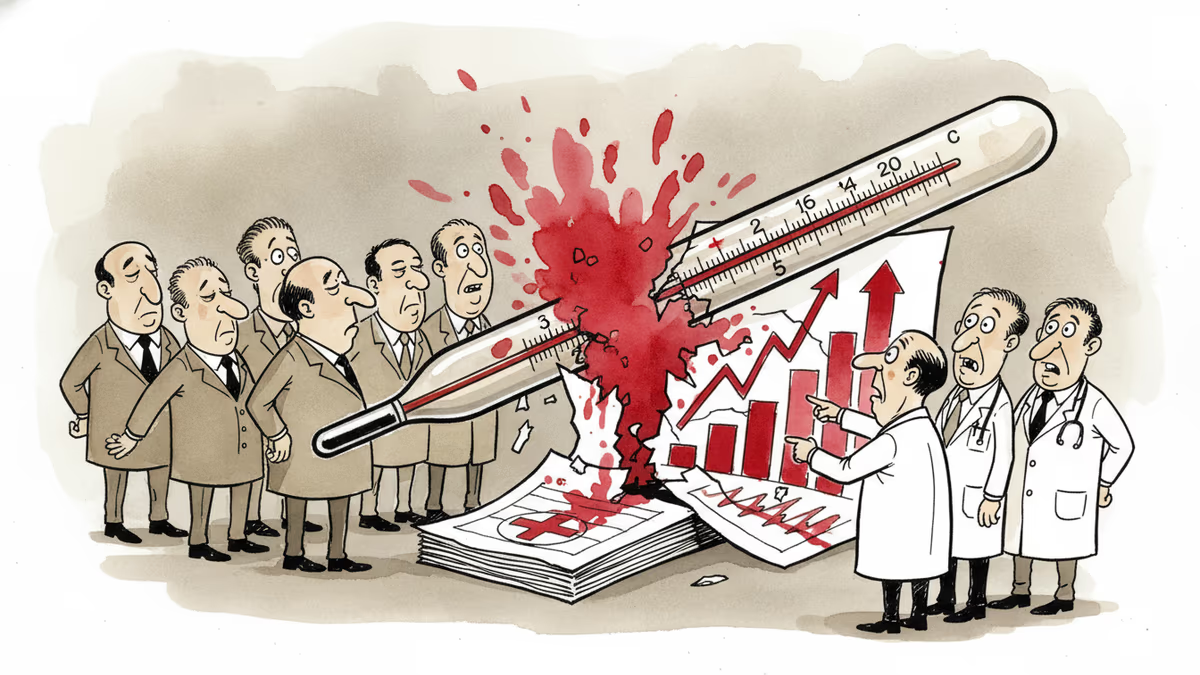
As the Trump administration rescinded the 2009 endangerment finding on greenhouse gases, medical professionals warn of mounting evidence linking climate change to deadly health impacts across America.
Entire regions becoming uninsurable due to climate change threatens the foundation of modern economics. How do we navigate this radical uncertainty?
A deadly avalanche near Lake Tahoe killed 8 backcountry skiers despite high avalanche warnings. How is climate change reshaping winter risks?
Trump's climate science reversal reveals a deeper crisis - the deliberate abandonment of knowledge itself. What happens when facts become negotiable?
As the Trump administration rescinded the 2009 endangerment finding on greenhouse gases, medical professionals warn of mounting evidence linking climate change to deadly health impacts across America.
Thoughts
Share your thoughts on this article
Sign in to join the conversation