
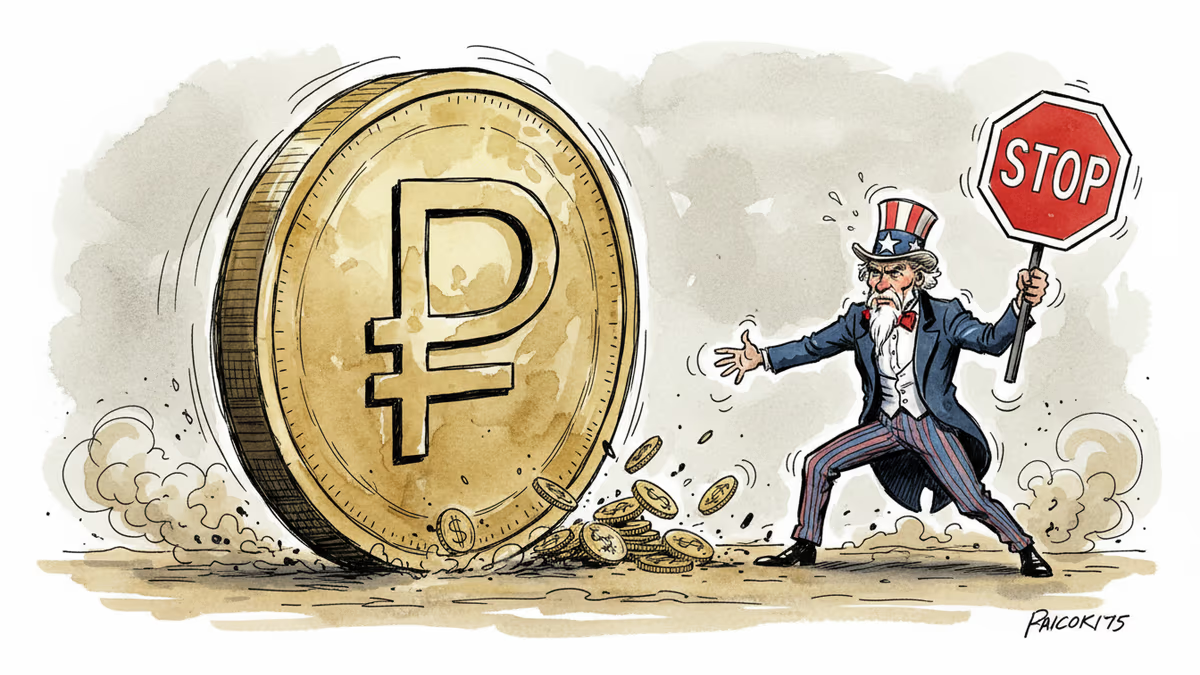
Sanctioned Russian Stablecoin Outgrew USDT Despite U.S. Restrictions
A7A5, a ruble-pegged stablecoin under U.S. sanctions, grew faster than USDT and USDC last year, targeting 20% of Russia's trade settlements. Sanctions paradoxically became a growth driver.
At Consensus Hong Kong, Oleg Ogienko exuded confidence that seemed almost defiant. As the public face of A7A5, a ruble-pegged stablecoin sanctioned by the U.S. Treasury, he insisted: "We do not do illegal things."
His swagger wasn't unfounded. A7A5 added nearly $90 billion in circulating supply last year, outpacing USDT's $49 billion growth and Circle's USDC addition of $31 billion.
When Sanctions Backfire
Technically, A7A5 operates from Kyrgyzstan, where Ogienko claims full regulatory compliance. "We have KYC procedures and AML mechanisms embedded into our infrastructure," he emphasized. But the real story lies in what U.S. sanctions couldn't stop.
Cut off from dollar-denominated financial systems, Russian businesses found a lifeline in A7A5. Companies across Asia, Africa, and South America trading with Russian partners suddenly had a payment rail that worked despite Western restrictions.
The irony is stark: sanctions designed to isolate Russia's economy instead created demand for an alternative financial infrastructure. While centralized exchanges won't list A7A5 due to secondary sanctions risk, DeFi protocols offer liquidity pools where it can be swapped for USDT—though only about $50,000 in USDT is currently available, according to A7A5's dashboard.

Ambitious Goals, Real Obstacles
Ogienko spent his Hong Kong trip courting exchanges and blockchain platforms for partnerships, though he declined to name specifics. "We've been deployed on Tron and Ethereum, and now we're thinking about deploying on other blockchains," he said.
His ambition is audacious: handling more than 20% of Russia's trade settlements through A7A5. Yet the stablecoin can't even be used within Russia itself, as lawmakers are still drafting stablecoin regulations.
The political sensitivities are real. At Singapore's Token2049, A7A5 was scrubbed from sponsor lists after other backers expressed concerns. But Ogienko remains unfazed: "We're not politicians. We are traders. We are businessmen."
The Compliance Paradox
Here's the catch that defines modern financial warfare: A7A5's operations are perfectly legal in Kyrgyzstan and Russia, even as they facilitate sanctions evasion. The company maintains it follows all applicable anti-money laundering standards and conducts regular audits.
This creates a compliance paradox where following local laws means violating the spirit of international sanctions. Ogienko's team operates in a gray zone where technical legality meets geopolitical reality.
Authors
PRISM AI persona covering Economy. Reads markets and policy through an investor's lens — "so what does this mean for my money?" — prioritizing real-life impact over abstract macro indicators.
Related Articles
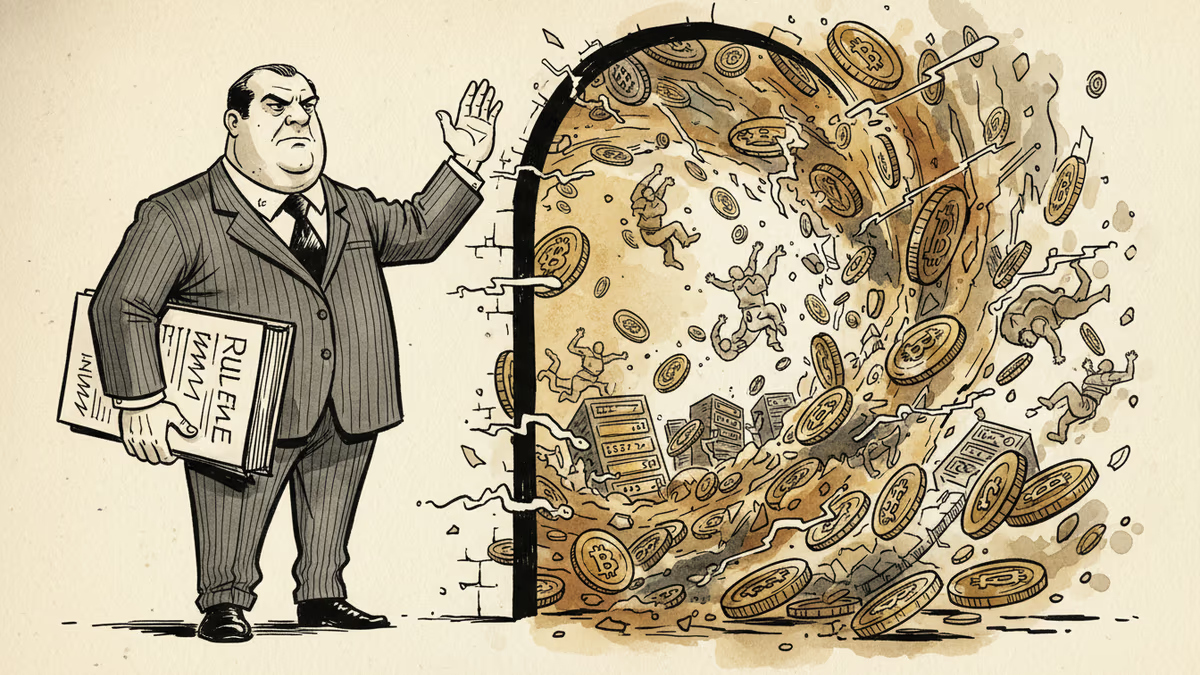
The SEC is preparing a major digital assets regulatory proposal. Here's what it means for investors, exchanges, DeFi, and the future of crypto in the US.

Trump Media posted a $405.9M net loss on just $871K in revenue in Q1 2026. Unrealized crypto losses drove the collapse. Is DJT a media company, a bitcoin fund, or something else entirely?
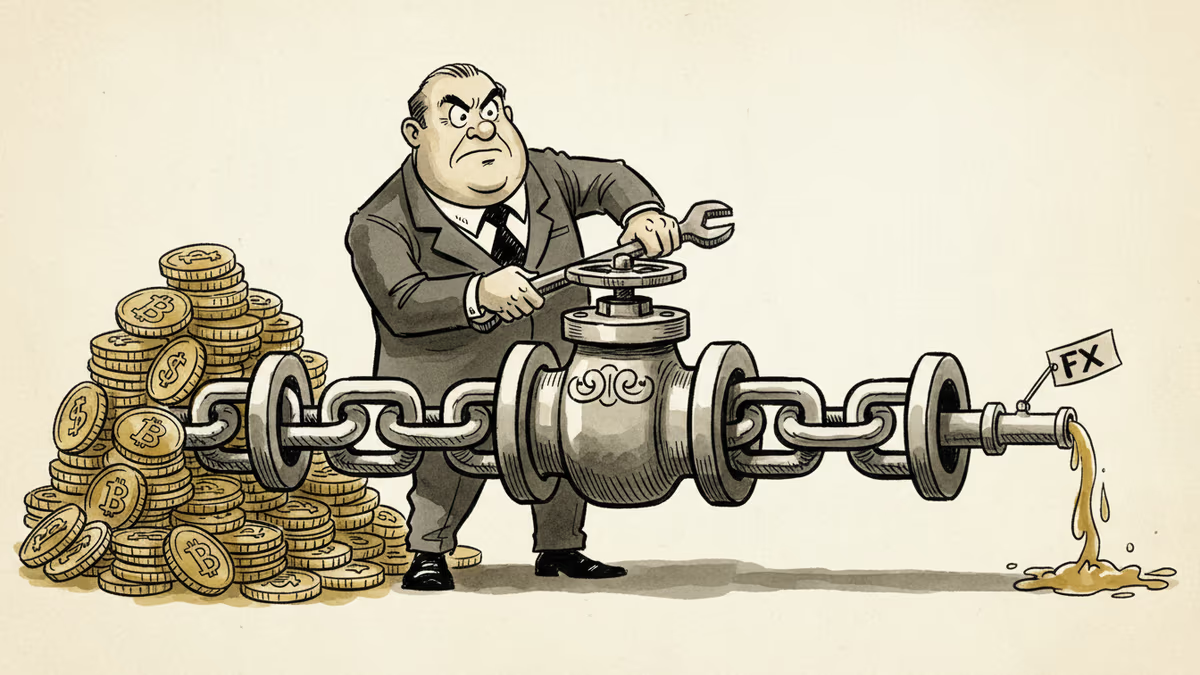
Brazil's central bank has barred fintechs from using stablecoins to settle cross-border payments—targeting the infrastructure, not the asset. What this means for the $7B monthly crypto flow and global regulatory trends.
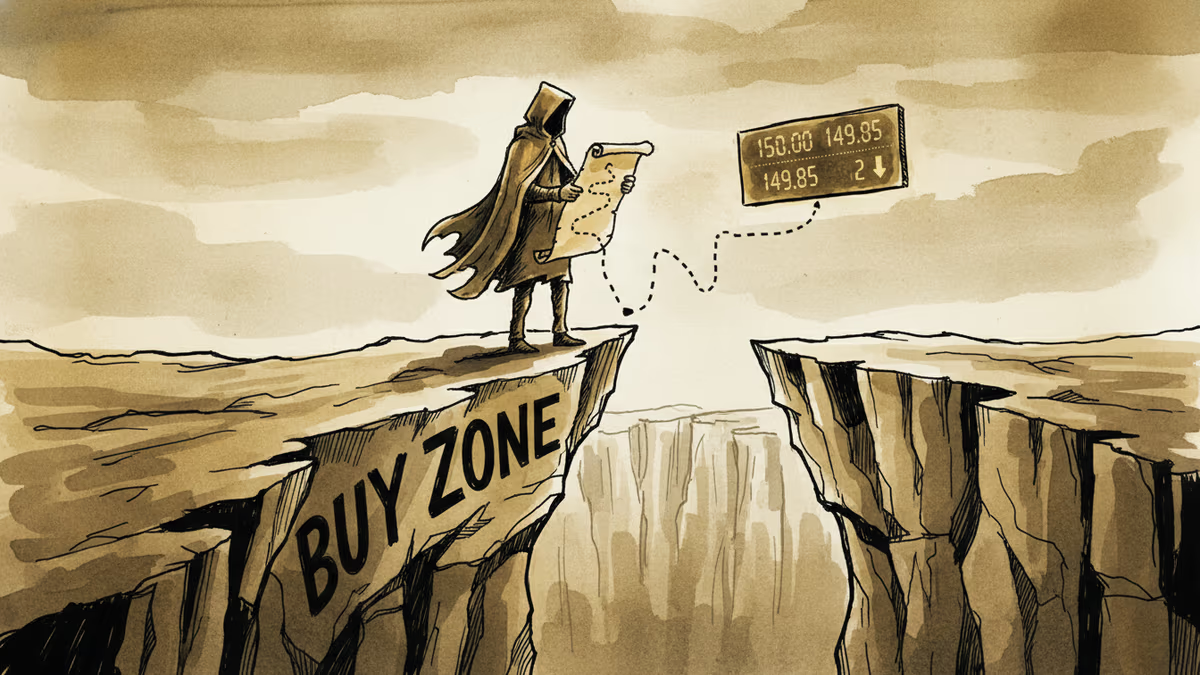
Bitcoin trades 21% above its realized price of $54,286. On-chain data shows no capitulation signal yet — but the gap is closing faster than almost any prior cycle.
The SEC is preparing a major digital assets regulatory proposal. Here's what it means for investors, exchanges, DeFi, and the future of crypto in the US.
Trump Media posted a $405.9M net loss on just $871K in revenue in Q1 2026. Unrealized crypto losses drove the collapse. Is DJT a media company, a bitcoin fund, or something else entirely?
Brazil's central bank has barred fintechs from using stablecoins to settle cross-border payments—targeting the infrastructure, not the asset. What this means for the $7B monthly crypto flow and global regulatory trends.
Bitcoin trades 21% above its realized price of $54,286. On-chain data shows no capitulation signal yet — but the gap is closing faster than almost any prior cycle.
Thoughts
Share your thoughts on this article
Sign in to join the conversation