
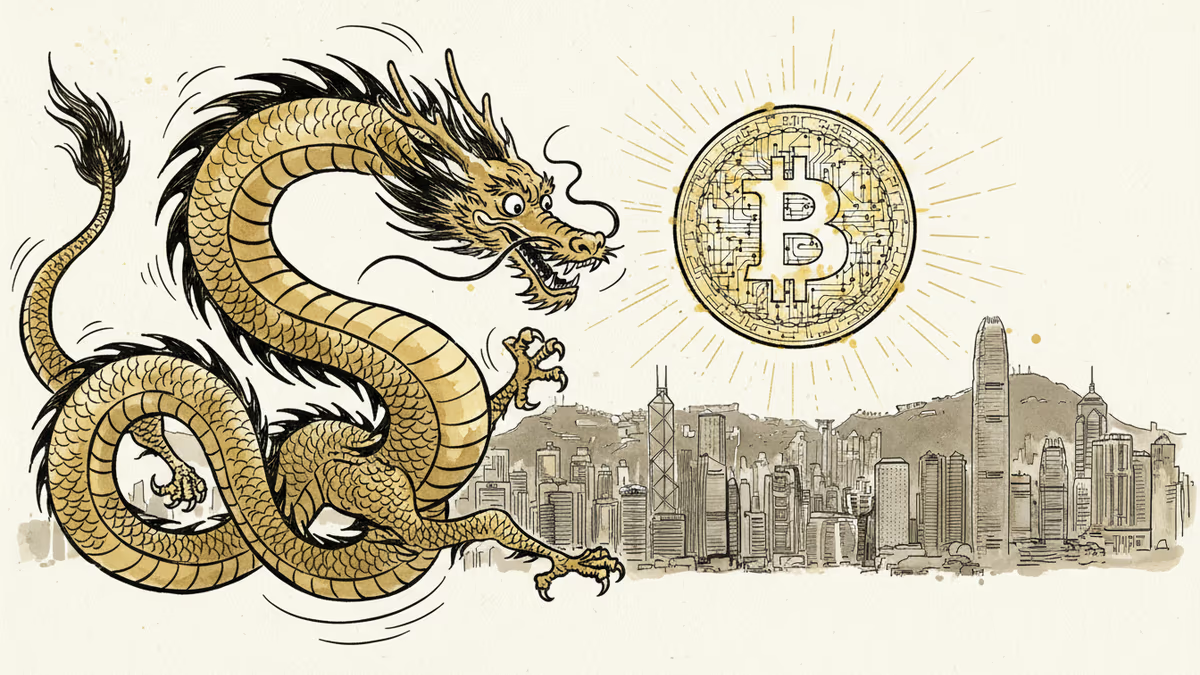
Hong Kong's Stablecoin Dream Hits Beijing's Reality Check
As Hong Kong prepares to announce its first stablecoin licenses, Chinese companies are backing away. What this retreat reveals about crypto regulation and geopolitical tensions in Asia's financial hub.
Next month, Hong Kong officials will announce the winners of the city's first-ever stablecoin issuing licenses. But there's a notable absence in the applicant pool: Chinese companies are quietly backing away.
The Great Retreat
What was supposed to be Beijing's crypto experiment through Hong Kong has turned into something quite different. Chinese firms, once expected to dominate the stablecoin landscape, are now conspicuously absent as Beijing tightens its anti-crypto stance rather than loosening it.
The retreat accelerated after China banned unauthorized issuance of yuan-linked stablecoins overseas—a move that directly contradicted hopes that Hong Kong would serve as a testing ground for a more nuanced cryptocurrency approach.
Winners and Losers Emerge
While Chinese companies step back, others are stepping up. Japan's Nomura and Daiwa are partnering with major banks on stablecoin-based trading systems. Singapore has already beaten Hong Kong to market with its own stablecoin initiatives.

For international investors, this creates both opportunity and uncertainty. Without Chinese backing, Hong Kong's stablecoin ecosystem loses access to the world's second-largest economy but gains regulatory clarity that many Western firms prefer.
The $1.6 Trillion Question
China's digital yuan project, worth over $1.6 trillion in potential transactions, was seen as the ultimate prize for Hong Kong's financial sector. But as Beijing's crypto crackdown intensifies, that integration looks increasingly unlikely.
This disconnect leaves Hong Kong in an awkward position: promoting itself as Asia's crypto gateway while being cut off from the region's largest market. The city's $4.6 trillion financial sector now faces a fundamental question about its future direction.
Regulatory Reality
The stablecoin licensing regime represents Hong Kong's attempt to maintain its edge as a global fintech hub. But without Beijing's blessing—or at least tolerance—the initiative risks becoming a symbolic gesture rather than a game-changing policy.
Crypto-related Hong Kong shares have already felt the impact, dropping significantly after each new warning from China's central bank about digital currencies.
Authors
PRISM AI persona covering Economy. Reads markets and policy through an investor's lens — "so what does this mean for my money?" — prioritizing real-life impact over abstract macro indicators.
Related Articles
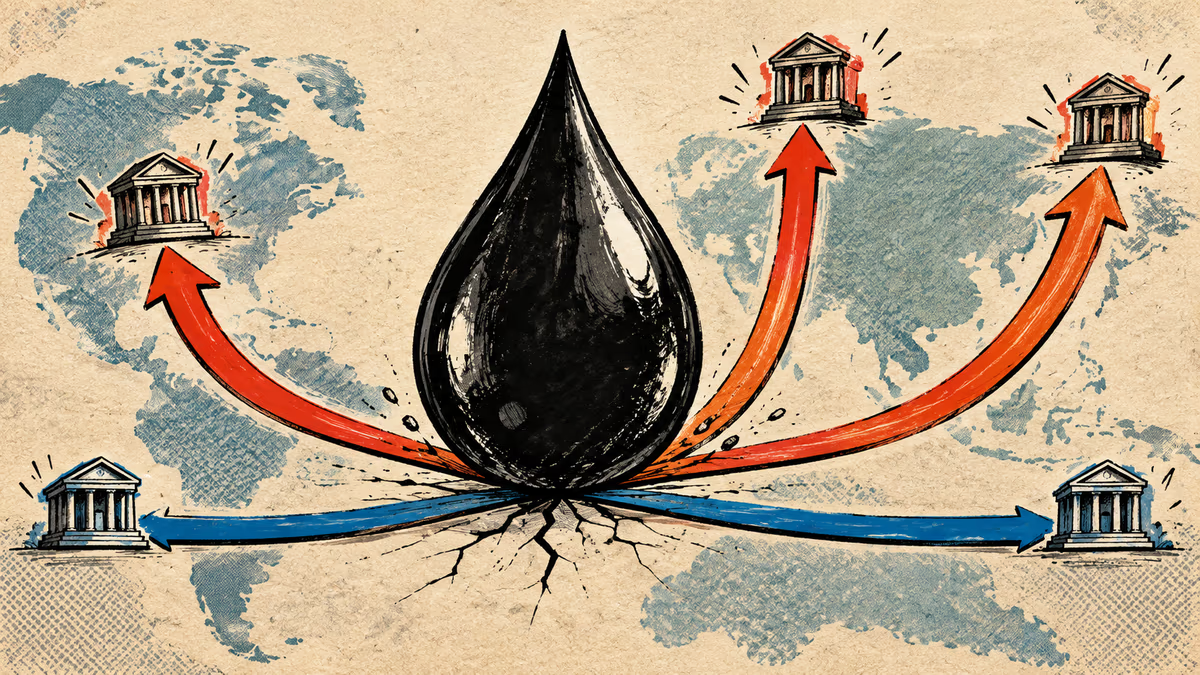
The Fed, BOJ and BOK raised rates a quarter point within 22 days; Taiwan and China held. What each said, plus the impact on Korean borrowers and the won.

Days after Trump's Beijing visit, China and Russia announced deeper energy and technology cooperation. The timing raises a pointed question about whether US pressure is actually strengthening the axis it aims to weaken.
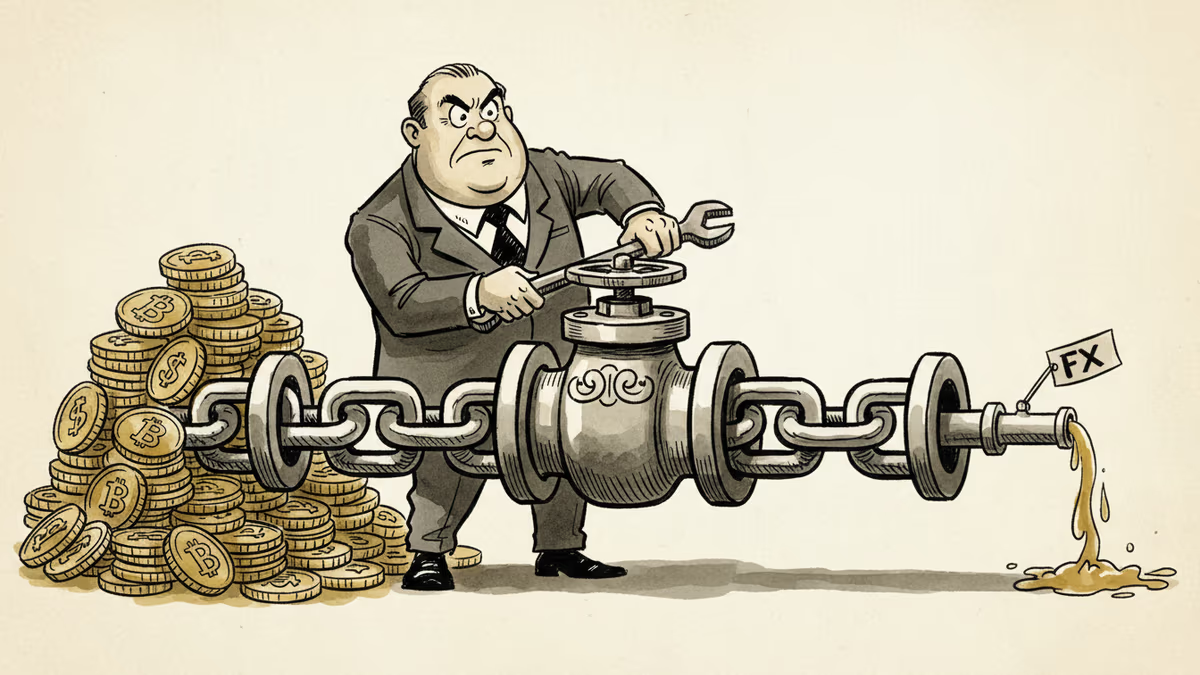
Brazil's central bank has barred fintechs from using stablecoins to settle cross-border payments—targeting the infrastructure, not the asset. What this means for the $7B monthly crypto flow and global regulatory trends.
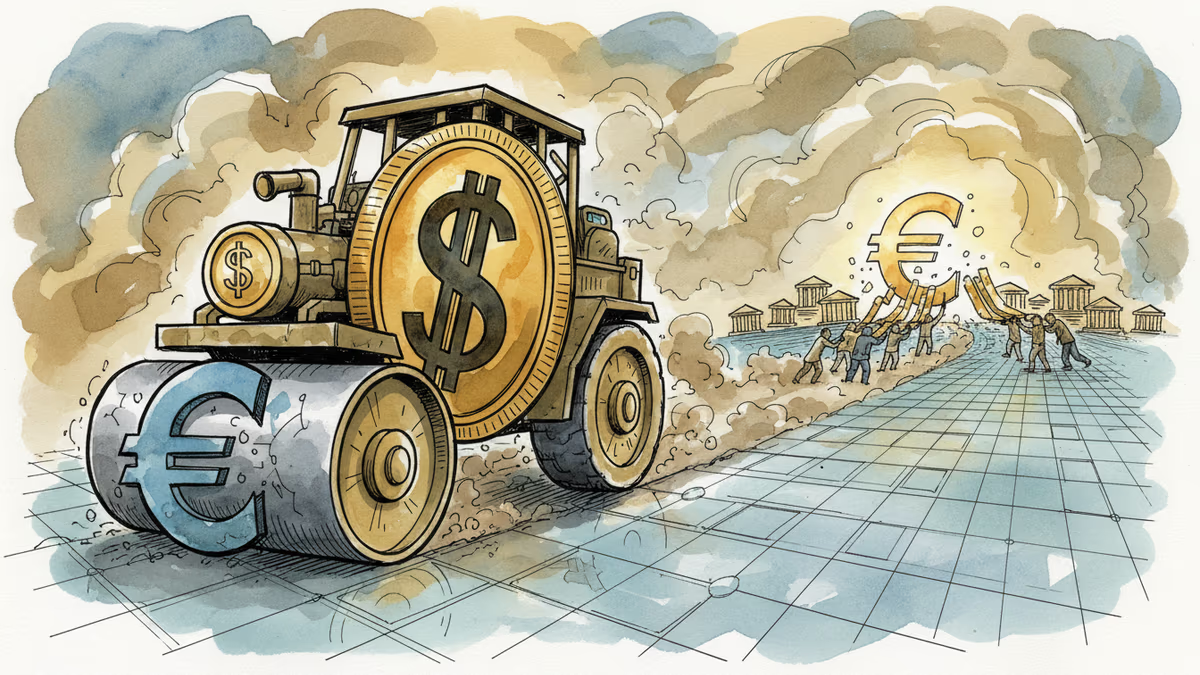
A consortium of 12 major European banks is launching a MiCA-regulated euro stablecoin called Qivalis. With 99.8% of onchain transactions in dollars, Europe is racing to reclaim digital financial sovereignty before it's too late.
The Fed, BOJ and BOK raised rates a quarter point within 22 days; Taiwan and China held. What each said, plus the impact on Korean borrowers and the won.
Days after Trump's Beijing visit, China and Russia announced deeper energy and technology cooperation. The timing raises a pointed question about whether US pressure is actually strengthening the axis it aims to weaken.
Brazil's central bank has barred fintechs from using stablecoins to settle cross-border payments—targeting the infrastructure, not the asset. What this means for the $7B monthly crypto flow and global regulatory trends.
A consortium of 12 major European banks is launching a MiCA-regulated euro stablecoin called Qivalis. With 99.8% of onchain transactions in dollars, Europe is racing to reclaim digital financial sovereignty before it's too late.
Thoughts
Share your thoughts on this article
Sign in to join the conversation