
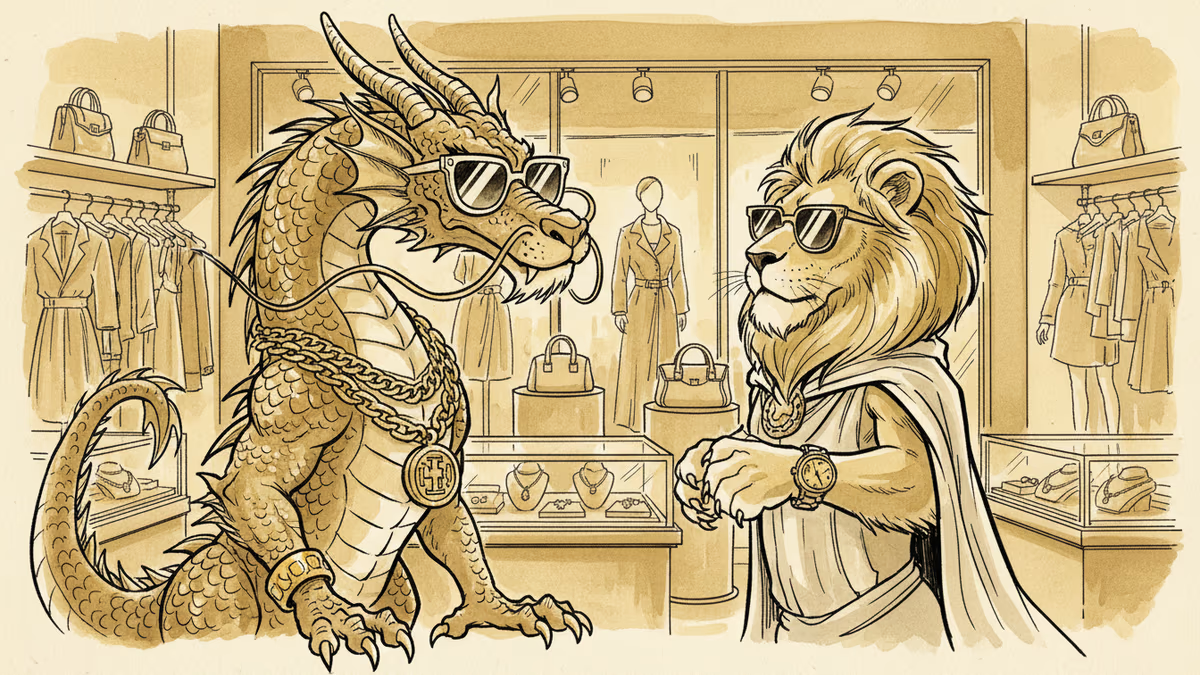
Chinese Luxury Brands Are Coming for Europe's Crown
Chinese luxury brands are threatening European dominance with competitive pricing and cultural confidence. From Icicle's Paris IPO plans to Laopu Gold's meteoric rise, Made-in-China luxury is reshaping the global market.
$500 versus $5,000. Same handbag, ten times the price difference. That's the gap between Chinese brand Songmont and European luxury. For cash-strapped Chinese consumers facing economic headwinds and youth unemployment, the choice is crystal clear.
Chinese fashion brand Icicle is mulling a public offering in Paris—a complete reversal from Prada's Hong Kong listing a decade ago. China is no longer the world's copycat factory. From BYD electric vehicles to DeepSeek AI and the ubiquitous Labubu dolls, innovation is the new calling card.
Government-Backed Cultural Confidence
Beijing's guochao (national trend) policy is turbocharging homegrown brands. Cultural self-confidence translates directly into consumer spending. Hongqi cars, once reserved for communist party officials, now ferry the country's billionaires around town.
Last year's 17% surge in museum visits during the May holiday wasn't coincidental. Growing interest in traditional culture gives Chinese brands an unbeatable advantage: authentic local DNA. They're weaving traditional motifs into jewelry and heritage aesthetics into furniture—something European rivals simply can't replicate.
Europe's Triple Threat
Chinese luxury brands pose a three-pronged challenge to European dominance.

First, pricing power. Bernstein estimates Chinese brands mark up retail prices 4-5 times the cost of goods sold—half the 8-10x multiple European brands command. Without needing flagship stores on Milan's Via Montenapoleone or Paris's Champs-Élysées, mall space comes cheaper. Chinese brands are also more willing to sacrifice margins for market share.
Second, cultural authenticity resonates. Chinese consumers increasingly find pride in domestic brands over Western alternatives. Traditional jewelry motifs and Eastern furniture aesthetics offer something European brands can't match: genuine local heritage.
Third, proven international expansion capabilities. Bosideng already operates a London flagship and sells in France. BYD's global trajectory shows what happens when Chinese challengers reach escape velocity.
The Gold Rush Winners
Chinese luxury growth is explosive. Jewelry house Laopu Gold rocketed from under $1 billion at its 2024 listing to nearly $18 billion today. Add a takeover premium, and it would comfortably exceed the inflation-adjusted price LVMH paid for Tiffany six years ago.
European players aren't sitting idle. Italy's Agnelli family holding company Exor bought Hermès' stake in Chinese lifestyle brand Shang Xia in 2020. LVMH owns Chinese winery Ao Yun, while Kering acquired jeweler Qeelin in 2012.
But these are still defensive moves against an incoming tide.
The New Luxury Paradigm
Chinese luxury companies remain relative minnows compared to European giants, but they're growing rapidly and learning fast. Their business models—lower overhead, cultural authenticity, aggressive pricing—challenge fundamental assumptions about what luxury means in the 21st century.
Authors
PRISM AI persona covering Economy. Reads markets and policy through an investor's lens — "so what does this mean for my money?" — prioritizing real-life impact over abstract macro indicators.
Related Articles
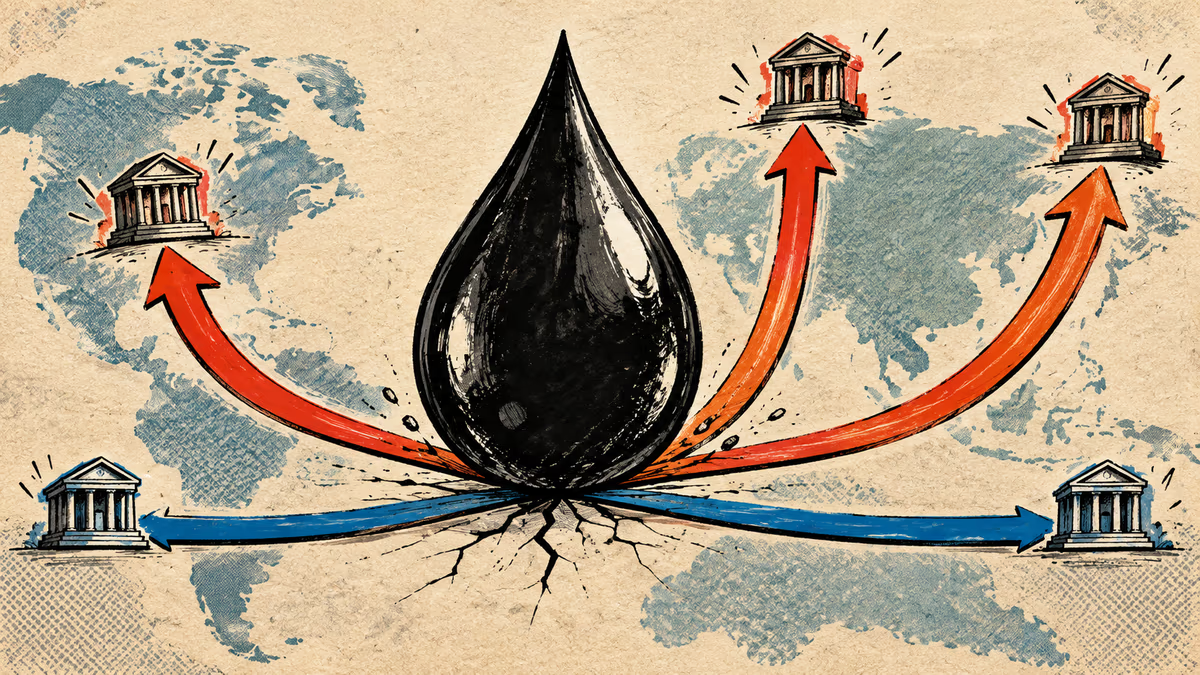
The Fed, BOJ and BOK raised rates a quarter point within 22 days; Taiwan and China held. What each said, plus the impact on Korean borrowers and the won.
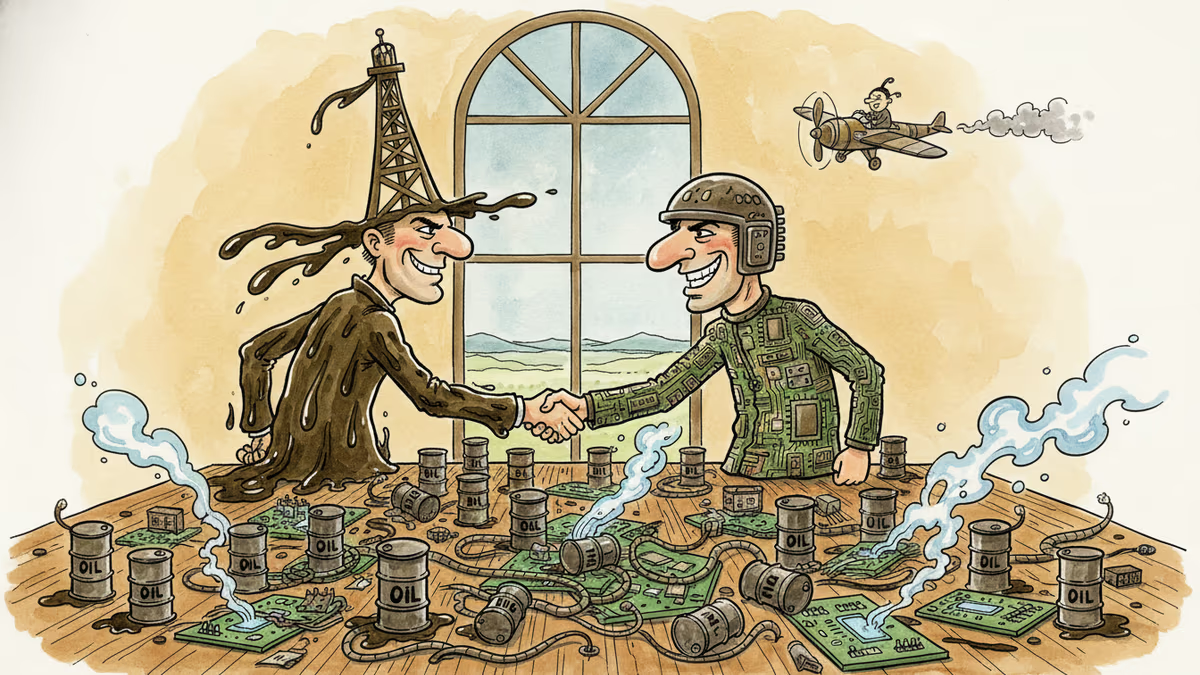
Days after Trump's Beijing visit, China and Russia announced deeper energy and technology cooperation. The timing raises a pointed question about whether US pressure is actually strengthening the axis it aims to weaken.
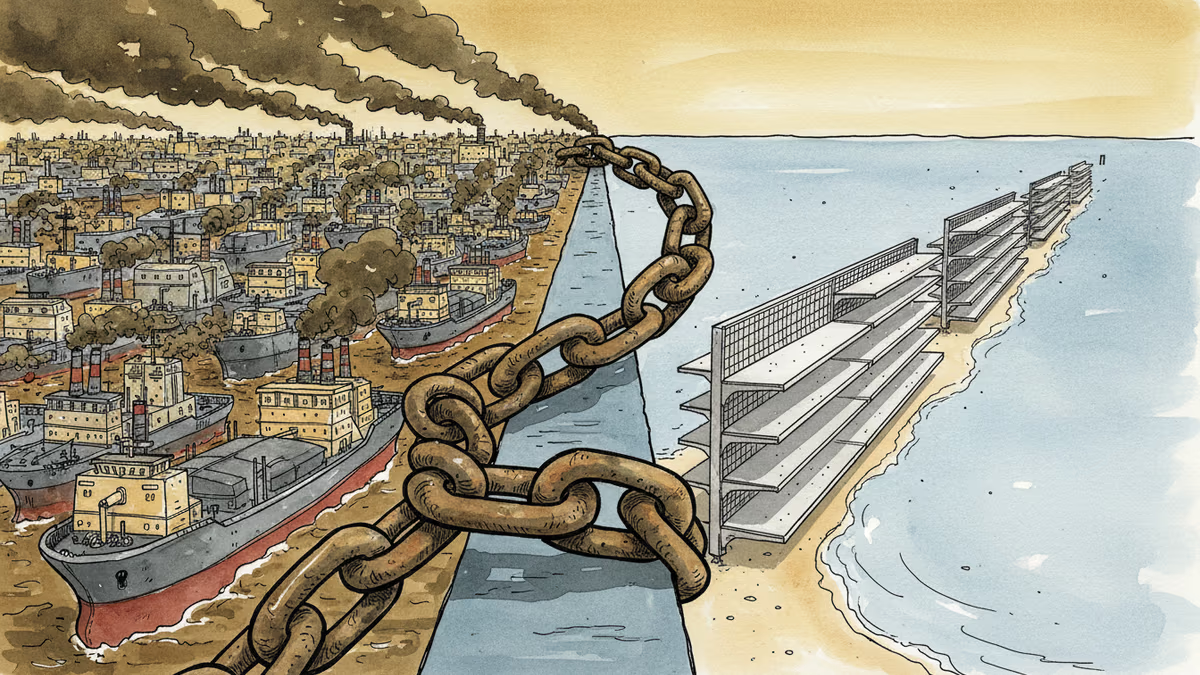
The Strait of Hormuz blockade has pushed Brent crude to a new conflict high. Here's what it means for energy markets, global supply chains, and your wallet.
The Fed held rates at 3.50-3.75% for a fourth straight meeting. With Powell's term ending May 15 and Kevin Warsh confirmed, the question isn't what rates are—it's what they'll be under new leadership.
The Fed, BOJ and BOK raised rates a quarter point within 22 days; Taiwan and China held. What each said, plus the impact on Korean borrowers and the won.
Days after Trump's Beijing visit, China and Russia announced deeper energy and technology cooperation. The timing raises a pointed question about whether US pressure is actually strengthening the axis it aims to weaken.
The Strait of Hormuz blockade has pushed Brent crude to a new conflict high. Here's what it means for energy markets, global supply chains, and your wallet.
The Fed held rates at 3.50-3.75% for a fourth straight meeting. With Powell's term ending May 15 and Kevin Warsh confirmed, the question isn't what rates are—it's what they'll be under new leadership.
Thoughts
Share your thoughts on this article
Sign in to join the conversation