
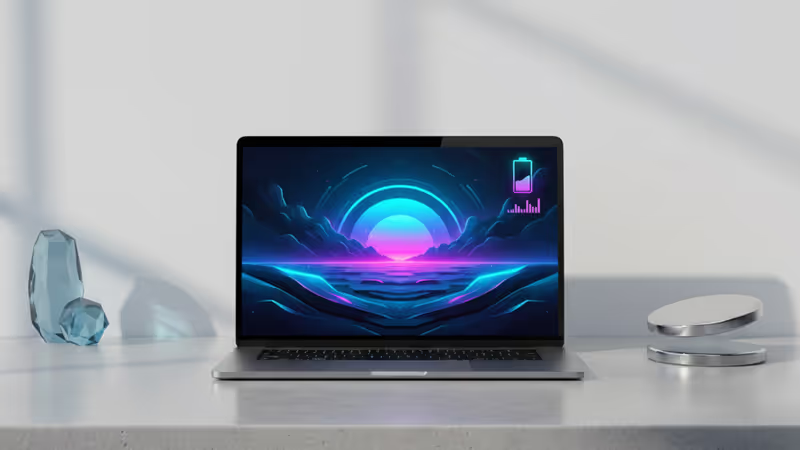
Samsung Intel SmartPower HDR OLED: Redefining Laptop Battery Efficiency
Samsung Display and Intel reveal SmartPower HDR, a new technology that slashes OLED power consumption for laptops through real-time brightness monitoring.
Watching HDR content on your laptop shouldn't mean watching your battery die in real-time. Samsung Display and Intel have joined forces to unveil SmartPower HDR, a technology designed to maximize the efficiency of OLED screens during high-dynamic-range playback.
How Samsung Intel SmartPower HDR Works
According to reports from The Verge, the magic happens when the laptop's chipset monitors the peak brightness of every single frame in real-time. While Intel initially teased this technology in 2025, Samsung Display has now provided the technical roadmap for how it functions within the OLED ecosystem.

The timing controller chip in the panel uses these real-time data points to adjust power draw dynamically. This localized control ensures that the screen doesn't waste energy on pixels that don't need high brightness, effectively extending usage time without compromising the visual punch of HDR.
The Wait for SmartPower HDR Laptops
Despite the promising details, it's still unclear which specific laptops will be the first to feature SmartPower HDR. Samsung hasn't named any partners yet, though industry analysts expect this to become a staple in premium ultrabooks aimed at creators and media enthusiasts by later this year.
Authors
Related Articles

Intel's revived New Mexico fab is betting on advanced chip packaging to challenge TSMC and capture AI market share. Here's why this quiet technology could matter more than the chips themselves.

A material humans have shaped for thousands of years is about to become the backbone of next-gen AI chips. Here's why the semiconductor industry is betting on glass—and what's at stake.

Intel's Core Ultra 200S Plus (Arrow Lake Refresh) adds cores and bumps clocks, promising 15% better gaming. But the real question is: compared to what? Here's what enthusiasts need to know.

Dell ditches discrete graphics entirely in the new XPS 14, betting on Intel's integrated GPU to match RTX 4050 performance. Is this the future of laptops or a risky experiment?
Intel's revived New Mexico fab is betting on advanced chip packaging to challenge TSMC and capture AI market share. Here's why this quiet technology could matter more than the chips themselves.
A material humans have shaped for thousands of years is about to become the backbone of next-gen AI chips. Here's why the semiconductor industry is betting on glass—and what's at stake.
Intel's Core Ultra 200S Plus (Arrow Lake Refresh) adds cores and bumps clocks, promising 15% better gaming. But the real question is: compared to what? Here's what enthusiasts need to know.
Dell ditches discrete graphics entirely in the new XPS 14, betting on Intel's integrated GPU to match RTX 4050 performance. Is this the future of laptops or a risky experiment?
Thoughts
Share your thoughts on this article
Sign in to join the conversation