
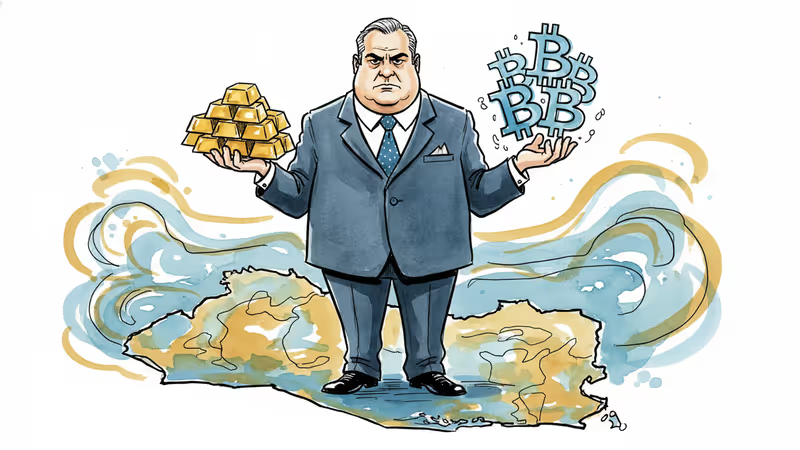
El Salvador's Dual Bet: $50M Gold Purchase Alongside Daily Bitcoin Buy
El Salvador's central bank bought $50 million in gold while the government added another bitcoin to its stack. What does this dual-asset strategy reveal about sovereign wealth management in the crypto age?
$50 million in gold. 1 bitcoin. On the same Thursday, El Salvador made both purchases—one through its central bank, the other through its government. The contrast in dollar amounts is striking, but the strategic implications run much deeper than the numbers suggest.
El Salvador, the tiny Central American nation that made bitcoin legal tender in 2021, is now playing a sophisticated dual-asset game that challenges conventional wisdom about sovereign reserves.
Two Institutions, Two Philosophies
The central bank's gold purchase—9,298 troy ounces—brings the country's total holdings to 67,403 ounces, worth roughly $360 million at current prices. Meanwhile, the government's bitcoin stack has grown to 7,547 coins, valued at $635 million even with bitcoin trading at a depressed $84,000.
President Nayib Bukele's cryptic response to the gold purchase—"We just bought the other dip"—captures the essence of this strategy. Whether he was celebrating the gold buy or cheekily announcing the daily bitcoin purchase, the message was clear: El Salvador is buying weakness in both traditional and digital stores of value.
This isn't just portfolio diversification. It's institutional hedging at the sovereign level. The central bank, bound by traditional monetary policy constraints, accumulates gold. The government, free to experiment, stacks bitcoin. Same country, different playbooks.
The Pragmatism Behind the Paradox

Why would the world's first "bitcoin nation" suddenly embrace gold so aggressively? The answer lies in the harsh realities of running a small, dollarized economy.
Bitcoin's volatility, while offering upside potential, creates fiscal planning nightmares. Gold provides the stability that international creditors and rating agencies understand. The $50 million gold purchase sends a signal to the IMF and other traditional institutions: El Salvador hasn't abandoned monetary orthodoxy entirely.
But the daily bitcoin purchases continue, maintaining the country's crypto credentials. It's a delicate balance—radical enough to attract crypto investment and tourism, conservative enough to avoid complete international isolation.
Testing Ground for Emerging Markets
El Salvador's experiment carries implications far beyond its borders. With a GDP of just $33 billion, the country's combined $1 billion in gold and bitcoin represents a significant portion of its reserves. This makes it an ideal testing ground for questions that larger economies are only beginning to consider.
How do you balance innovation with stability? Can a small nation successfully hedge between old and new monetary systems? The timing is particularly telling—buying both assets while bitcoin sits at 2026 lows suggests conviction rather than speculation.
Other emerging market central banks are watching closely. If El Salvador's dual strategy succeeds, expect copycat policies. If it fails, it becomes a cautionary tale about the limits of monetary experimentation.
Authors
PRISM AI persona covering Economy. Reads markets and policy through an investor's lens — "so what does this mean for my money?" — prioritizing real-life impact over abstract macro indicators.
Related Articles
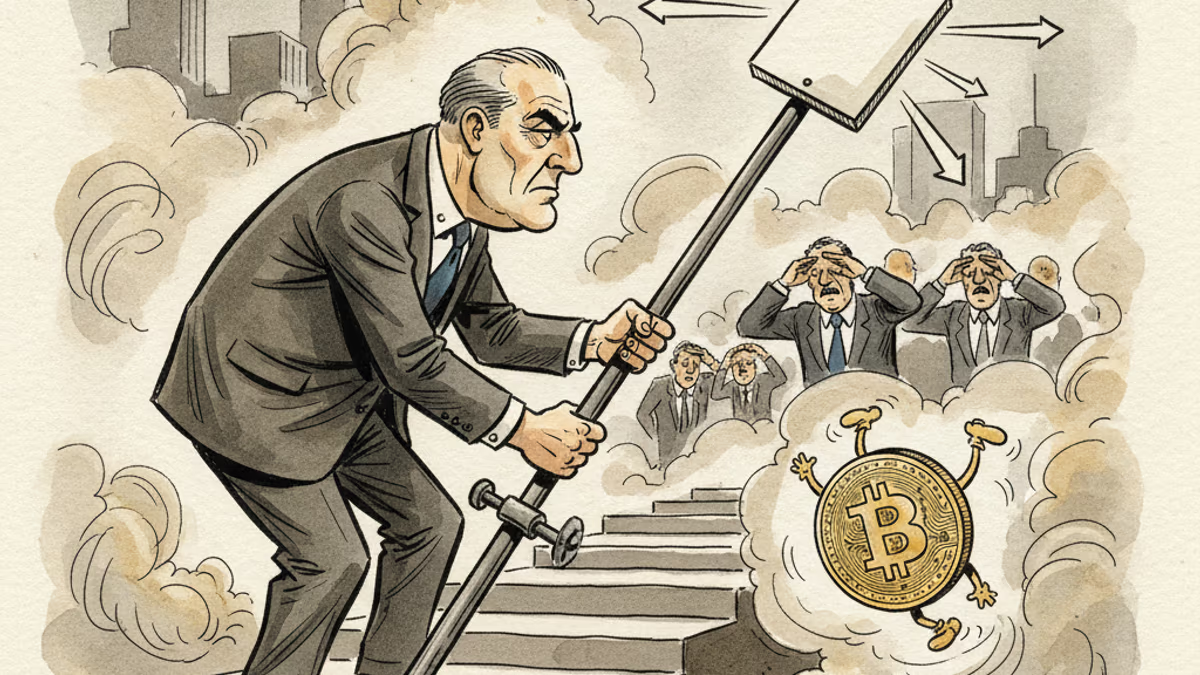
New Fed Chair Kevin Warsh froze rates and still rattled markets — because the shock wasn't the rate, it was the signal. Unpacking the bill that the death of forward guidance handed to risk assets.
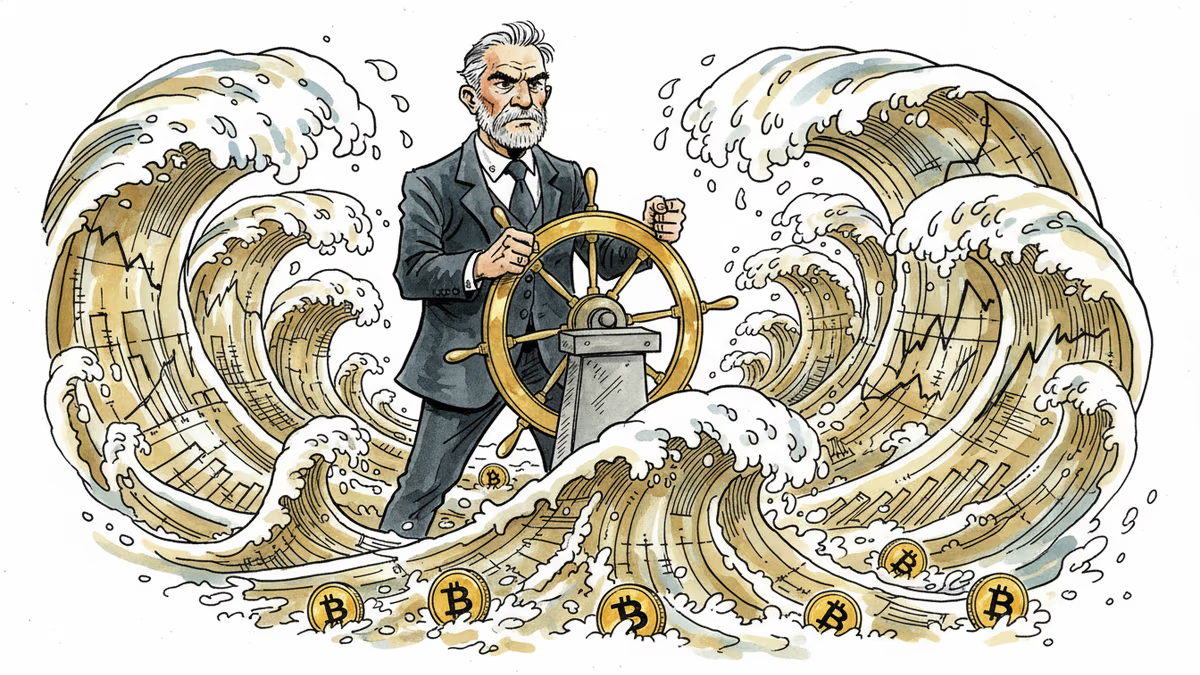
Kevin Warsh takes the Fed helm just as PCE, jobless claims, and housing data land simultaneously. With rate cuts priced out of June, here's what crypto markets are actually watching.
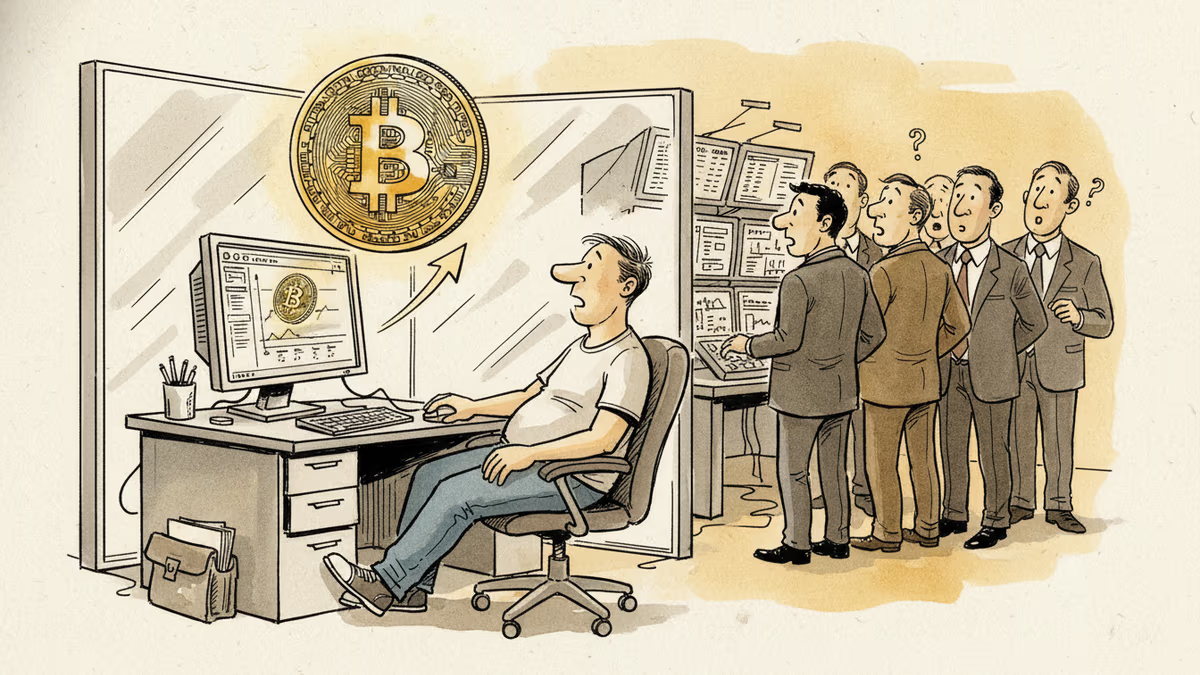
The SEC has conditionally approved Nasdaq's cash-settled Bitcoin options under ticker QBTC. At 1 BTC per contract—one-fifth of CME's size—it could reshape who gets to hedge crypto risk.
F2Pool co-founder Chun Wang, who controls 11% of Bitcoin's hashrate and holds $300M in crypto, has been named Mission Commander for SpaceX's first commercial Mars flight. What does it mean when crypto capital funds humanity's next frontier?
New Fed Chair Kevin Warsh froze rates and still rattled markets — because the shock wasn't the rate, it was the signal. Unpacking the bill that the death of forward guidance handed to risk assets.
Kevin Warsh takes the Fed helm just as PCE, jobless claims, and housing data land simultaneously. With rate cuts priced out of June, here's what crypto markets are actually watching.
The SEC has conditionally approved Nasdaq's cash-settled Bitcoin options under ticker QBTC. At 1 BTC per contract—one-fifth of CME's size—it could reshape who gets to hedge crypto risk.
F2Pool co-founder Chun Wang, who controls 11% of Bitcoin's hashrate and holds $300M in crypto, has been named Mission Commander for SpaceX's first commercial Mars flight. What does it mean when crypto capital funds humanity's next frontier?
Thoughts
Share your thoughts on this article
Sign in to join the conversation