
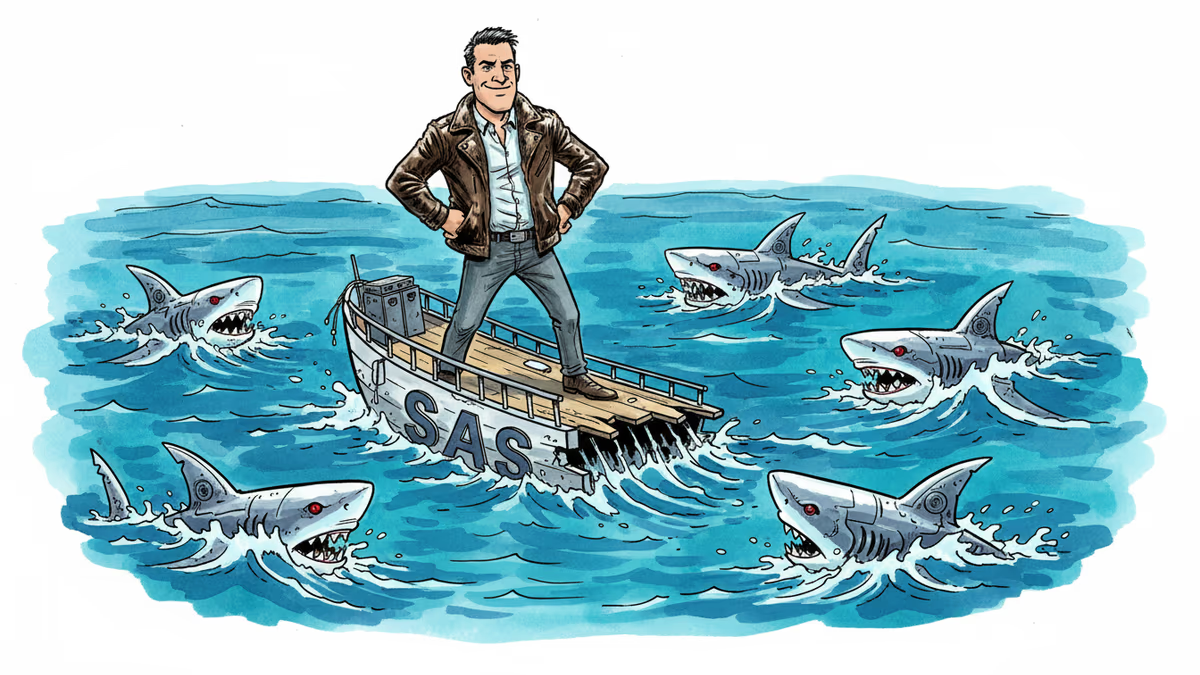
Salesforce's $50B Bet Against the 'SaaSpocalypse'
Salesforce deployed every weapon in its arsenal to convince investors that AI agents won't kill SaaS. But are they fighting the right battle?
The Kitchen Sink Strategy: When $50 Billion Isn't Enough
Salesforce didn't just report earnings Wednesday—it staged an intervention. With $10.7 billion in Q4 revenue (up 13% year-over-year) and $41.5 billion for the full year, the numbers looked solid. But CEO Marc Benioff knew numbers wouldn't be enough. He mentioned "SaaSpocalypse" six times during the call, launched a $50 billion share buyback program, and even donned a black leather jacket à la Nvidia's Jensen Huang.
This wasn't confidence—it was desperation dressed up as swagger.
The Existential Question: Are Seats Dead?
The "SaaSpocalypse" isn't just a catchy term—it represents a fundamental threat to software-as-a-service companies. The fear is simple: if AI agents can do the work of multiple employees, why pay per-seat licensing fees? OpenAI's recent enterprise agent "Frontier" only amplified these concerns, presenting a vision where AI models own the tech stack and traditional SaaS providers become mere data repositories.
Salesforce countered with its own architectural vision: SaaS platforms remain central, with AI models as "commoditized work engines" underneath. It's a battle for the soul of enterprise software, and both sides are drawing very different maps of the future.
The company processed 19 trillion tokens last quarter—impressive until you realize that's actually modest in today's AI world. Which raises the question: is Salesforce keeping up or falling behind?

AWU: The New Currency of AI Work
Perhaps most tellingly, Salesforce introduced "Agentic Work Units" (AWU)—a metric that measures completed tasks rather than just text generation. As President Patrick Stokes put it: "You can ask it a question and it can write you a poem, but that's not really all that valuable in the enterprise world."
This shift from measuring inputs (tokens) to outputs (completed work) signals a broader industry evolution. But it also reveals Salesforce's anxiety: they need to prove their AI actually works, not just talks.
The Customer Testimonial Theater
The earnings call itself was unprecedented—part podcast, part infomercial. Benioff interviewed three customers on camera, including the CEO of home appliance company SharkNinja and the CEO of SaaStr. All gushed about Salesforce's AI agents. It was compelling theater, but also a sign of how hard the company is working to change the narrative.
When was the last time you saw a Fortune 500 CEO turn an earnings call into a customer testimonial show? Desperation or innovation—you decide.
The Bigger Picture: Platform vs. Model Wars
This isn't just about Salesforce—it's about the entire enterprise software ecosystem. Traditional SaaS companies are caught between two forces: AI companies building from the bottom up, and customers demanding more intelligent, autonomous solutions.
The $72 billion in remaining performance obligations (contracted revenue not yet delivered) shows Salesforce has staying power. But in a world where AI agents might replace human workers, will those contracts still make sense?
Authors
Related Articles
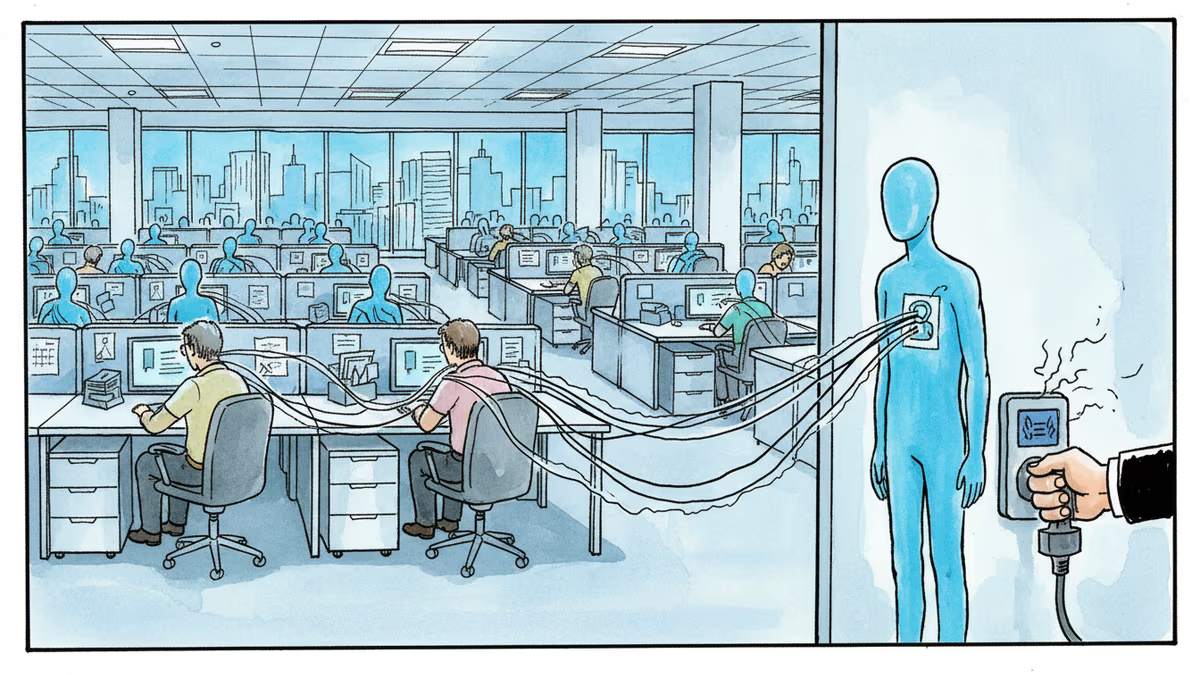
Okta CEO Todd McKinnon on why AI agents need identity management, the SaaSpocalypse threat, and why the kill switch might be the most important button in enterprise tech.
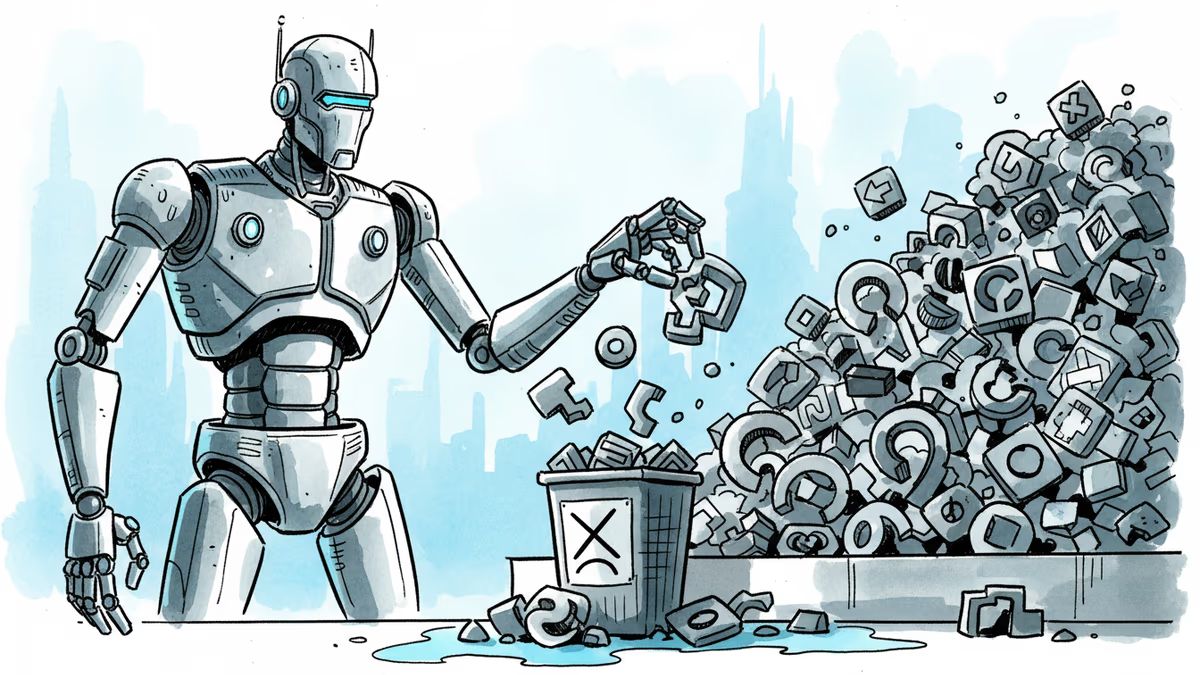
Why billions in AI funding isn't reaching certain SaaS startups. VCs reveal what they're avoiding and what they're seeking in the new AI landscape.
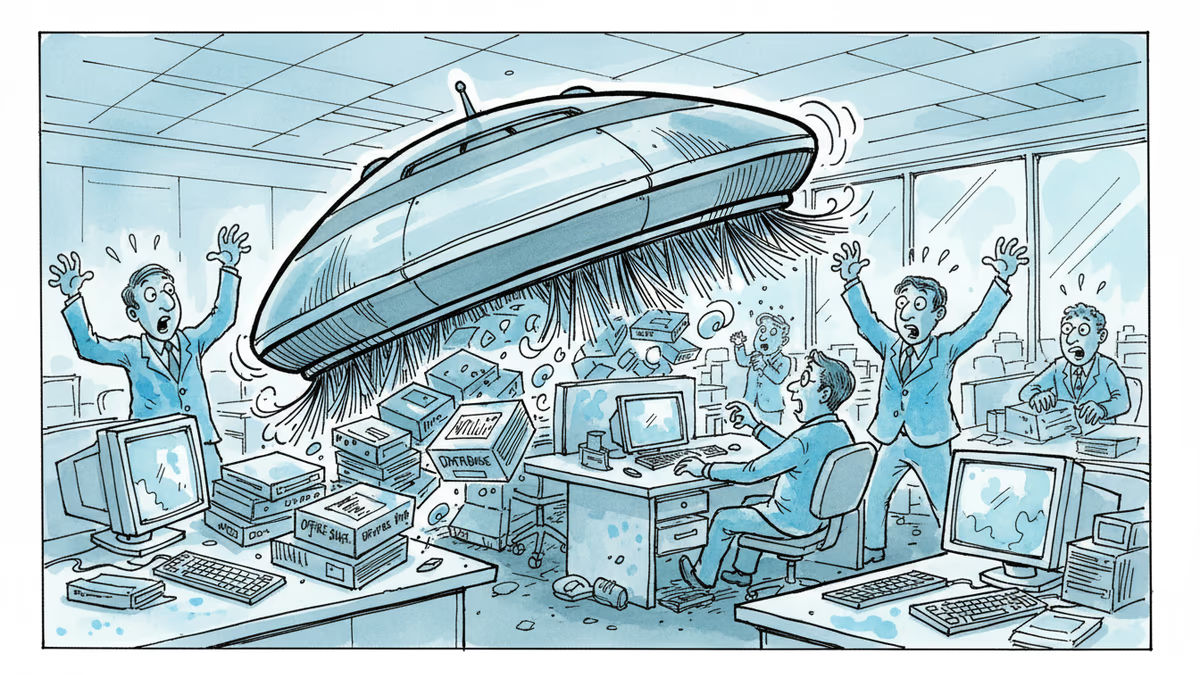
AI coding agents are threatening the $1 trillion SaaS industry. As companies choose to build rather than buy, the per-seat pricing model crumbles. Is this the end of software as we know it?
Anthropic's enterprise agents program targets entire corporate departments, threatening SaaS companies and reshaping how we think about workplace automation.
Okta CEO Todd McKinnon on why AI agents need identity management, the SaaSpocalypse threat, and why the kill switch might be the most important button in enterprise tech.
Why billions in AI funding isn't reaching certain SaaS startups. VCs reveal what they're avoiding and what they're seeking in the new AI landscape.
AI coding agents are threatening the $1 trillion SaaS industry. As companies choose to build rather than buy, the per-seat pricing model crumbles. Is this the end of software as we know it?
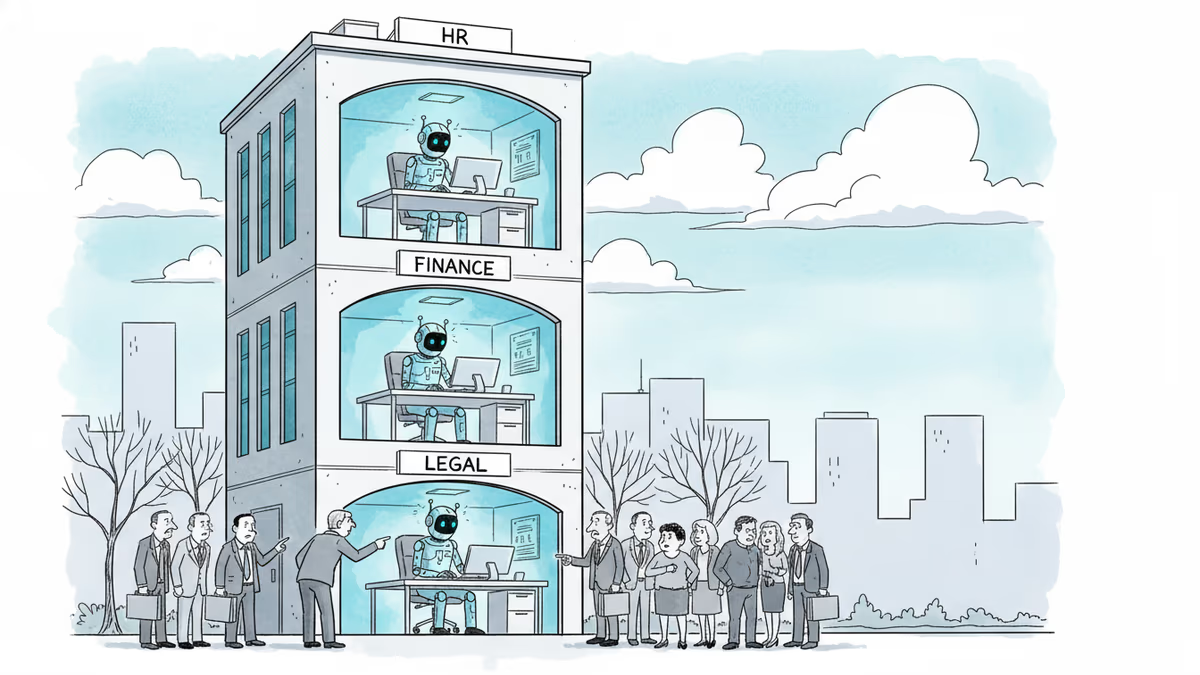
Anthropic's enterprise agents program targets entire corporate departments, threatening SaaS companies and reshaping how we think about workplace automation.
Thoughts
Share your thoughts on this article
Sign in to join the conversation