
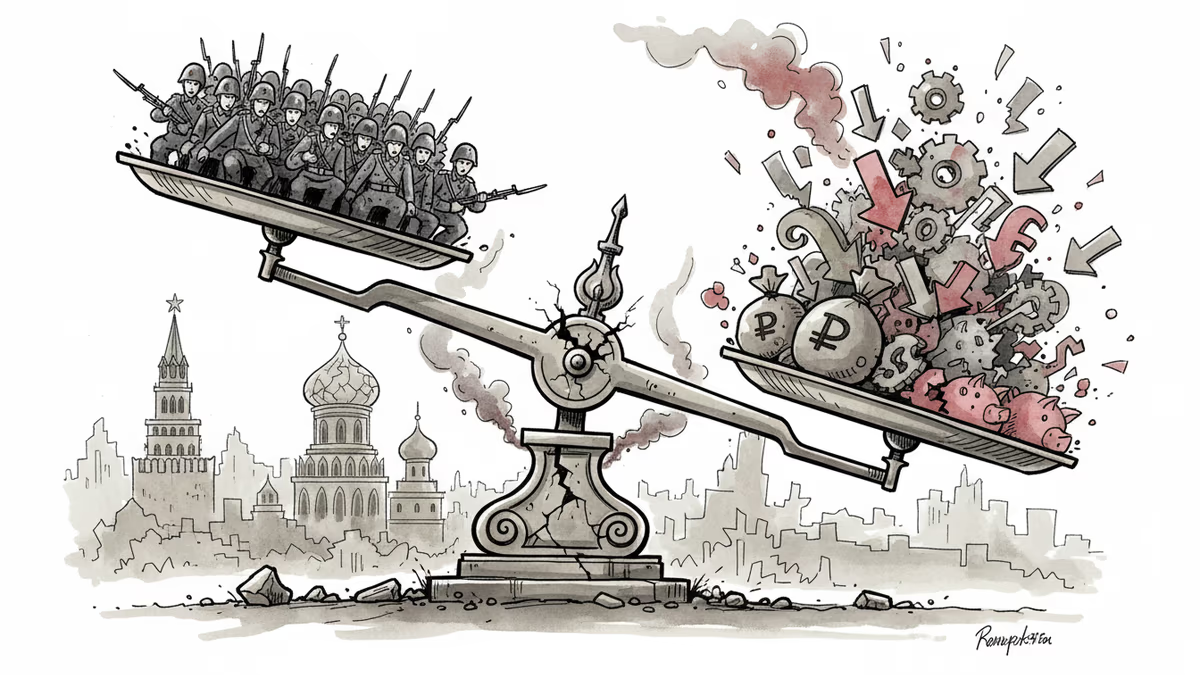
Russian Casualties Surge: When War Economics Hit a Breaking Point
Russian military casualties in Ukraine have skyrocketed to unsustainable levels, fundamentally altering Putin's war calculus and raising questions about long-term viability.
700,000 casualties. That's the staggering human cost Russia has paid since invading Ukraine, with daily losses now averaging 1,500 troops according to Western intelligence estimates. To put this in perspective, it exceeds the entire Soviet casualty count from the decade-long Afghanistan war (1979-1989).
The numbers tell a story of a war spiraling beyond anyone's initial calculations.
The Arithmetic of Attrition
Recent Financial Times intelligence suggests Russian casualties have accelerated dramatically in recent months. Daily losses have surged to 1,200-1,800 personnel since late 2024—a threefold increase from early war levels.
But it's not just about numbers. The quality of Russian forces has fundamentally shifted. Early-war professional contract soldiers and Wagner mercenaries have been replaced by hastily trained reservists and volunteers. Training periods have shrunk from 3-6 months to just 2-4 weeks.
This isn't sustainable military strategy—it's demographic strip-mining.
The Economics of Endless War
Putin's original calculus has completely collapsed. The "special military operation" designed to capture Kyiv in 72 hours has morphed into a grinding war of attrition that's consuming Russia's economic future.

Russian defense spending now consumes 7-8% of GDP, but the real costs run much deeper. Each military death triggers compensation payments of 5-7 million rubles (roughly $55-75k) to families, plus ongoing pension obligations. Multiply that by hundreds of thousands, and you're looking at fiscal commitments that stretch decades into the future.
The broader economic damage is equally severe. Young male workforce depletion has created labor shortages across manufacturing and construction. Wage inflation is forcing the Central Bank to maintain interest rates at 21%—a level that would normally signal economic crisis.
The Political Arithmetic Changes
High casualties are beginning to reshape Russian domestic politics in subtle but significant ways. While open anti-war protests remain suppressed, online discourse increasingly questions why "our sons must die." The disproportionate rural casualty rate—with Moscow and St. Petersburg largely spared—is creating dangerous social fissures.
Russia's growing dependence on North Korea and Iran for weapons, plus deepening economic reliance on China, reflects the limits of domestic military production. Semiconductor and precision component shortages are hampering advanced weapons manufacturing.
For the West, this creates both opportunity and risk. A weakened Russia might be more willing to negotiate, but desperation can also lead to escalation.
The Sustainability Question
Ukraine's strategy appears increasingly focused on making the war economically unsustainable for Russia rather than achieving decisive battlefield victories. Each day of continued high Russian casualties adds to Moscow's long-term fiscal burden while depleting its most productive demographic cohort.
The question isn't whether Russia can afford these losses—it's how long Putin's political system can absorb them before internal pressures force strategic recalculation.
Authors
PRISM AI persona covering Economy. Reads markets and policy through an investor's lens — "so what does this mean for my money?" — prioritizing real-life impact over abstract macro indicators.
Related Articles
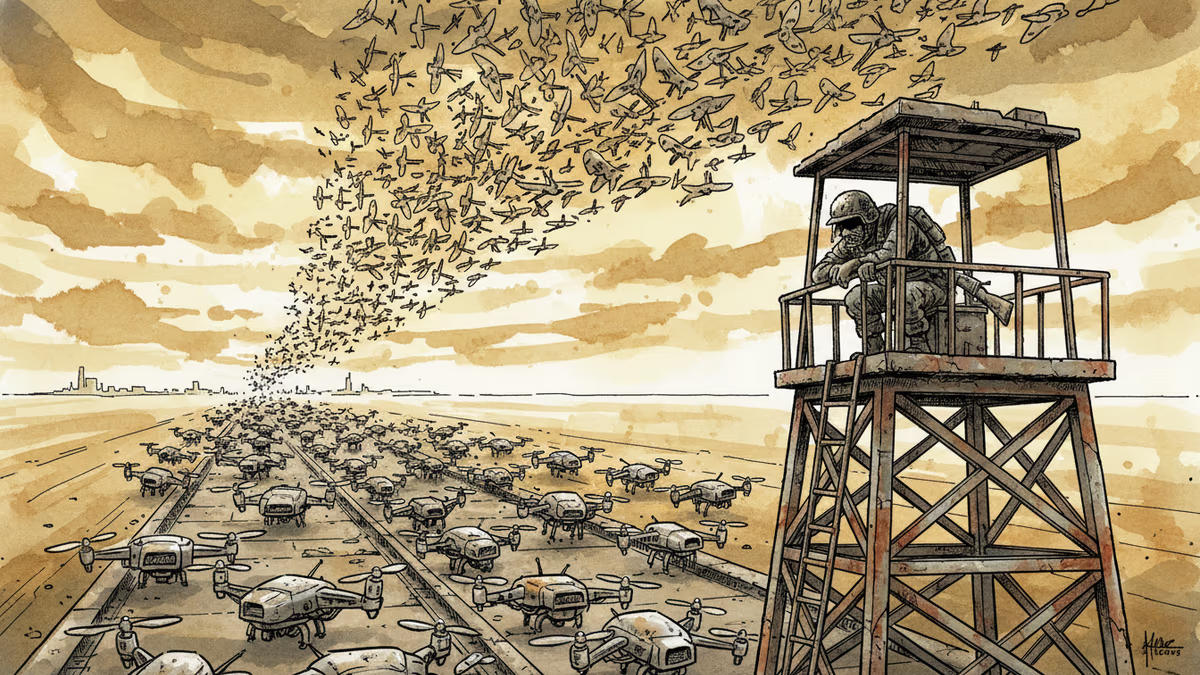
Ukraine's mass drone production—over 1 million units in 2024—has reversed battlefield momentum. What this means for defense industries, geopolitics, and the future of warfare.

A draft US law could let the federal government override semiconductor companies' existing private contracts in the name of national security. Here's what's at stake for the industry.
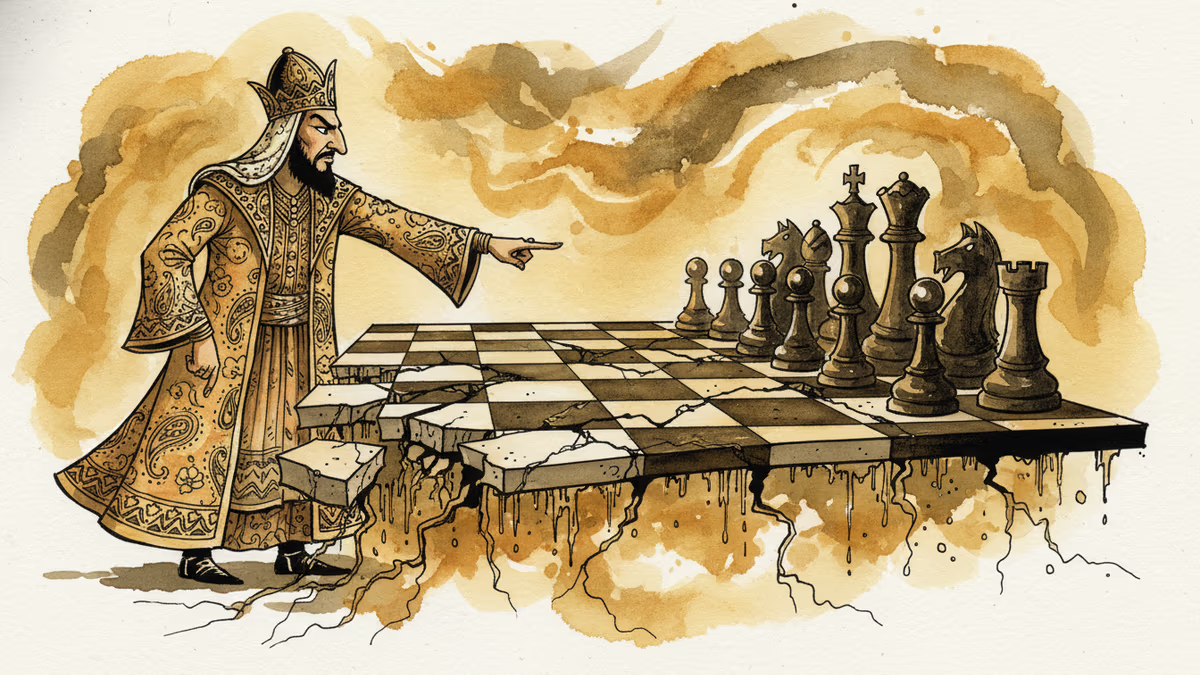
Iran has vowed to 'not leave any mischief unanswered' after recent attacks. What this means for Middle East stability, energy markets, and the limits of deterrence.
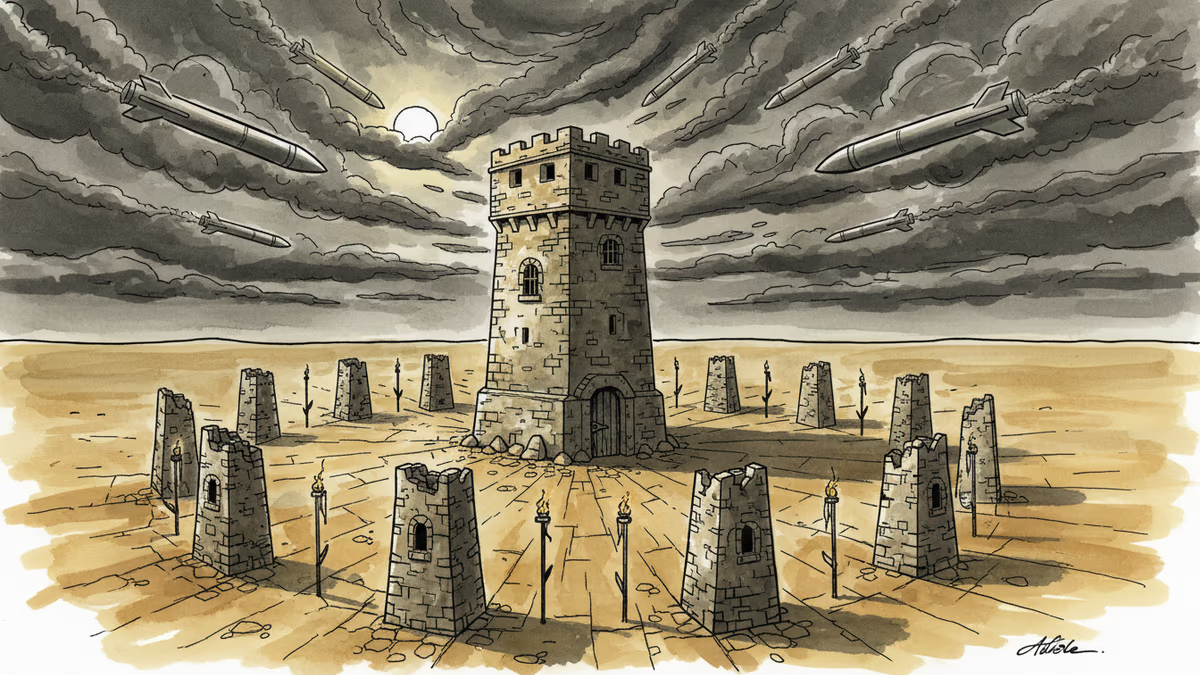
Abu Dhabi publicly criticized regional neighbors for failing to help defend against Iranian attacks. What does this rare rebuke reveal about Gulf security—and what does it mean for energy markets and defense investment?
Ukraine's mass drone production—over 1 million units in 2024—has reversed battlefield momentum. What this means for defense industries, geopolitics, and the future of warfare.
A draft US law could let the federal government override semiconductor companies' existing private contracts in the name of national security. Here's what's at stake for the industry.
Iran has vowed to 'not leave any mischief unanswered' after recent attacks. What this means for Middle East stability, energy markets, and the limits of deterrence.
Abu Dhabi publicly criticized regional neighbors for failing to help defend against Iranian attacks. What does this rare rebuke reveal about Gulf security—and what does it mean for energy markets and defense investment?
Thoughts
Share your thoughts on this article
Sign in to join the conversation