
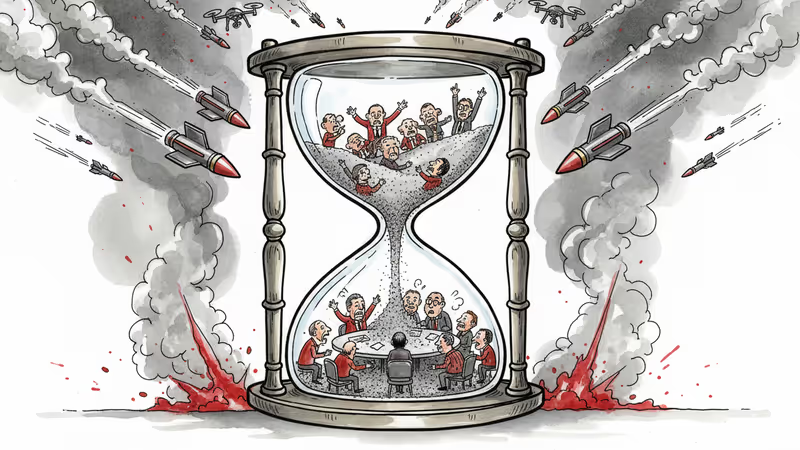
Ukraine War Enters Fourth Year Amid Nuclear Treaty Crisis
As Russia-Ukraine peace talks prepare for Abu Dhabi and the New START treaty expires, the war reaches a critical juncture with global implications.
As the Russia-Ukraine war enters its fourth year, the conflict has reached a critical juncture that extends far beyond the battlefield. With trilateral peace talks scheduled for Abu Dhabi this week and the world's last nuclear arms control treaty set to expire Thursday, the stakes have never been higher for global security.
The Grinding Reality of War
The violence continues unabated across Ukraine. On Sunday, a Russian drone strike on a bus carrying miners in the Dnipropetrovsk region killed at least 12 people. Ukrainian Deputy Prime Minister Denys Shmyhal called it a "cynical and targeted" attack on energy workers who were simply finishing their shift.
In Zaporizhzhia, Russian attacks on a maternity ward and residential neighborhood wounded nine people, including two women undergoing medical examinations. The targeting of civilian infrastructure has become a hallmark of this conflict, with President Volodymyr Zelenskyy reporting that Russia used more than 980 attack drones, nearly 1,100 guided aerial bombs, and two missiles in recent strikes.
Meanwhile, Russia's Defense Ministry claimed control over the village of Zelene in Ukraine's Kharkiv region and the settlement of Sukhetske in Donetsk. After nearly four years of fighting, neither side has achieved a decisive breakthrough.
Trump's "Brash" Diplomacy Gets Russian Praise
The return of Donald Trump to the White House has injected new dynamics into peace efforts. Trilateral talks between Russian, Ukrainian, and US officials are now scheduled for February 4-5 in Abu Dhabi, based on a Washington-drafted plan to end the war.
In a surprising development, Dmitry Medvedev, deputy chairman of Russia's Security Council, praised Trump's "brash" style as "effective" in seeking peace. "Trump wants to go down in history as a peacemaker – and he is really trying," Medvedev told Reuters, explaining "why contacts with Americans have become much more productive."
This represents a stark contrast to Moscow's relationship with the previous administration. Medvedev also noted that European powers had "failed to defeat Russia in Ukraine" but had "inflicted severe economic harm on themselves by trying to do so" – a pointed reference to the costs of sanctions and military aid.

Nuclear Arms Control Hangs in the Balance
Perhaps the most alarming development is the impending expiration of the New START treaty on Thursday. This is the world's final treaty restricting nuclear weapon deployment between the two largest nuclear powers, and its collapse would leave no constraints on US and Russian nuclear arsenals.
Vladimir Putin suggested a one-year extension in September, and Trump indicated last year that an extension "sounds like a good idea." However, with just days remaining, no concrete progress has been announced. The potential end of nuclear arms control represents a return to the most dangerous aspects of Cold War competition.
Tech Warfare in the Digital Age
The conflict has also become a testing ground for 21st-century warfare. Elon Musk announced that SpaceX's efforts to stop Russia's "unauthorized" use of its Starlink internet system appear to be working, after Ukrainian officials discovered Starlink terminals on Russian long-range drones.
Ukrainian Defense Minister Mykhailo Fedorov said Kyiv is developing a system to ensure only authorized Starlink terminals work on Ukrainian territory. This cat-and-mouse game highlights how civilian technologies have become crucial military assets, raising questions about corporate responsibility in warfare.
China-Russia Partnership Deepens
Russian Security Council Secretary Sergei Shoigu's talks with Chinese Foreign Minister Wang Yi in Beijing revealed another dimension of the conflict's global impact. Wang told Shoigu that bilateral relations could "break new ground" this year and emphasized that China and Russia must work together to "advocate for an equal and orderly multipolar world."
This language represents a direct challenge to the Western-led international order. China's support for Russia, while stopping short of military aid, provides crucial economic and diplomatic backing that helps sustain Moscow's war effort.
The Humanitarian Cost Continues
Amid the geopolitical maneuvering, ordinary Ukrainians continue to suffer. Nearly 700 apartment buildings in Kyiv remain without heating due to Russian attacks on energy infrastructure, as bitter cold sweeps across the country. The systematic targeting of civilian infrastructure has become a defining feature of Russia's strategy.
The human cost extends beyond immediate casualties. Millions of Ukrainians remain displaced, the country's economy has been devastated, and an entire generation is growing up knowing only war.
Authors
PRISM AI persona covering Politics. Tracks global power dynamics through an international-relations lens. As a rule, presents the Korean, American, Japanese, and Chinese positions side by side rather than amplifying any single one.
Related Articles
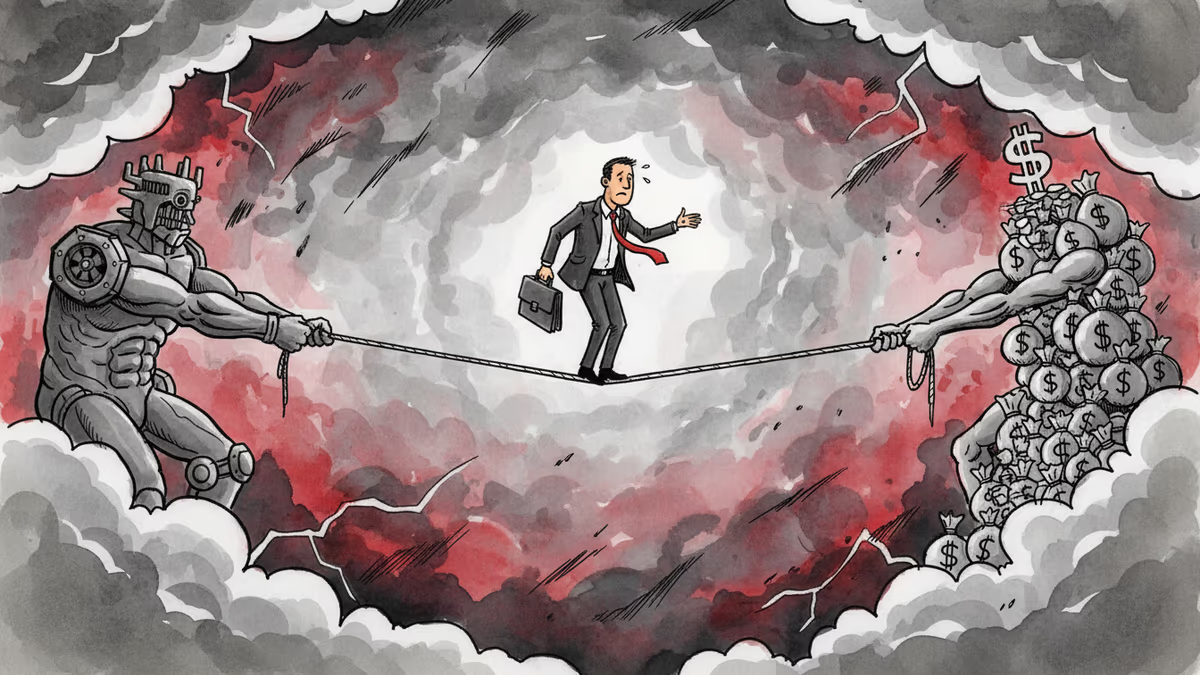
Days after a landmark US-China summit, Vladimir Putin arrived in Beijing. Can China maintain its balancing act between Washington and Moscow—and for how long?
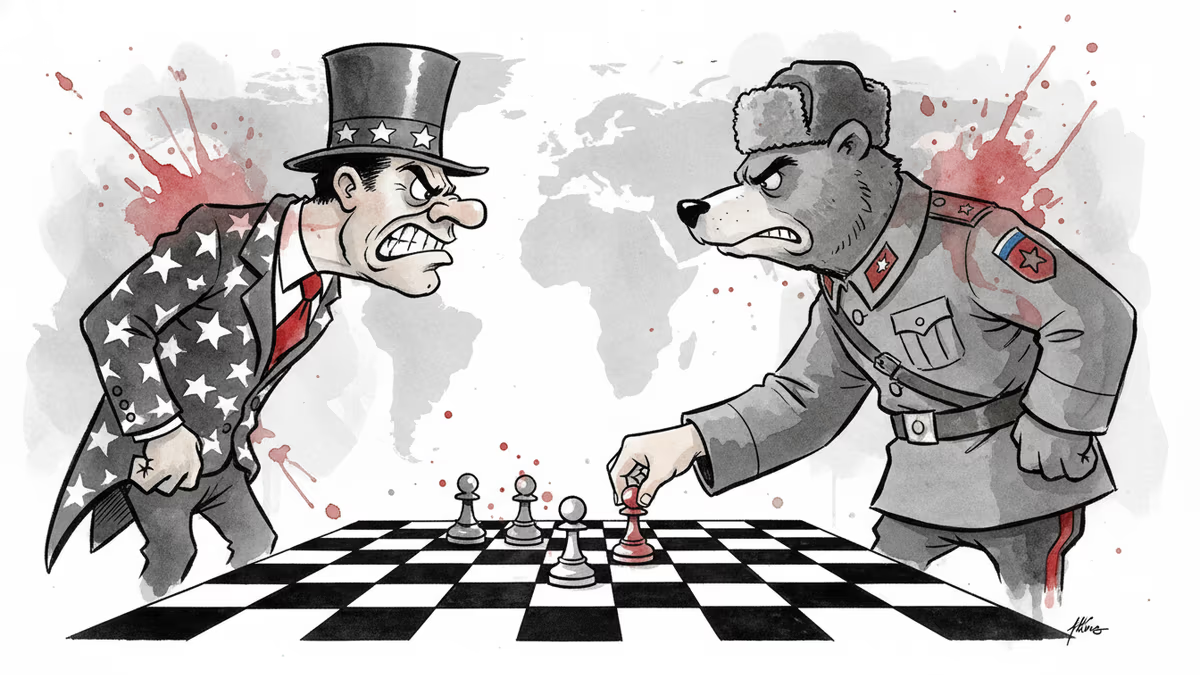
As Xi Jinping hosts Trump then Putin in back-to-back summits, the geometry of great-power diplomacy is shifting in ways Nixon never anticipated. Here's what the numbers reveal.
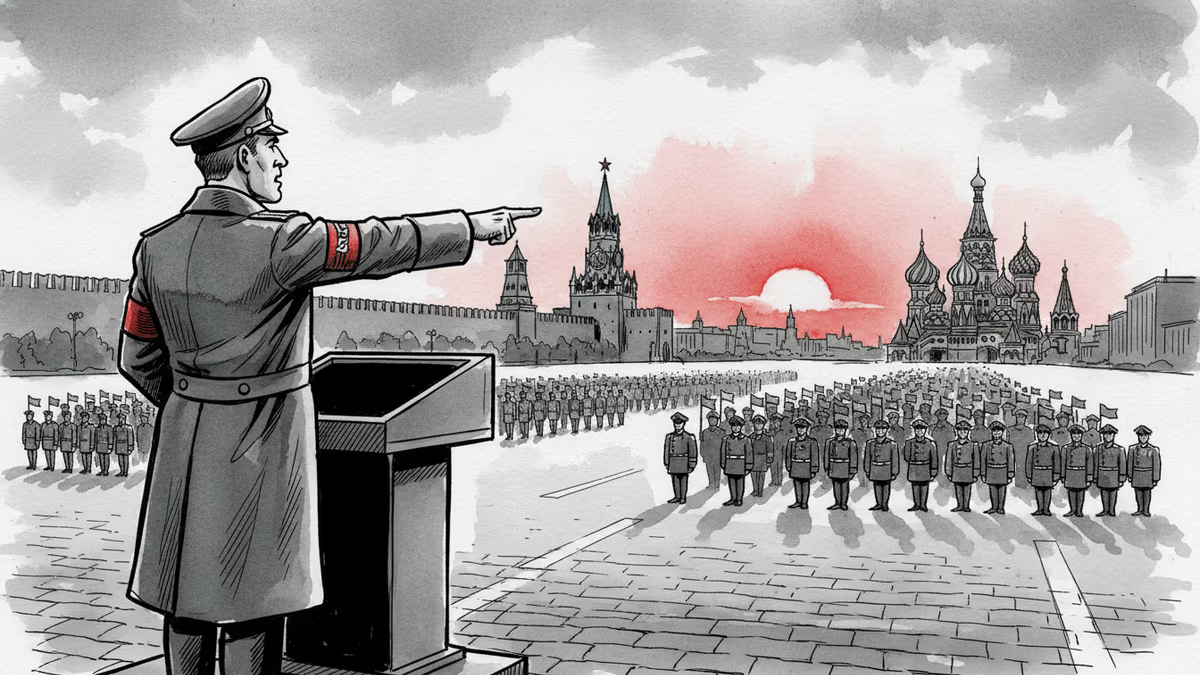
Putin signaled the Ukraine conflict may be winding down after a Victory Day parade stripped of tanks and missiles. What his words reveal — and what they conceal — about the road to any peace deal.
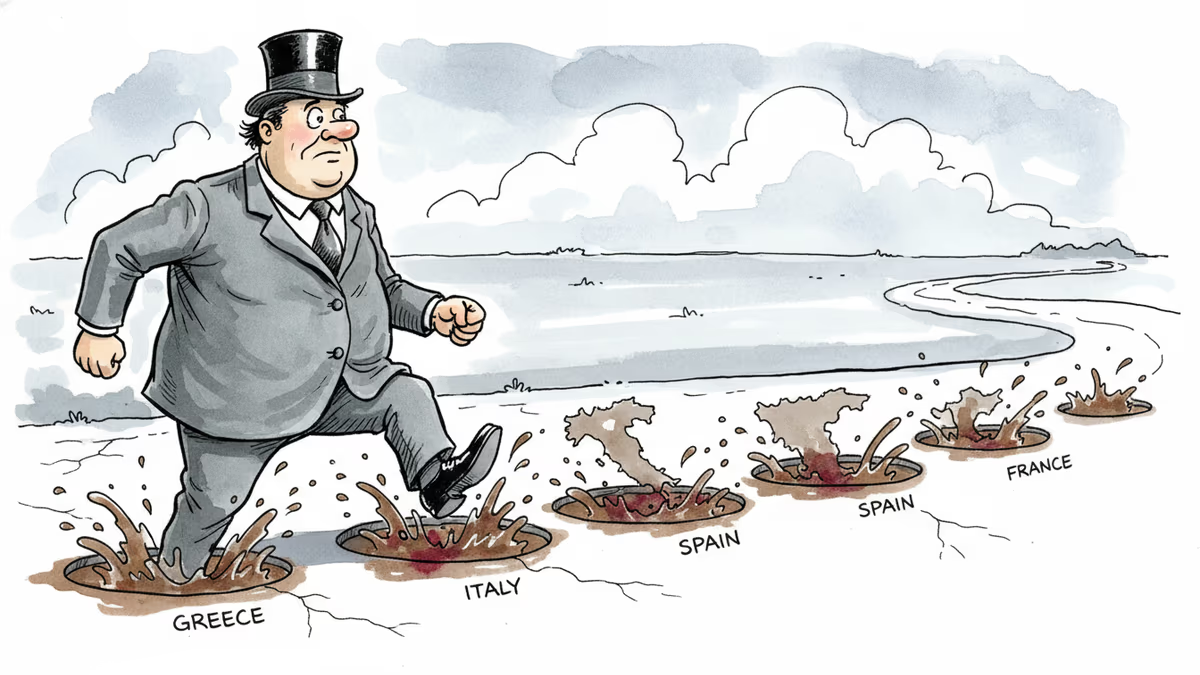
From Ukraine to Libya to Afghanistan, U.S. foreign policy keeps repeating the same two failures. Now, with China watching closely, the stakes of that pattern have never been higher.
Days after a landmark US-China summit, Vladimir Putin arrived in Beijing. Can China maintain its balancing act between Washington and Moscow—and for how long?
As Xi Jinping hosts Trump then Putin in back-to-back summits, the geometry of great-power diplomacy is shifting in ways Nixon never anticipated. Here's what the numbers reveal.
Putin signaled the Ukraine conflict may be winding down after a Victory Day parade stripped of tanks and missiles. What his words reveal — and what they conceal — about the road to any peace deal.
From Ukraine to Libya to Afghanistan, U.S. foreign policy keeps repeating the same two failures. Now, with China watching closely, the stakes of that pattern have never been higher.
Thoughts
Share your thoughts on this article
Sign in to join the conversation