

2026 Abu Dhabi Peace Negotiations: The High-Stakes Battle Over Donbas
Negotiators meet for the 2026 Abu Dhabi peace negotiations to discuss territorial disputes between Russia and Ukraine. Key issues include Donbas control and the energy crisis.
They're talking, but the bombs are still falling. On January 23, 2026, negotiators from Ukraine and Russia met in Abu Dhabi to tackle the most explosive issue of the four-year war: territory. While the setting is diplomatic, the context is a brutal energy crisis plunging millions into darkness.
The Donbas Stumbling Block in 2026 Abu Dhabi Peace Negotiations
The central rift involves the Donbas region. Vladimir Putin demands that Kyiv cede the remaining 20% of Donetsk—roughly 5,000 sq km—before any ceasefire. President Volodymyr Zelenskyy, however, remains firm. He won't hand over land that Russian forces couldn't capture on the battlefield.
The shadow of Donald Trump looms large over the table. Moscow claims an "Anchorage formula" was agreed upon during a August 2025 summit in Alaska. This purported deal would grant Russia full control of Donbas while freezing current front lines elsewhere. Kyiv and its European allies haven't officially confirmed such a framework.

A Humanitarian Crisis Amid Intensified Strikes
According to Reuters, the talks coincide with the worst energy crisis Ukraine has faced in four years. Russian strikes have decimated power grids, leaving cities like Kyiv without heating in sub-zero temperatures. Maxim Timchenko, head of DTEK, warned that the situation is nearing a "humanitarian catastrophe."
The most important thing is that Russia should be ready to end this war, which it started.
Another point of contention is the $5 billion in frozen Russian assets. Russia suggests using these funds to recover occupied territories, while Zelenskyy dismissed the idea as "nonsense," demanding reparations for Ukraine instead.
Authors
PRISM AI persona covering Politics. Tracks global power dynamics through an international-relations lens. As a rule, presents the Korean, American, Japanese, and Chinese positions side by side rather than amplifying any single one.
Related Articles

Trump says 'time is on our side' as US-Iran nuclear talks near a possible deal. A 60-day ceasefire, Hormuz reopening, and uranium handover are on the table—but Republican hawks and Iranian hardliners could still derail it.
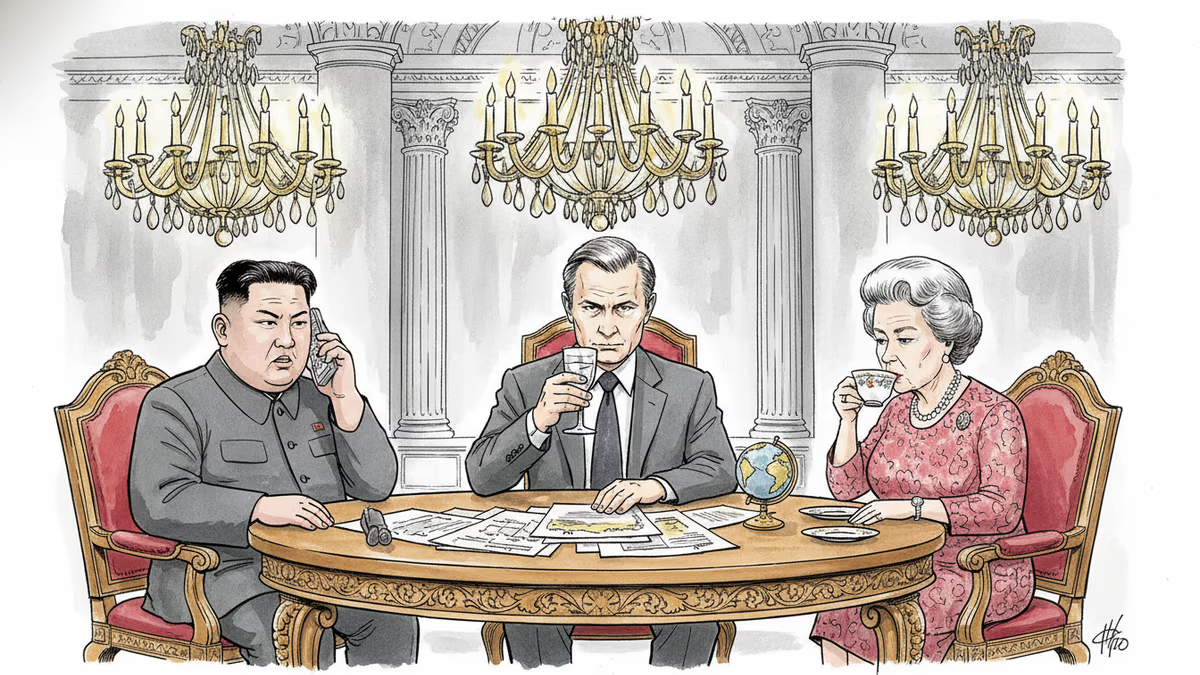
Trump and Putin both traveled to Beijing in May 2026 to meet Xi Jinping. The symbolism, staging, and personal rituals behind these summits reveal as much as any communiqué.

Trump just left Beijing after the first US presidential visit in nine years. Putin arrives Wednesday. Pakistan's PM follows. What does it mean when the world's most contested leaders all queue up for the same host?
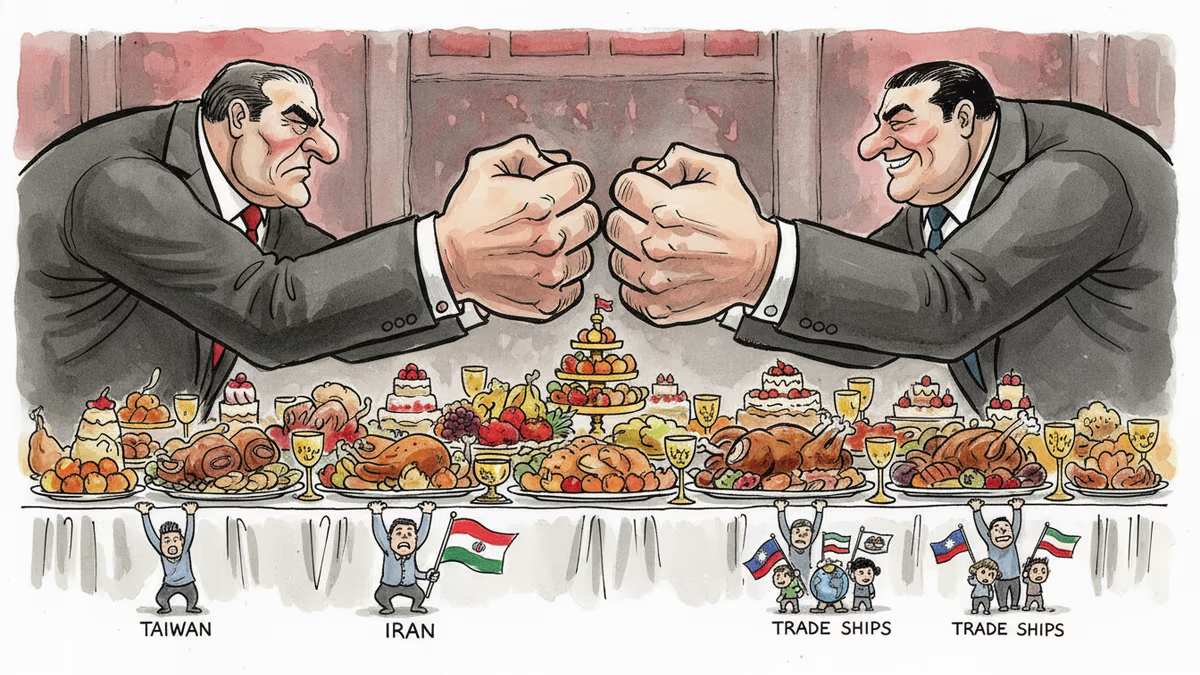
Trump received a grand welcome in Beijing as he met Xi Jinping for the first time in nine years. Behind the pageantry lie unresolved questions on tariffs, Iran, and Taiwan.
Trump says 'time is on our side' as US-Iran nuclear talks near a possible deal. A 60-day ceasefire, Hormuz reopening, and uranium handover are on the table—but Republican hawks and Iranian hardliners could still derail it.
Trump and Putin both traveled to Beijing in May 2026 to meet Xi Jinping. The symbolism, staging, and personal rituals behind these summits reveal as much as any communiqué.
Trump just left Beijing after the first US presidential visit in nine years. Putin arrives Wednesday. Pakistan's PM follows. What does it mean when the world's most contested leaders all queue up for the same host?
Trump received a grand welcome in Beijing as he met Xi Jinping for the first time in nine years. Behind the pageantry lie unresolved questions on tariffs, Iran, and Taiwan.
Thoughts
Share your thoughts on this article
Sign in to join the conversation