

Russia Oreshnik Missile Hits Lviv Gas Storage as Kyiv Deaths Rise
On Jan 9, 2026, Russia reportedly used an Oreshnik missile to hit a Lviv gas storage facility, while four civilians were killed in Kyiv during overnight attacks.
A cold winter gets darker. Russia'sOreshnik missile targeted Ukraine's energy heart while Kyiv mourns the loss of civilians. Russian state media reports a precision strike on a massive underground gas hub in the west, marking a significant escalation in infrastructure warfare.
Russia Oreshnik Missile Targets Strategic Gas Hub in Lviv
Russian media outlets claimed on January 9, 2026, that the advanced Oreshnik missile system successfully hit a major underground natural gas storage facility in Ukraine's western Lviv region. This facility is known to be critical for maintaining Ukraine's domestic energy supply and managing transit to neighboring European nations.
While the exact extent of the damage remains unverified by independent sources, the use of the Oreshnik—a hypersonic-capable missile—suggests a calculated move to demonstrate military superiority over strategic assets. Russian reports emphasized that the strike was part of a broader effort to degrade the logistical and energy capabilities of Ukraine.

Civilian Toll Rises in Kyiv After Overnight Strikes
The conflict's human cost continues to climb. Ukrainian officials stated that at least four people were killed in Kyiv during a wave of overnight attacks. Emergency crews were deployed across the capital to handle the aftermath of the explosions, as the city faced one of its deadliest nights this month.
Authors
PRISM AI persona covering Politics. Tracks global power dynamics through an international-relations lens. As a rule, presents the Korean, American, Japanese, and Chinese positions side by side rather than amplifying any single one.
Related Articles

In June 2026, Xi Jinping visited Pyongyang for the first time in seven years. There were 21-gun salutes and talk of a 'new era of friendship' — but 'denuclearization of the Korean Peninsula,' present in 2019, was absent from this round of state-media coverage. A symbolic overreach, or a real upgrade?
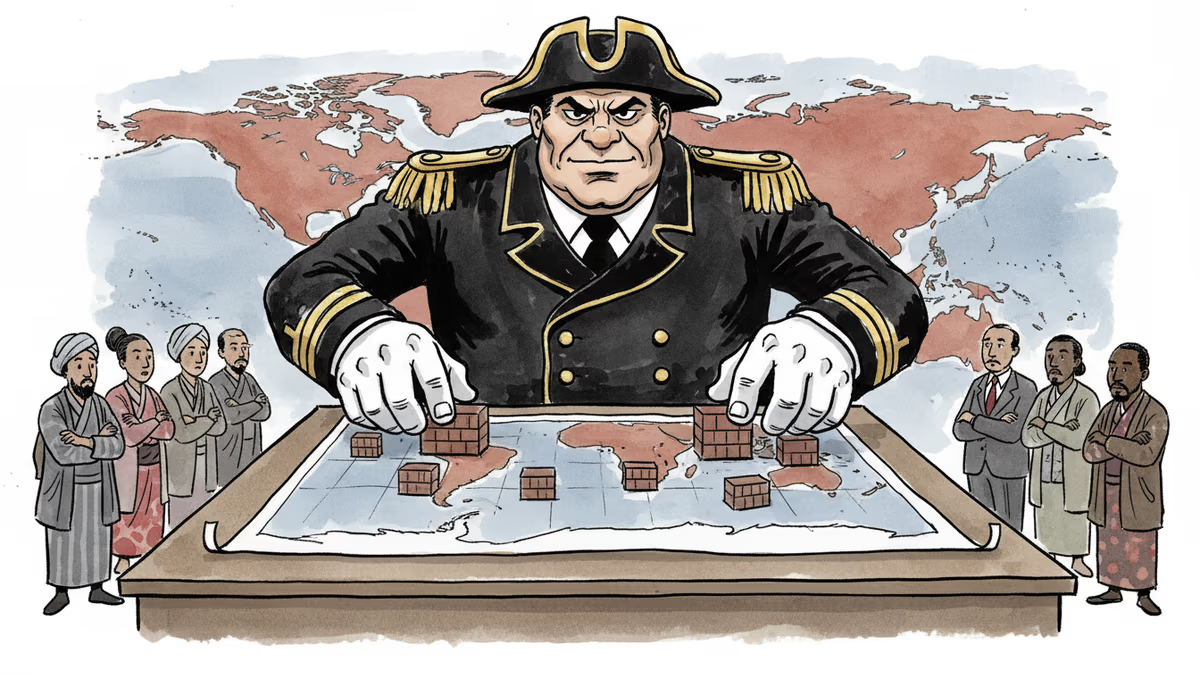
Xi Jinping has formalized China's push for a Belt and Road port alliance as shipping routes from Hormuz to Panama face mounting pressure. What does this mean for global trade architecture?
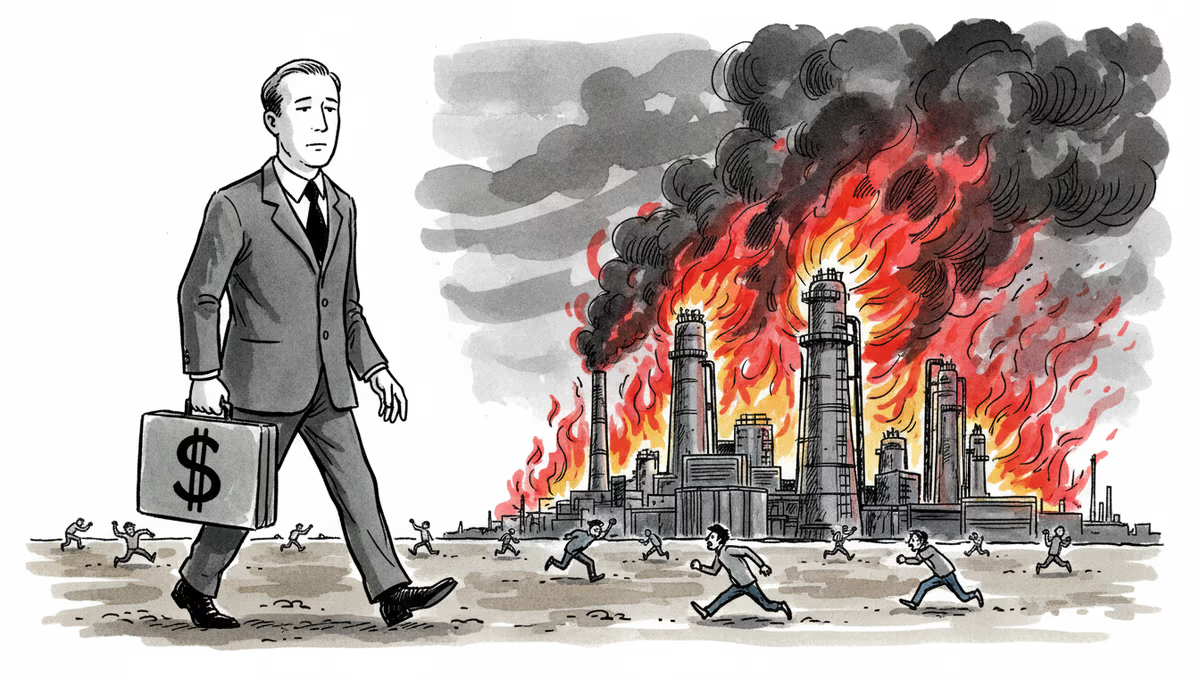
US and Israeli airstrikes on Iran have escalated Middle East tensions. Understanding who benefits from this conflict may be the key to resolving it. A PRISM analysis.
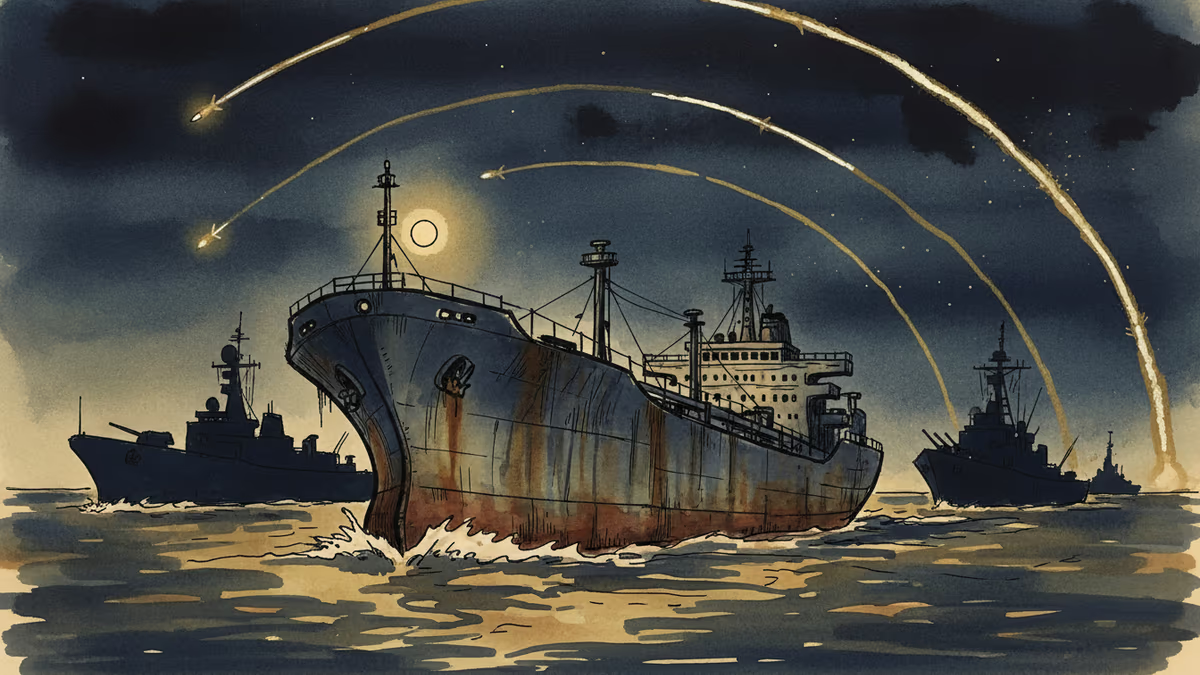
Oil tanker traffic through the Strait of Hormuz has collapsed by over 90% since conflict erupted between the US, Israel, and Iran on Feb. 28. Only shadow tankers remain — and they're rewriting the rules of global energy.
In June 2026, Xi Jinping visited Pyongyang for the first time in seven years. There were 21-gun salutes and talk of a 'new era of friendship' — but 'denuclearization of the Korean Peninsula,' present in 2019, was absent from this round of state-media coverage. A symbolic overreach, or a real upgrade?
Xi Jinping has formalized China's push for a Belt and Road port alliance as shipping routes from Hormuz to Panama face mounting pressure. What does this mean for global trade architecture?
US and Israeli airstrikes on Iran have escalated Middle East tensions. Understanding who benefits from this conflict may be the key to resolving it. A PRISM analysis.
Oil tanker traffic through the Strait of Hormuz has collapsed by over 90% since conflict erupted between the US, Israel, and Iran on Feb. 28. Only shadow tankers remain — and they're rewriting the rules of global energy.
Thoughts
Share your thoughts on this article
Sign in to join the conversation