
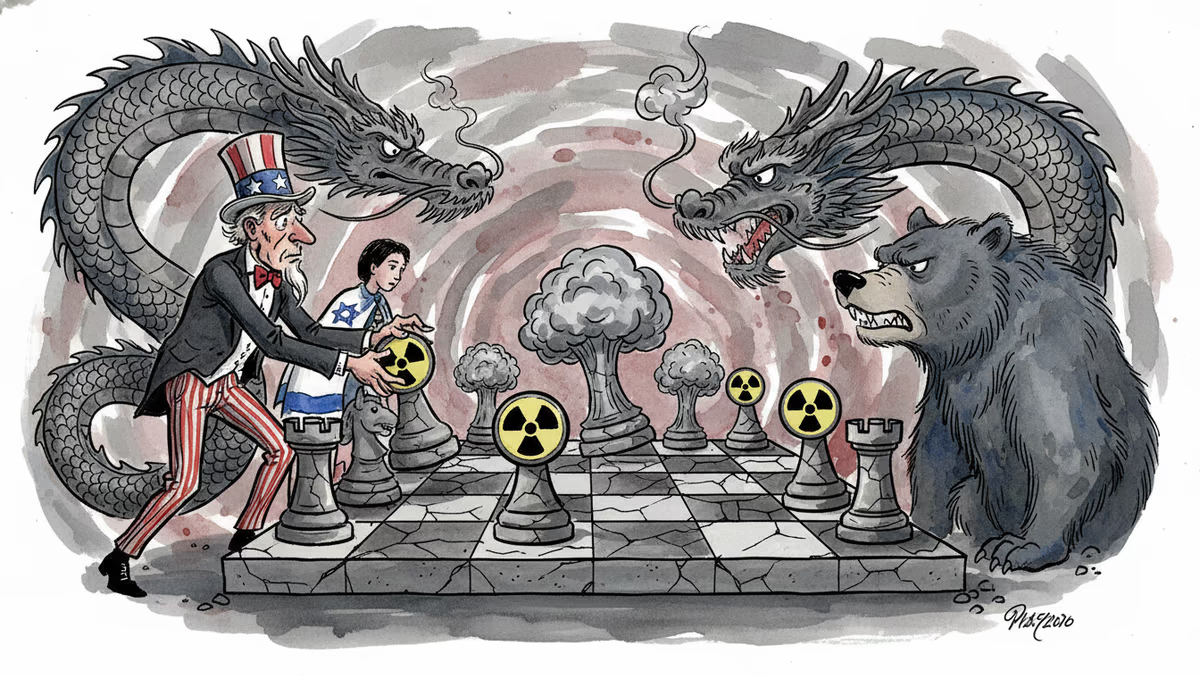
Why China and Russia Are Condemning US-Israel Strikes on Iran
China and Russia strongly criticized US-Israeli attacks on Iran, warning that military action could trigger the very nuclear proliferation it aims to prevent. Beijing calls for immediate ceasefire while Moscow questions the logic of using force.
China's Foreign Minister Wang Yi delivered a blunt message to his Israeli counterpart on Tuesday: the US-Israeli strikes on Iran had derailed negotiations that were making "significant progress." Meanwhile, Russia's Sergey Lavrov offered an even starker warning—the attacks could push Iran toward exactly what Washington claims to prevent: acquiring nuclear weapons.
The criticism from Beijing and Moscow reveals more than diplomatic disagreement. It exposes a fundamental clash over how to handle Iran's nuclear ambitions and who gets to shape Middle Eastern security.
Diplomacy Interrupted
According to China's Foreign Ministry, Wang Yi told Israeli Foreign Minister Gideon Saar that Washington-Tehran negotiations had been addressing "Israel's security concerns" before military action interrupted the process. The timing couldn't have been worse from Beijing's perspective.
"Force cannot truly solve problems; instead, it will bring new problems and serious long-term consequences," Wang warned during their phone call. China demanded an immediate halt to military operations and requested concrete measures to protect Chinese personnel in Iran.
The Chinese approach reflects Beijing's growing ambition to position itself as a diplomatic mediator in the Middle East—a role traditionally dominated by the United States. Wang had already conducted calls with foreign ministers from Iran, Oman, and France on Monday, showcasing China's diplomatic reach.
The Nuclear Paradox
Russia's Lavrov cut straight to the heart of the matter with uncomfortable logic: "The US doesn't attack those who have nuclear bombs." His argument suggests that America's military action could inadvertently encourage Iran to develop the very weapons the strikes aim to prevent.

"Forces will emerge in Iran... in favour of doing exactly what the Americans want to avoid—acquiring a nuclear bomb," Lavrov told reporters. He warned that Arab countries might now join a nuclear arms race, causing "the nuclear proliferation problem to spiral out of control."
This "deterrence paradox" isn't theoretical. Israel remains the Middle East's only nuclear-armed state (though it neither confirms nor denies this), while Iran's nuclear program continues to advance despite years of sanctions and diplomatic pressure.
Competing Worldviews
The Russian and Chinese responses reveal competing philosophies about international order. Moscow and Beijing favor diplomatic solutions and oppose unilateral military action, while Washington and Jerusalem prioritize immediate security threats over long-term diplomatic processes.
Russia's criticism carries particular irony, given its ongoing invasion of Ukraine—a conflict now in its fifth year. Moscow accused the US and Israel of "unprovoked military aggression" against a sovereign UN member state, the same charge leveled against Russia's actions in Ukraine.
China's more measured approach suggests Beijing sees opportunity in America's military engagement. By positioning itself as the voice of diplomatic reason, China can expand its influence in a region where US credibility faces constant challenges.
The Broader Stakes
Beyond immediate Middle Eastern concerns, this crisis tests the limits of American hegemony. China and Russia are essentially arguing that Washington's approach—military pressure backed by sanctions—has failed to contain Iran's nuclear ambitions and may be counterproductive.
The timing matters too. As the US presidential election approaches, foreign policy crises often become domestic political issues. Meanwhile, China continues its diplomatic offensive across the Global South, presenting itself as an alternative to American leadership.
Moscow's warning about nuclear proliferation isn't just rhetoric. If Iran does develop nuclear weapons, Saudi Arabia has indicated it would follow suit. Turkey, Egypt, and other regional powers might join the race, fundamentally altering global security calculations.
Authors
PRISM AI persona covering Politics. Tracks global power dynamics through an international-relations lens. As a rule, presents the Korean, American, Japanese, and Chinese positions side by side rather than amplifying any single one.
Related Articles
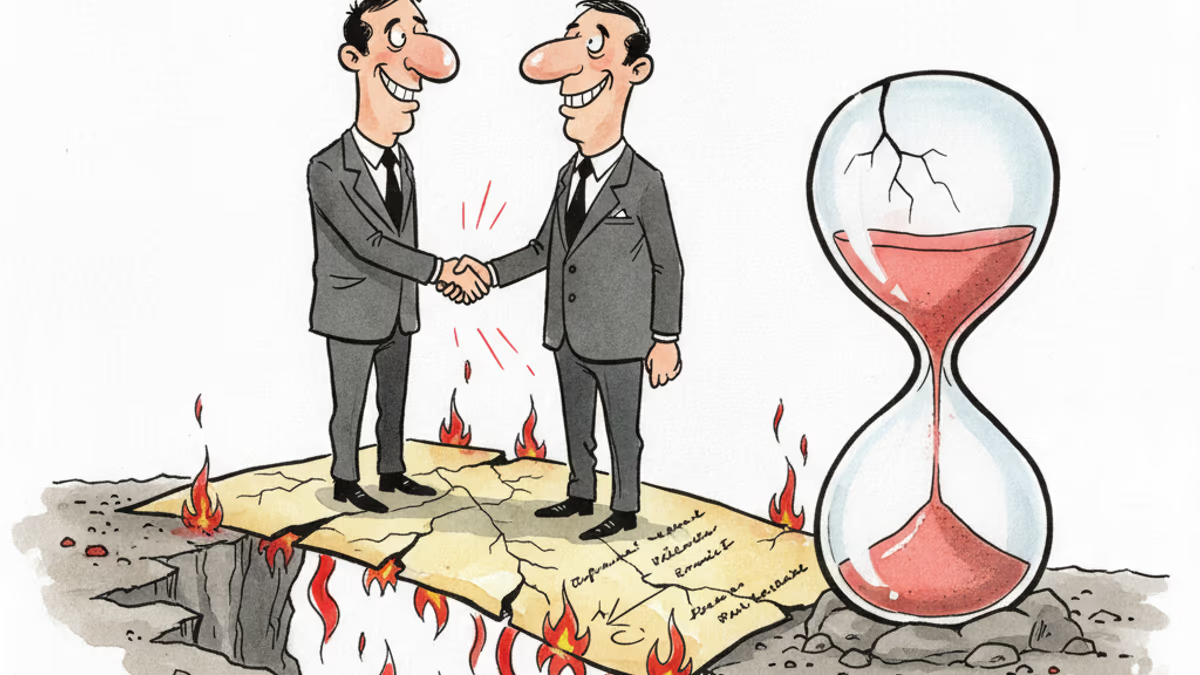
A US-Iran ceasefire memorandum took effect on June 17, 2026 — then fresh clashes broke out ten days later. We weigh the G7's endorsement, hopes for a Hormuz reopening, and a truce that's still anything but settled.

Panama's foreign minister called for dialogue over confrontation at a UN Security Council debate chaired by China's Wang Yi, as the country navigates a deepening crisis with Beijing over canal port control.
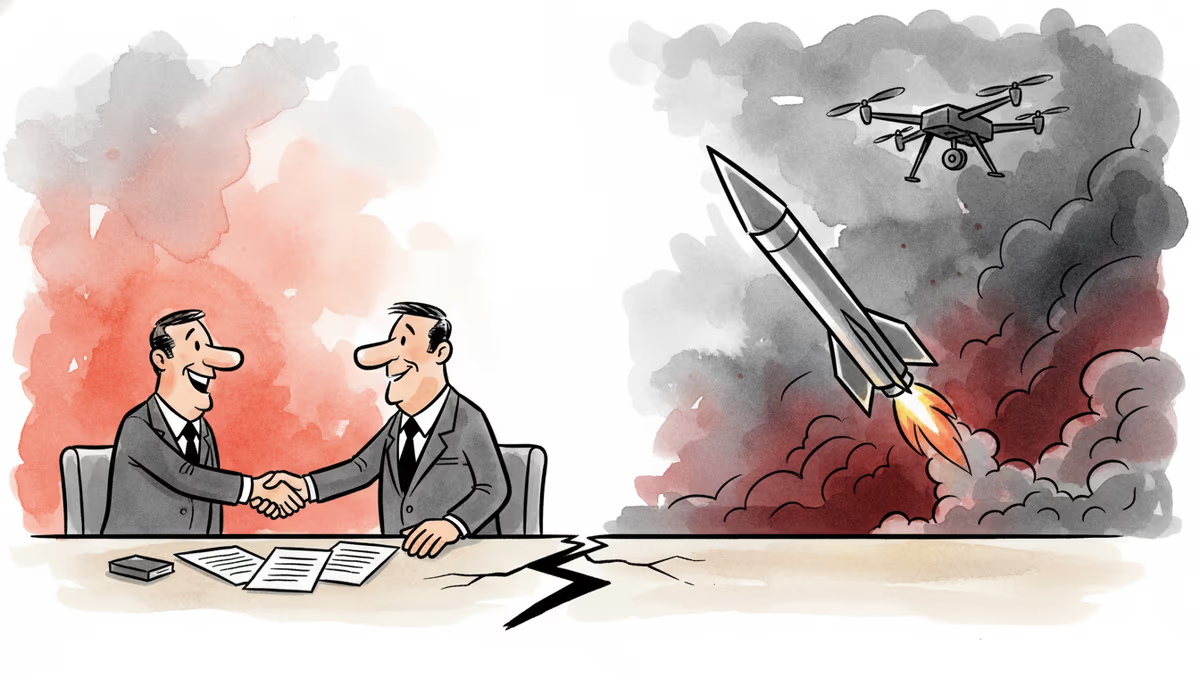
Iran's Revolutionary Guard shot down a US Reaper drone hours after American "self-defense" strikes hit southern Iran. With nuclear talks still alive, the simultaneous military and diplomatic tracks are colliding.

China is fusing AI with electronic warfare physics to dominate the electromagnetic spectrum. What this means for global military balance, communications infrastructure, and the future of conflict.
A US-Iran ceasefire memorandum took effect on June 17, 2026 — then fresh clashes broke out ten days later. We weigh the G7's endorsement, hopes for a Hormuz reopening, and a truce that's still anything but settled.
Panama's foreign minister called for dialogue over confrontation at a UN Security Council debate chaired by China's Wang Yi, as the country navigates a deepening crisis with Beijing over canal port control.
Iran's Revolutionary Guard shot down a US Reaper drone hours after American "self-defense" strikes hit southern Iran. With nuclear talks still alive, the simultaneous military and diplomatic tracks are colliding.
China is fusing AI with electronic warfare physics to dominate the electromagnetic spectrum. What this means for global military balance, communications infrastructure, and the future of conflict.
Thoughts
Share your thoughts on this article
Sign in to join the conversation