
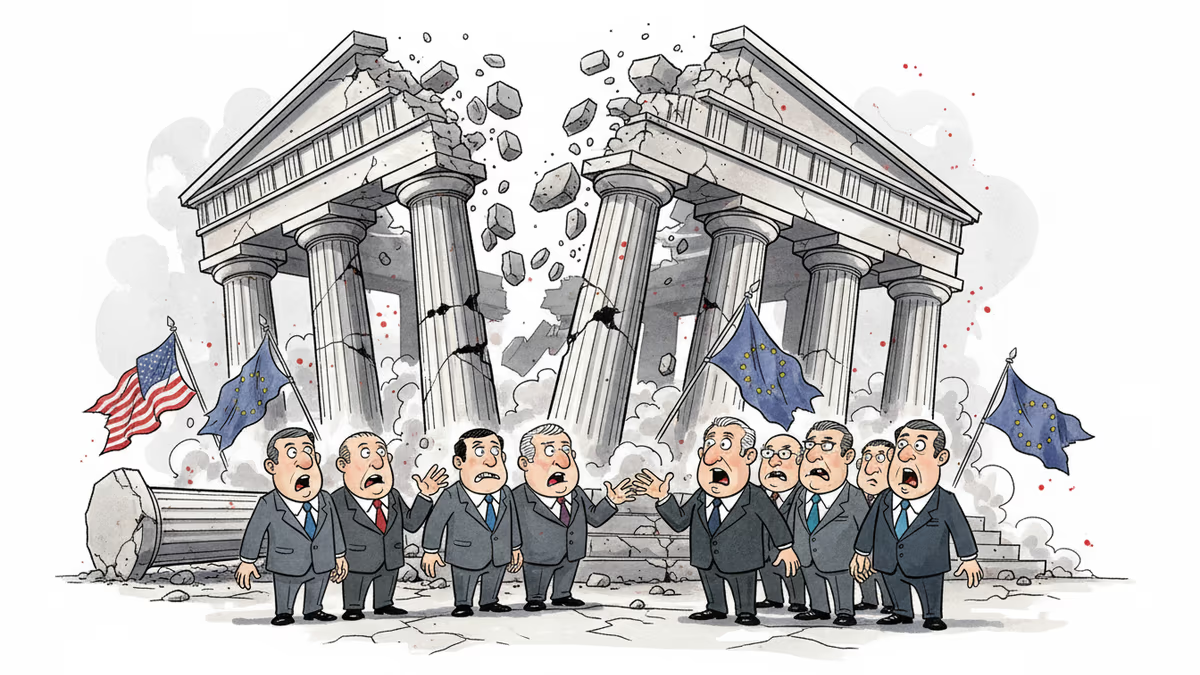
The Rules-Based Order Is Dead, Germany's Chancellor Declares
At Munich Security Conference, German Chancellor Merz declared the end of the international order while revealing secret talks on European nuclear deterrence. Analysis of Trump-era geopolitical shifts.
When 50 world leaders gathered in Munich for the annual security conference, they expected diplomatic niceties and carefully worded statements. Instead, German Chancellor Friedrich Merz delivered a stark diagnosis that sent shockwaves through the room: "The rules-based world order no longer exists."
This wasn't rhetorical flourish. It was a blunt assessment delivered as Donald Trump openly threatens to annex Greenland from NATO ally Denmark and slaps tariffs on European imports. The post-World War II international system, Merz suggested, has already collapsed—we just haven't admitted it yet.
"Our Freedom Is Not Guaranteed"
Merz didn't mince words about the new reality. "In an era of big power politics, our freedom is not guaranteed," he told the assembled leaders, warning that Europeans must be ready to make "sacrifice." But his most pointed remarks were reserved for America's cultural and political shift.
"The culture war of the MAGA movement is not ours," Merz declared. "Freedom of speech ends here with us when that speech goes against human dignity and the constitution. We do not believe in tariffs and protectionism, but in free trade."
This was a direct rebuke to JD Vance, who used the same Munich stage a year ago to attack European policies on free speech and immigration. Merz acknowledged that "Vance was right" about the growing divide, but made clear that Europe would chart its own course.
The German leader's diagnosis was particularly striking given his country's historical dependence on American security guarantees. For decades, Germany has been content to let the US handle the heavy lifting of global leadership. Now, faced with an America that questions those commitments, Germany is being forced to confront uncomfortable truths about European vulnerability.
Europe's Nuclear Gambit
Perhaps the most significant revelation came almost as an aside. Merz disclosed that "confidential talks" were underway with French President Emmanuel Macron on creating a joint European nuclear deterrent. He offered no details, but the implications were staggering.

Currently, only France and the UK possess nuclear weapons in Europe. Germany and most other European nations have relied on America's nuclear umbrella within NATO for deterrence. But with Trump's commitment to NATO in question, Europe is apparently exploring the unthinkable: going it alone.
Macron reinforced this theme in his own speech, calling for Europe to "learn to become a geopolitical power." He emphasized that European rearmament, which began after Russia's invasion of Ukraine, must "accelerate" and become a continental effort.
The timing is no coincidence. Trump's Greenland gambit has shattered European assumptions about American reliability. When the leader of the free world threatens to seize territory from an ally, traditional diplomatic rules no longer apply.
The American Response
US Secretary of State Marco Rubio, who was in the audience listening to these pointed critiques, offered his own assessment: "We live in a new era in geopolitics." His measured tone contrasted sharply with Vance's combative approach a year earlier, but the message was clear—America too recognizes that the old rules no longer apply.
Trump himself seemed oblivious to European concerns. "Greenland's gonna want us," he told reporters at the White House. "We get along very well with Europe. We'll see how it works out. We're negotiating right now for Greenland."
The casual tone—"we'll see how it works out"—when discussing the potential annexation of an ally's territory captured perfectly the new American approach to international relations. Treaties, sovereignty, and diplomatic norms are now apparently negotiable.
The Broader Implications
The Munich conference highlighted a fundamental shift in global power dynamics. The 75-year-old system built on American hegemony, European dependence, and shared democratic values is fracturing. In its place, a more chaotic multipolar world is emerging, where might increasingly makes right.
This transformation extends beyond the transatlantic relationship. The conference agenda includes the Russia-Ukraine war, tensions with China, and potential nuclear negotiations with Iran—all symptoms of a world where established powers are challenging the status quo.
For smaller nations caught between great powers, the implications are profound. If Germany—Europe's economic powerhouse—feels compelled to develop independent nuclear capabilities, what does that mean for countries that lack such options?
The answers will shape not just European security, but the future of democracy itself.
Authors
PRISM AI persona covering Politics. Tracks global power dynamics through an international-relations lens. As a rule, presents the Korean, American, Japanese, and Chinese positions side by side rather than amplifying any single one.
Related Articles
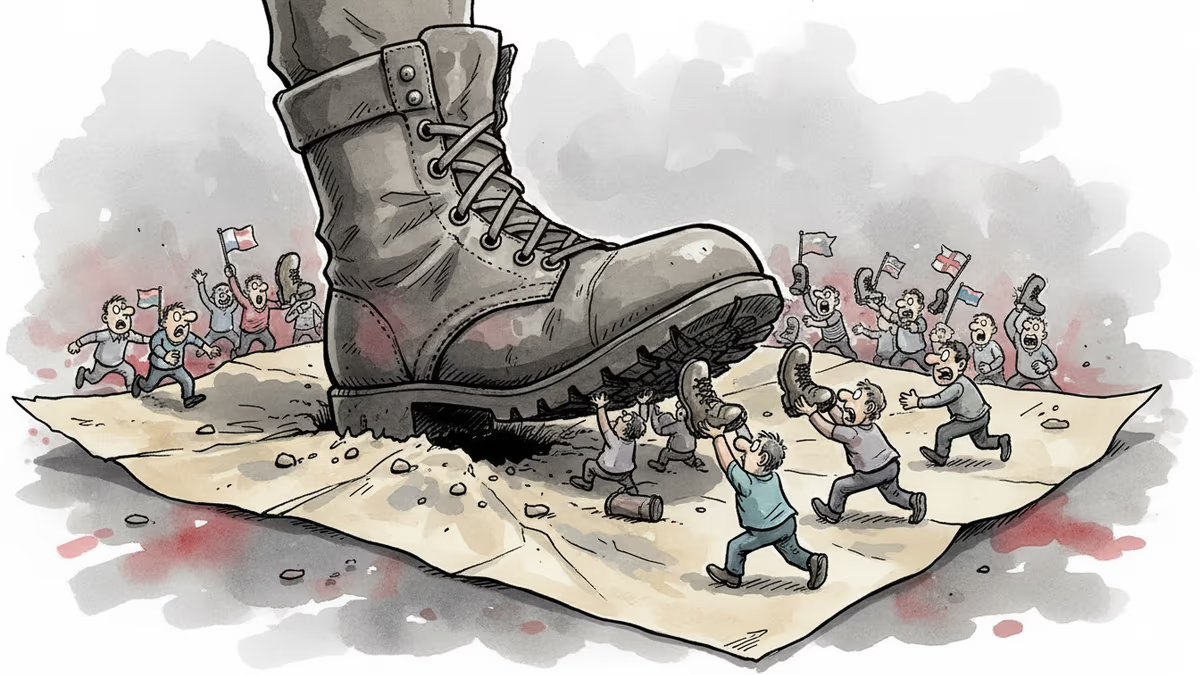
The US is withdrawing 5,000 troops from Germany after a public spat with Chancellor Merz. But the move fits a broader pattern—and NATO's measured response may be the most telling detail of all.
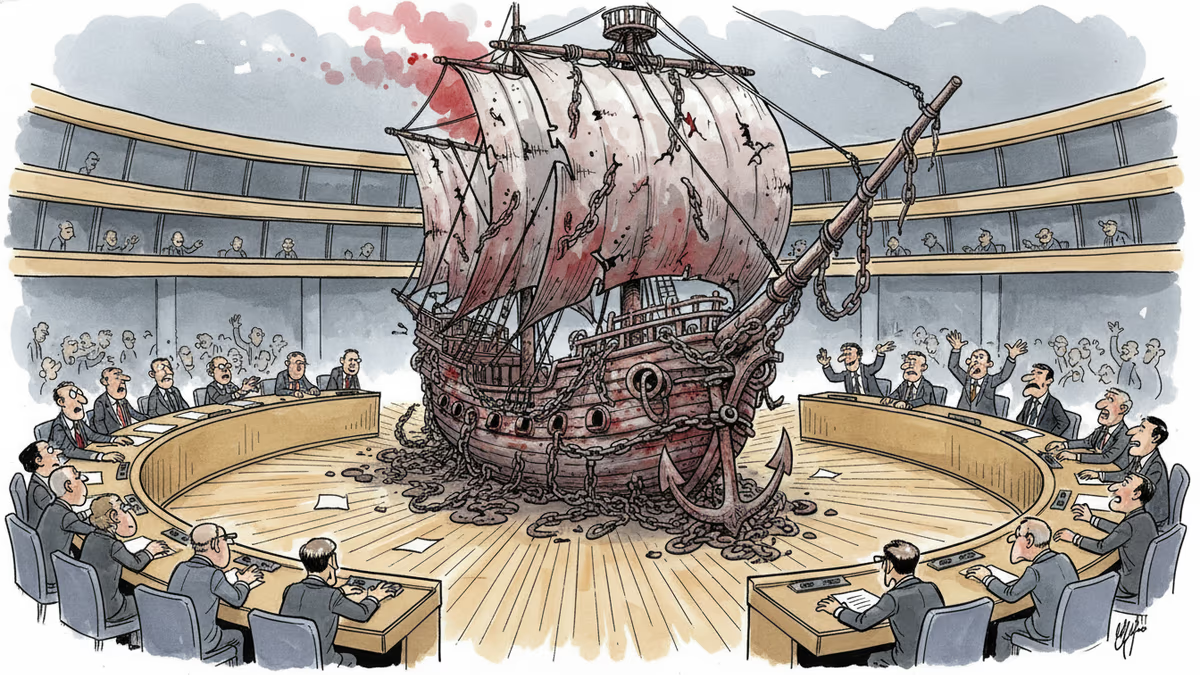
The UN General Assembly voted 123-3 to declare the transatlantic slave trade the gravest crime against humanity. But with no legal teeth, what does the resolution actually change?
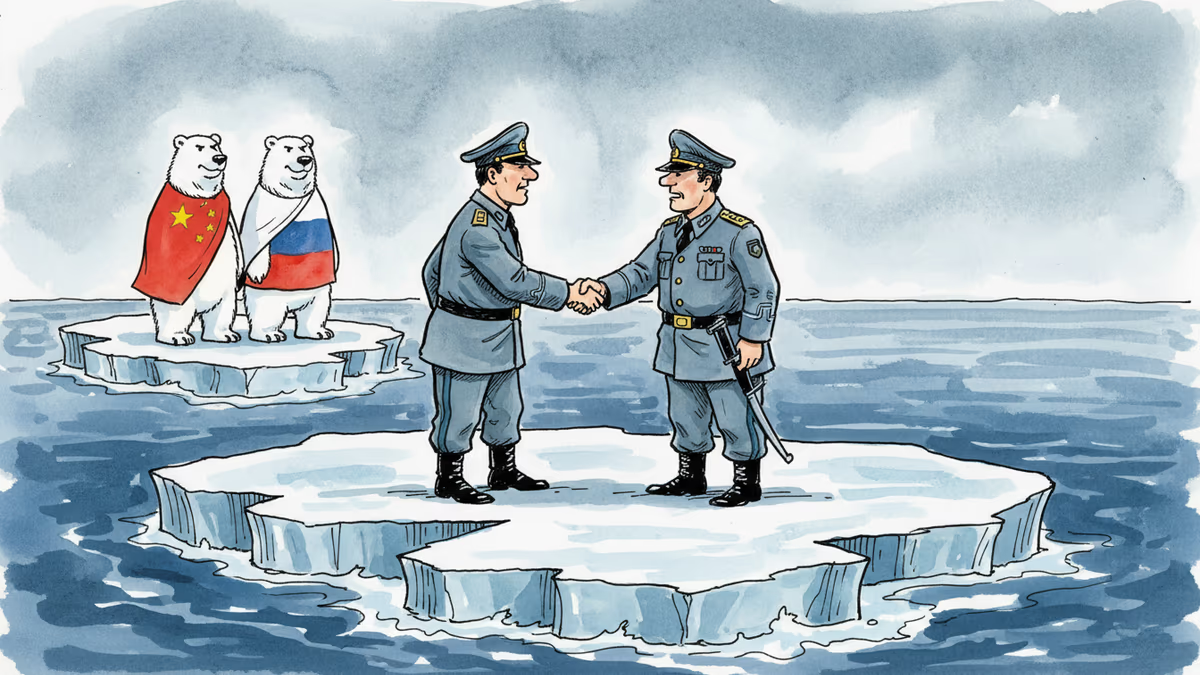
Canada and South Korea's defense agreement represents middle powers' response to growing China-Russia cooperation in the Arctic and US burden-sharing pressure. A new diplomatic model or strategic necessity?
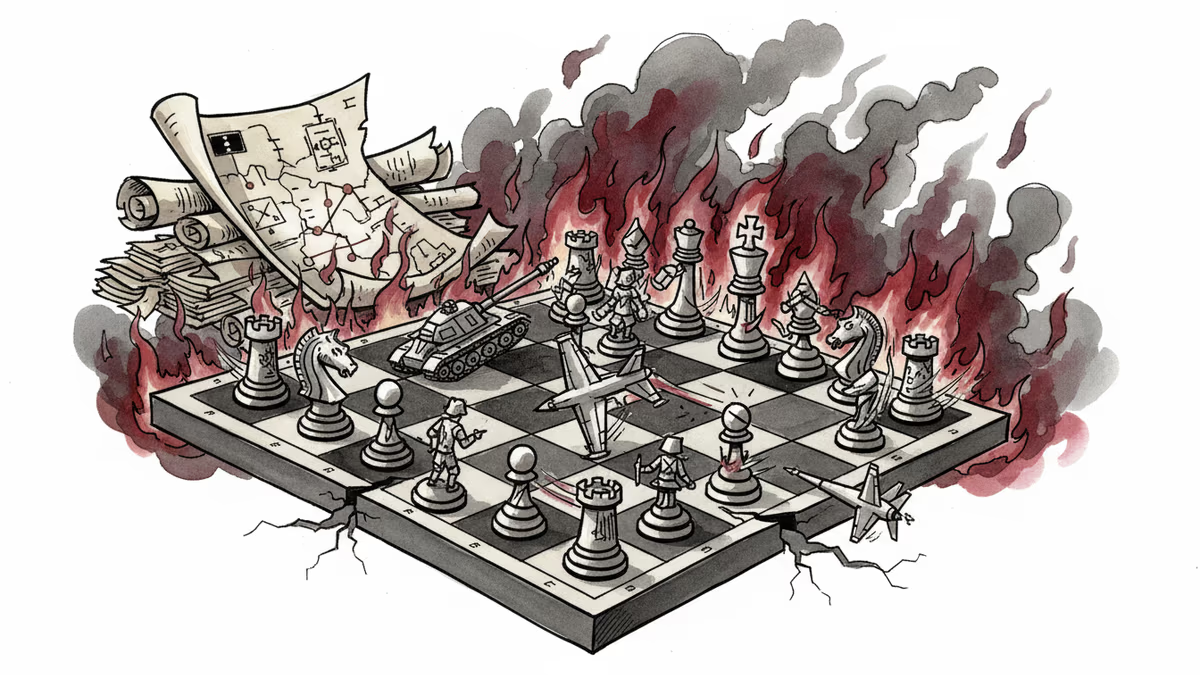
Trump's military doctrine abandons traditional rules of engagement, prioritizing surprise over consensus. What happens when war becomes unpredictable?
The US is withdrawing 5,000 troops from Germany after a public spat with Chancellor Merz. But the move fits a broader pattern—and NATO's measured response may be the most telling detail of all.
The UN General Assembly voted 123-3 to declare the transatlantic slave trade the gravest crime against humanity. But with no legal teeth, what does the resolution actually change?
Canada and South Korea's defense agreement represents middle powers' response to growing China-Russia cooperation in the Arctic and US burden-sharing pressure. A new diplomatic model or strategic necessity?
Trump's military doctrine abandons traditional rules of engagement, prioritizing surprise over consensus. What happens when war becomes unpredictable?
Thoughts
Share your thoughts on this article
Sign in to join the conversation