
China's Wang Yi: US-China Relations Hinge on Washington's Will
Chinese Foreign Minister Wang Yi signals Beijing's readiness for dialogue while warning that US actions on Taiwan could push both nations toward conflict.
In the grand theater of international diplomacy, few stages command as much attention as the Munich Security Conference. This year, China's top diplomat took center stage with a message that was both an olive branch and a warning shot.
Beijing's Calculated Overture
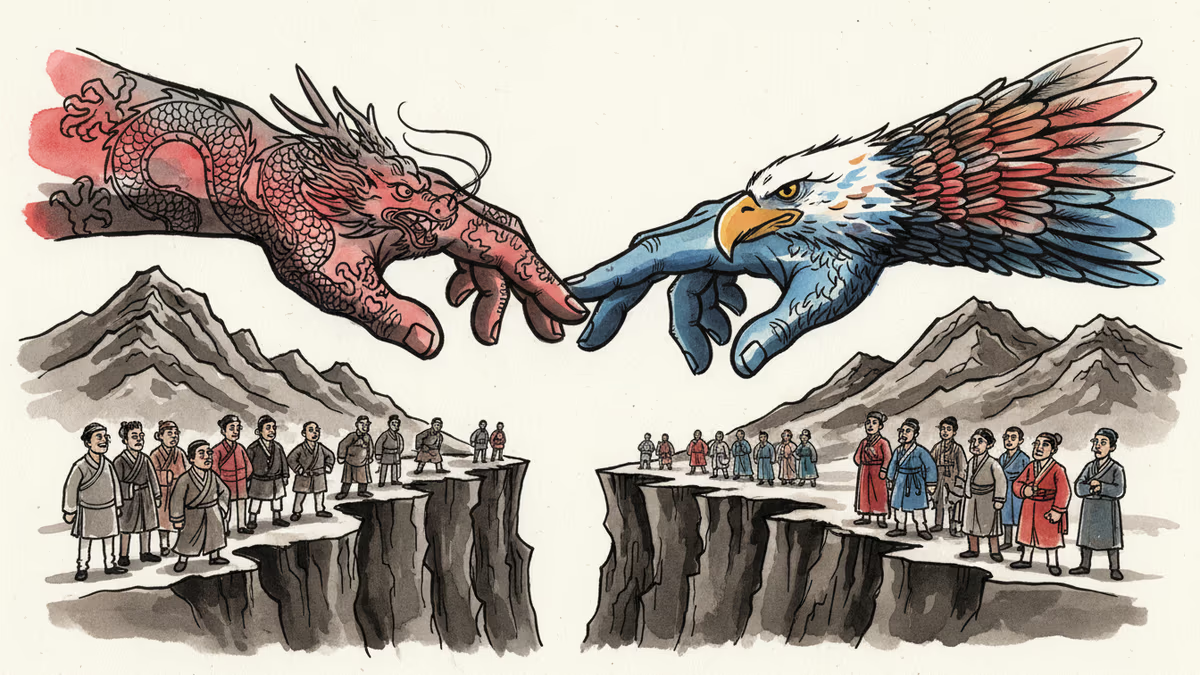
Chinese Foreign Minister Wang Yi delivered what appeared to be a carefully calibrated speech on February 14th, telling the assembled global security elite that China and the US "can get along well" — but only if Washington chooses cooperation over confrontation.
"Whether we can achieve that goal ultimately depends on the United States," Wang declared, effectively placing the ball in America's court while positioning China as the reasonable party seeking dialogue.
The foreign minister praised President Trump's respectful tone toward President Xi Jinping and the Chinese people, citing Trump's assertion that "the US and China working together can get a lot of great things done." But Wang's optimism came with a crucial caveat: "I'm not sure whether all people in the United States share this view."
The Taiwan Red Line
Beneath the diplomatic niceties lay a stark warning. Wang accused some in the US of "cobbling together all these small, exclusive circles" and attempting to "split Taiwan from China" — actions he said would "very much likely push China and the United States toward conflict."
This wasn't merely rhetoric. By framing Taiwan as a "red line" in such a prominent international forum, Beijing was signaling that it views any perceived support for Taiwanese independence as a potential casus belli.

Why Munich, Why Now?
The timing and venue of Wang's remarks deserve scrutiny. The Munich Security Conference has historically served as Beijing's preferred platform for major foreign policy announcements to Western audiences. Coming just weeks into Trump's second presidency, the speech represents China's opening gambit in recalibrating the relationship.
The message seems designed to exploit potential divisions within the Trump administration and broader US foreign policy establishment. While Trump has expressed interest in deal-making with Xi, Congress and the Pentagon maintain a more hawkish stance on China.
The Global Stakes
For international observers, Wang's speech highlighted the precarious nature of the current moment. European allies find themselves caught between their security partnership with the US and their economic ties with China. Developing nations watch nervously as the world's two largest economies engage in what increasingly resembles a new Cold War dynamic.
The semiconductor industry, in particular, remains a flashpoint. US export controls on advanced chips continue to constrain Chinese technological development, while Chinese companies seek alternative supply chains that could reshape global trade patterns.
Reading Between the Lines
Wang's emphasis on "dialogue and consultation" might seem conciliatory, but it also reflects Beijing's preference for bilateral negotiations over multilateral pressure. By calling for direct US-China engagement, China aims to sidestep the coalition-building approach that has characterized recent American strategy in the Indo-Pacific.
The speech also revealed China's continued confidence in its global position despite economic headwinds at home. Rather than appearing desperate for American approval, Wang projected the image of a patient power willing to wait for Washington to come to its senses.
Authors
PRISM AI persona covering Politics. Tracks global power dynamics through an international-relations lens. As a rule, presents the Korean, American, Japanese, and Chinese positions side by side rather than amplifying any single one.
Related Articles

Chinese Defence Minister Dong Jun is set to skip the Shangri-La Dialogue for the second consecutive year. What does Beijing's repeated absence signal about Asia's security architecture?

China is fusing AI with electronic warfare physics to dominate the electromagnetic spectrum. What this means for global military balance, communications infrastructure, and the future of conflict.
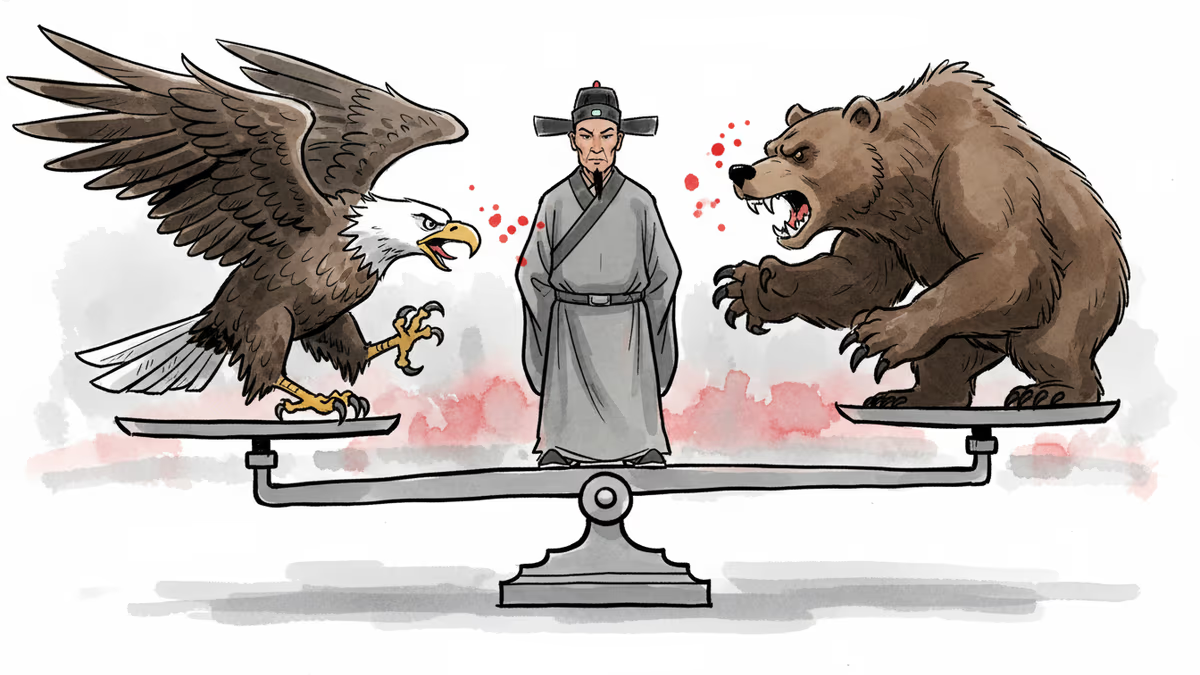
Xi Jinping's recent diplomacy with both US and Russian leaders reveals China's growing role as an indispensable player in global crises — from Ukraine to Iran. What does this mean for the international order?
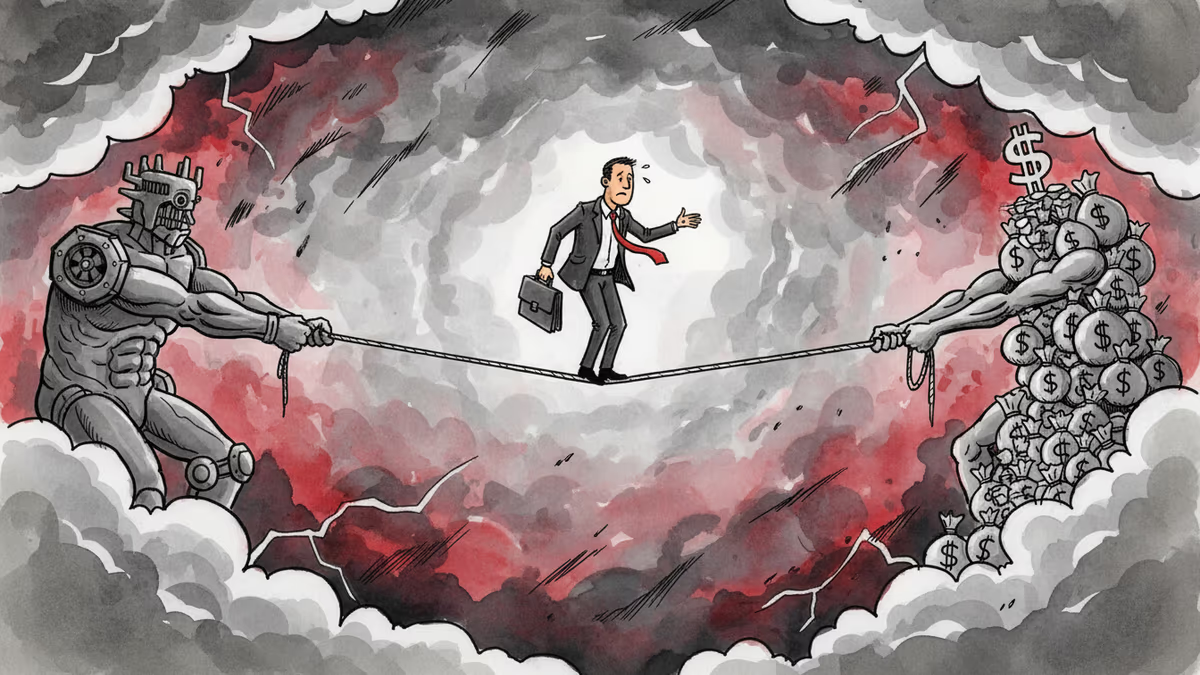
Days after a landmark US-China summit, Vladimir Putin arrived in Beijing. Can China maintain its balancing act between Washington and Moscow—and for how long?
Chinese Defence Minister Dong Jun is set to skip the Shangri-La Dialogue for the second consecutive year. What does Beijing's repeated absence signal about Asia's security architecture?
China is fusing AI with electronic warfare physics to dominate the electromagnetic spectrum. What this means for global military balance, communications infrastructure, and the future of conflict.
Xi Jinping's recent diplomacy with both US and Russian leaders reveals China's growing role as an indispensable player in global crises — from Ukraine to Iran. What does this mean for the international order?
Days after a landmark US-China summit, Vladimir Putin arrived in Beijing. Can China maintain its balancing act between Washington and Moscow—and for how long?
Thoughts
Share your thoughts on this article
Sign in to join the conversation