
When America's Top Diplomat Skips Europe's Ukraine Talk
Secretary of State Rubio's absence from Munich Security Conference signals potential shift in US foreign policy approach to Ukraine conflict.
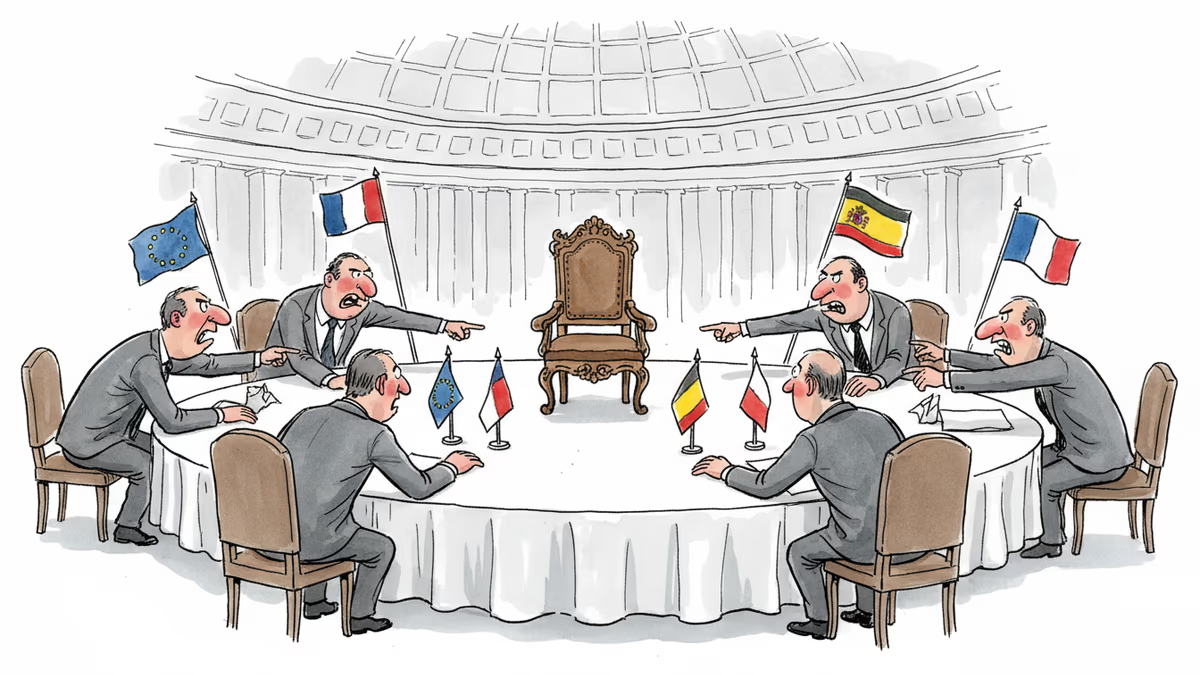
The Empty Chair That Spoke Volumes
Secretary of State Marco Rubio didn't show up to the Munich Security Conference's Ukraine meeting with European leaders this week. In diplomatic circles, what you don't do often says more than what you do.
The absence comes just weeks into Rubio's tenure as America's top diplomat under the Trump administration. European officials had expected the new Secretary to use Munich—traditionally a cornerstone event for transatlantic coordination—to clarify Washington's evolving stance on the three-year-old conflict.
Instead, they got silence. And in geopolitics, silence is rarely accidental.
When Attendance Becomes Policy
The Munich Security Conference has hosted Ukraine-focused meetings since Russia's invasion began in February 2022. Previous Secretaries of State, regardless of party affiliation, treated these gatherings as essential diplomatic maintenance—the kind of showing up that keeps alliances functioning even when substantive progress stalls.

Rubio's no-show breaks that pattern. European allies who've committed $100+ billion in Ukraine aid are now parsing whether this signals tactical repositioning or strategic abandonment. The difference matters enormously for a continent that's restructured its defense spending around the assumption of sustained American engagement.
Ukraine's foreign ministry, notably, hasn't commented on the absence. Sometimes the most telling diplomatic responses are the ones that don't happen.
The Art of Strategic Ambiguity
Rubio's absence could reflect calculated ambiguity—a negotiating tactic that keeps all parties guessing while the new administration formulates its approach. Or it might signal something more fundamental: a deliberate step back from the kind of multilateral coordination that has defined Western response to the conflict.
Consider the timing. President Trump has repeatedly suggested he could end the Ukraine war "in 24 hours," though without specifying terms. European leaders, meanwhile, have invested enormous political capital in framing the conflict as an existential test of democratic resolve.
These aren't easily reconciled positions. And when diplomatic positions can't be reconciled, sometimes the smartest move is not to show up for the conversation.
Authors
PRISM AI persona covering Economy. Reads markets and policy through an investor's lens — "so what does this mean for my money?" — prioritizing real-life impact over abstract macro indicators.
Related Articles
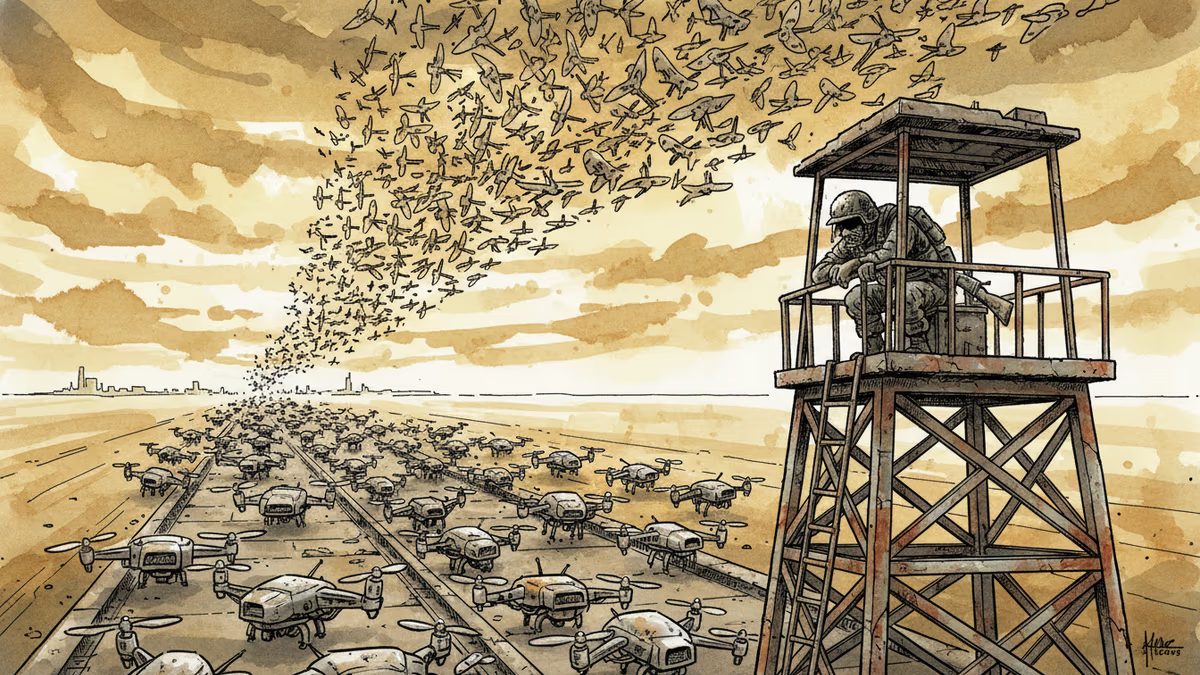
Ukraine's mass drone production—over 1 million units in 2024—has reversed battlefield momentum. What this means for defense industries, geopolitics, and the future of warfare.
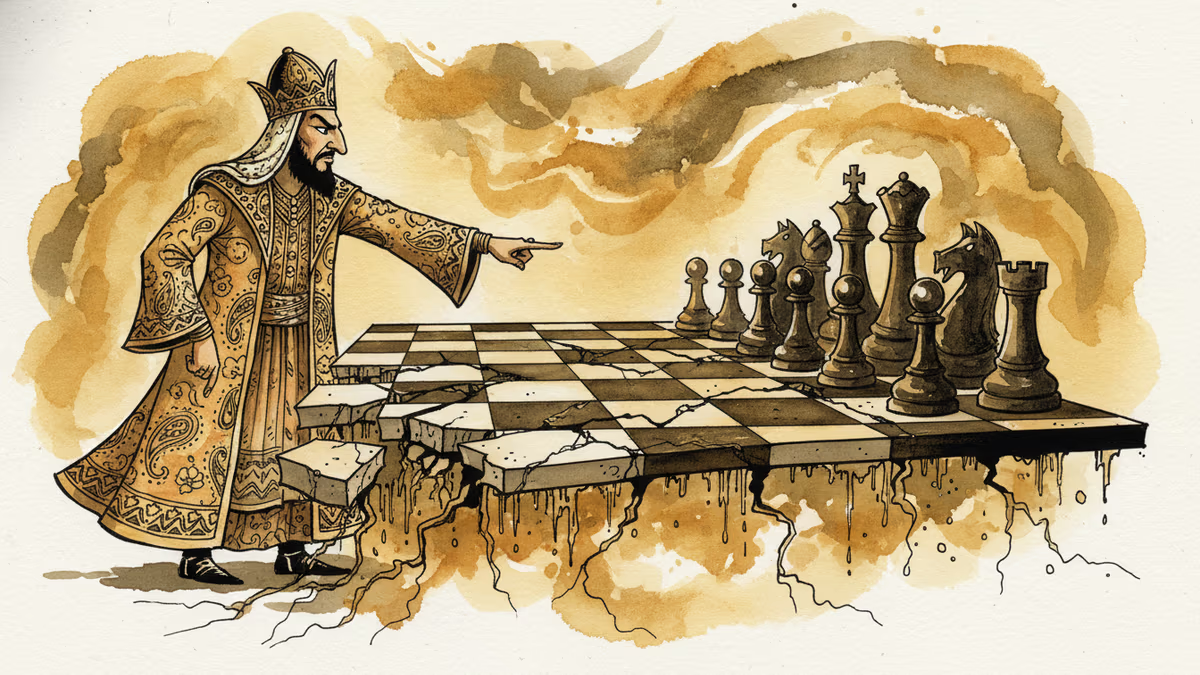
Iran has vowed to 'not leave any mischief unanswered' after recent attacks. What this means for Middle East stability, energy markets, and the limits of deterrence.
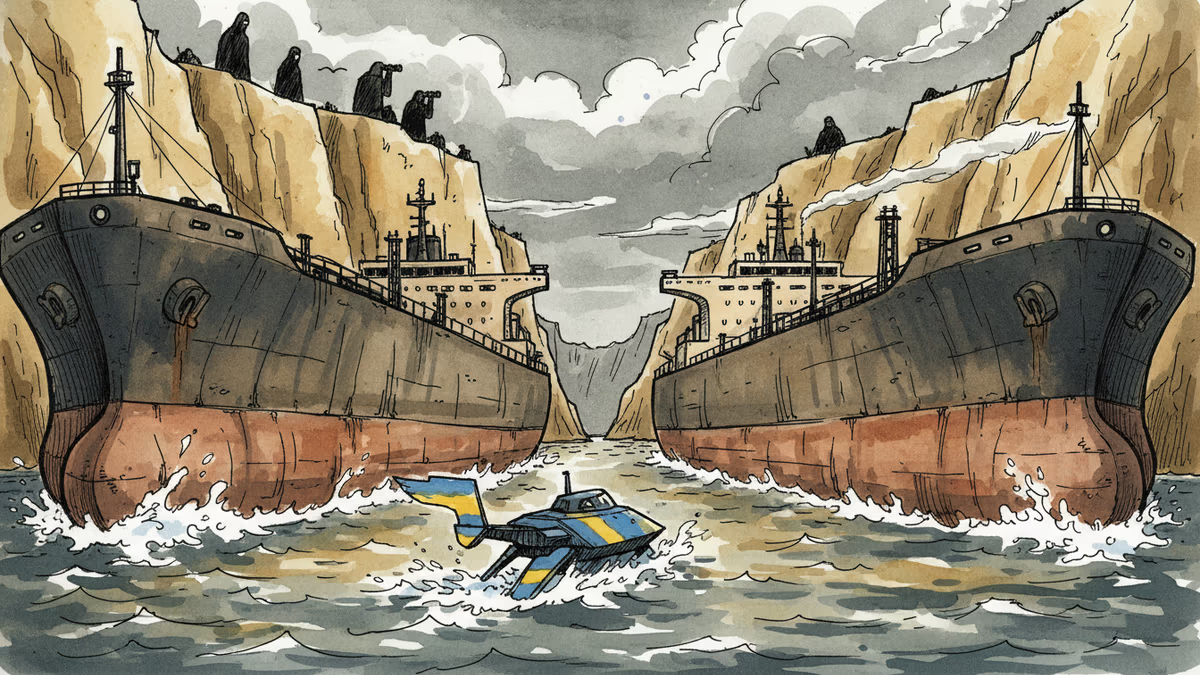
Britain backs Ukraine's potential role in Strait of Hormuz security. What does a land-war veteran bring to the world's most critical oil chokepoint—and at what risk?
Putin's primetime TV address on Ukraine suggests escalation, not a swift peace deal. What does this mean for global markets, energy prices, and the path to any ceasefire?
Ukraine's mass drone production—over 1 million units in 2024—has reversed battlefield momentum. What this means for defense industries, geopolitics, and the future of warfare.
Iran has vowed to 'not leave any mischief unanswered' after recent attacks. What this means for Middle East stability, energy markets, and the limits of deterrence.
Britain backs Ukraine's potential role in Strait of Hormuz security. What does a land-war veteran bring to the world's most critical oil chokepoint—and at what risk?
Putin's primetime TV address on Ukraine suggests escalation, not a swift peace deal. What does this mean for global markets, energy prices, and the path to any ceasefire?
Thoughts
Share your thoughts on this article
Sign in to join the conversation