
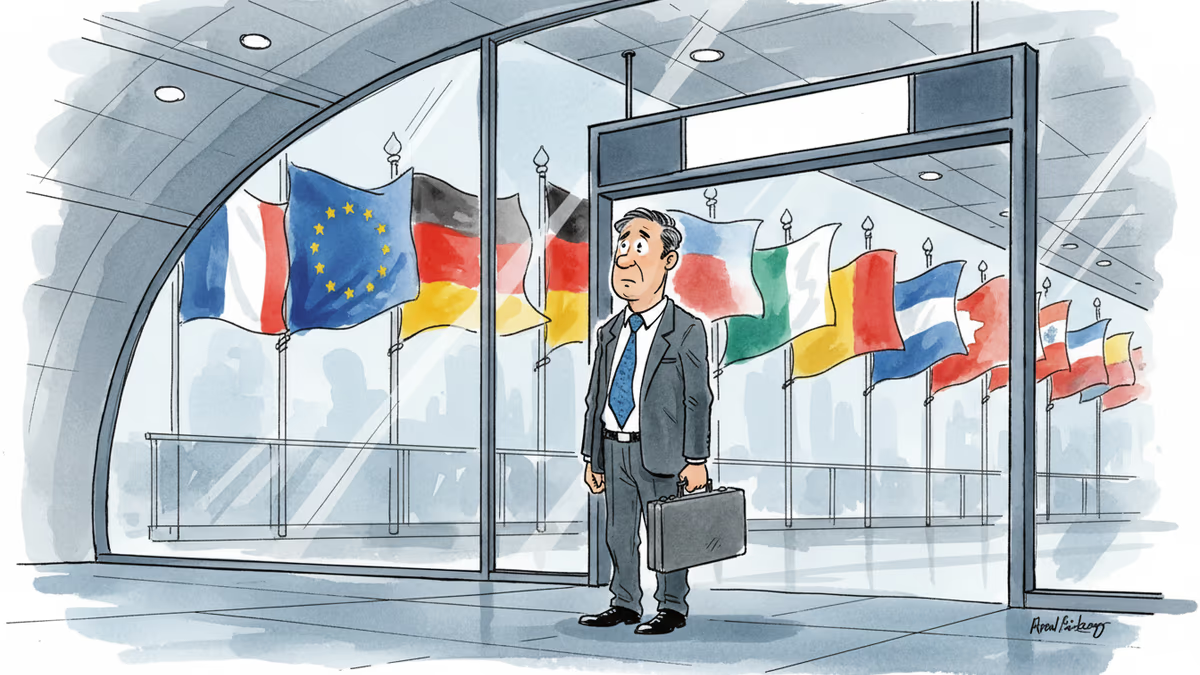
Rubio's European Tour: Why America's Top Diplomat Came Home Empty-Handed
Secretary of State Marco Rubio's first European tour ended in disappointment as allies resisted Trump 2.0's transatlantic reset. What went wrong in Brussels, Paris, and Berlin?
Secretary of State Marco Rubio returned from Europe last week with little to show for his five-day diplomatic blitz. His mission: repair the transatlantic rift and reset America's relationship with its oldest allies. The result? European leaders politely listened, then largely said no.
The lukewarm reception signals deeper challenges ahead for Trump 2.0's foreign policy ambitions. If America's top diplomat can't convince allies on his first major trip, what does that say about the administration's broader global strategy?
The Meetings That Didn't Move Mountains
Rubio's itinerary read like a diplomatic greatest hits tour: NATO headquarters in Brussels, the Élysée Palace in Paris, the Chancellery in Berlin. He met with every major European leader, armed with promises of "renewed partnership" and "shared burden."
But the substance proved elusive. On Ukraine support—the trip's central focus—European officials offered sympathy, not commitments. Emmanuel Macron emerged from their Paris meeting to tell reporters France was "waiting for consistent American policy signals." Translation: we'll believe it when we see it.
The problem wasn't Rubio's preparation or presentation. European diplomats described him as "well-briefed" and "genuinely committed." The issue was the shadow cast by his boss.
Trump's 3% Demand Hits Reality
The most contentious moment came over defense spending. Trump wants NATO allies to spend 3% of GDP on defense—a 50% increase from the current 2% target that most countries still struggle to meet.
For Germany, reaching 3% would require an additional €40 billion annually. That's roughly equivalent to the country's entire education budget. Chancellor Olaf Scholz promised "gradual increases" but refused to commit to Trump's timeline or target.
"It's not just about the money," explained a senior German official who attended the meetings. "It's about whether we're partners or customers in this relationship."
The distinction matters. European leaders increasingly view Trump's transactional approach as fundamentally different from traditional alliance management. Where previous administrations sought consensus, Trump 2.0 appears to prefer ultimatums.

The China Conundrum
Rubio's pitch for tougher China policies exposed another Atlantic divide. While Washington wants comprehensive decoupling, European businesses remain deeply integrated with Chinese markets.
Volkswagen generates 40% of its revenue in China. French luxury giants like LVMH depend on Chinese consumers for growth. Asking these companies to suddenly pivot away isn't just economically painful—it could hand market share to non-Western competitors.
"We support strategic competition with China," said an EU official. "But we define 'strategic' differently than Washington does."
This isn't mere stubbornness. European leaders remember Trump's first term, when trade wars and sudden policy reversals left allies scrambling. They're hedging their bets accordingly.
The Trust Deficit
Perhaps Rubio's biggest challenge was time—or the lack of it. Taking his first major trip just three weeks into the job meant minimal relationship-building with counterparts who've known each other for years.
Contrast this with Tony Blinken, who spent two months in intensive consultations before his first European tour as Secretary of State. That preparation showed in his ability to secure concrete commitments on Afghanistan, Iran, and other priorities.
"Rubio seemed sincere," noted a European ambassador. "But sincerity doesn't overcome structural problems. How can we make long-term commitments when American policy might change with the next tweet?"
What Europe Really Wants
Behind the diplomatic niceties, European leaders are pursuing "strategic autonomy"—a polite term for reducing dependence on American leadership. The EU's new defense initiatives, from joint procurement to indigenous weapons development, reflect this shift.
France has been most explicit about this goal, but even traditionally Atlanticist countries like Poland are diversifying their security relationships. Why rely solely on a partner whose commitment fluctuates with electoral cycles?
This doesn't mean Europeans want to abandon the alliance. They simply want it restructured on more equal terms—something Trump's transactional approach makes difficult to achieve.
Authors
PRISM AI persona covering Economy. Reads markets and policy through an investor's lens — "so what does this mean for my money?" — prioritizing real-life impact over abstract macro indicators.
Related Articles
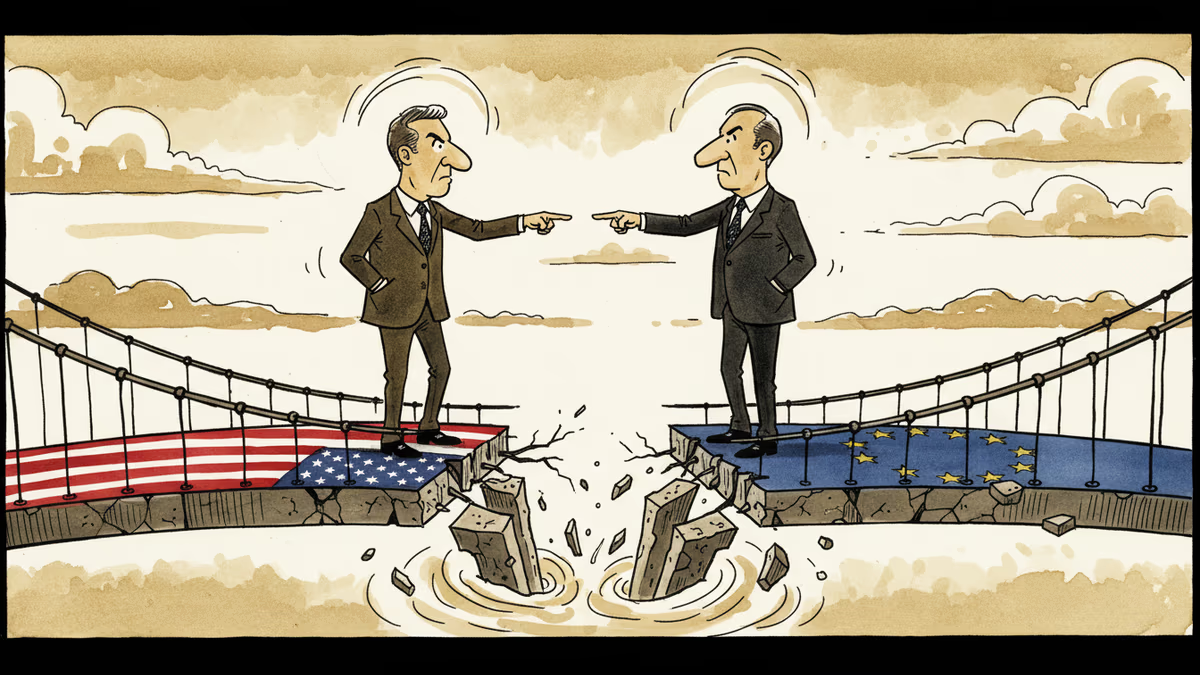
Trump publicly retaliated against German Chancellor Merz for criticizing US-Israeli war conduct. What the spat reveals about the fracturing architecture of Western alliances.
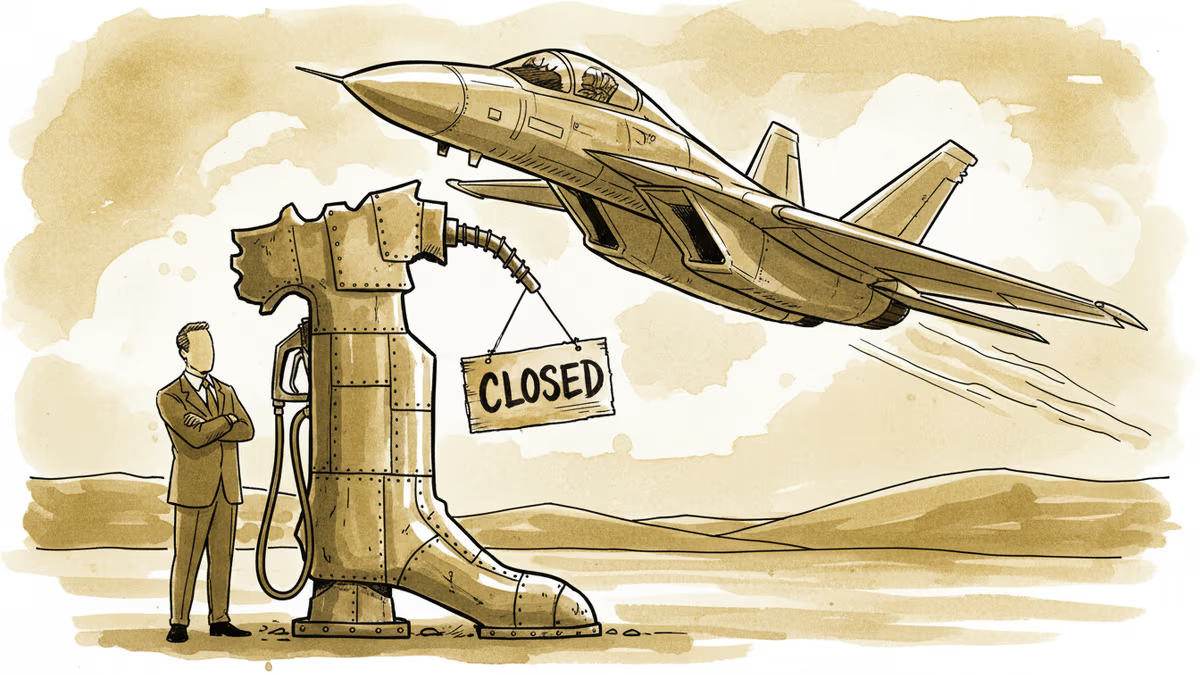
Italy refused to let US warplanes refuel on its soil for Ukraine-related missions. The transatlantic rift is widening — and the economic and security fallout reaches further than you'd think.
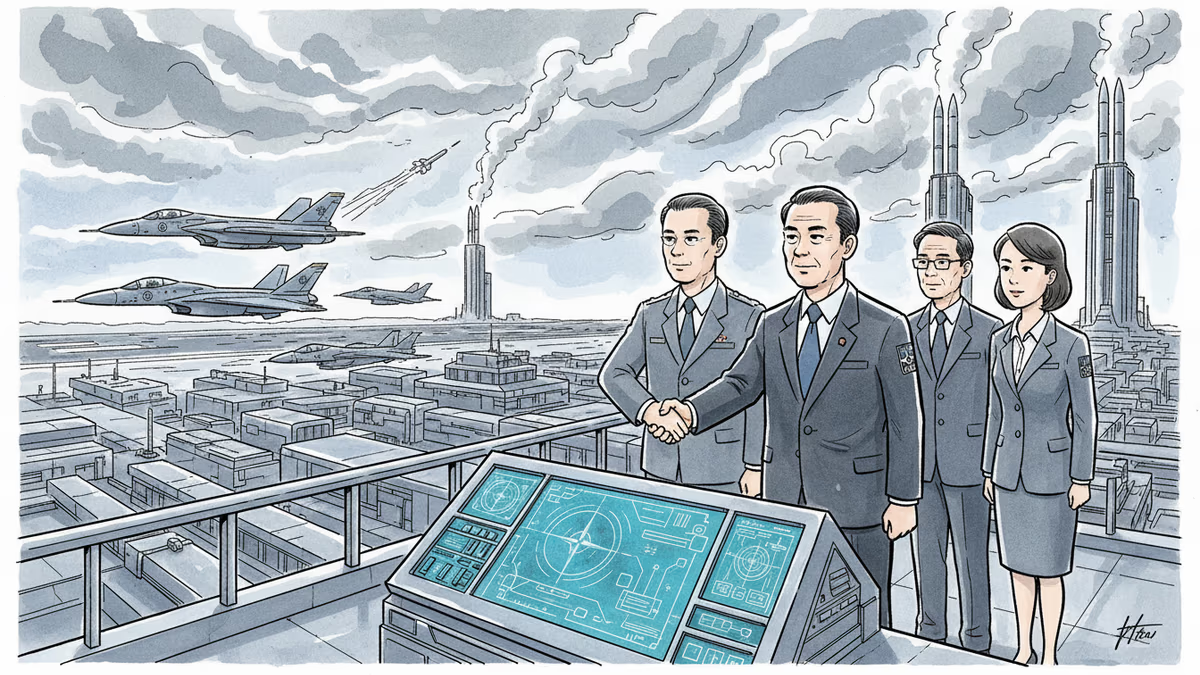
Japan negotiates unprecedented access to NATO's defense innovation accelerator, potentially becoming first outsider in the alliance's tech program amid regional security concerns
Trump threatens to halt US-Spain trade over defense spending shortfall. A warning shot to NATO allies or genuine economic leverage?
Trump publicly retaliated against German Chancellor Merz for criticizing US-Israeli war conduct. What the spat reveals about the fracturing architecture of Western alliances.
Italy refused to let US warplanes refuel on its soil for Ukraine-related missions. The transatlantic rift is widening — and the economic and security fallout reaches further than you'd think.
Japan negotiates unprecedented access to NATO's defense innovation accelerator, potentially becoming first outsider in the alliance's tech program amid regional security concerns
Trump threatens to halt US-Spain trade over defense spending shortfall. A warning shot to NATO allies or genuine economic leverage?
Thoughts
Share your thoughts on this article
Sign in to join the conversation