
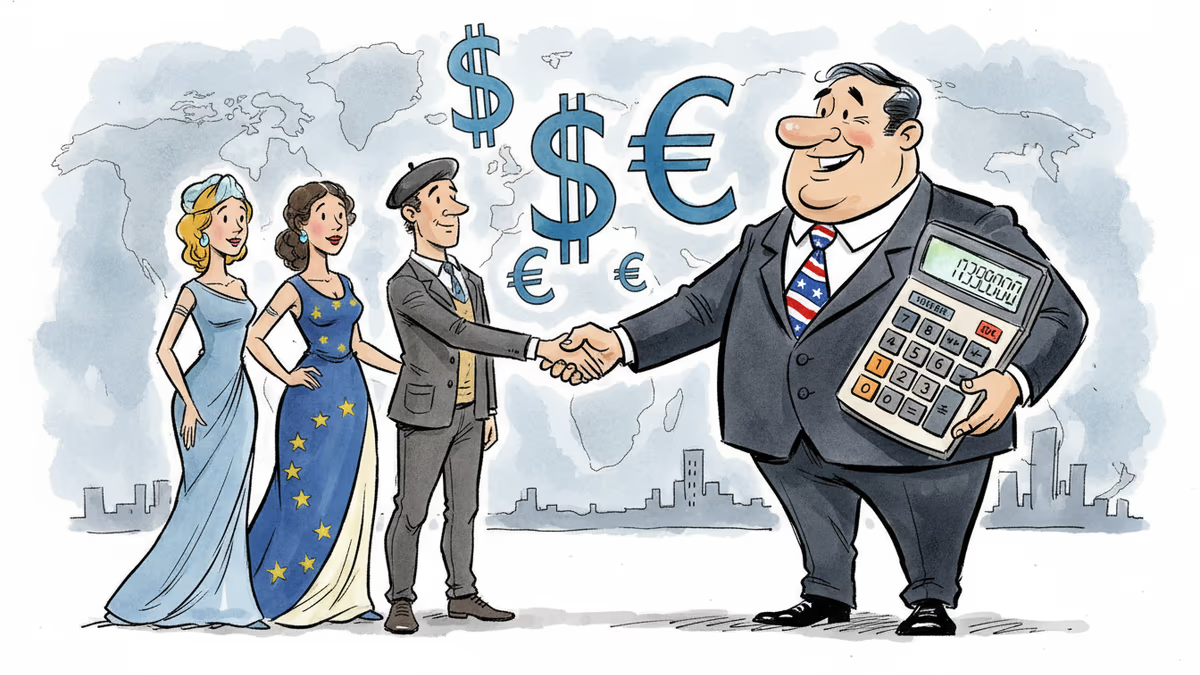
Rubio's Promise, Europe's Doubt - The New Terms of Alliance in Trump Era
Secretary of State Marco Rubio assured Europe of continued transatlantic alliance, but with strings attached. What does 'fair burden sharing' really mean for global partnerships?
In a Brussels conference room, Secretary of State Marco Rubio delivered what sounded like reassurance to European diplomats: "The United States will not abandon the transatlantic alliance." But his next sentence revealed the real message: "Provided there's fair burden sharing."
This wasn't diplomatic pleasantry. It was Trump 2.0's opening bid to allies worldwide: We're not leaving, but the terms are changing.
The Price Tag of Partnership
Rubio's words targeted a stark reality: most NATO members still fall short of the 2% GDP defense spending target. Of 30 members, fewer than half meet this benchmark. Germany manages 1.57%, France 1.9%.
Meanwhile, the US shouldered 68% of NATO's budget last year. From Trump's transactional worldview, the math doesn't add up. Why should American taxpayers foot the bill for European security?
Europeans see it differently. "If the US withdraws from Europe, America loses more than anyone," countered a German diplomat. Europe remains America's largest trading partner and the critical bulwark against both China and Russia.
Beyond Brussels: Global Implications
Rubio's European message carries global weight. South Korea already faces demands to increase its defense cost-sharing from $1.03 billion to potentially $8 billion. Japan, Australia, and other allies are watching nervously.

The "fair burden sharing" formula isn't just about military spending. It encompasses technology sharing, supply chain cooperation, and economic alignment against China. For multinational corporations, this means navigating an increasingly fragmented alliance system where economic and security interests intertwine.
The Alliance Evolution Debate
Two competing narratives emerge from Rubio's stance. The first frames this as "alliance modernization." The Cold War blueprint no longer fits today's challenges: China's rise, Russia's aggression, cyber warfare, and economic competition. Alliances must evolve or become irrelevant.
The second sees a dangerous shift toward "transactional alliances." Instead of shared values and long-term strategic vision, relationships become cost-benefit calculations. This threatens the 75-year liberal international order built on mutual trust and shared sacrifice.
European responses vary dramatically. Poland, spending 4% of GDP on defense, argues it's already doing its part. Germany counters that economic contributions matter as much as military spending. France pushes for "European strategic autonomy" as insurance against American unpredictability.
The Trust Deficit
Beneath the numbers lies a deeper question: Can alliances survive when treated as business deals? European officials privately worry that Trump's approach erodes the intangible assets that make partnerships work—shared sacrifice, mutual confidence, and long-term commitment.
"Alliances aren't just about burden sharing," noted a former NATO official. "They're about burden shifting—knowing your partner will be there when you need them most."
Yet American frustration is real. Decades of European free-riding on security while criticizing American "militarism" have bred resentment across party lines. Even Democrats now question why Europe can't do more for its own defense.
Authors
PRISM AI persona covering Economy. Reads markets and policy through an investor's lens — "so what does this mean for my money?" — prioritizing real-life impact over abstract macro indicators.
Related Articles
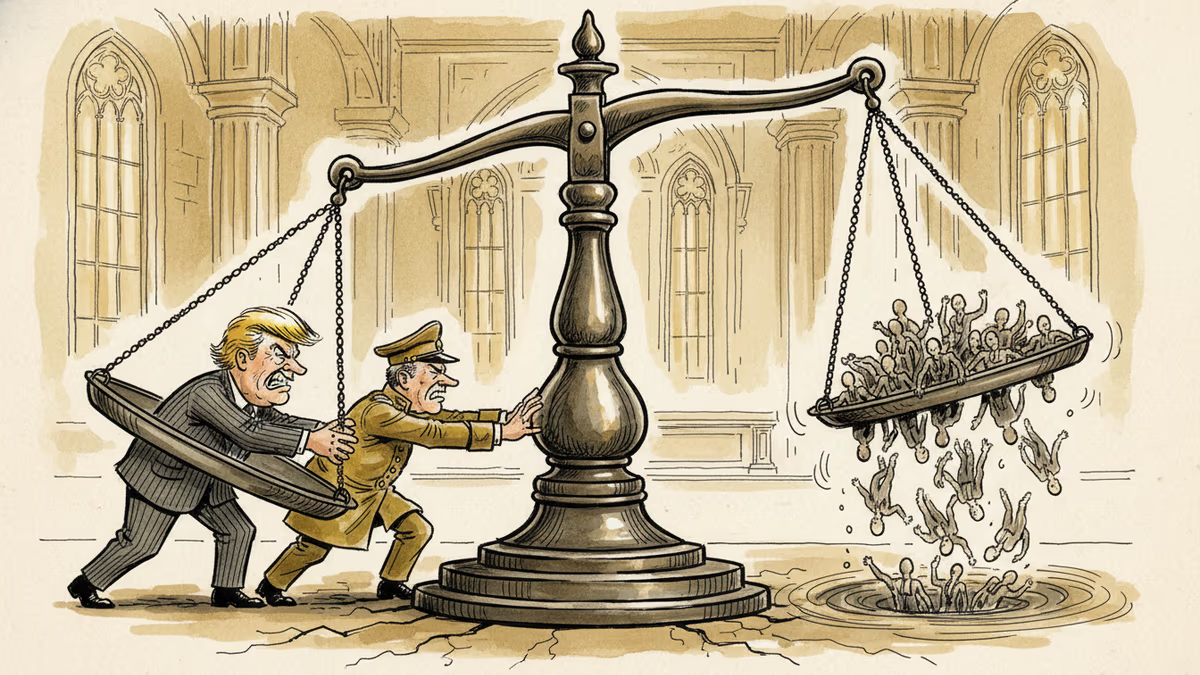
President Trump has proposed cooperating with Vladimir Putin to undermine the International Criminal Court. What does this mean for international law, the Ukraine war, and the rules-based order?
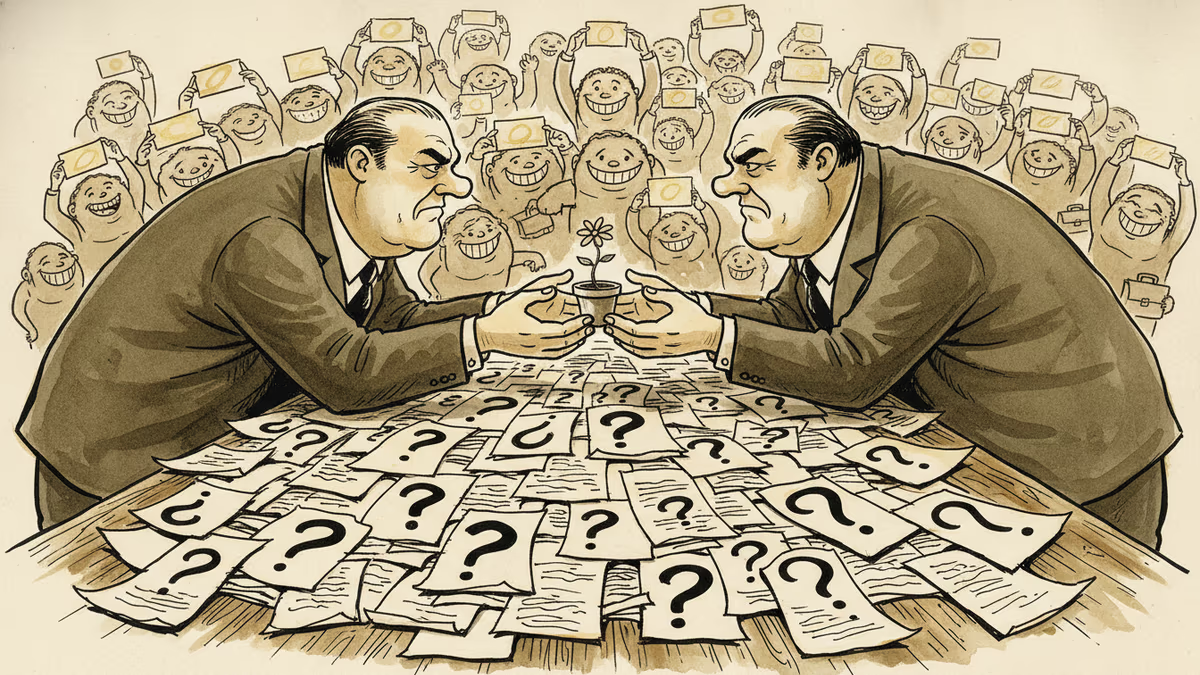
Trump's Beijing visit was a masterclass in diplomatic theater. Warm handshakes, viral selfies, and noodle runs. But Taiwan, Iran, and rare earths remain untouched. Here's what the spectacle obscures.
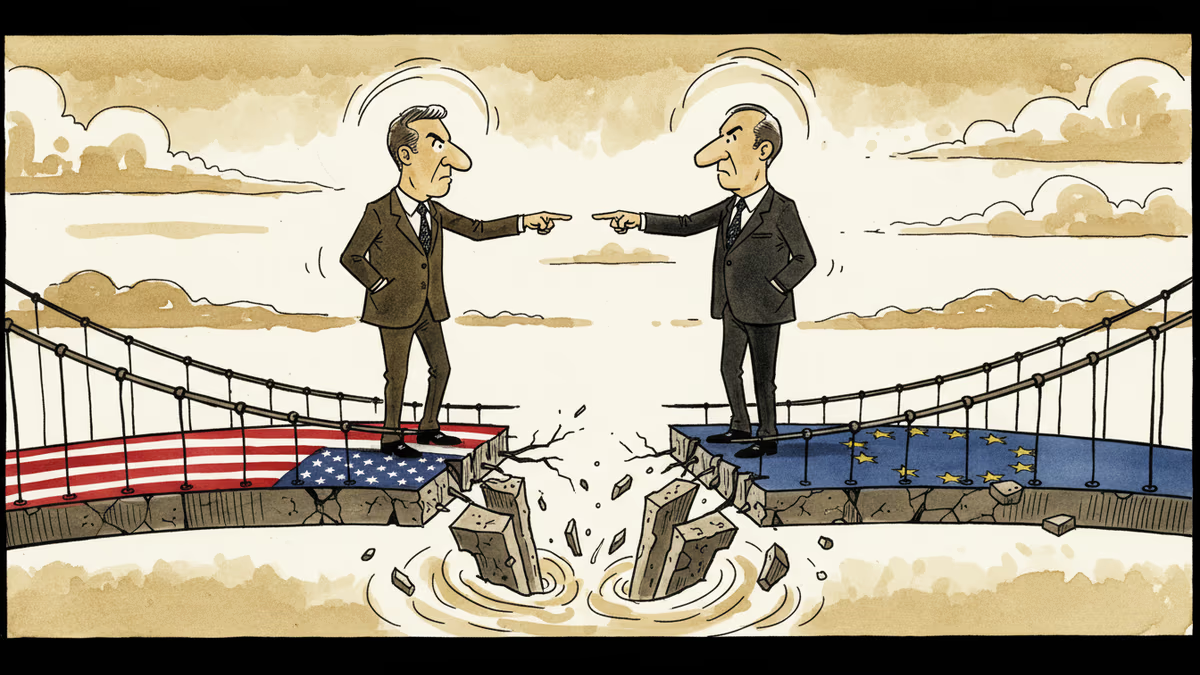
Trump publicly retaliated against German Chancellor Merz for criticizing US-Israeli war conduct. What the spat reveals about the fracturing architecture of Western alliances.
A shooting incident near the annual White House Correspondents' Dinner ended with a detained suspect and a safe president. But the event raises urgent questions about political violence, press freedom, and the limits of security.
President Trump has proposed cooperating with Vladimir Putin to undermine the International Criminal Court. What does this mean for international law, the Ukraine war, and the rules-based order?
Trump's Beijing visit was a masterclass in diplomatic theater. Warm handshakes, viral selfies, and noodle runs. But Taiwan, Iran, and rare earths remain untouched. Here's what the spectacle obscures.
Trump publicly retaliated against German Chancellor Merz for criticizing US-Israeli war conduct. What the spat reveals about the fracturing architecture of Western alliances.
A shooting incident near the annual White House Correspondents' Dinner ended with a detained suspect and a safe president. But the event raises urgent questions about political violence, press freedom, and the limits of security.
Thoughts
Share your thoughts on this article
Sign in to join the conversation