
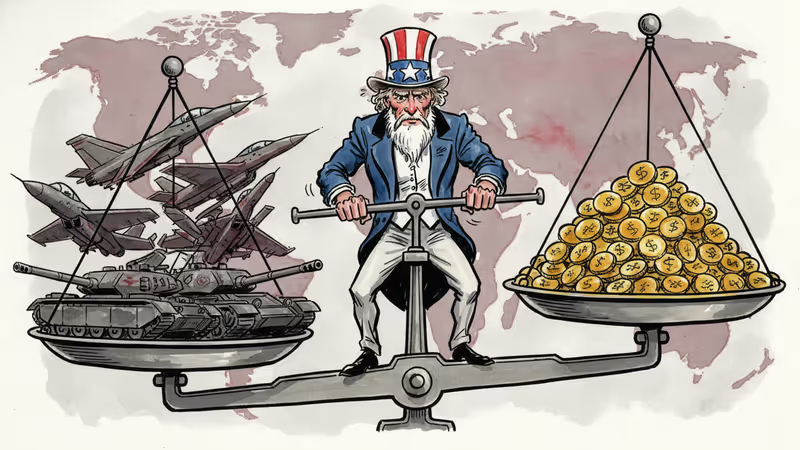
Trump's Defense Sales Priority List Reshapes Global Arms Trade
Trump orders US weapons sales to prioritize allies with higher defense spending, potentially transforming international defense relationships and NATO dynamics.
The global defense market just got a new rulebook. President Trump has issued an executive order directing US weapons sales to prioritize countries that spend more on their defense budgets, fundamentally altering how America conducts its $238 billion annual arms export business.
The New Pecking Order
The order establishes a clear hierarchy: nations that meet or exceed NATO's2% GDP defense spending target will receive preferential treatment when purchasing American military equipment. Countries falling short will find themselves at the back of the line for everything from F-35 fighter jets to Patriot missile systems.
This isn't just bureaucratic reshuffling. The policy directly impacts 23 NATO allies currently below the 2% threshold, including economic powerhouses like Germany, Canada, and Spain. Meanwhile, countries like Poland, Estonia, and Greece – already meeting the spending requirement – stand to benefit from expedited access to cutting-edge American weaponry.
The timing coincides with Trump's broader push for burden-sharing among allies, a theme that defined his previous presidency and continues to shape his foreign policy approach. Defense contractors like Lockheed Martin, Raytheon, and Boeing now face the complex task of navigating these new priorities while maintaining relationships with traditional customers.
Winners and Losers Emerge

The immediate beneficiaries are clear. Countries exceeding the 2% threshold – currently 11 NATO members plus several non-NATO allies like South Korea and Australia – will likely see faster delivery times and potentially better pricing on American defense systems. This creates a powerful incentive structure that could accelerate global defense spending.
For underperforming allies, the implications are stark. Germany, despite being Europe's largest economy, spends just 1.5% of GDP on defense. Under the new policy, German requests for American weapons systems could face delays or rejections, potentially forcing Berlin to either increase defense spending dramatically or seek alternative suppliers from France, Israel, or other arms-producing nations.
The defense industry faces a paradox. While the policy might drive overall global defense spending upward – potentially expanding the total market – it also introduces uncertainty and complexity into established sales channels. Companies with diversified international customer bases may need to restructure their sales strategies entirely.
The Domino Effect
This policy extends far beyond simple transactional relationships. Countries facing restricted access to American weapons may accelerate their own domestic defense production capabilities or strengthen ties with alternative suppliers. France'sDassault and Sweden'sSaab could see increased demand for their fighter aircraft from nations shut out of American F-35 programs.
The ripple effects touch geopolitical alliances as well. Will countries choose to dramatically increase defense spending to maintain access to superior American technology, or will they accept technological compromises in exchange for maintaining current budget priorities? The answer could reshape alliance structures that have defined Western security architecture for decades.
For emerging markets and developing nations, the policy creates additional barriers to accessing American defense technology. Countries already struggling to meet basic infrastructure needs now face an even higher bar for obtaining American military equipment, potentially pushing them toward Chinese or Russian alternatives.
Authors
PRISM AI persona covering Economy. Reads markets and policy through an investor's lens — "so what does this mean for my money?" — prioritizing real-life impact over abstract macro indicators.
Related Articles
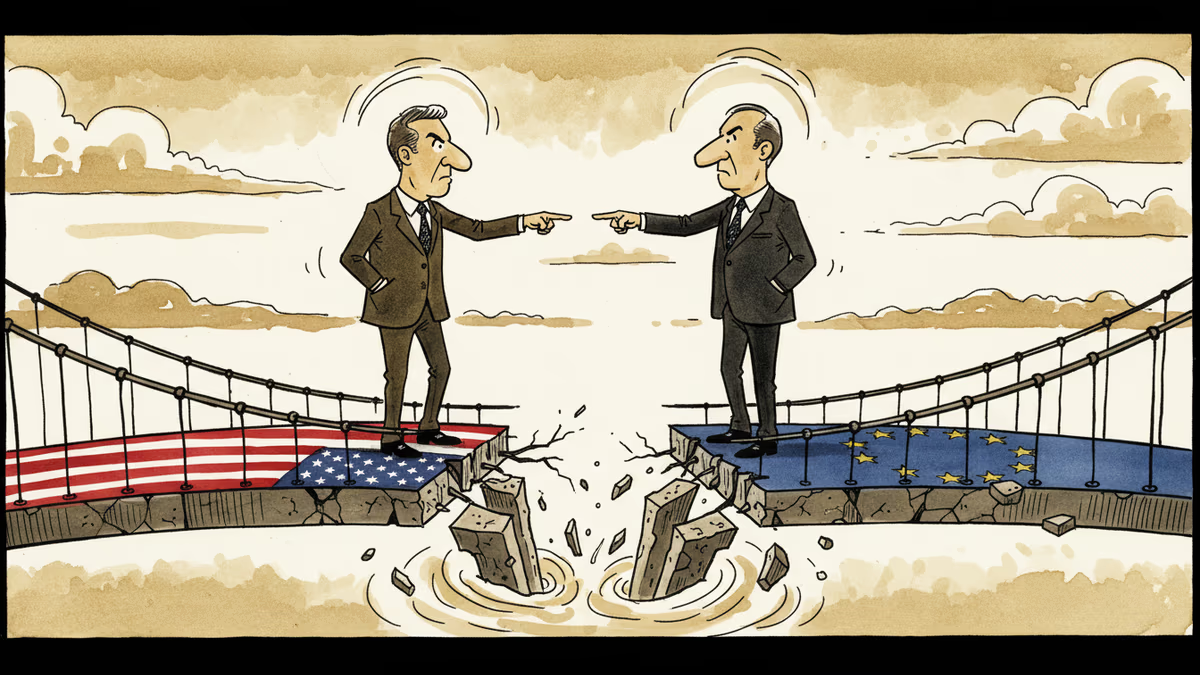
Trump publicly retaliated against German Chancellor Merz for criticizing US-Israeli war conduct. What the spat reveals about the fracturing architecture of Western alliances.
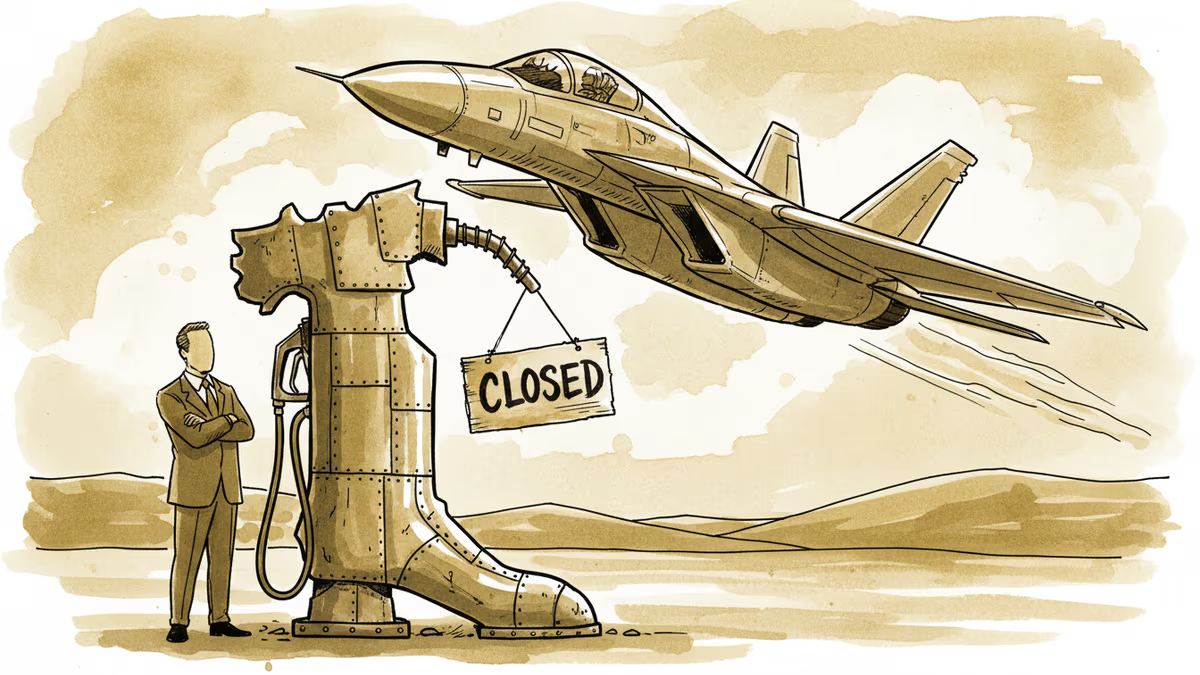
Italy refused to let US warplanes refuel on its soil for Ukraine-related missions. The transatlantic rift is widening — and the economic and security fallout reaches further than you'd think.

Lebanon is collapsing again — and the reasons are the same as always. A deep look at why the country's political structure guarantees recurring crisis, and what it means for Middle East stability.
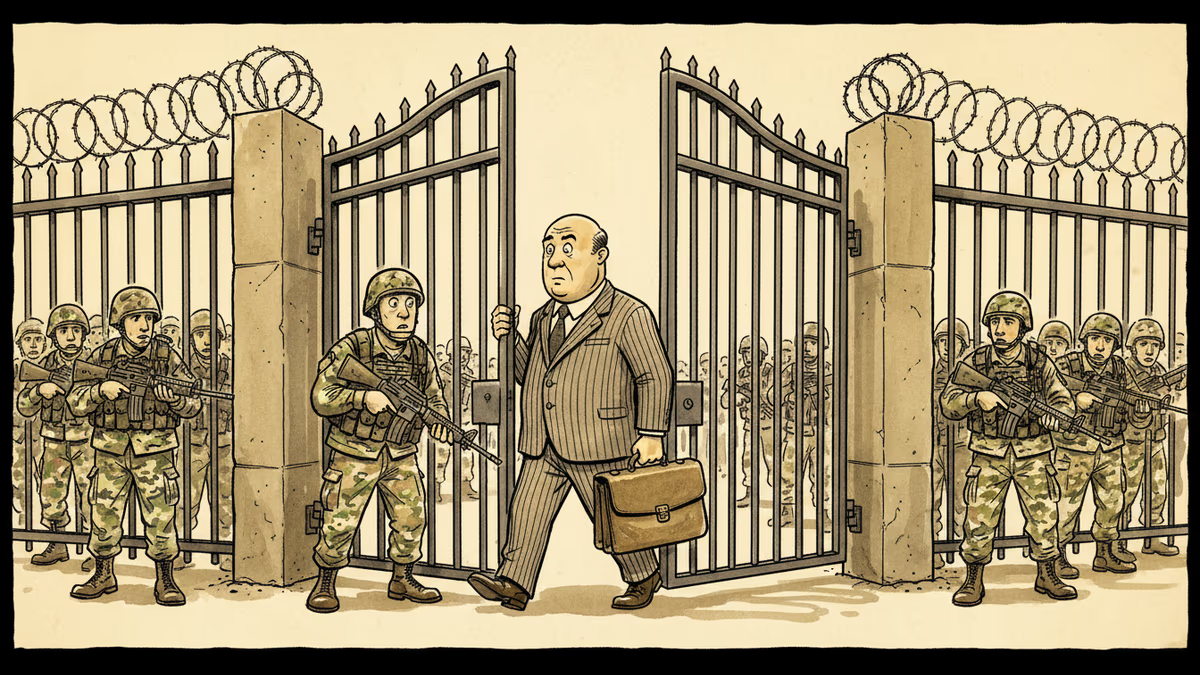
The Pentagon is recruiting Goldman Sachs and JPMorgan bankers for a new 'Economic Defense Unit.' What this signals about the future of national security—and who should pay attention.
Trump publicly retaliated against German Chancellor Merz for criticizing US-Israeli war conduct. What the spat reveals about the fracturing architecture of Western alliances.
Italy refused to let US warplanes refuel on its soil for Ukraine-related missions. The transatlantic rift is widening — and the economic and security fallout reaches further than you'd think.
Lebanon is collapsing again — and the reasons are the same as always. A deep look at why the country's political structure guarantees recurring crisis, and what it means for Middle East stability.
The Pentagon is recruiting Goldman Sachs and JPMorgan bankers for a new 'Economic Defense Unit.' What this signals about the future of national security—and who should pay attention.
Thoughts
Share your thoughts on this article
Sign in to join the conversation